70Speculative Evolution
Imagine related organisms and ecological relationships from shared body plans and environmental constraints.
Definition and context
Speculative evolution begins by asking what life might become along another path, connecting form, ancestry and ecological conditions. Original speculative-zoology projects such as Snaiad and fictional game ecosystems offer comparisons at different levels. They are constrained inventions rather than discovered real species or predictions of an inevitable future.
People and ecology
People can observe, supplying scale through position, sightlines and restrained actions without becoming the ecosystem's center. Organisms need legible movement, senses and feeding relationships. Shared features across several forms suggest a world's continuity better than arbitrarily attaching many parts to one animal.
Spaces and forms
Choose a basic body plan, habitat and resources before developing related branches. Similar ways of life may lead to similar forms without close ancestry, while common origins can yield major differences in different environments. Evolution does not inevitably progress toward being larger, stronger or more intelligent; retain conditions and contingency.
Color and materials
Outer surfaces, supports, joints and protective structures need to work together. Keratin-like plates, soft fringes or moist surfaces can serve different environmental roles. Even in an invented species, limb connections should follow a consistent body plan, with individual variation within an intelligible range.
Light, composition and scale
Light, temperature, depth, terrain and shelter can influence visible forms and behavior. Images can convey those relationships through value, scale and habitat layers. Luminescence is optional rather than a universal sign of alien life. Clearly established ordinary conditions can support unfamiliar organisms too.
Sound and graphics
Observers might compare feet of similar wet-shore and dry-shore organisms, record active periods or infer resources from feeding traces. Visible clues should support inference, although one picture cannot prove an entire evolutionary history. State hypotheses clearly and let repeated observation refine or challenge them.
Motifs and distinctions
Unlike body horror, the emphasis is on populations, generations and ecology rather than sudden individual loss of control. Human modification and laboratories are optional, unlike biopunk's frequent focus. Compared with monster designs built by arbitrarily combining parts, this approach calls for traceable shared traits and constraints across forms: unfamiliarity does not mean an absence of rules.
Ideas for game environments
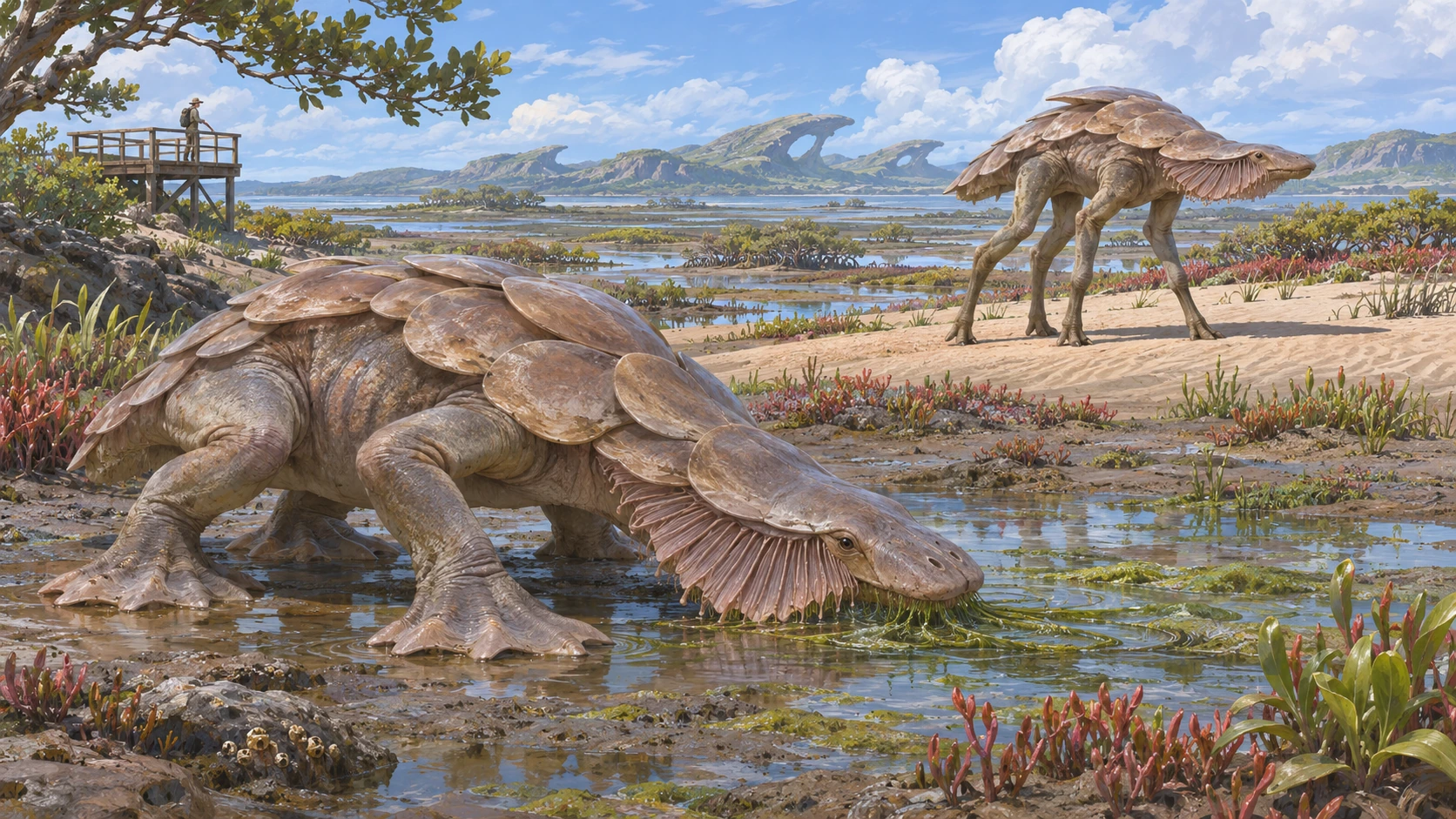
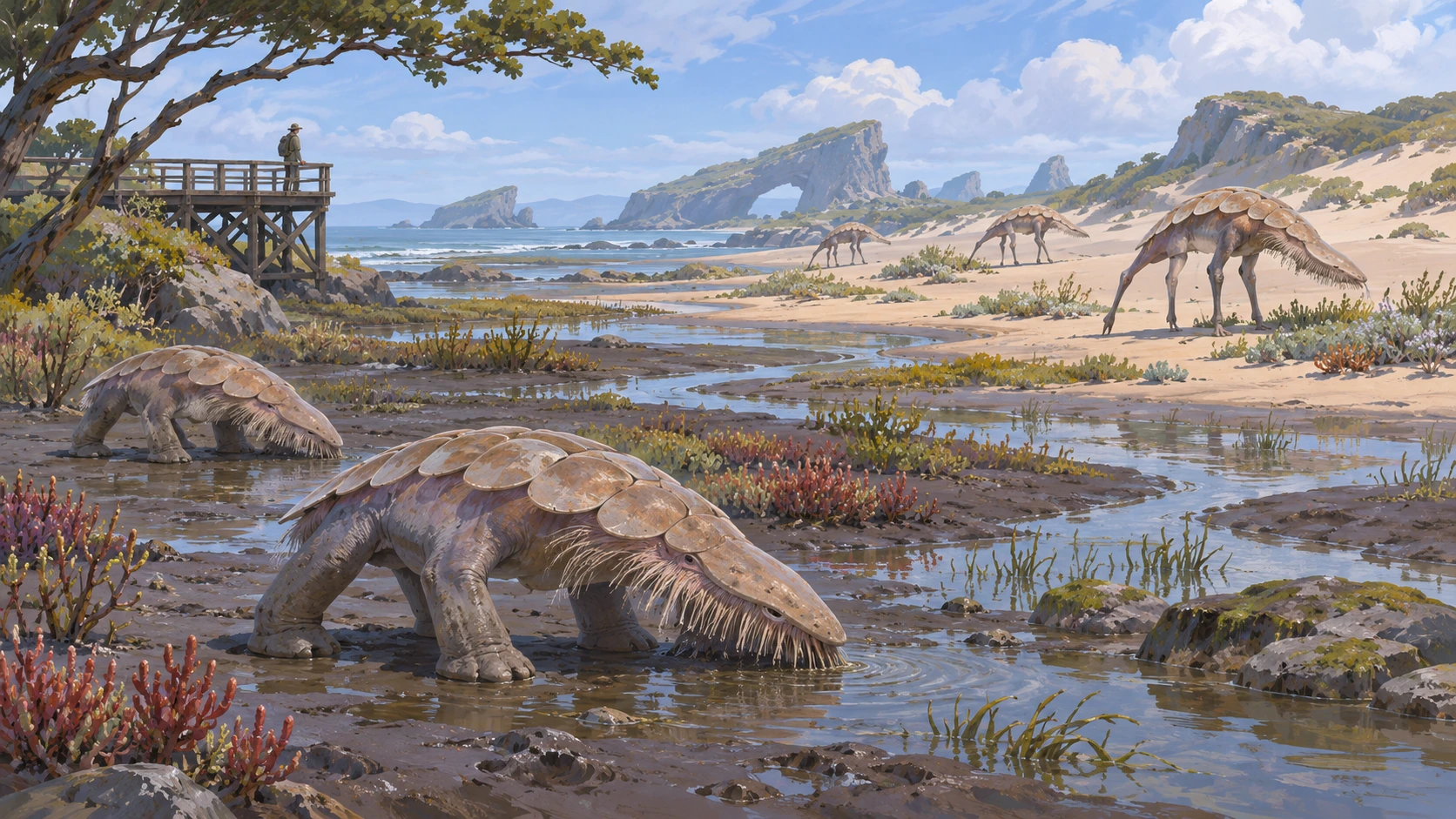
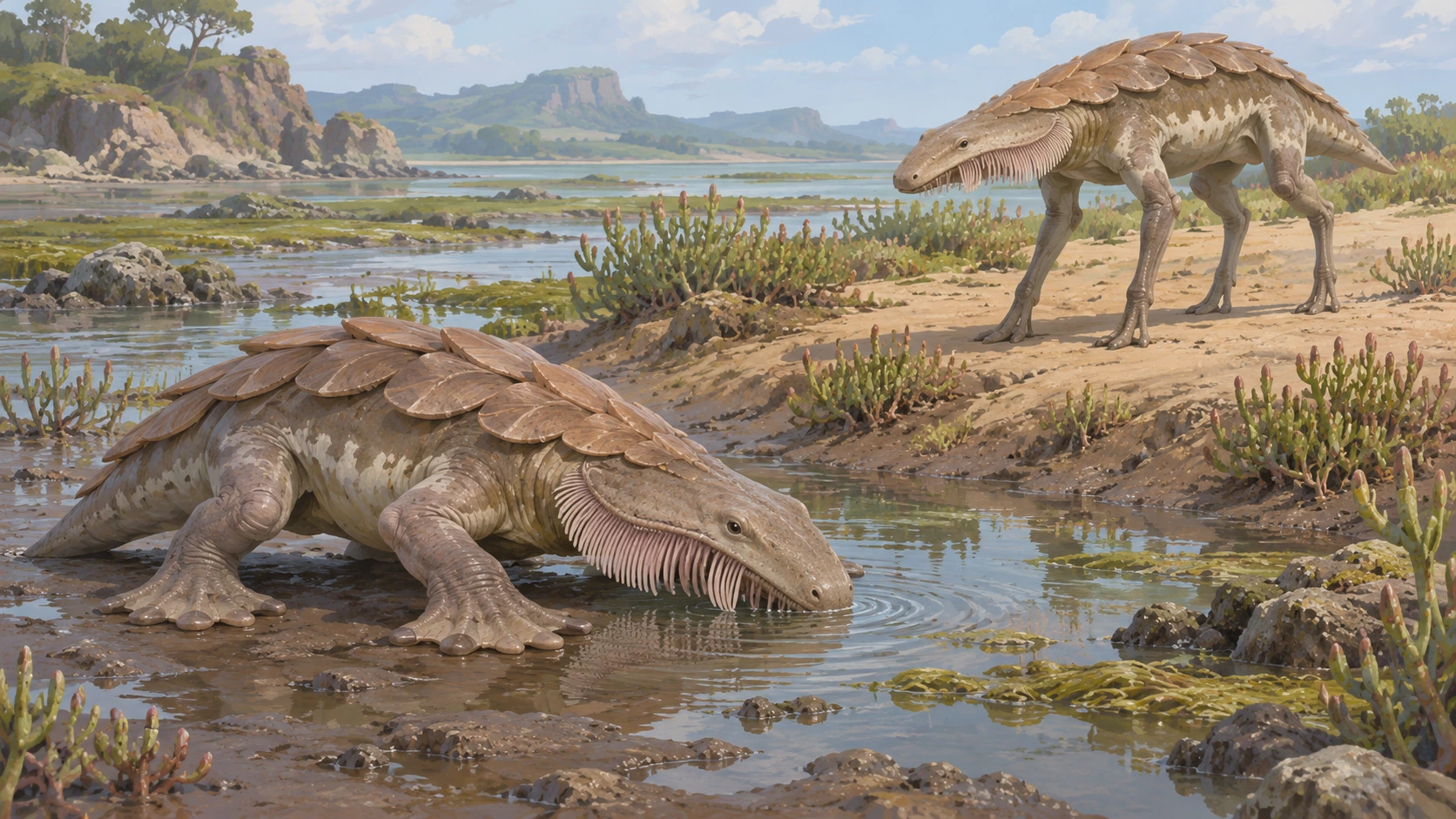
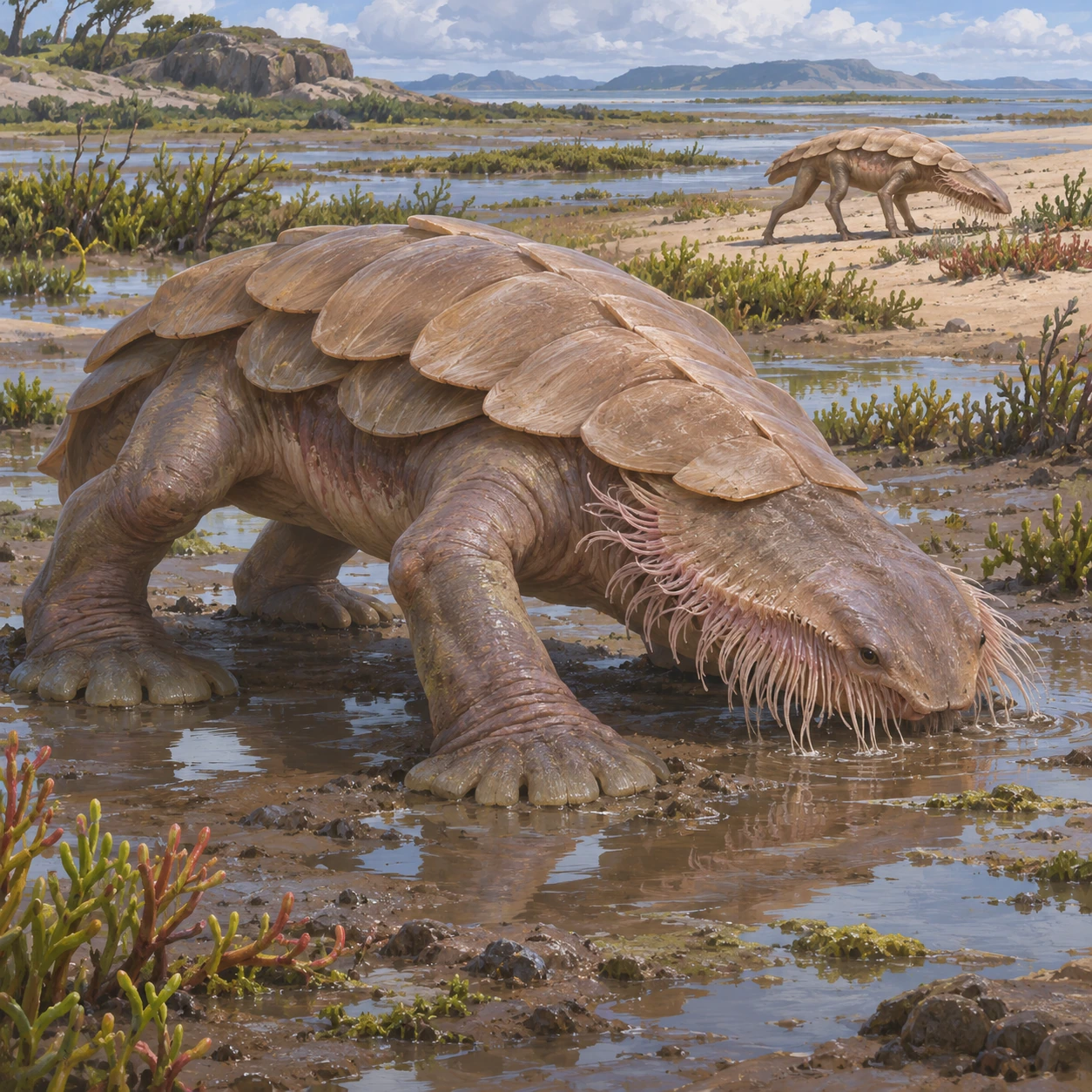
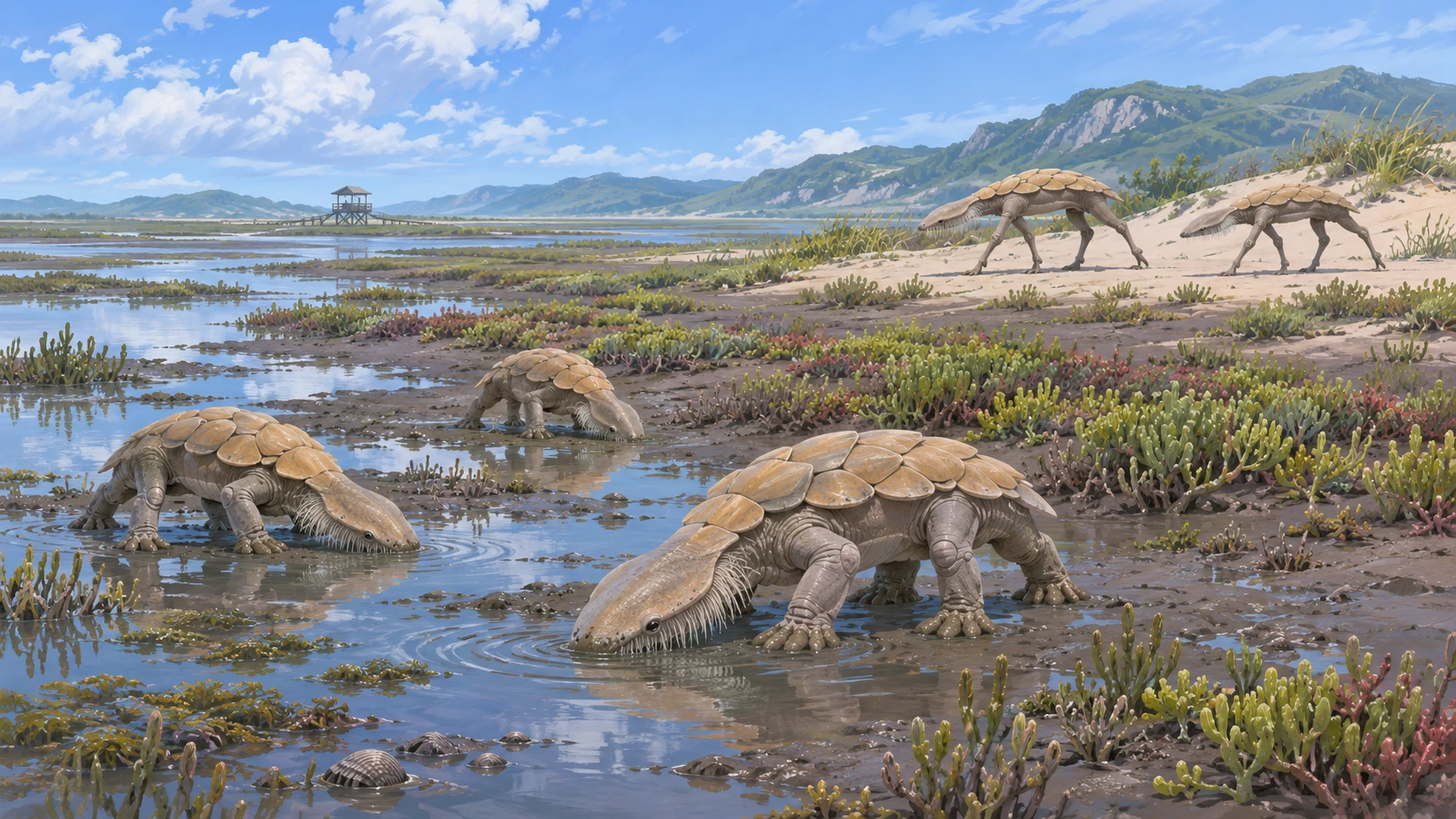
Design an imaginary tidal wetland. Two related quadrupeds share low flattened heads, lateral feeding fringes and dorsal plates; one has broad feet and a low body on wet shores, while the drier-shore form has longer legs and narrower feet. Feeding positions, tide pools and vegetation edges invite comparison, with an ordinary observer remaining on a distant stable platform.
Read scene descriptions
Main environment
In an original tidal wetland, two invented quadrupeds share flattened heads, lateral feeding fringes and dorsal plates. A broad-footed low-bodied form uses wet shores, while a longer-legged narrow-footed form uses drier ground. Pools, vegetation and feeding positions invite ecological comparison, with a distant observer providing scale.
A distant observer supplies scale while organisms and habitats remain central.
Broad feet and a low body contrast with longer legs and narrow feet as invented adaptations to different shores.
Dorsal plates and lateral fringes keep protective and feeding structures legible.
Tide pools, vegetation edges and related organisms form ecological relationships open to comparison.