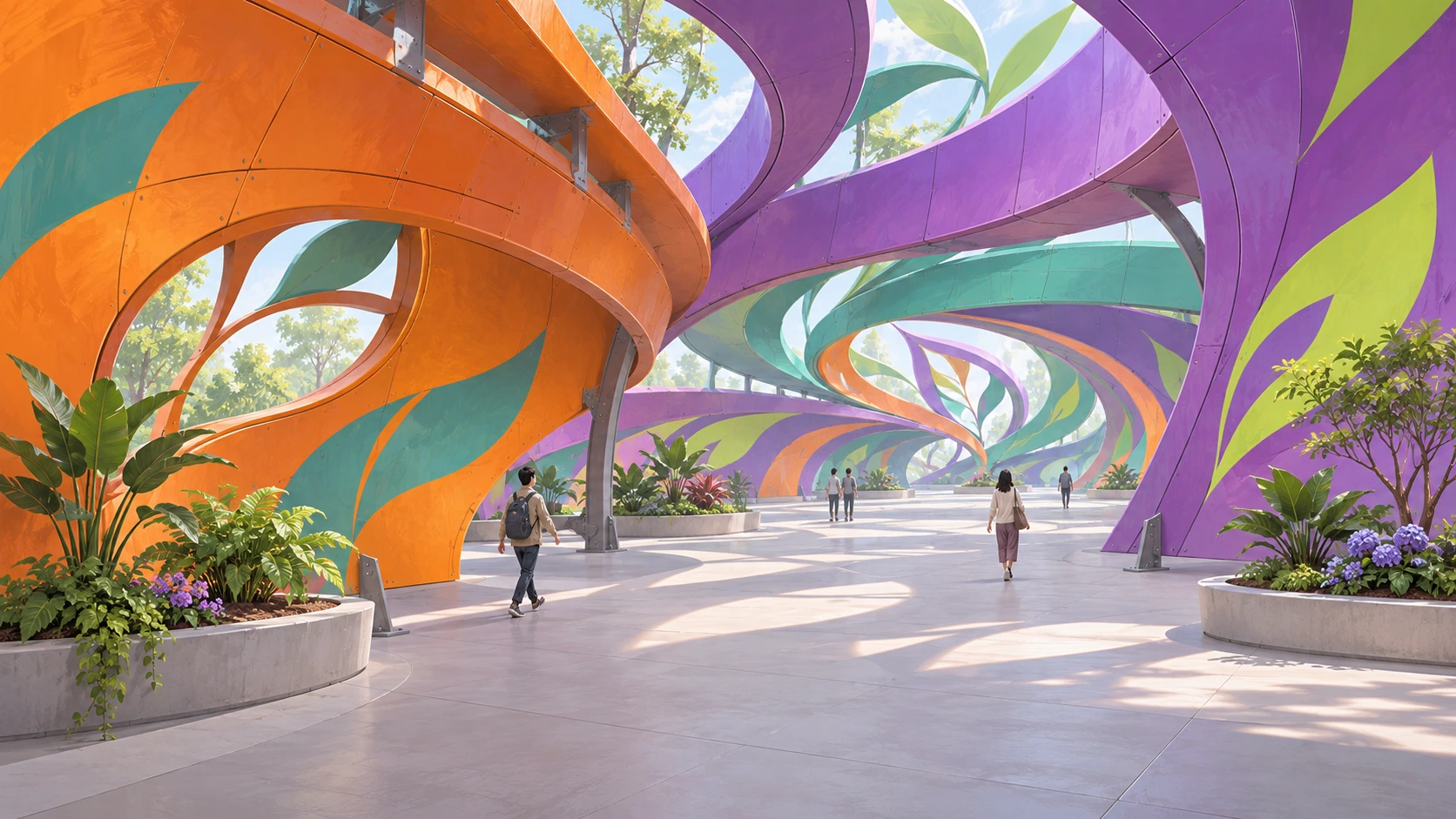
71Psychedelic Art
Change how familiar images are perceived through clashing colors, continuous transformation and shifting figure–ground relationships.
Definition and context
Psychedelic art connects with varied perceptual explorations and cultural contexts; 1960s music posters are one important aspect rather than its entirety. Period posters and paintings at the V&A show complementary colors, transformed lettering and intertwined figures and foliage. Observable visual relationships matter here, without classifying every bright, dreamlike or colorful work as one movement.
People and ecology
People can follow apparently continuous cues while finding echoes between their outlines and the background. Real branches and graphic leaves can guide attention toward each other while retaining distinct roles. Strangeness can arise from viewing relationships without reducing characters to a stock image of irrationality.
Spaces and forms
Choose a transformation rule: curves gradually contract, one contour continues into another object, or the same area reads alternately as figure and ground. Establish routes with a few large forms before developing dense detail along them. Continuous change can unify a scene more effectively than arbitrarily assembling unusual objects.
Color and materials
Flat color bands, print-like edges, flowing brushwork and actual material qualities can contrast. Curved panels or fabric may carry graphics in a spatial adaptation, while thickness, connections and ground remain legible. Visually flowing surfaces need not make every material physically melt.
Light, composition and scale
Adjacent complements, alternating saturation and repeated contours can suggest vibration; broad quiet fields clarify local changes. Complex patterns still need value hierarchy around the subject. A static picture can suggest movement without requiring flashing light.
Sound and graphics
Viewpoint changes can alter figure and ground, or slow manipulation reconnect curves and color layers. Stable entrances and readable feedback keep visual exploration from concealing action points. Color changes need organization instead of cycling every hue continuously.
Motifs and distinctions
Compared with Op Art, this approach can include more figurative, organic and narrative transformations rather than geometric perception alone. Unlike Vectordelia, it need not rely on sharp digital edges or commercial media from a particular decade. It overlaps surrealism while giving perceptual intensity and surface continuity more direct emphasis.
Ideas for game environments
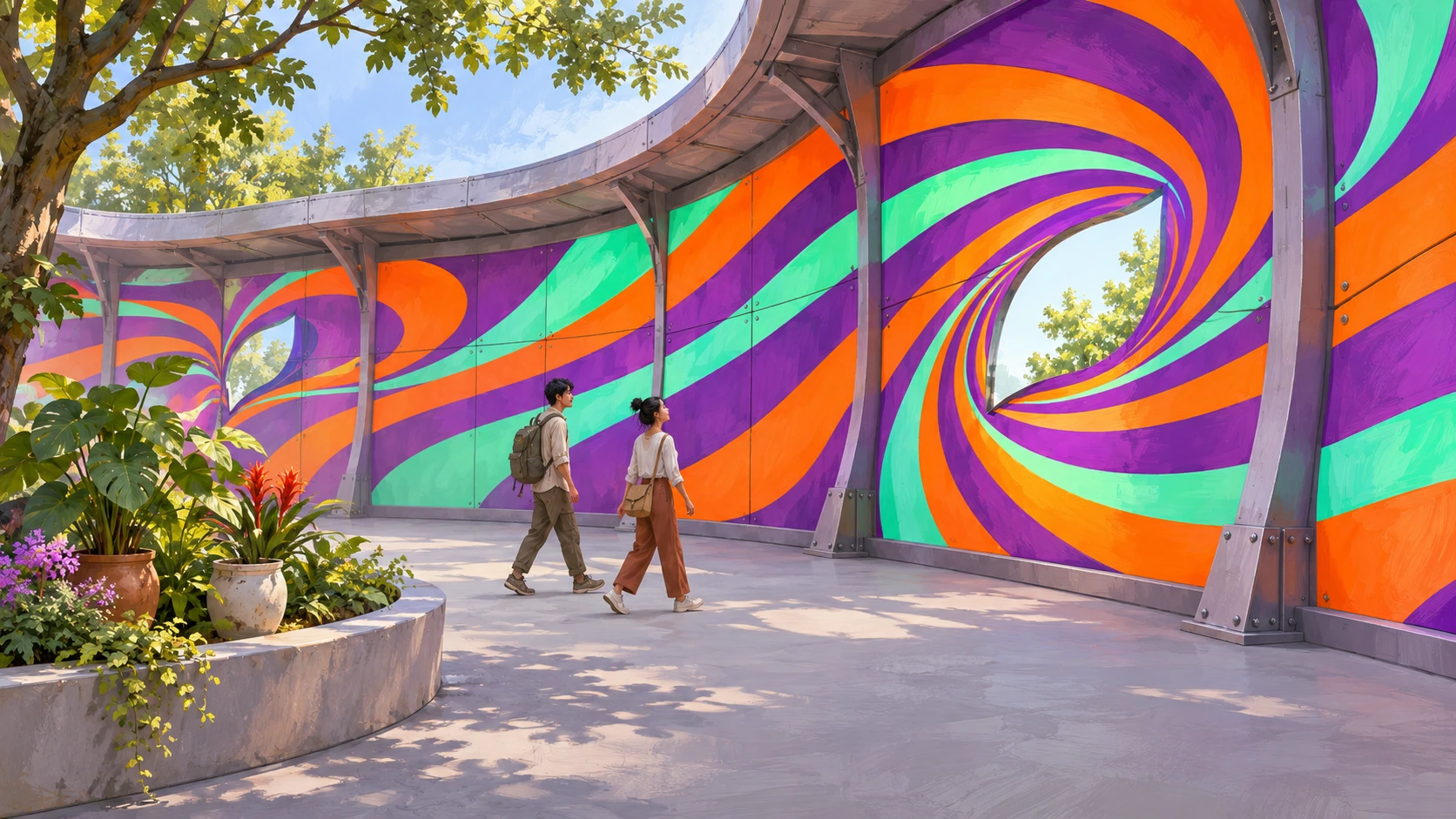
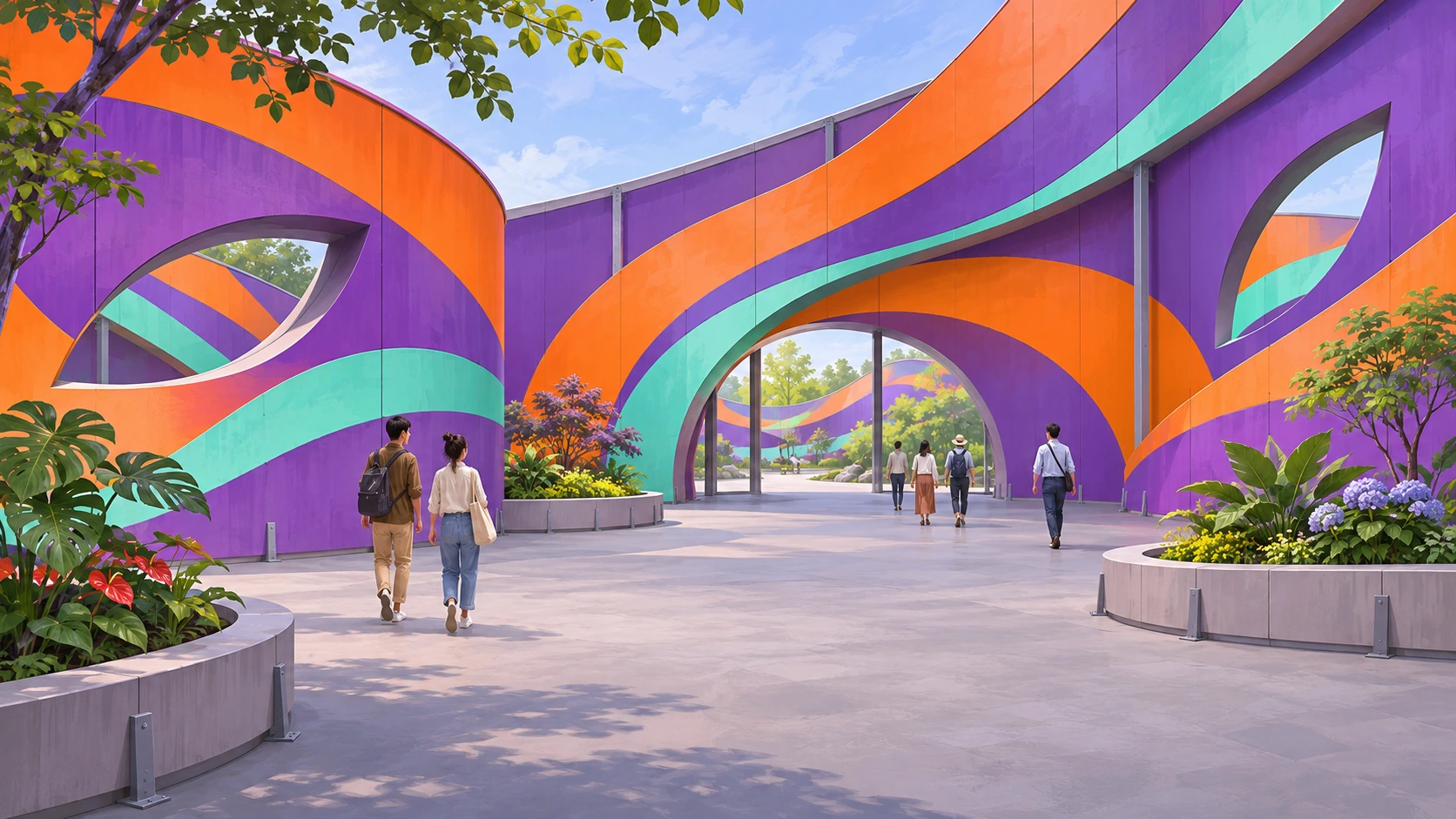
Design a ribbon-light courtyard. Curved walls carry orange, violet and turquoise bands that contract continuously, with leaf-shaped gaps changing between figure and ground from different viewpoints. Ordinary visitors follow stable low-contrast paving; real potted plants remain distinct from graphic leaves, supporting dense perceptual change with a quiet route.
Read scene descriptions
Main environment
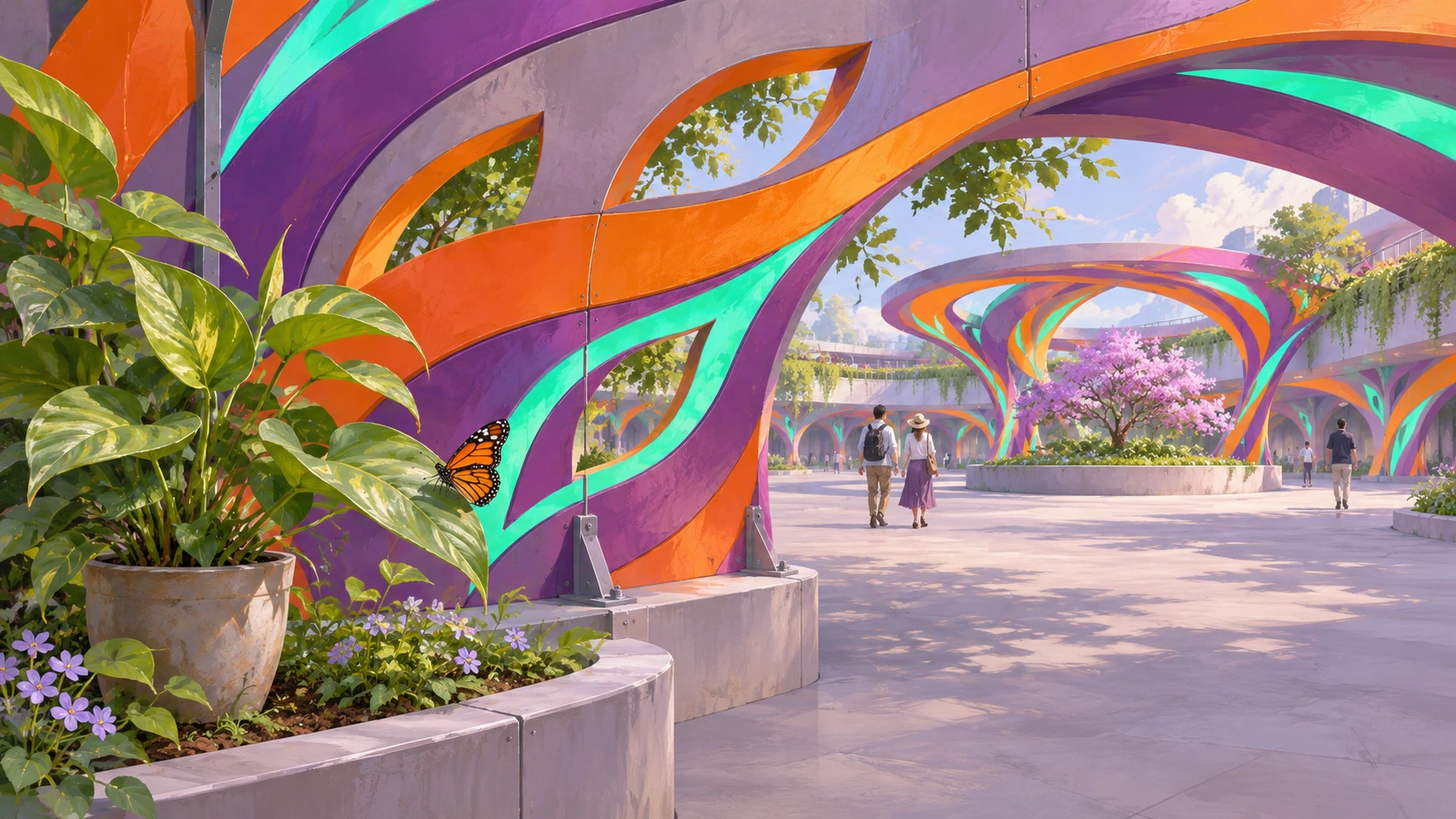
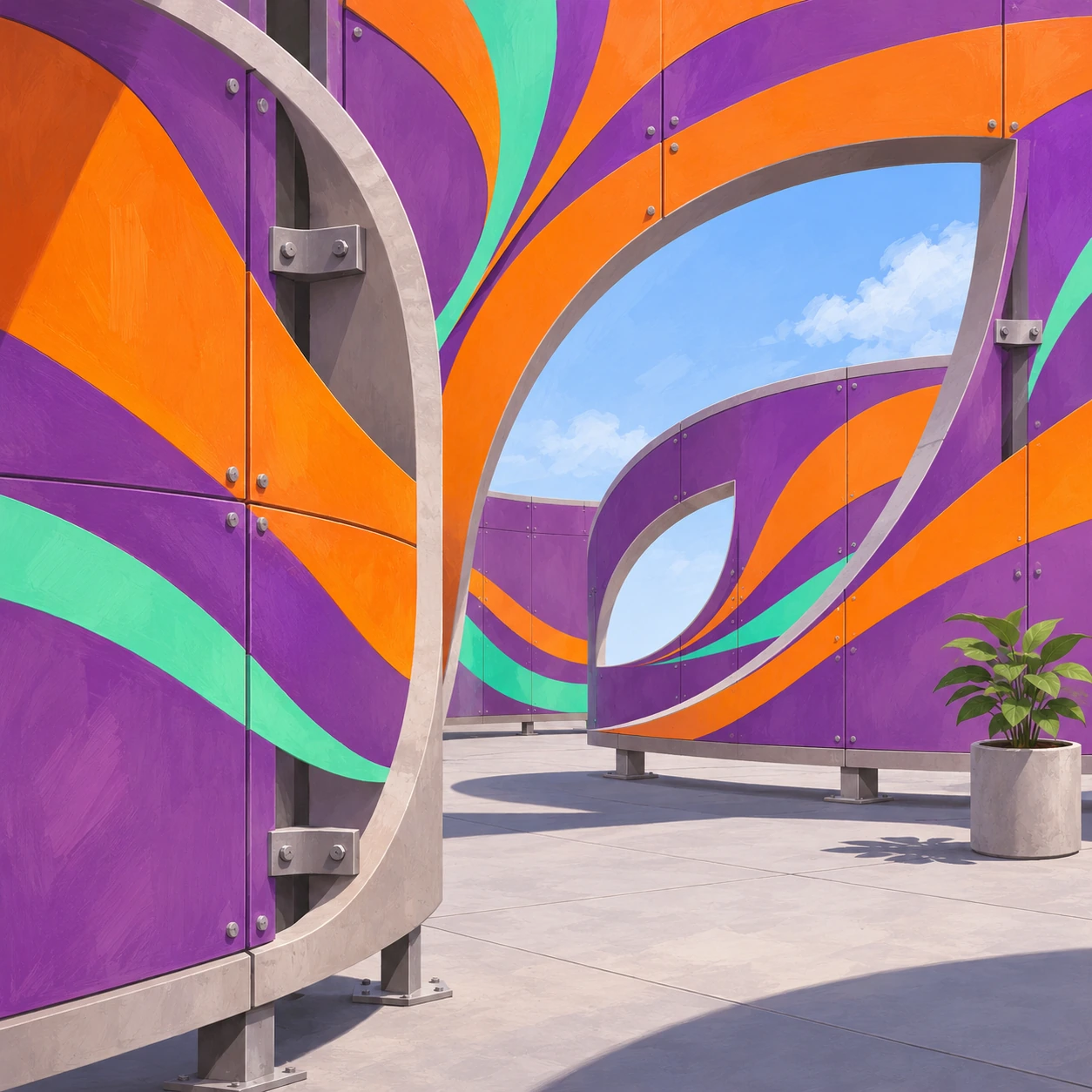
An original ribbon-light courtyard wraps curved walls in continuous orange, violet and turquoise bands, with leaf-shaped gaps shifting figure–ground relationships. Ordinary visitors follow stable low-contrast paving among distinct real plants, hard panel edges and graphic surfaces, with quiet areas between dense changes.
People walking on stable ground give dense contours and color bands readable scale.
Real leaves echo graphic leaf-shaped gaps while retaining distinct roles.
Flat color bands, hard panel edges and joints distinguish visual flow from physical materials.
Contracting curves and quiet paving support changing figure–ground relationships and direction.