69Folk Horror
Let landscape, everyday customs and unexplained communal rules make a familiar rural setting feel unsettling.
Definition and context
Folk horror is more than adding monsters or old symbols to a village. Isolation, communal rules, stories and gaps in an outsider's understanding can change the meaning of everyday life. BFI's film discussion and public images from Mundaun and The Excavation of Hob's Barrow offer different media examples; horror in a particular work does not make actual folk traditions inherently harmful.
People and ecology
Pausing, avoidance, shared waiting and withheld explanations can make social relationships visible. Outsiders need not always be right, nor locals an undifferentiated group of evil faces. Specific actions, interests and secrets carry more narrative force than labeling a region or belief system itself.
Spaces and forms
Establish understandable fields, lanes, homes, woodland edges and exits before letting a rule change access. Identical empty baskets might appear at every door, while an ordinary straw rope temporarily closes the only mountain path and residents seem to know when passage will resume. Repetition should create an information gap rather than mere decoration.
Color and materials
Wood, earth, stone, fibers, old cloth and everyday tools retain traces of use, placing unfamiliar rules in familiar objects. Ritual objects need not be expensive or luminous: baskets, knots and seed racks can provide situational clues. Claims about a material's regional character need concrete references; an invented setting needs internal consistency.
Light, composition and scale
Overcast skies, daylight and warm window light can all hold fear. Contrast open landscape with restricted exits, or visible houses with unexplained empty areas, instead of relying on uniform black fog. Sound can create distance too: an activity continues far away while nearby residents fall silent together.
Sound and graphics
A path might follow different access rules at different times, or an ordinary object recur at several doors and gradually alter a player's judgment. Clues should permit observation and comparison. Secrets can remain unexplained temporarily without making every step depend on guessing an unsupported code.
Motifs and distinctions
Compared with pastoral aesthetics, folk horror unsettles belonging and safety in familiar countryside rather than merely darkening its colors. Fields, woodland edges and communal rules often matter more than castles, unlike some gothic spatial narratives. Folklore extends beyond Europe, but cross-cultural work needs attention to specific contexts.
Ideas for game environments
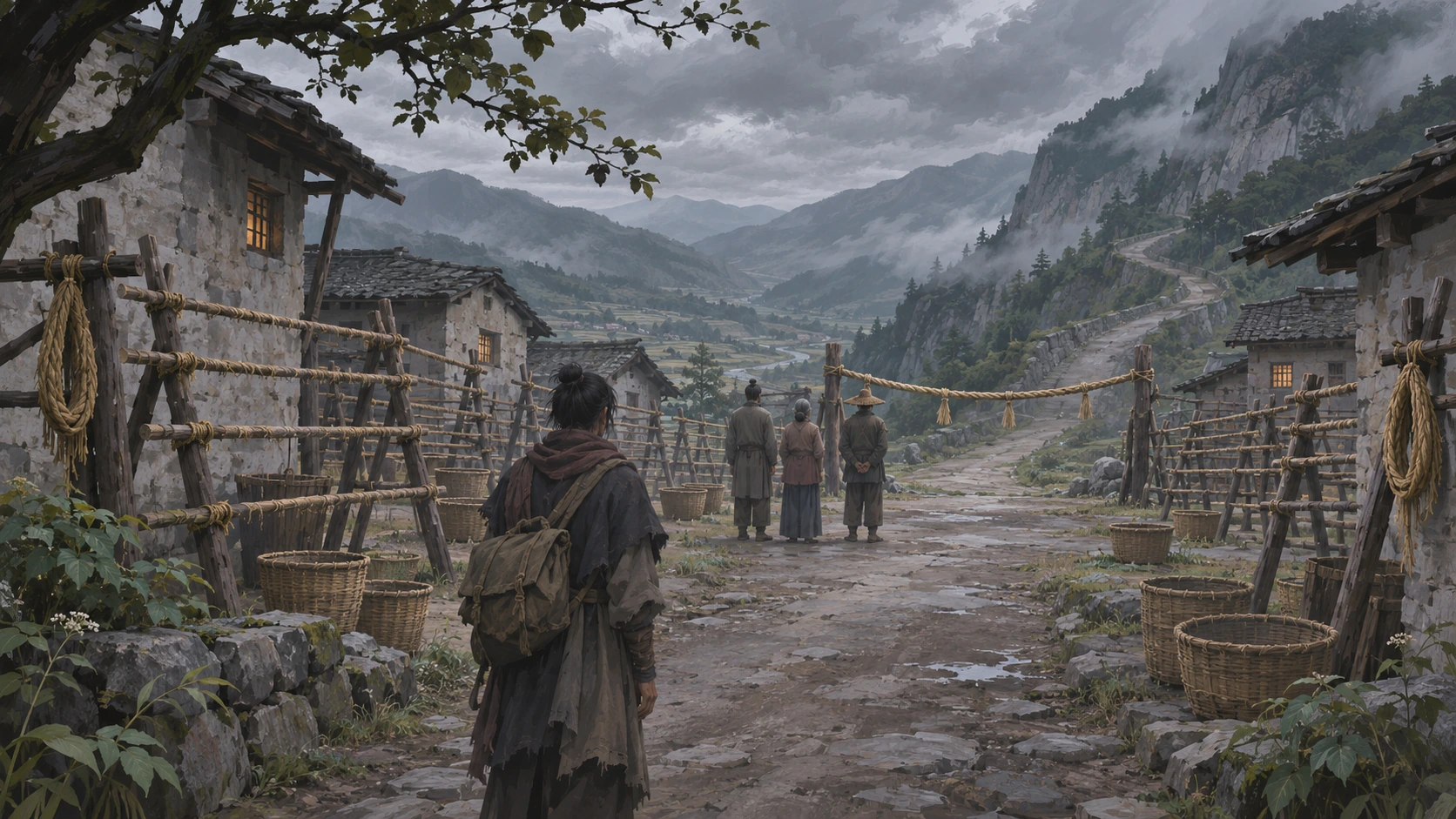
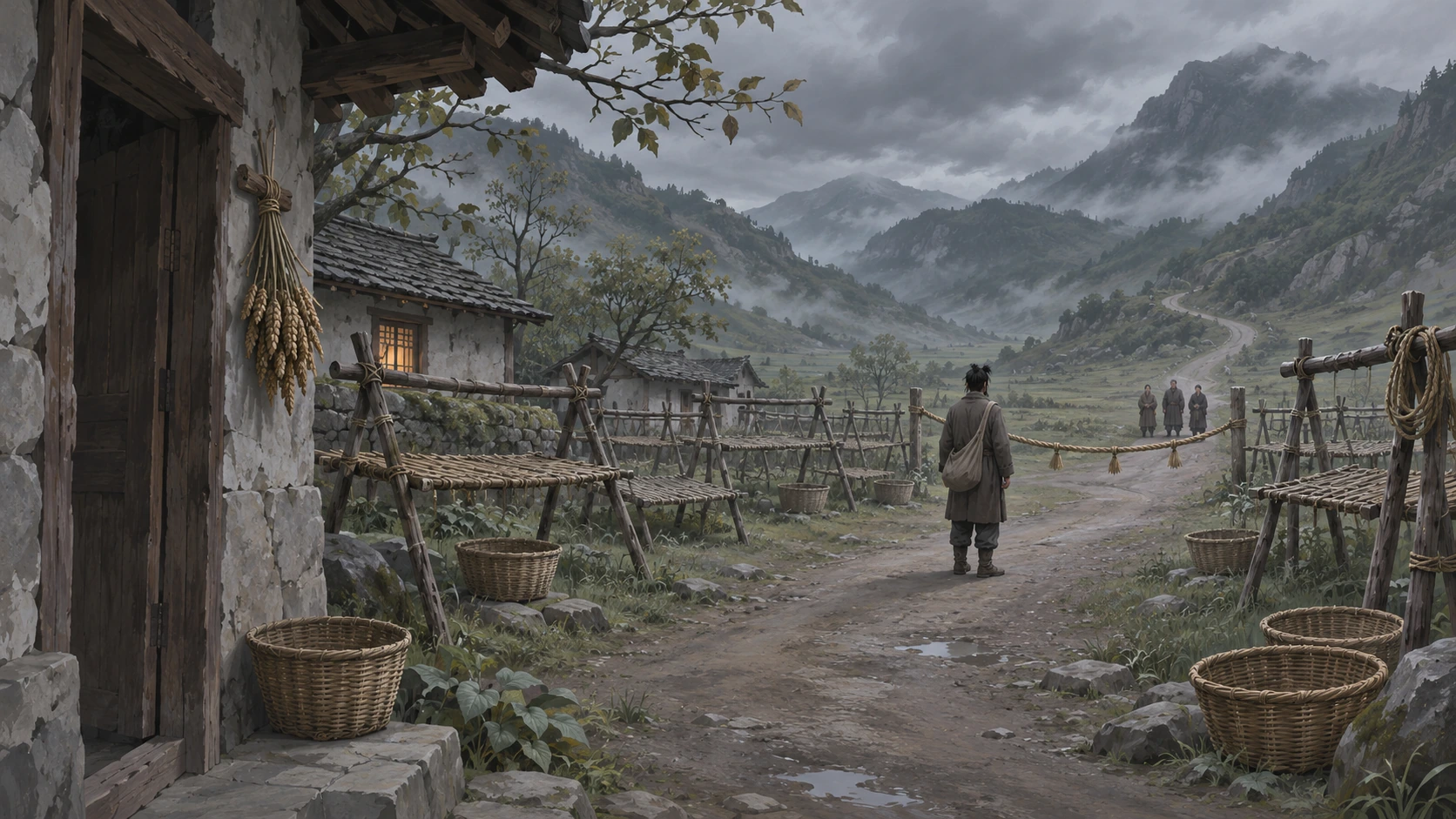
Design a fictional valley seed-drying yard. Stone houses, wooden racks and empty baskets repeat along a lane; matching straw rope closes the only mountain route, residents wait together in the distance, and an adult visitor stops before the boundary. No monster appears: ordinary materials and withheld rules already change the open landscape.
Read scene descriptions
Main environment
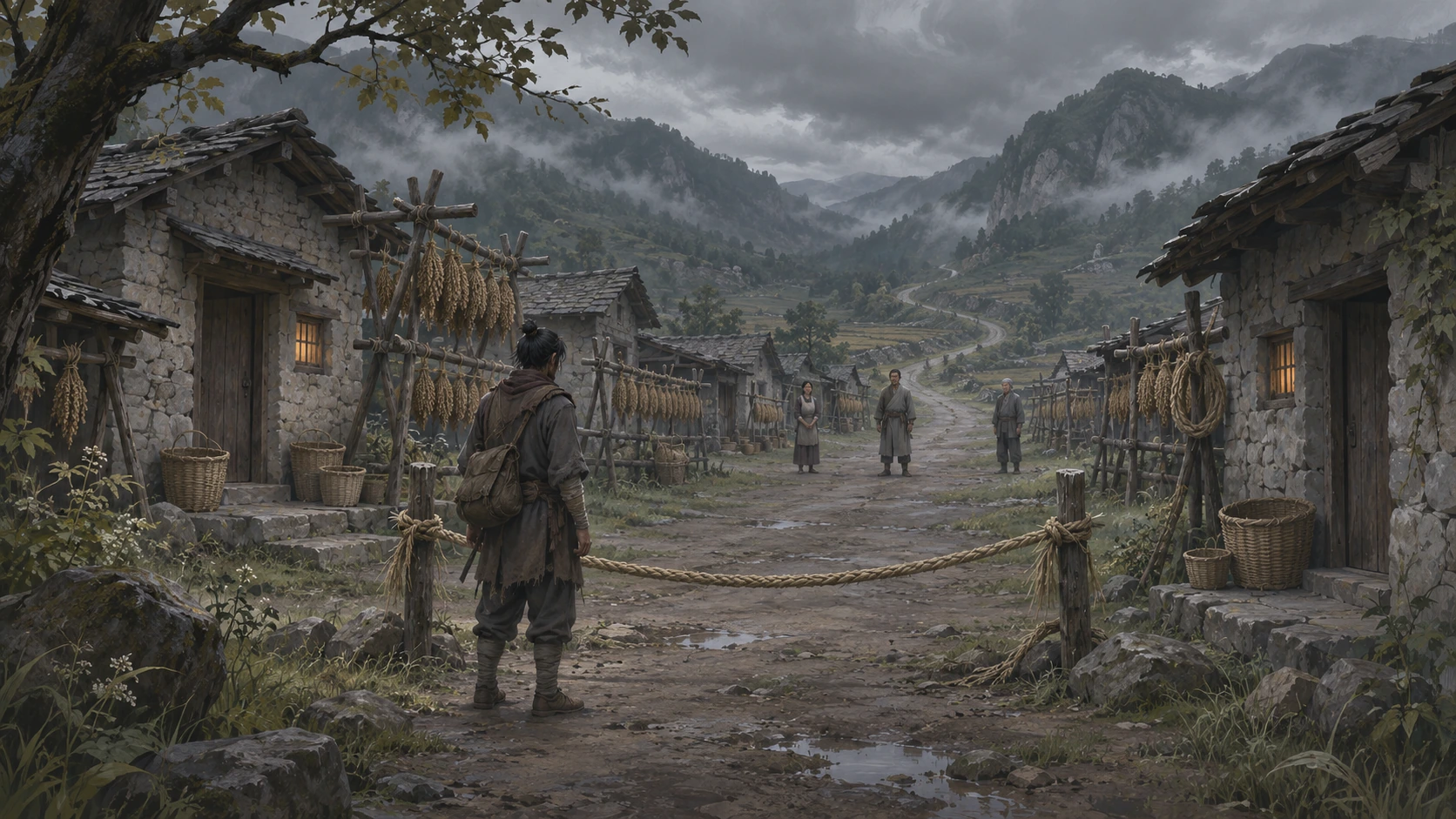
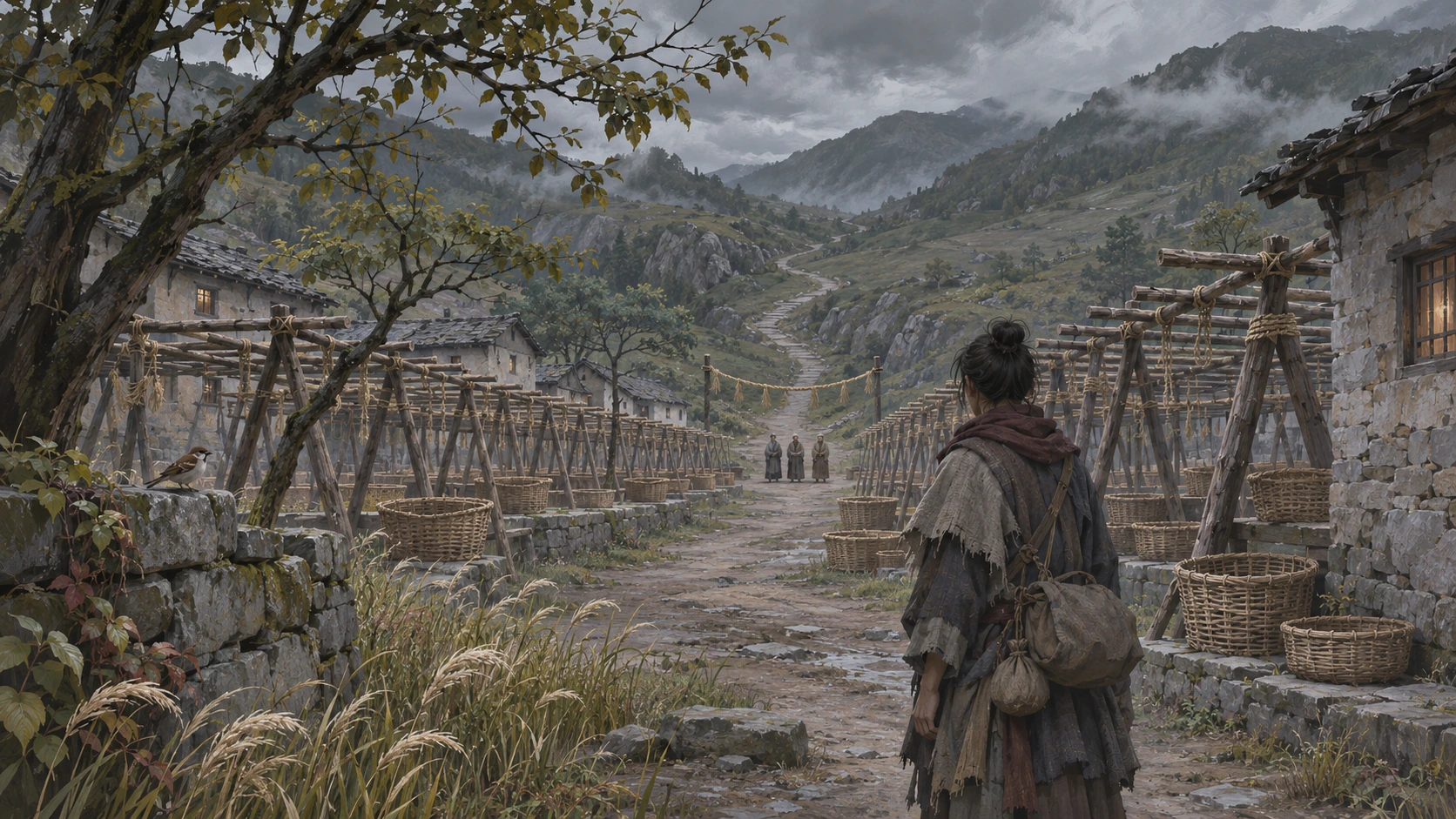
In an original valley seed-drying yard, stone homes, wooden racks and empty baskets repeat along an ordinary lane. Straw rope closes the only mountain route, residents wait together, and an adult visitor pauses at the boundary. Familiar materials and unexplained communal rules unsettle open terrain.
A visitor pausing and residents waiting together make a gap in understanding visible through action.
Ordinary grasses, trees and a mountain lane support an unusual rule within an everyday environment.
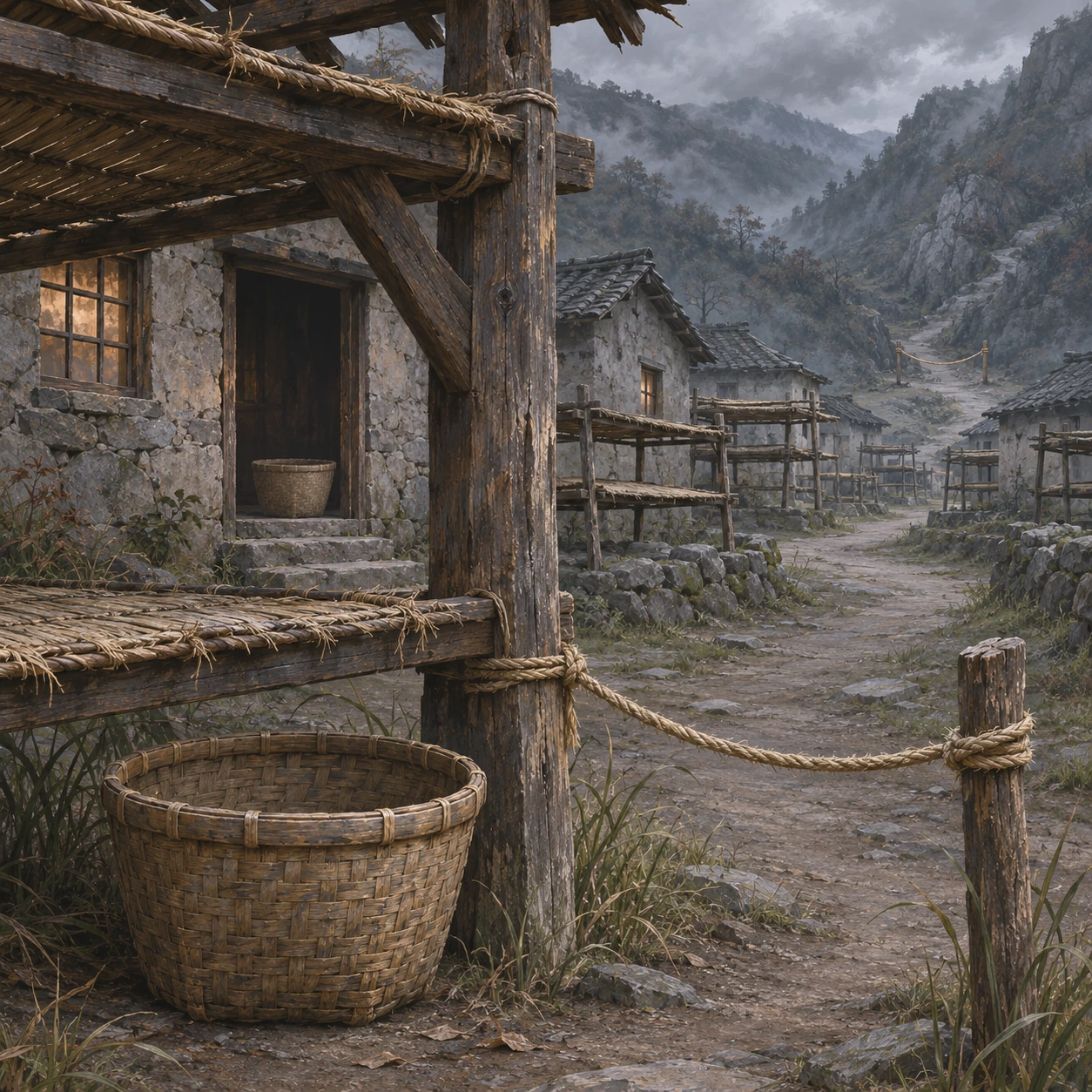
Wear on straw rope, empty baskets and wooden racks turns ordinary objects into clues.
An open valley meets a restricted exit as repeated objects change the meaning of a route.