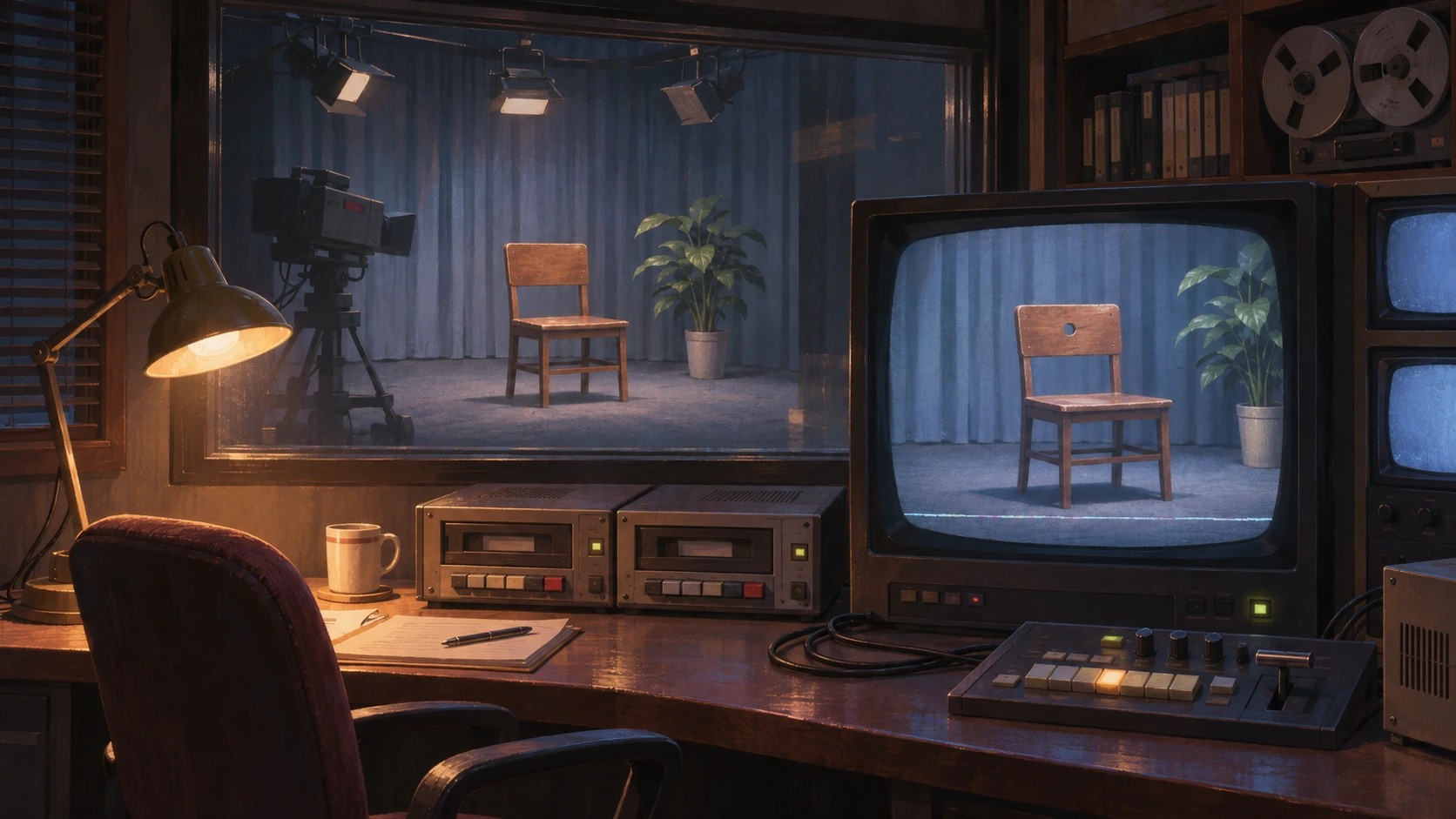
32Analog Horror
A familiar broadcast format continues as its content undermines its authority.
Definition and context
Analog horror uses forms such as television broadcasts, videotapes, educational films and institutional recordings for fictional horror. Public works by creators such as LOCAL58TV offer concrete references, but the category is neither a shared canon nor simply a VHS filter. Establish a believable program or record before disrupting its normal rules.
People and ecology
Announcers, viewers, operators and recorded figures hold different information. Empty chairs, microphones, recording lights and shift traces can imply people maintaining a routine. Plants, animals and anomalies should belong to a particular program or place rather than automatically becoming monsters.
Spaces and forms
Studios, tape archives, television cabinets and night-shift rooms give the medium a physical setting. Distinguish the screen from its surroundings: an unfamiliar room on a tape is not automatically behind the equipment. Keep ordinary sets, cables and maintenance routes beside the anomalous program.
Color and materials
Cassette plastic, dust, worn buttons, screen glass and paper catalogues carry different detail. Choose a clear signal loss, such as restrained tracking noise or color bleed, rather than combining every digital and analog artifact. The loss should not hide the narrative clue.
Light, composition and scale
Use ordinary program lighting or stable household light as a baseline, then change the information on the screen. An apparently normal shot held too long can become unsettling. Darkness can limit a local view without obscuring the entire studio.
Sound and graphics
Broadcast pacing, theme music, switching silence and tape mechanisms establish a format. A pause or misplaced repetition can break it. Narrative graphics should fit the fictional institution's period and voice rather than presenting an existing real-world alert as an actual emergency.
Motifs and distinctions
Compared with retrofuturism, this category concerns unreliable recording and broadcasting. Compared with digital horror, it emphasizes analog media habits. An old television, noise or an elongated face does not alone create a narrative; institution, equipment and information need a relationship.
Ideas for game environments
Let an operator discover two recordings with different endings. Repeat a program opening after sign-off. Give a chair on the screen details that can be compared with one in the room. Fear follows recognition of a contradiction within a legible format.
Read scene descriptions
Main environment
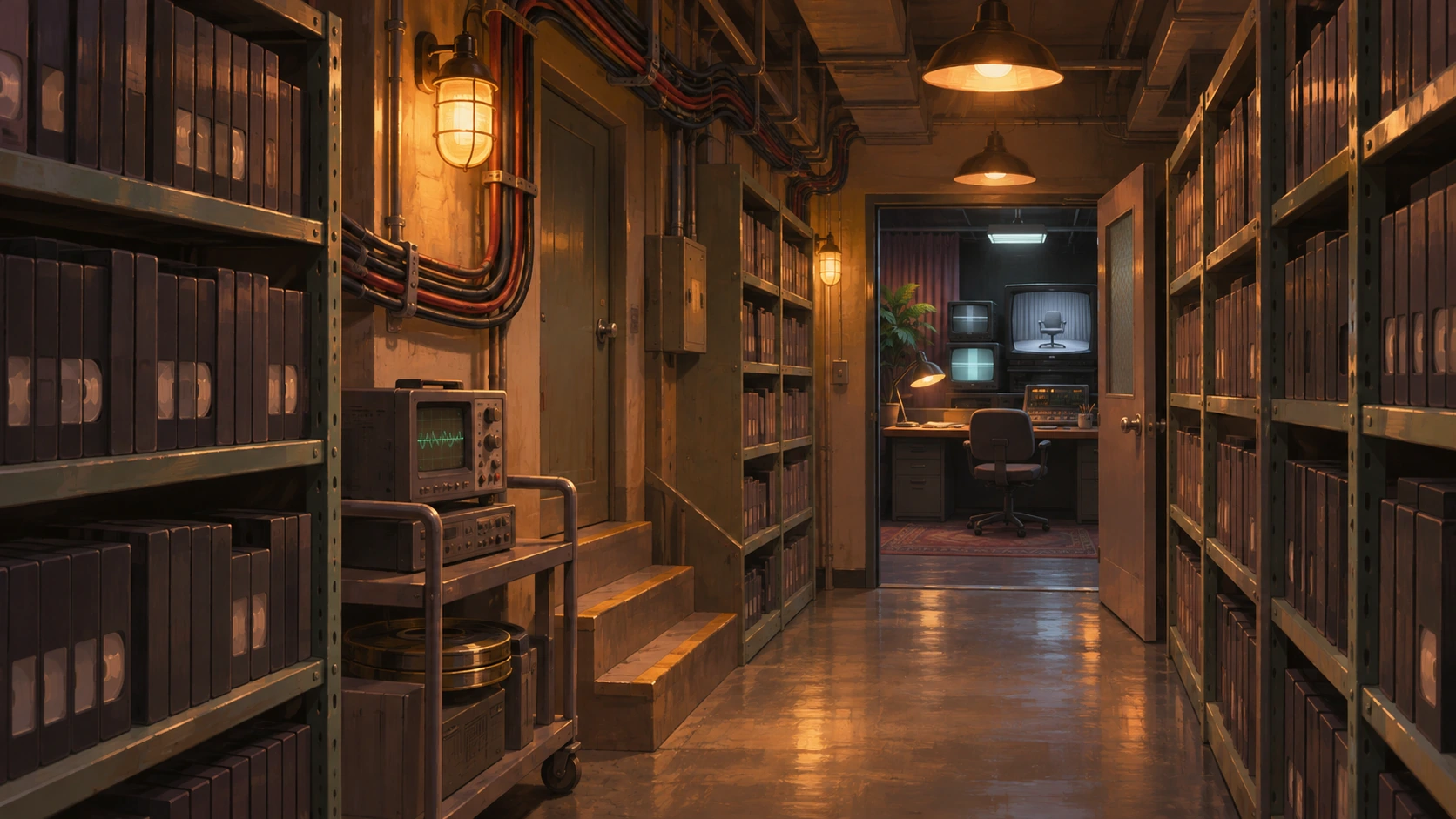
A fictional night-shift control room at a community television station retains intact tapes, cables and ordinary sets. A recorded empty chair differs from the set before the viewer; restrained tracking noise leaves the comparison readable.
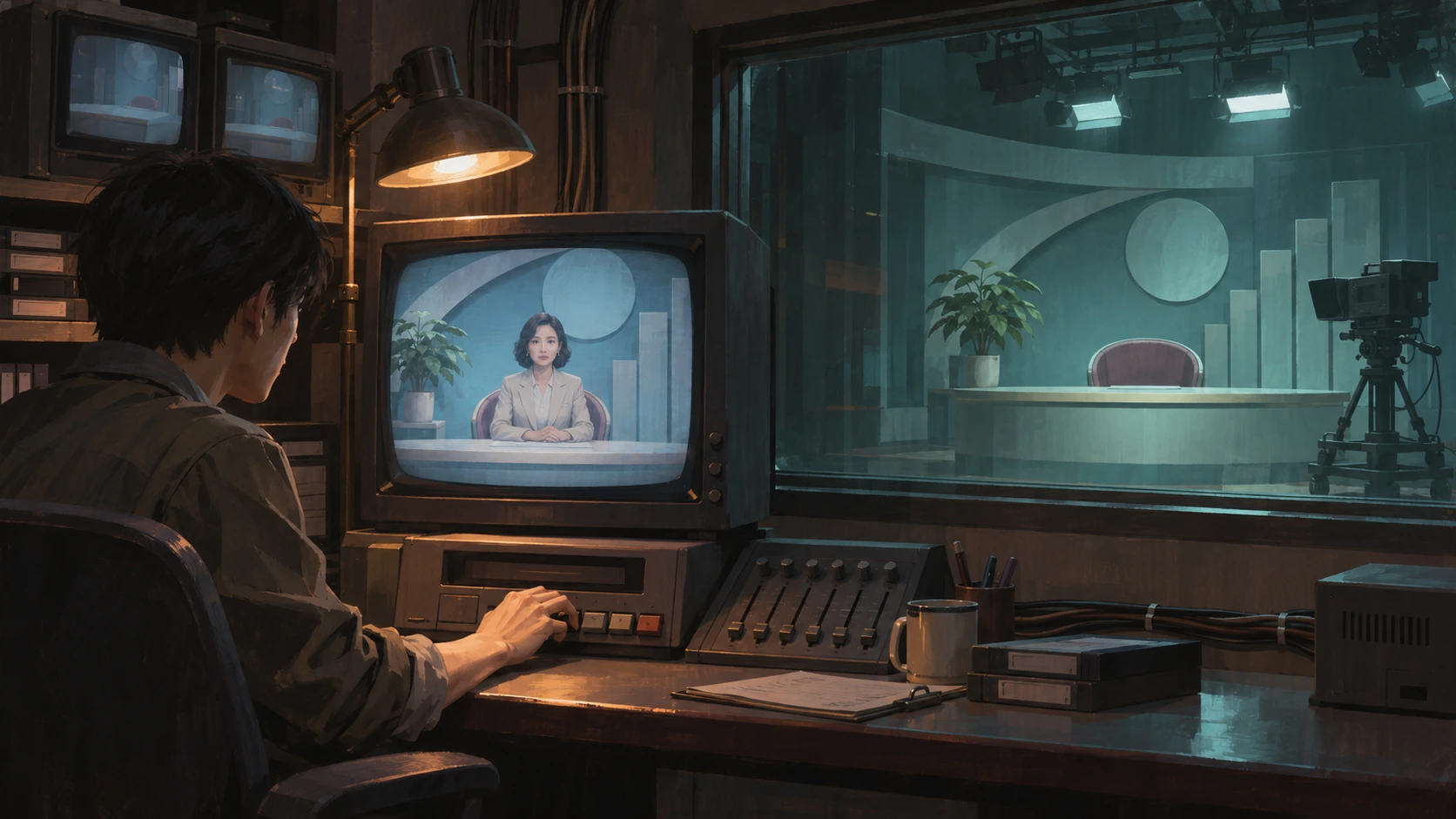
The operator and recorded figure have access to different information.
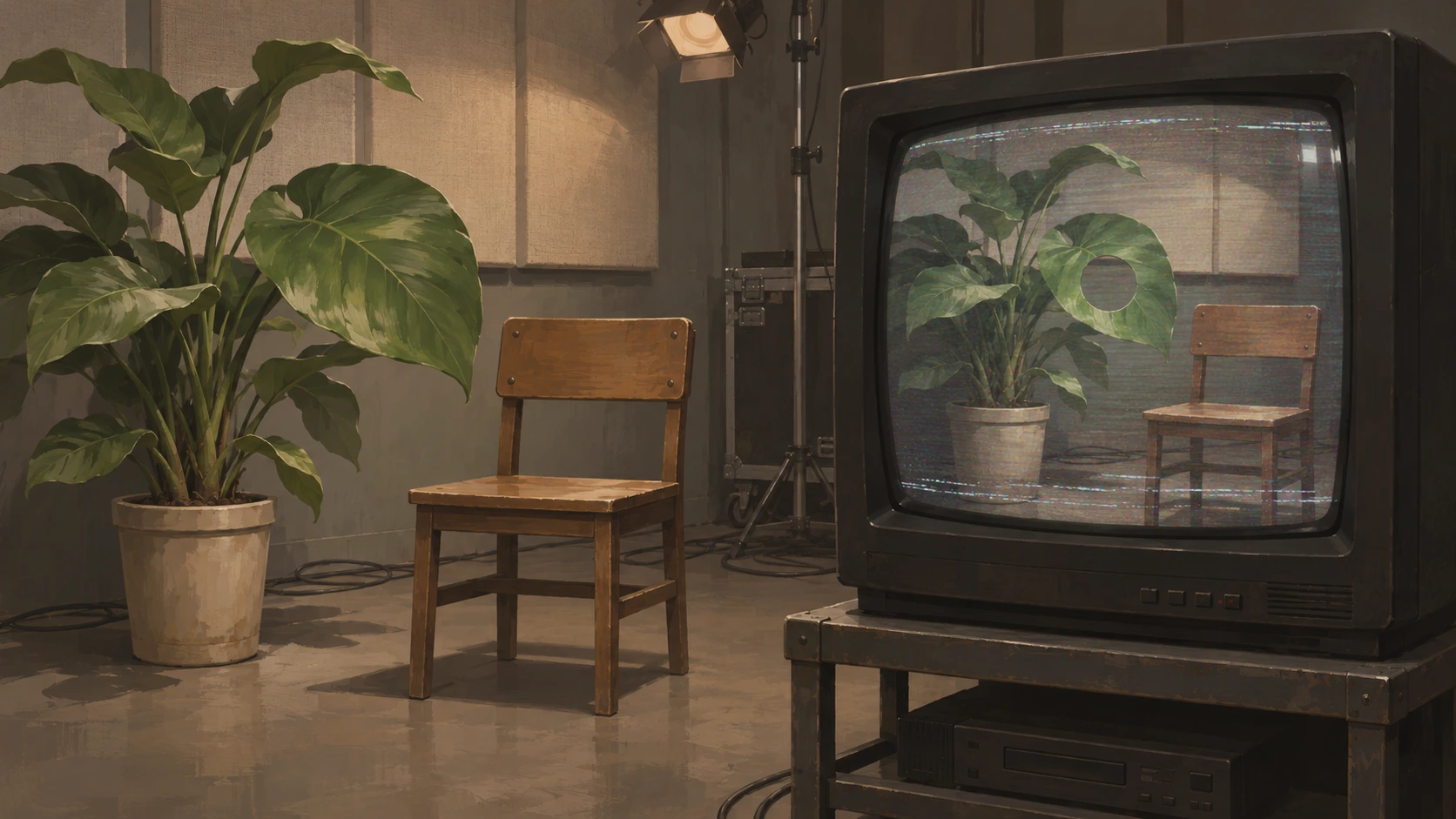
Details of an ordinary plant can be compared with its recorded image.
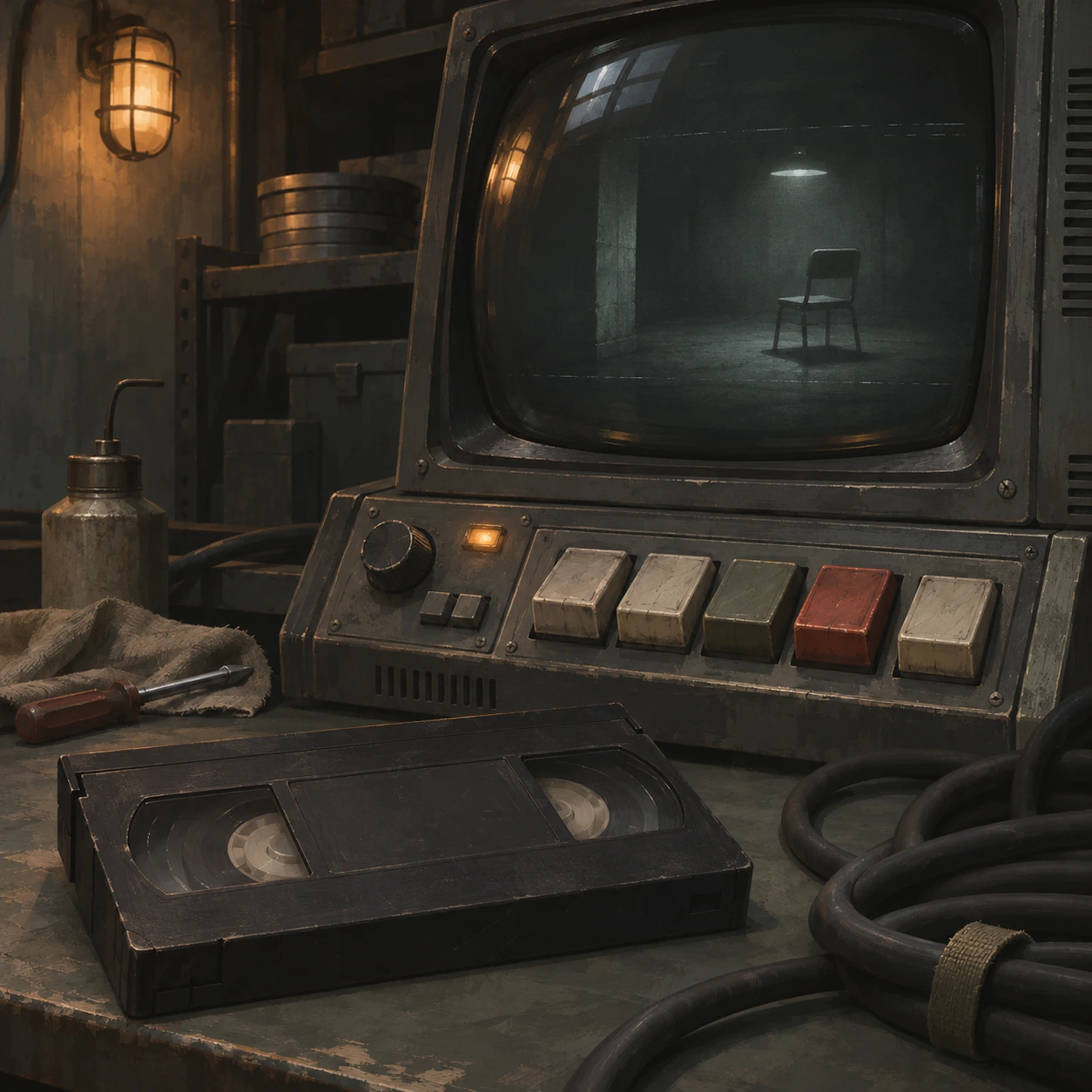
Cassette shells, buttons and screen glass reveal physical media conditions.
Archives and maintenance routes give the anomalous broadcast a working context.