31Early 3D / Low-poly Nostalgia
Let limited forms and textures invite the mind to complete the space.
Definition and context
This category studies early 3D imagery and contemporary nostalgic translations. Low polygon count, low-resolution textures and a particular console look are different dimensions, not synonyms for PS1. Original games, remakes and emulator captures should also be distinguished. These original scenes borrow visible form and texture relationships without claiming hardware reproduction.
People and ecology
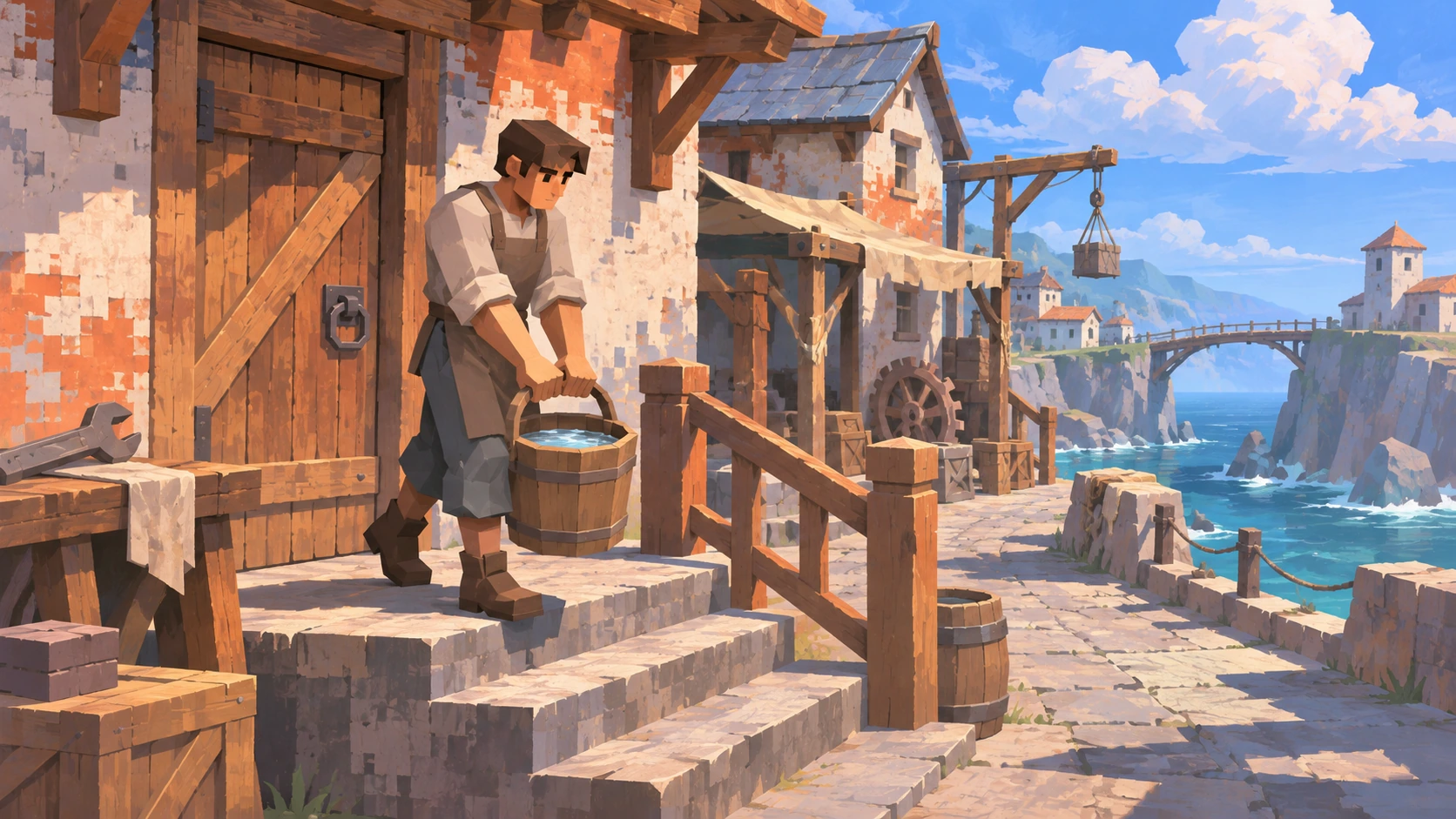
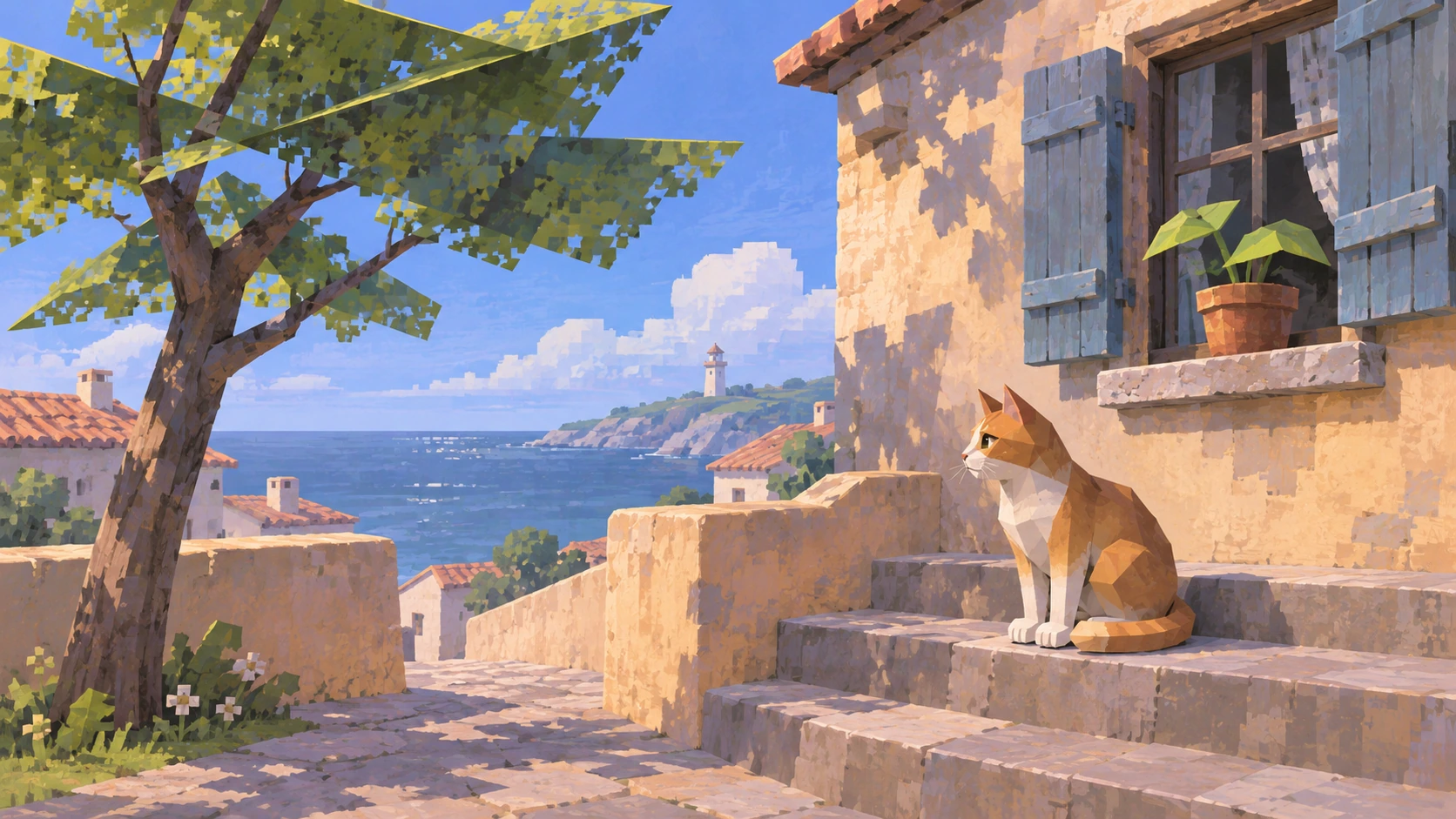
Use a few large planes to establish a figure's pose and direction. Faces may be simplified while gestures remain legible. Leaves can become intersecting planes; animals rely on silhouette and gait. Simplification allocates information rather than making every organism the same angular model.
Spaces and forms
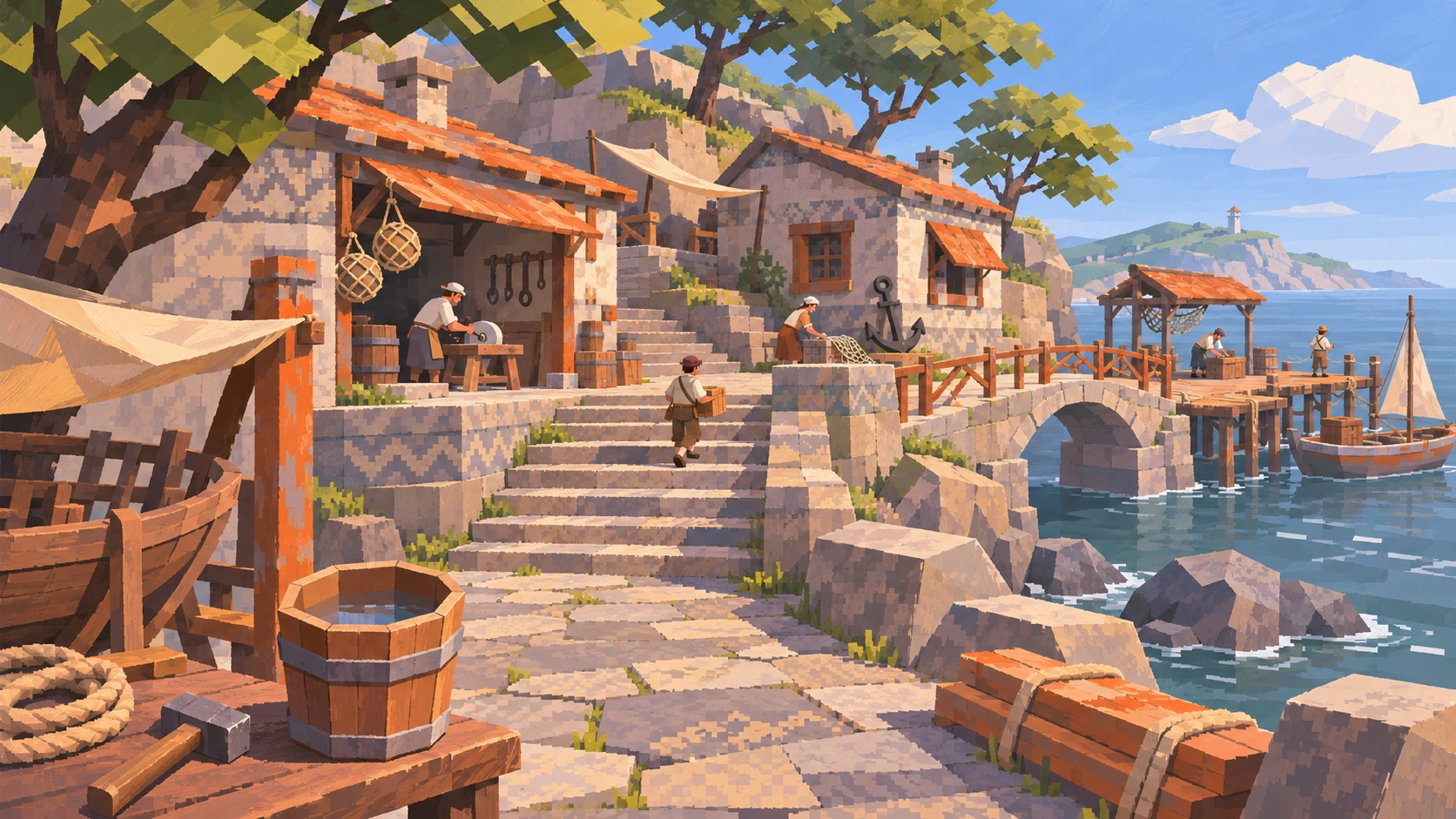
Build rooms, slopes, steps and junctions from countable major planes before adding detail with textures. Distant doors and bridges provide direction; nearby props establish scale. Traversal and occlusion should remain coherent.
Color and materials
Limited-color textures, visible pixels, planar shading and repeated materials can coexist. Choose a clear constraint, such as coarse geometry with finer textures or coarse textures on a relatively complete silhouette. Avoid shrinking photographs and pasting them indiscriminately.
Light, composition and scale
Organize the view through limited distance, distinct lighting zones and broad color masses. Texture swimming, edge jitter and sudden appearance are optional imitation choices, not universal requirements of early 3D.
Sound and graphics
Short ambient loops and restrained spatial feedback can match the image rhythm. Keep text and icons readable separately; reduced image resolution need not hide controls. The paintings need not reproduce an existing game's HUD.
Motifs and distinctions
Compared with webcore, this category emphasizes volume, geometry and texture mapping. Compared with smooth modern low-poly art, it may retain coarse textures and unstable edges. Nostalgia does not require horror, ruins or night.
Ideas for game environments
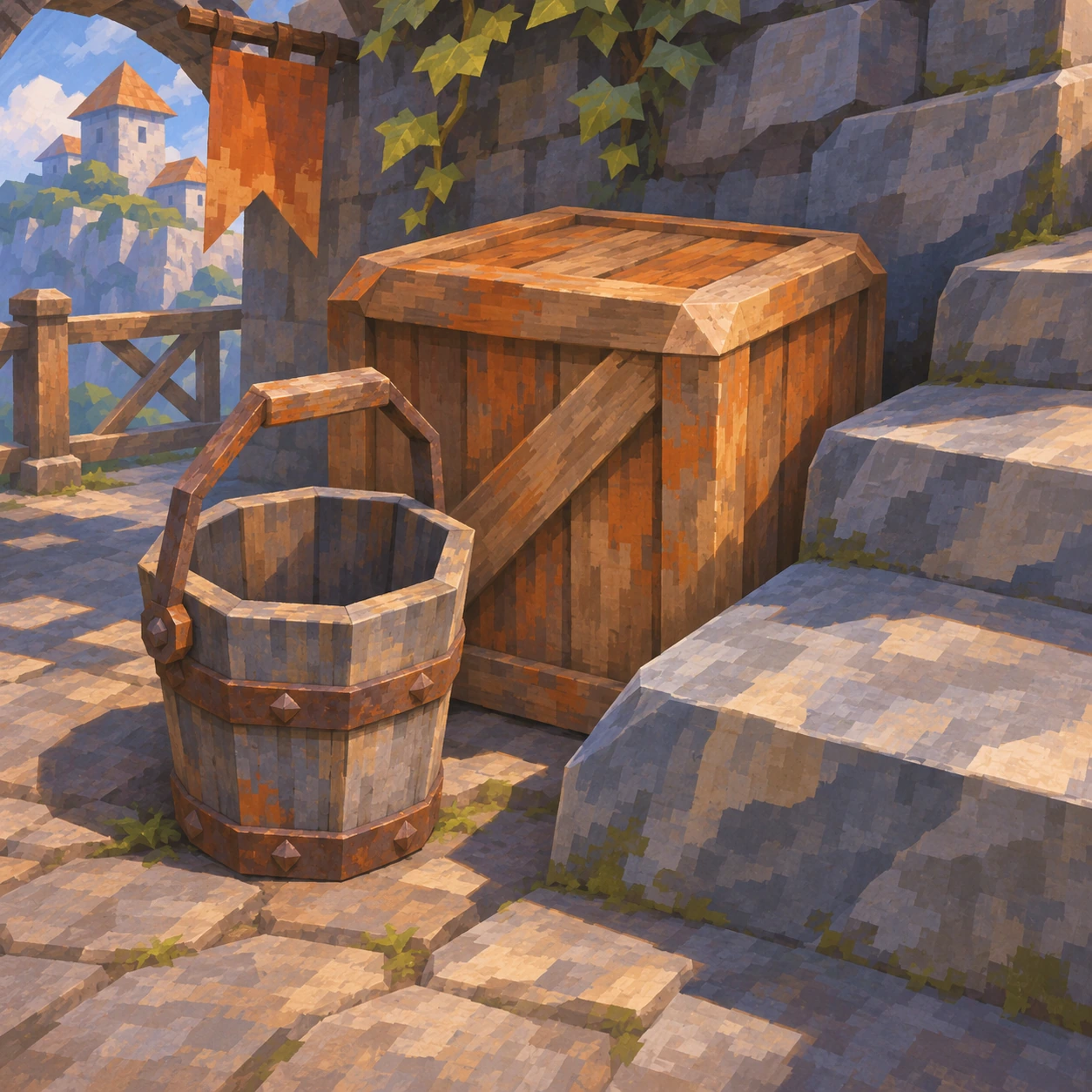
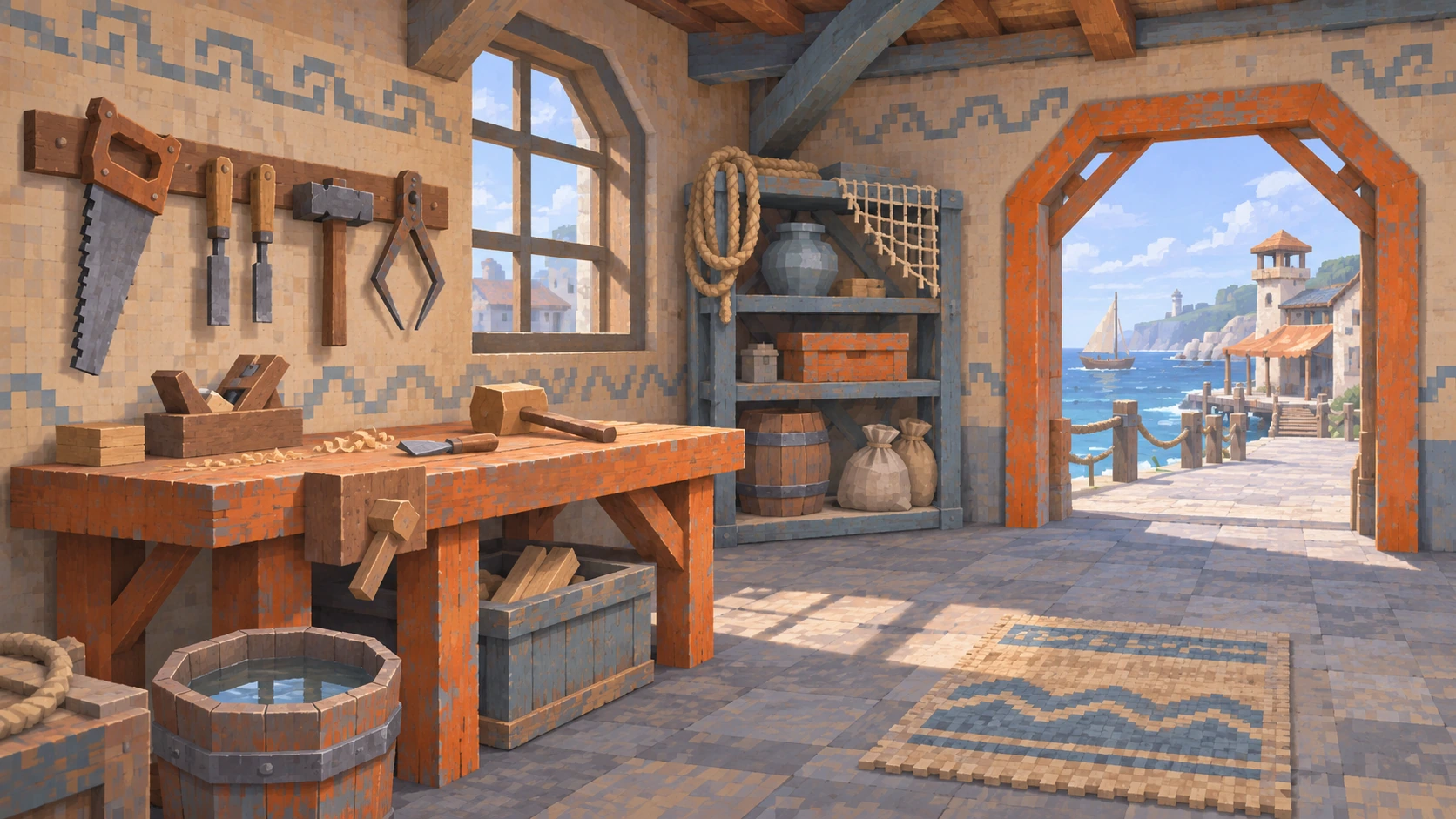
Use an octagonal bucket to signal geometric scale. Let leaf planes change silhouette as the viewer turns. Combine repeated wall textures with a distinctive doorway. Limited information invites spatial completion while movement and interaction stay clear.
Read scene descriptions
Main environment
An original coastal town uses countable planes, limited-color wall textures, simple steps and planar foliage. Everyday activity establishes scale, while distinct doors and a bridge provide direction.
Simplified figures retain clear poses and actions.
Planar leaves and animal silhouettes allocate detail differently.
Coarse geometry, visible pixels and local shading share the descriptive work.
Repeated wall textures and a distinct doorway make a restrained space recognizable.