26Nostalgiacore
Recall a life through the relationships between familiar objects.
Definition and context
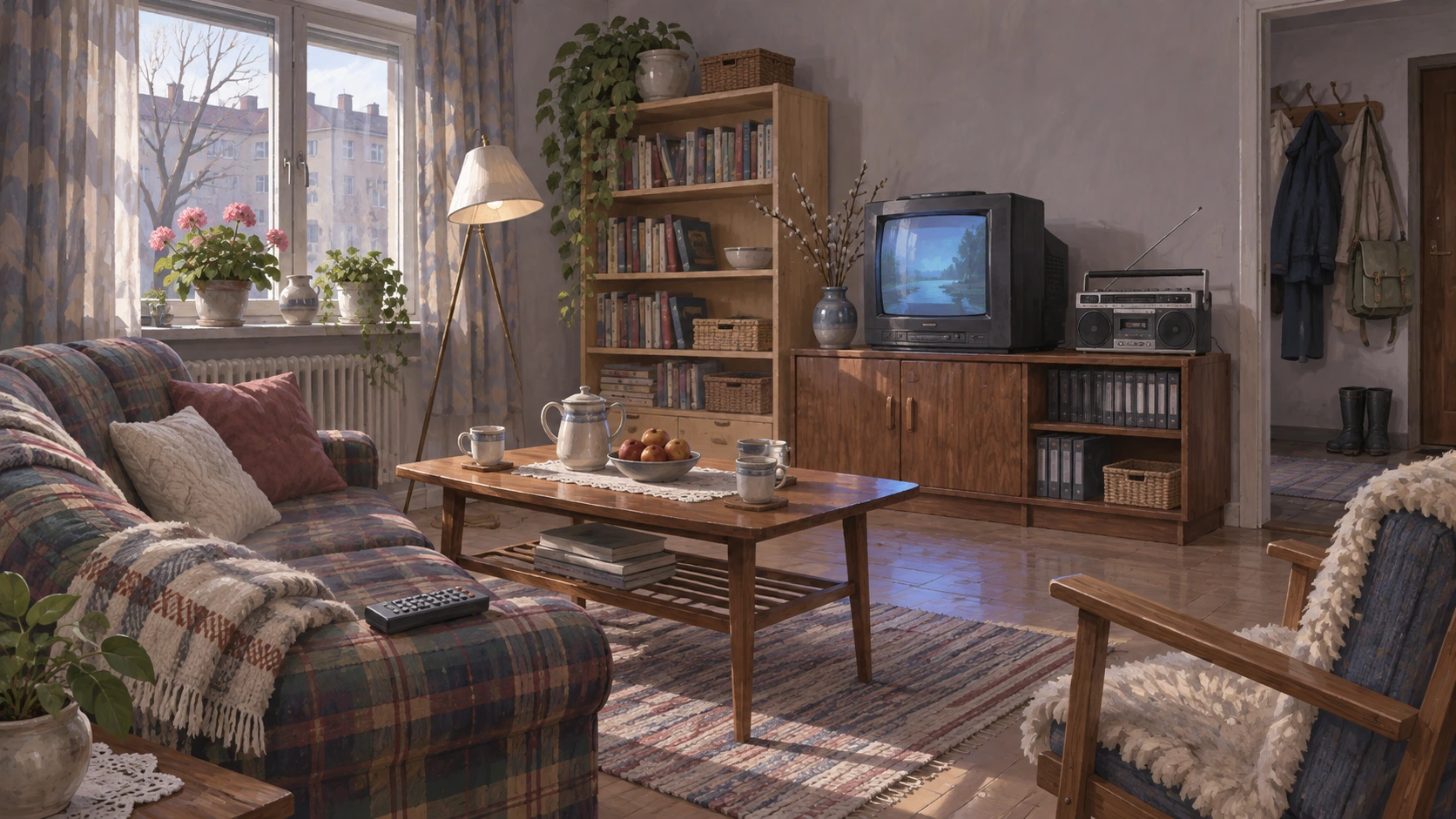
Nostalgiacore is an online label for imagery organized around recollection. Period, place and household circumstances determine which objects plausibly belong together. Viewers may recognize lived experience or imagine a borrowed past. These original scenes depict a fictional northern European home of the 1990s, rather than a universal childhood.
People and ecology
People can remain offscreen. A coat over a chair, two different cups and half-cleared toys imply shared life. Pets and plants have established places; appliances need power and signs of use. Age does not require mold in a dry, cared-for room.
Spaces and forms
Choose a place, period and household before selecting a television cabinet, windows, sockets and storage. Viewing distance, the position of tapes beside their player, and the sofa facing the window establish routines.
Color and materials
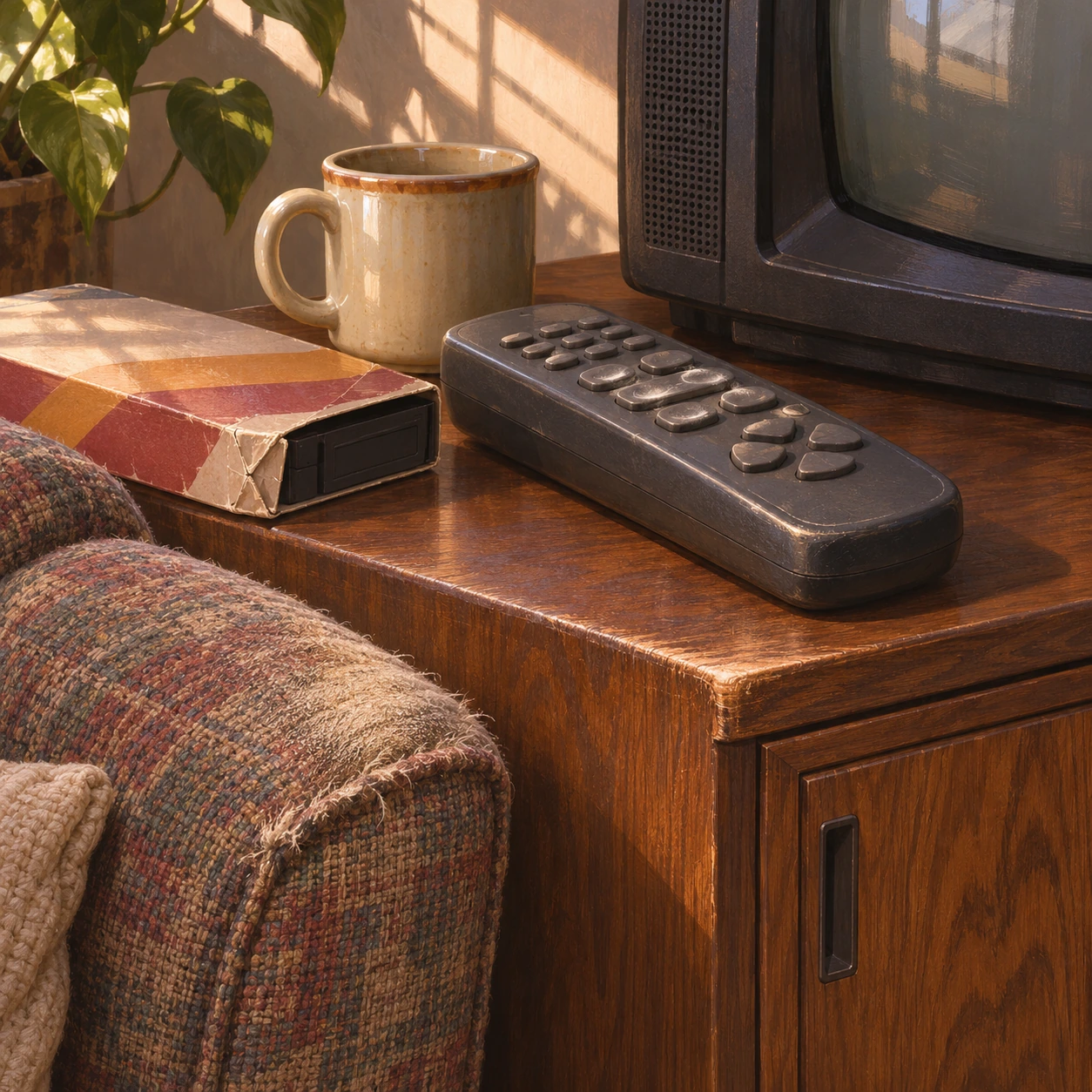
Veneer, cloth, glass, plastic and printed paper age differently. Frequently pressed buttons become polished; cups mark a small part of a table. Dust gathers in storage corners. Avoid uniform yellowing.
Light, composition and scale
Use familiar window light with a local cool reflection from the television. Toys, table edges and doorframes guide the eye while leaving space to sit, walk and reach. An ordinary viewpoint can carry memory without blur.
Sound and graphics
A refrigerator cycle, tape mechanism, traffic outside and stairwell echoes locate the home. Any packaging or writing should fit the chosen place and period. These illustrations use unbranded objects.
Motifs and distinctions
Unlike dreamcore, nostalgiacore can remain spatially realistic. Unlike retrofuturism, it concerns technology used in daily life rather than a historical vision of the future. Unmotivated mixtures of regional and period icons weaken specificity.
Ideas for game environments
Make a familiar cup a landmark. Let polished remote buttons and a worn chair imply absent users. Share one appliance sound between kitchen and living room so that usable objects gradually reveal household life.
Read scene descriptions
Main environment
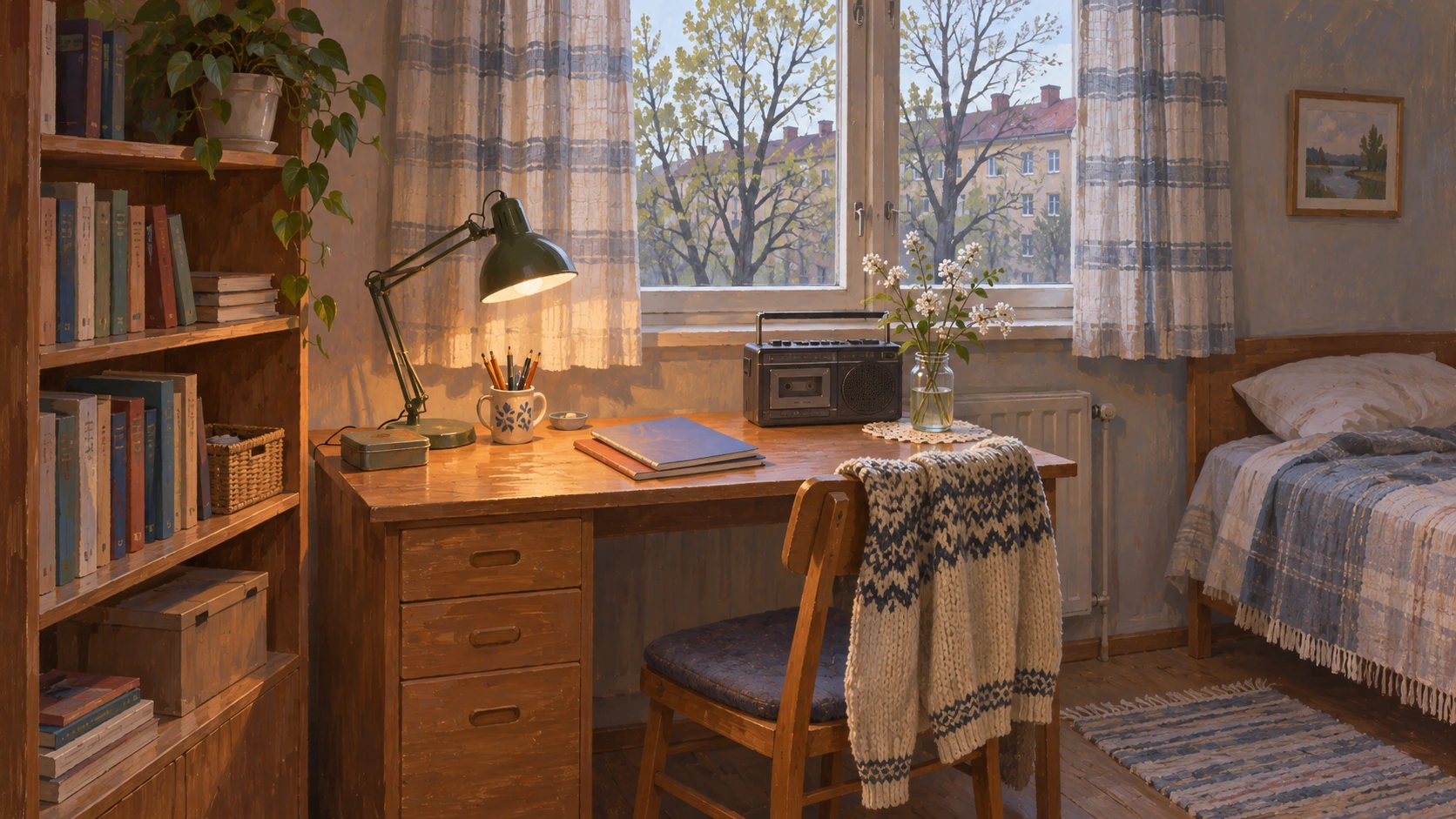
A fictional 1990s northern European living room combines veneer furniture, tapes, a plaid sofa and houseplants. Window light and television glow remain distinct. A remote, cups and draped fabric suggest daily use, with local wear at points of contact.
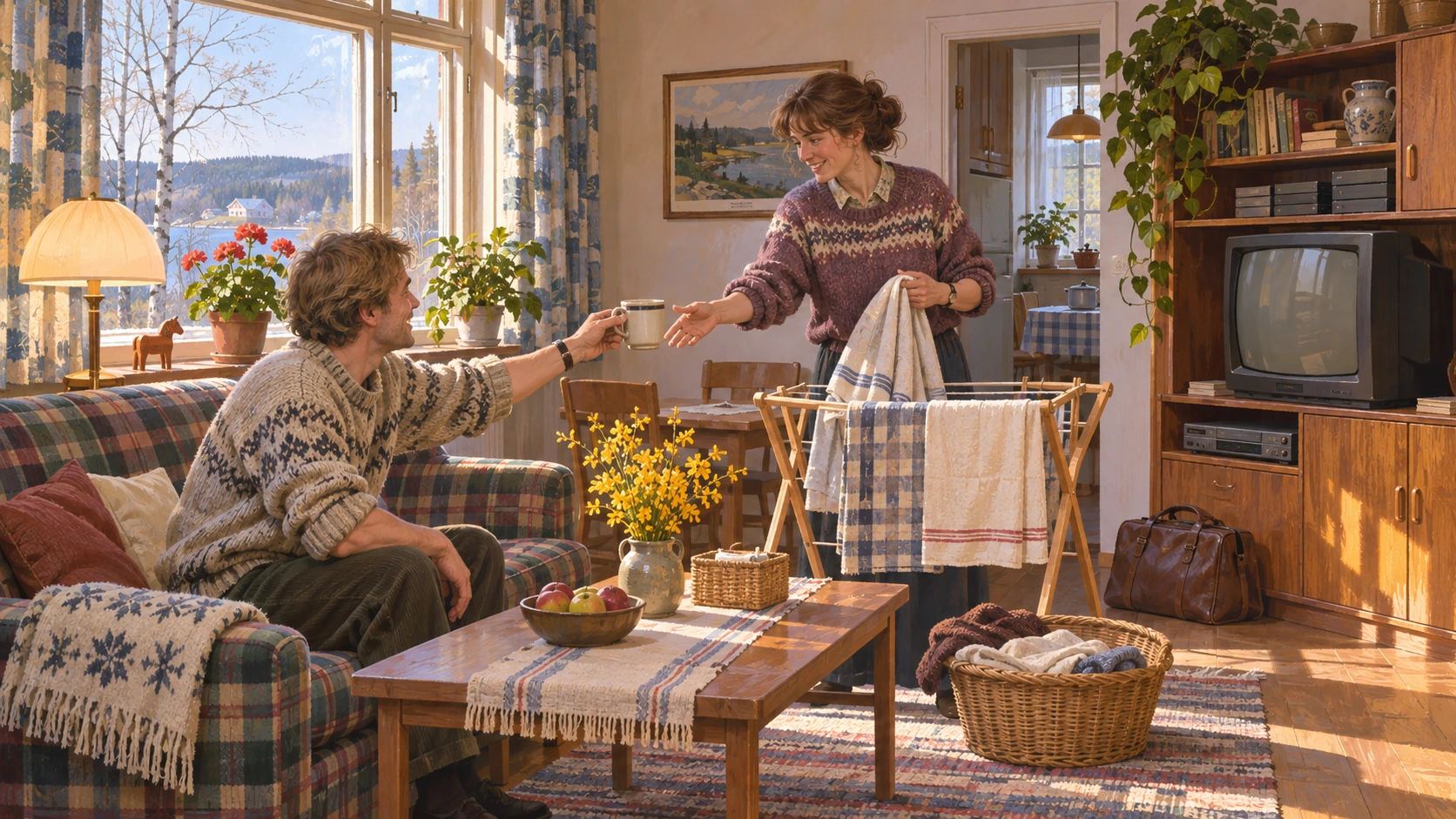
Family members pass a cup beside a drying rack and household textiles.
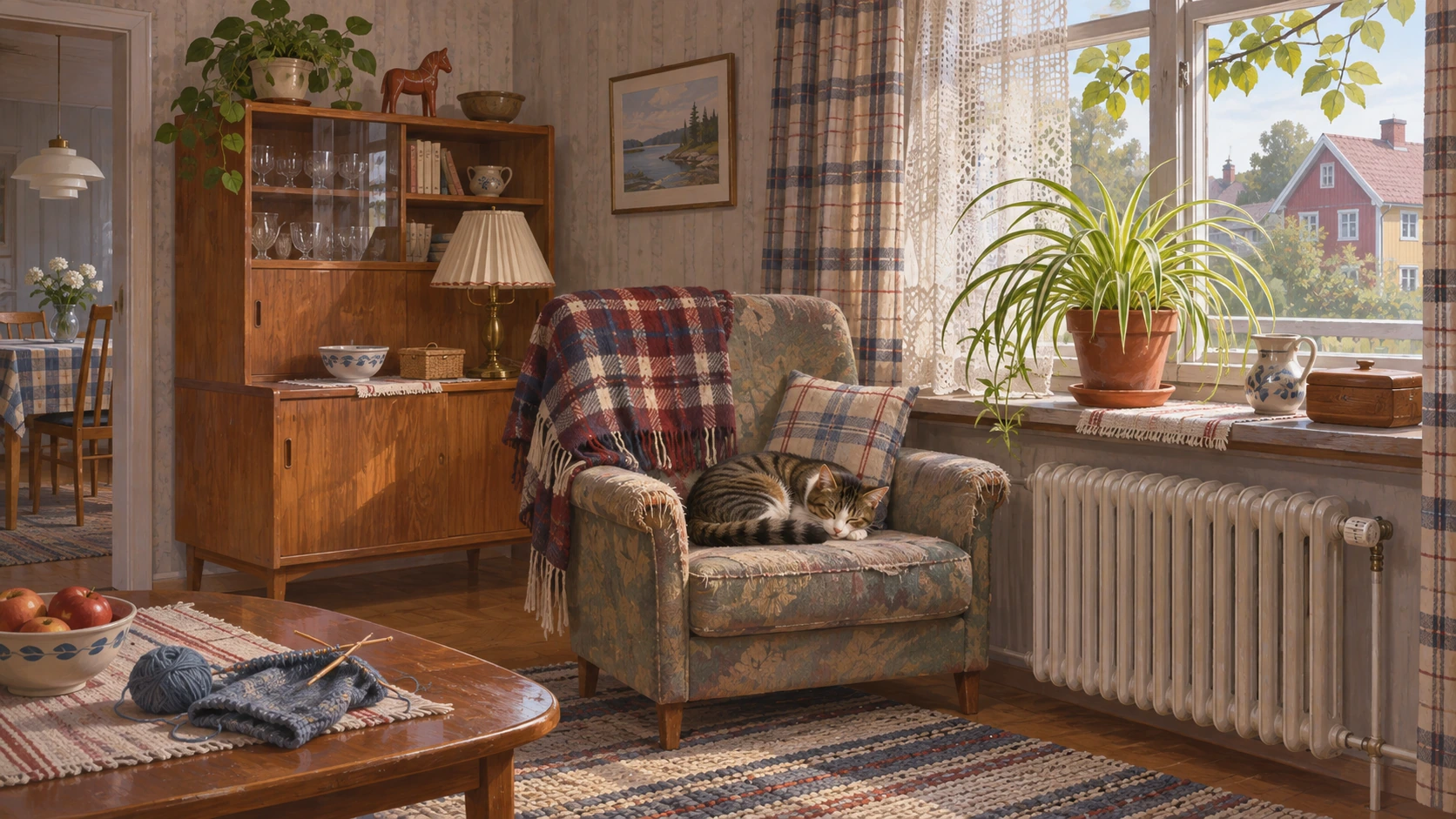
A house cat and tended plants occupy established places.
Buttons, veneer and cloth wear according to how they are touched.
A desk, cassette recorder and storage share one household period and context.