27Kidcore / Toy Aesthetics
Build a playful world from child-sized spaces and tangible materials.
Definition and context
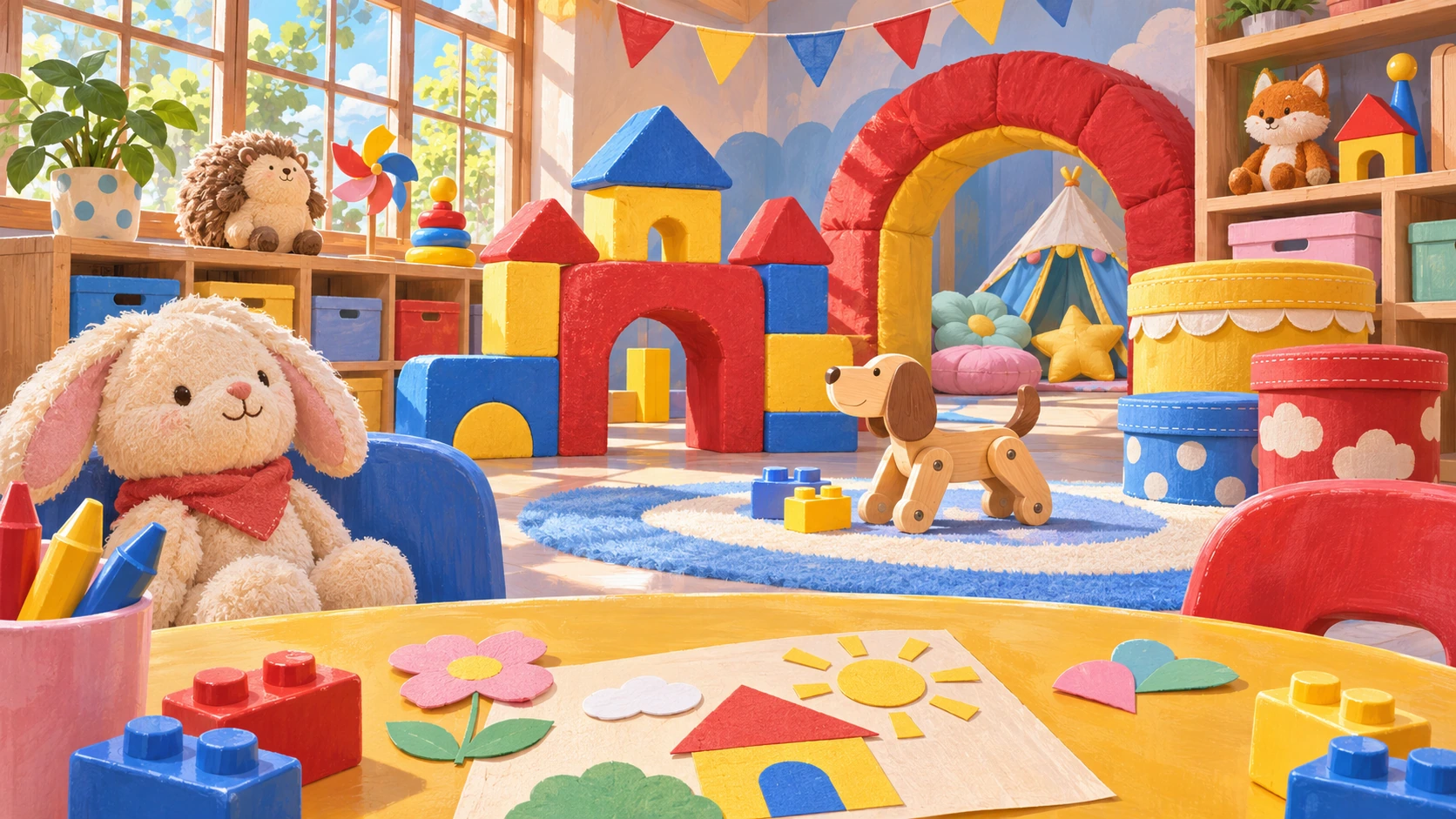
Kidcore is an online label drawing on childhood culture, toys and vivid graphics; toycore is a related search term. Community boundaries vary. The history of a particular toy is not the history of the label. These original scenes study materials and use scale without reproducing branded characters.
People and ecology
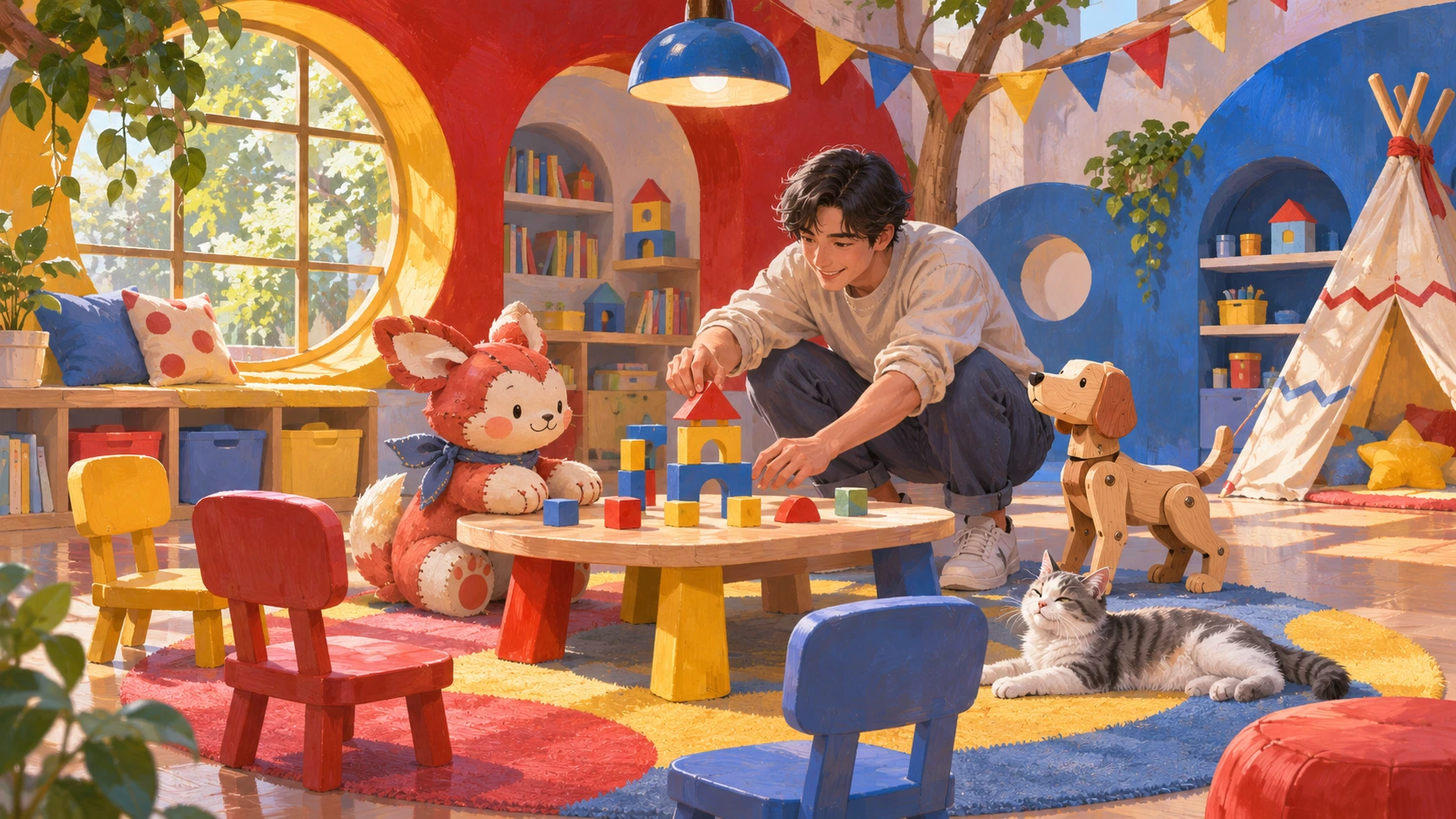
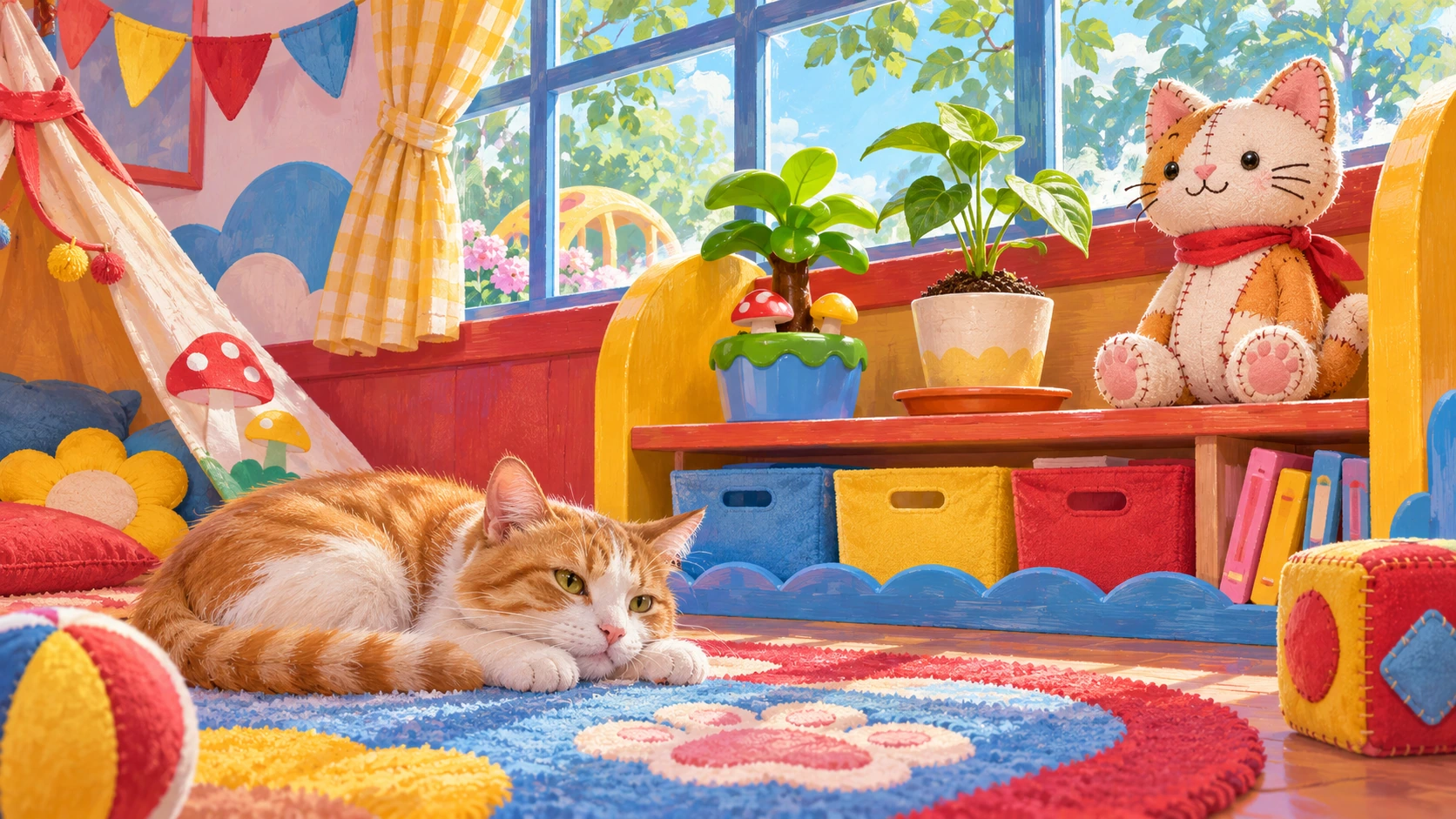
Children, adults, dolls and pets may coexist but need different modes of being. Plush animals bend around seams, a wooden dog articulates at joints, and a real cat carries weight and attention. Distinguish plastic plants from living ones.
Spaces and forms
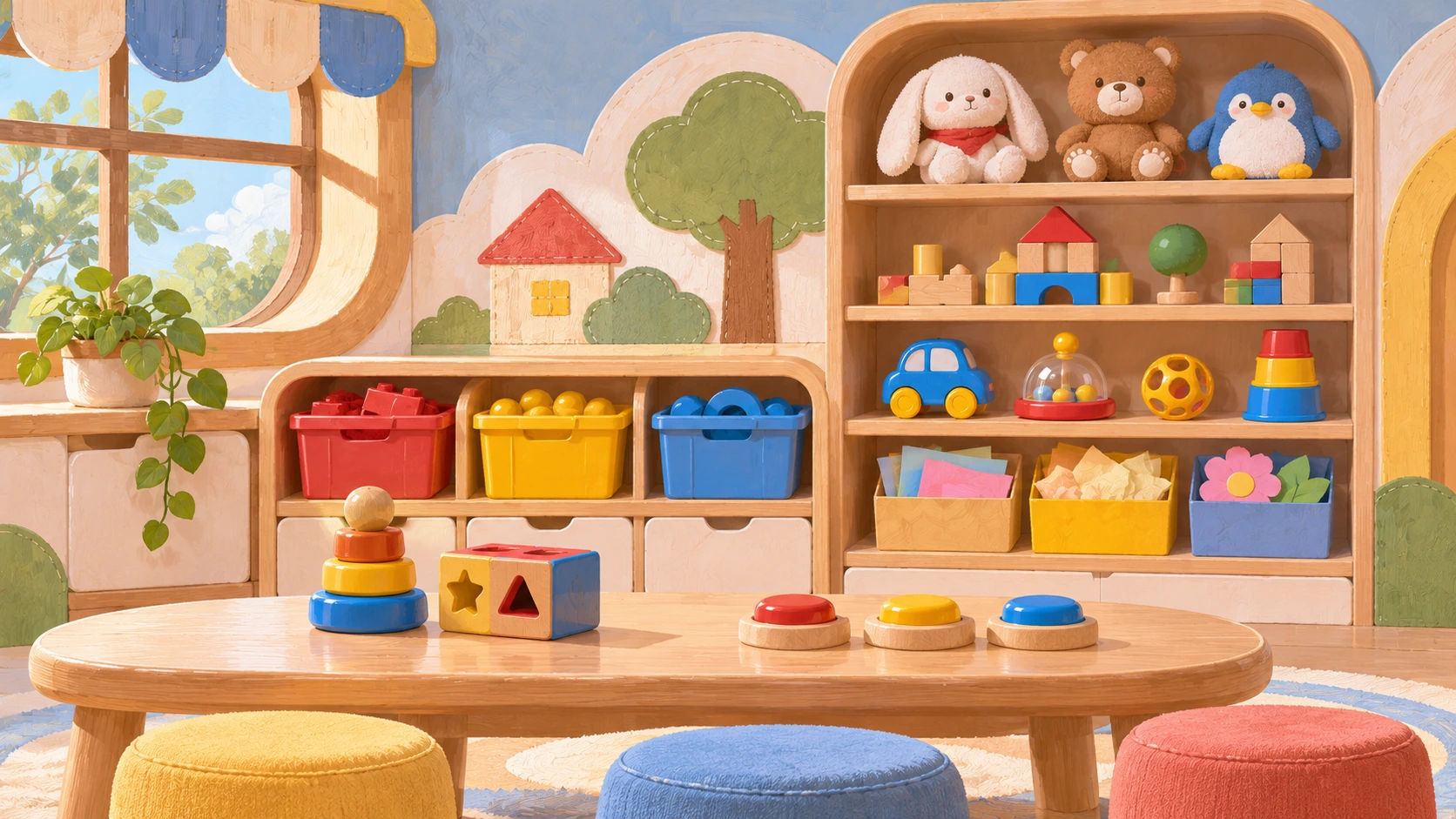
Low tables, rounded blocks, padded arches and storage boxes form a usable playroom. At child height, a nearby table edge becomes a horizon. An adult kneels to join the activity.
Color and materials
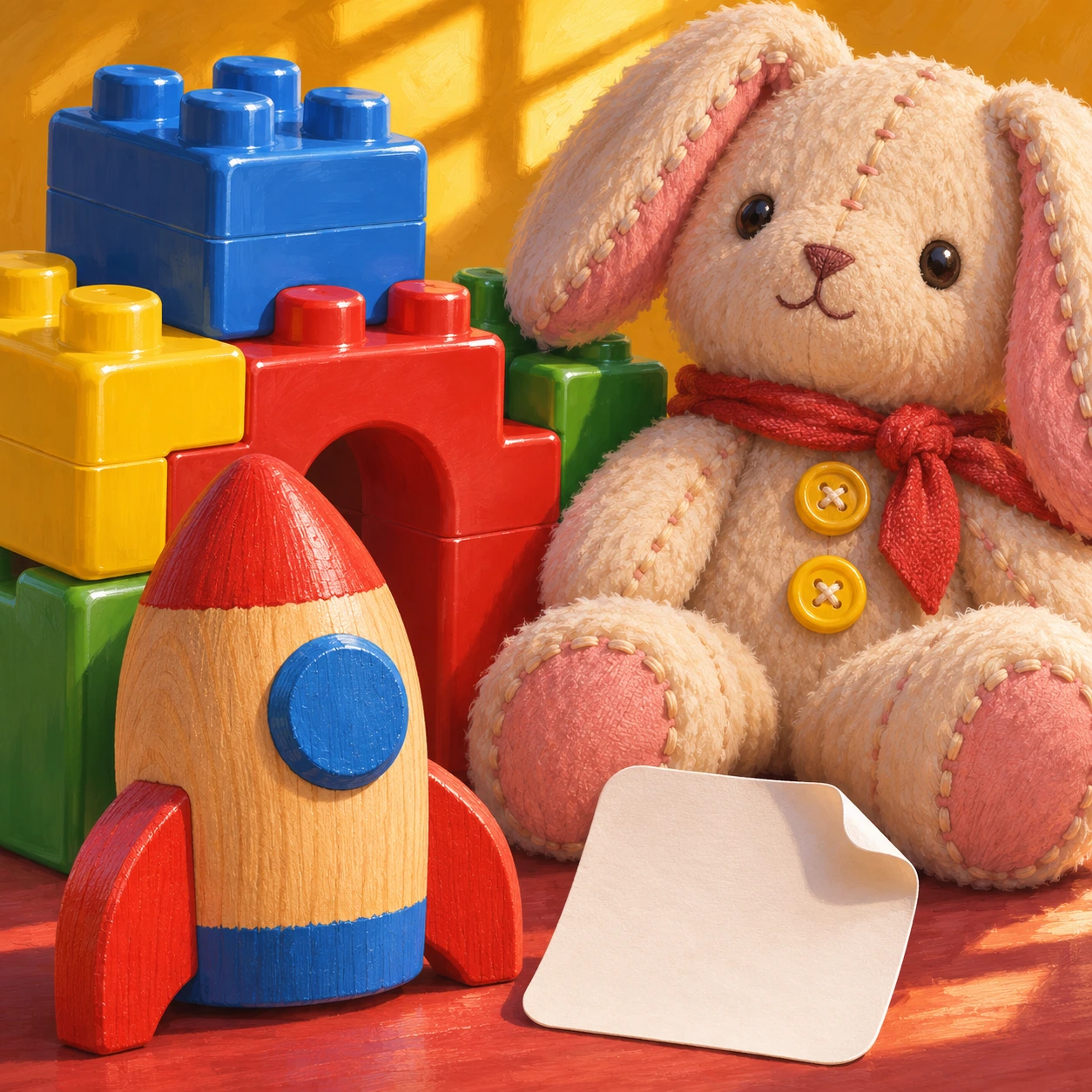
Large red, yellow and blue forms support smaller candy-colored accents. Molding seams, plush stitching, fixed buttons, painted wood edges and lifting paper corners reveal different manufacturing methods.
Light, composition and scale
Stable daylight, clear silhouettes and selective repetition organize the view. Frontal displays compare materials; low viewpoints reveal scale. Leave room for play rather than filling every surface with products.
Sound and graphics
Plastic clicks, falling wood blocks, springs and sound buttons create a light soundscape. Simple shapes and bold icons can indicate interaction. Button size, resistance and feedback should fit the gesture.
Motifs and distinctions
Kidcore shares childhood material with dreamcore but need not feel unsettling. Compared with nostalgiacore, it emphasizes sensory play and graphic color rather than one household period. An eerie variation is optional.
Ideas for game environments
Make a table edge the horizon of a route. Give padding, wooden blocks and plastic buttons distinct feedback. Animate jointed toys, plush figures and living creatures differently; color aids recognition while material and scale invite use.
Read scene descriptions
Main environment
A bright playroom seen at child height turns a low table edge into a horizon. Blocks, padding and storage form clear layers; plush, molded plastic, painted wood and paper retain distinct textures. All toys are original.
A kneeling adult, plush animal, jointed wooden dog and cat share a child-sized space.
Living pets and plants remain distinct from their toy counterparts.
Molding seams, stitching, paint edges and paper corners reveal four materials.
Low furniture and storage boxes leave space for physical play.