25After Hours
Customers leave while maintenance and waiting continue.
Definition and context
This category studies commercial and public places after normal activity ends: service pauses while cleaning, restocking and waiting continue. It is a scene state and a loose community label rather than one historical movement. The place remains connected to functioning society and a future opening.
People and ecology
Cleaners, night staff, guards or a last customer retain relationships of use. Plants are still watered, moths may approach remaining light, and other animals need a plausible route in. Fungi usually belong to neglected patches rather than every closed shop.
Spaces and forms
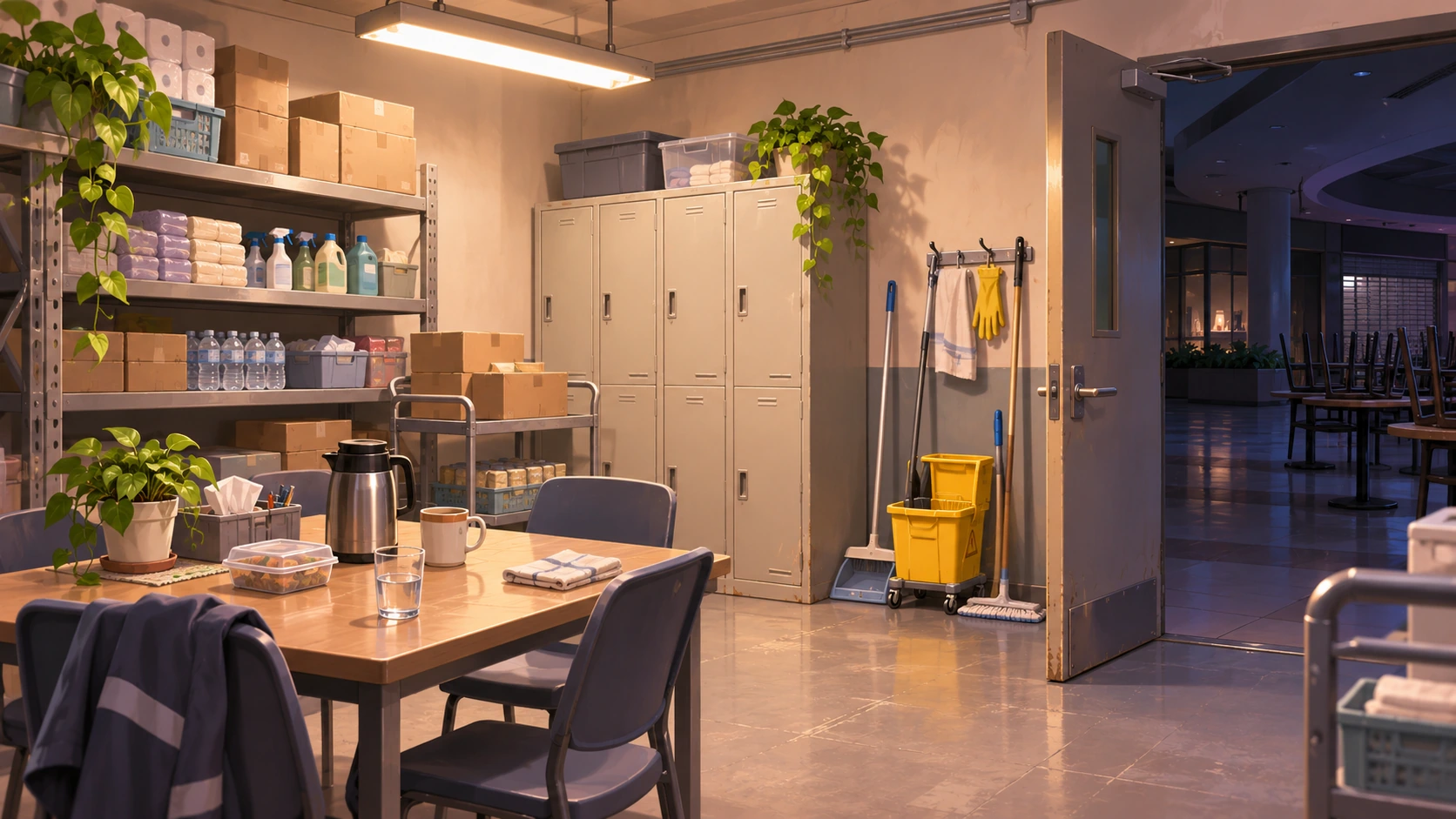
Stacked chairs, shelves being restocked, shutters and open staff doors communicate the state. Customer service stops while the back room may become busier. Internal work routes remain after the main entrance closes.
Color and materials
Keep daytime finishes and let partial lighting change their relationships. A freshly mopped wet edge, folded refuse bags and cleaning tools register recent labor. Contact wear and daily care coexist without broken glass, peeling surfaces and deep dust.
Light, composition and scale
Switch lights off in sections and leave the maintenance area brighter. A dark customer zone looking toward a lit back room gives the time change a direction. Ordinary furniture and service carts preserve bodily scale.
Sound and graphics
Freezers, cleaning machines, closing conversations and automatic doors have sources and cycles. Signs may describe a pause or cleaning without becoming ominous warnings. Closing sounds still connect the place to daytime social life.
Motifs and distinctions
Unlike a ruin, the space may reopen tomorrow. It overlaps with liminality but foregrounds an operating rhythm. An empty photograph alone does not verify closing time; lighting and materials can be studied without claiming an undocumented state.
Ideas for game environments
Use separate service and maintenance lighting, traces of work, internal routes after entrance closure and located machinery sound. Changing one place's working state can make daytime familiarity feel unfamiliar at night.
Read scene descriptions
Main environment
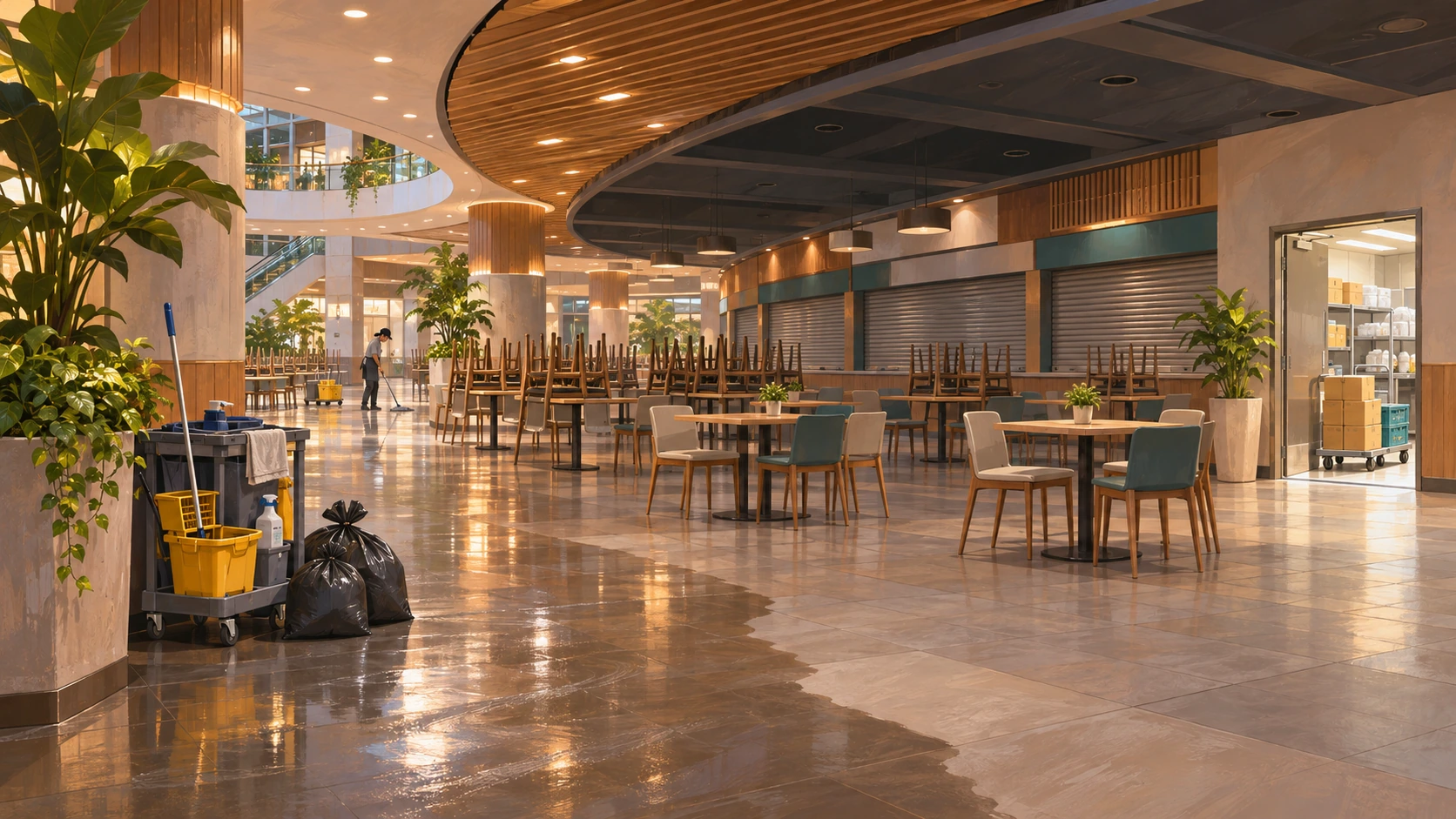
A food court has just closed: chairs are partly stacked, counters shuttered and customer lights switched off in sections. A bright staff doorway, fresh wet floor edge, cleaning cart and tended plants show ongoing work and the prospect of reopening.
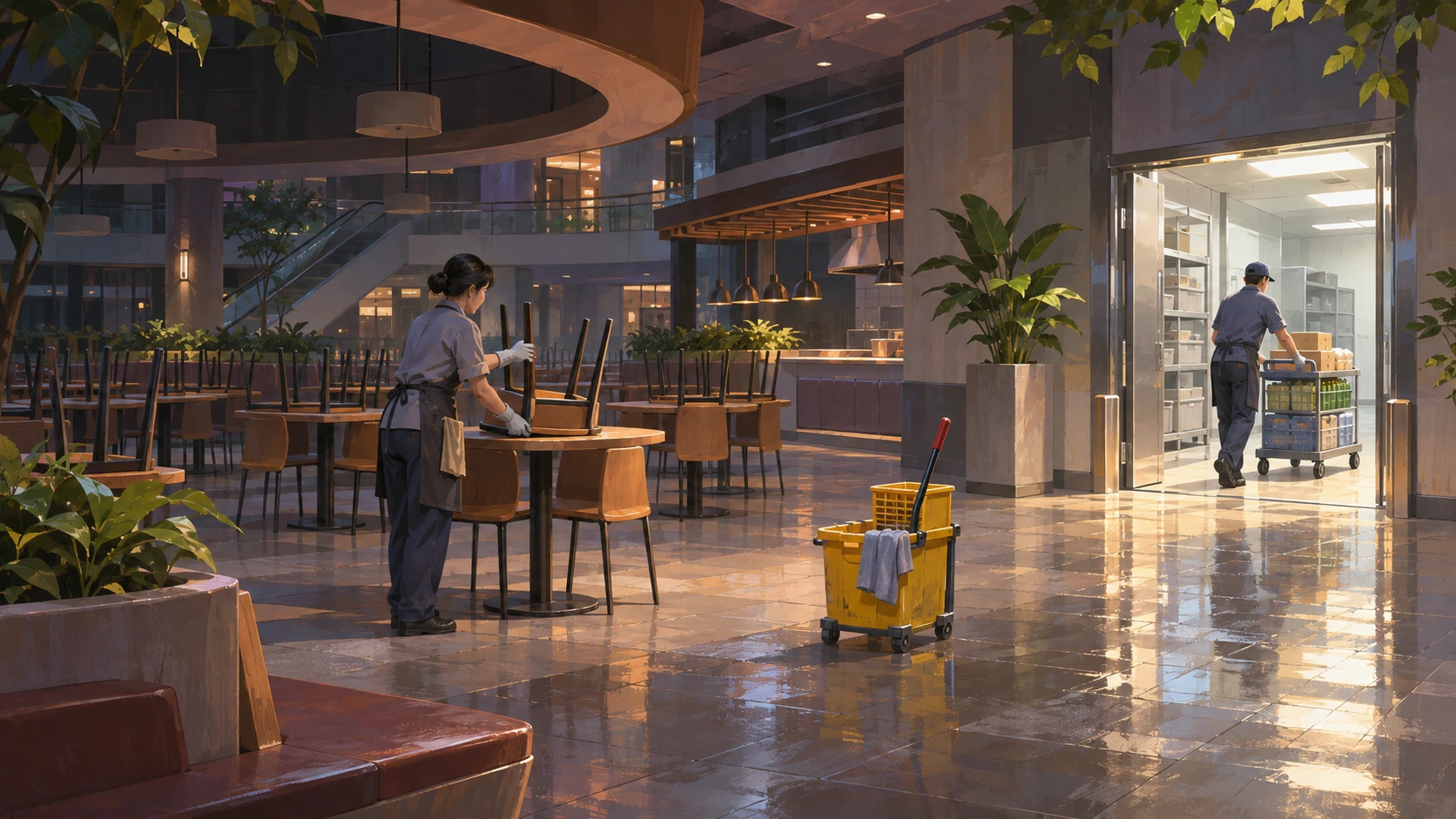
Stacking chairs and restocking continue after customer service stops.
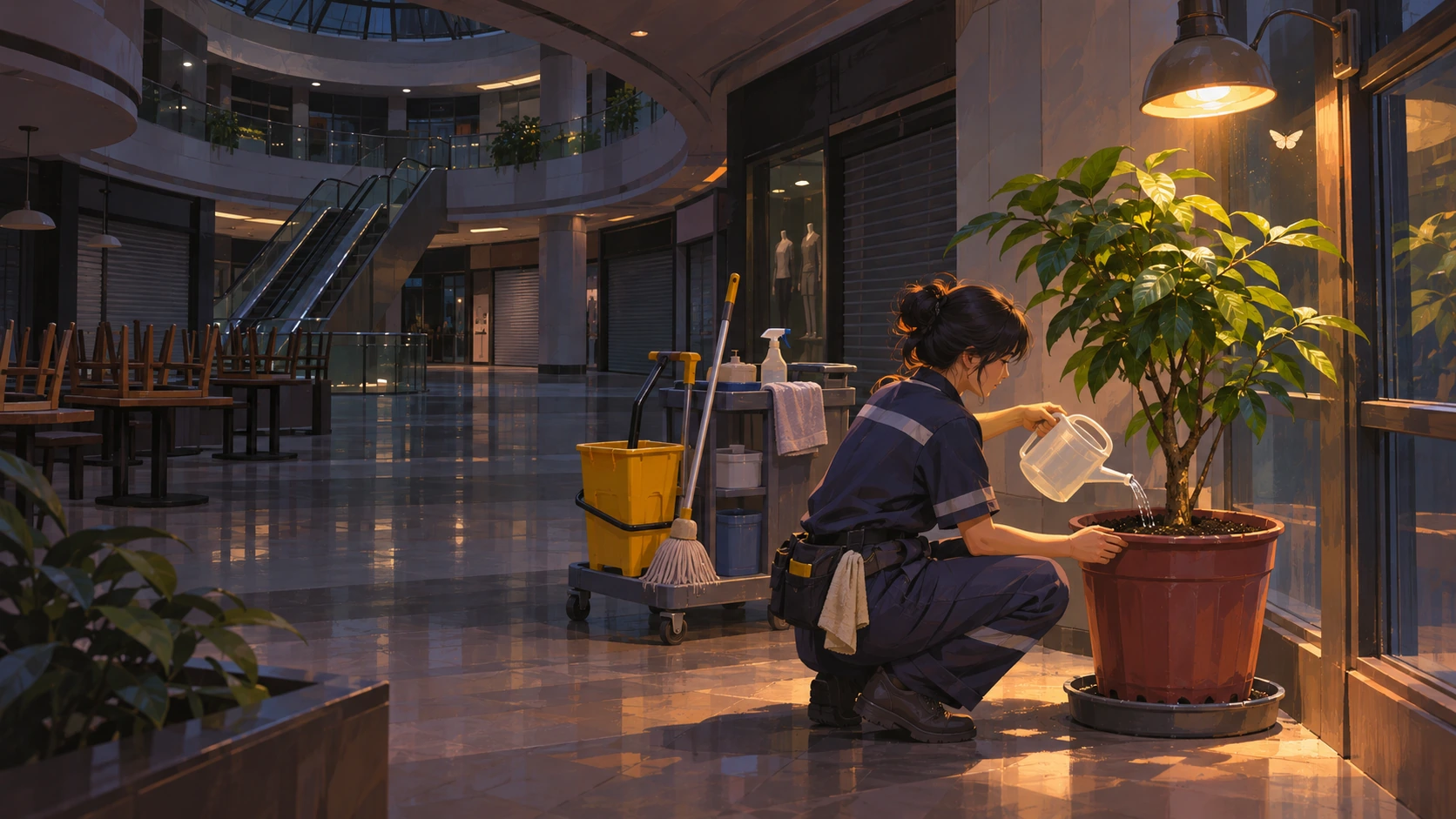
Watering and remaining light sustain life after closing.
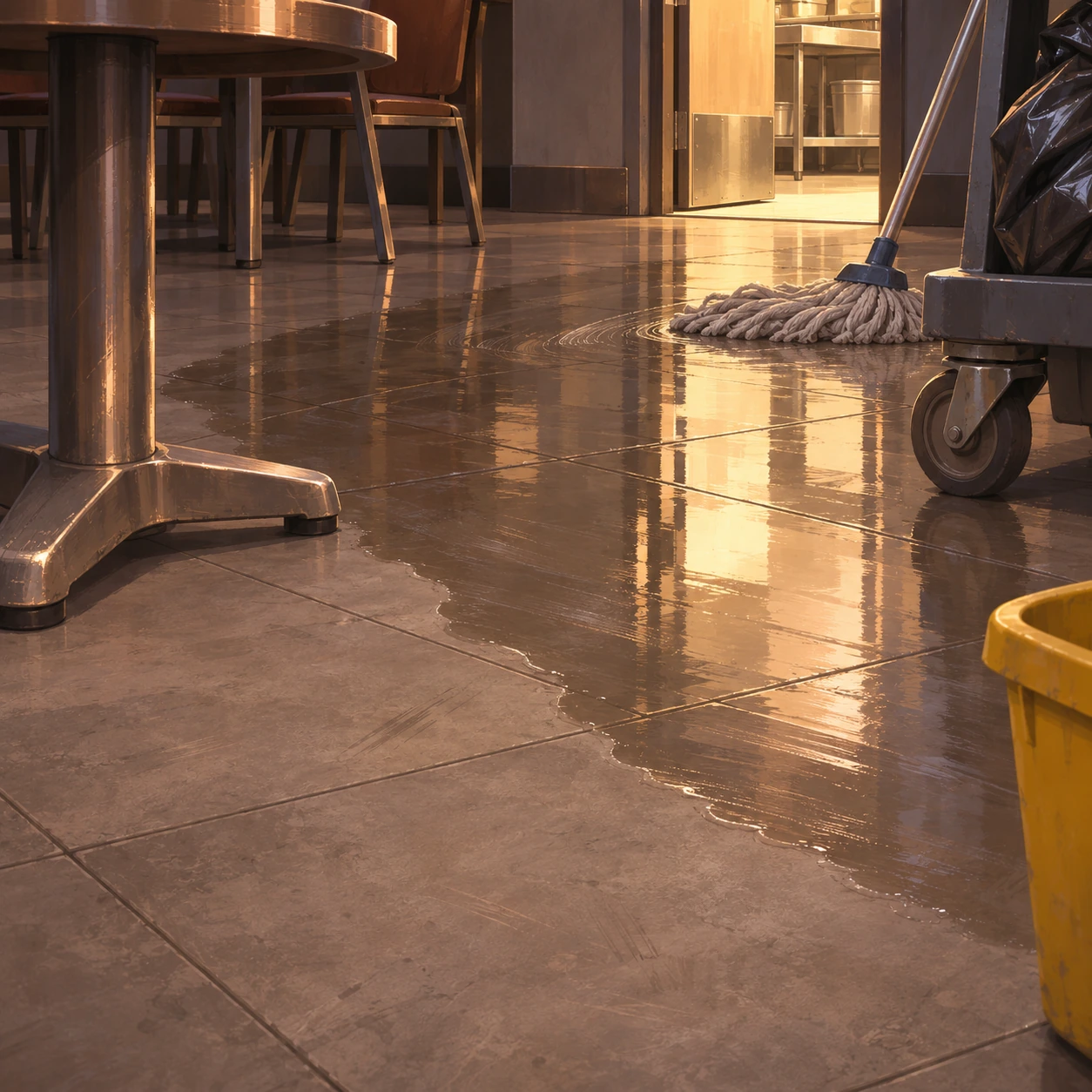
Wet and dry flooring and cart wheels register recent cleaning.
A bright back room and dark public zone retain night-shift life.