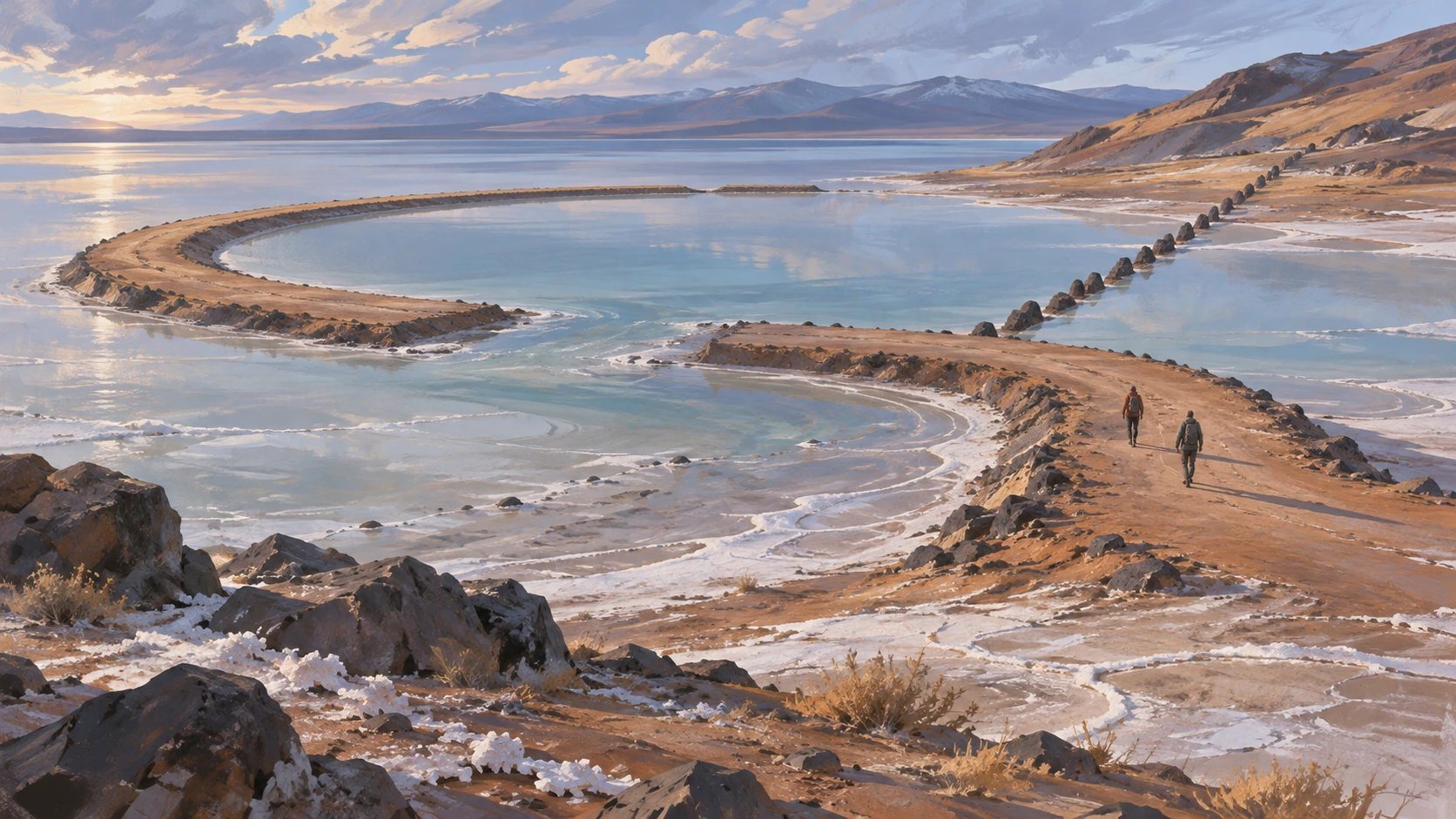
21Land Art / Earthworks
Terrain, material, orientation and time form the work.
Definition and context
Land Art makes site, terrain, natural material and time part of the work, as in specific practices by Robert Smithson and Nancy Holt. Outdoor placement alone does not establish it. Study the relation to water, geology, orientation and approach work by work.
People and ecology
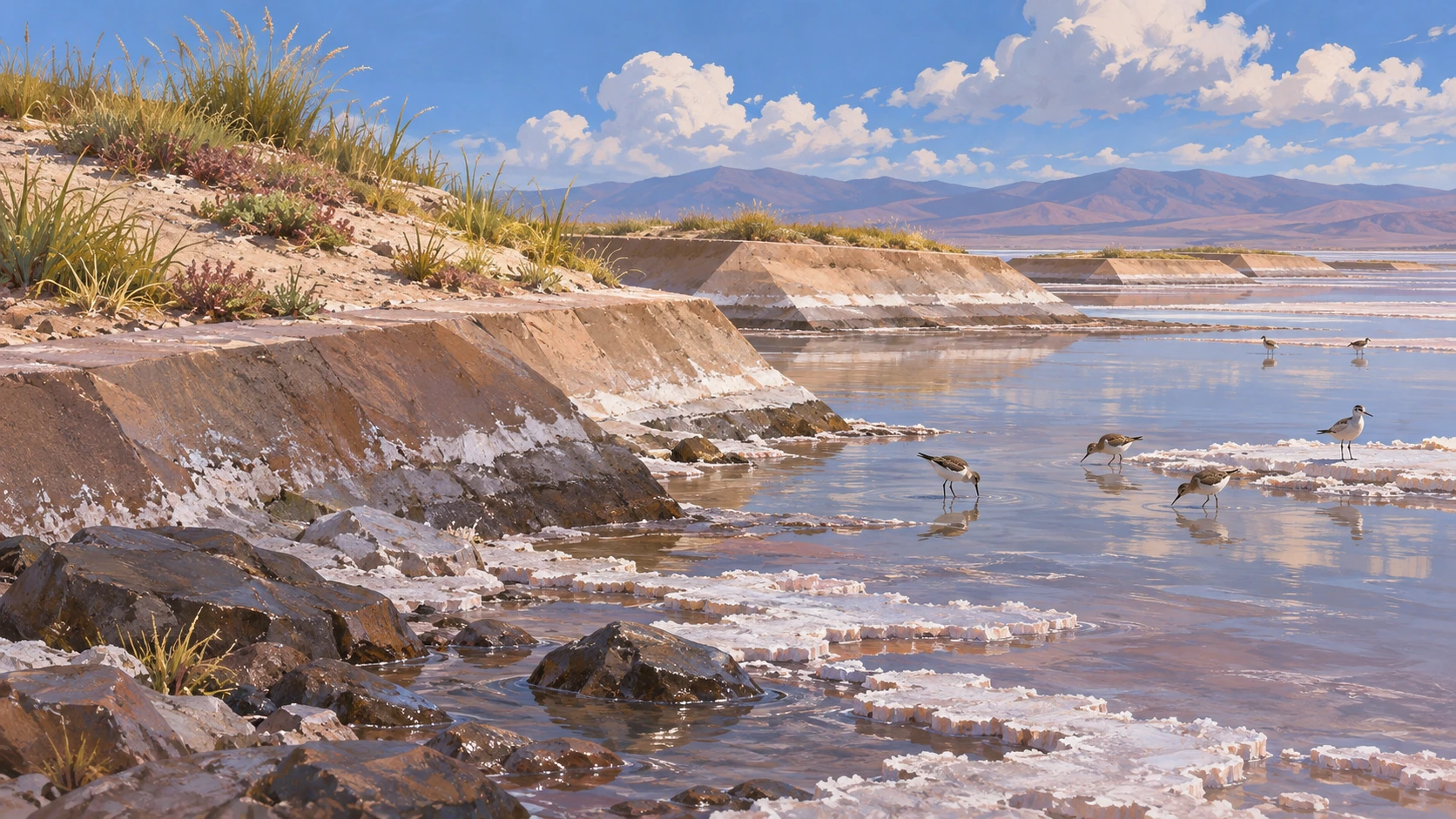
People participate through walking, pausing and bodily scale. Plants, animals and fungi follow actual site conditions rather than a generic green texture; saline or dry ground may have little vegetation. Machinery may leave construction traces or withdraw afterward.
Spaces and forms
Embankments, trenches, stone lines, arcs, spirals and cuts connect with terrain. Material sources, water level, slope and direction help determine form. Understand soil and water movement before arranging access instead of floating geometry over unrelated scenery.
Color and materials
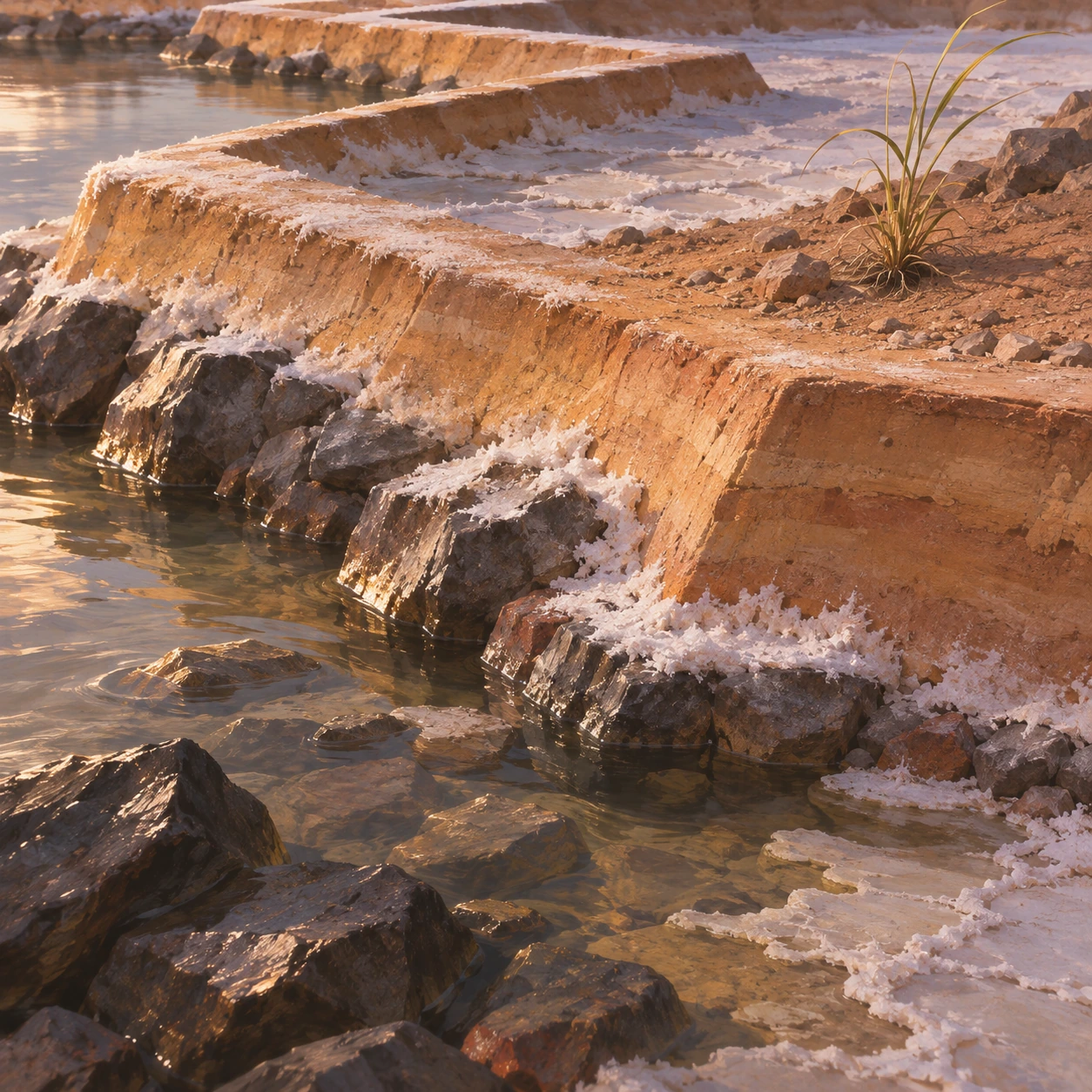
Local stone, earth, sand, water, salt and vegetation retain differences. Moisture and season alter color; deposition, erosion and growth slowly modify edges. A form need not have machined precision, but deliberate intervention should remain readable.
Light, composition and scale
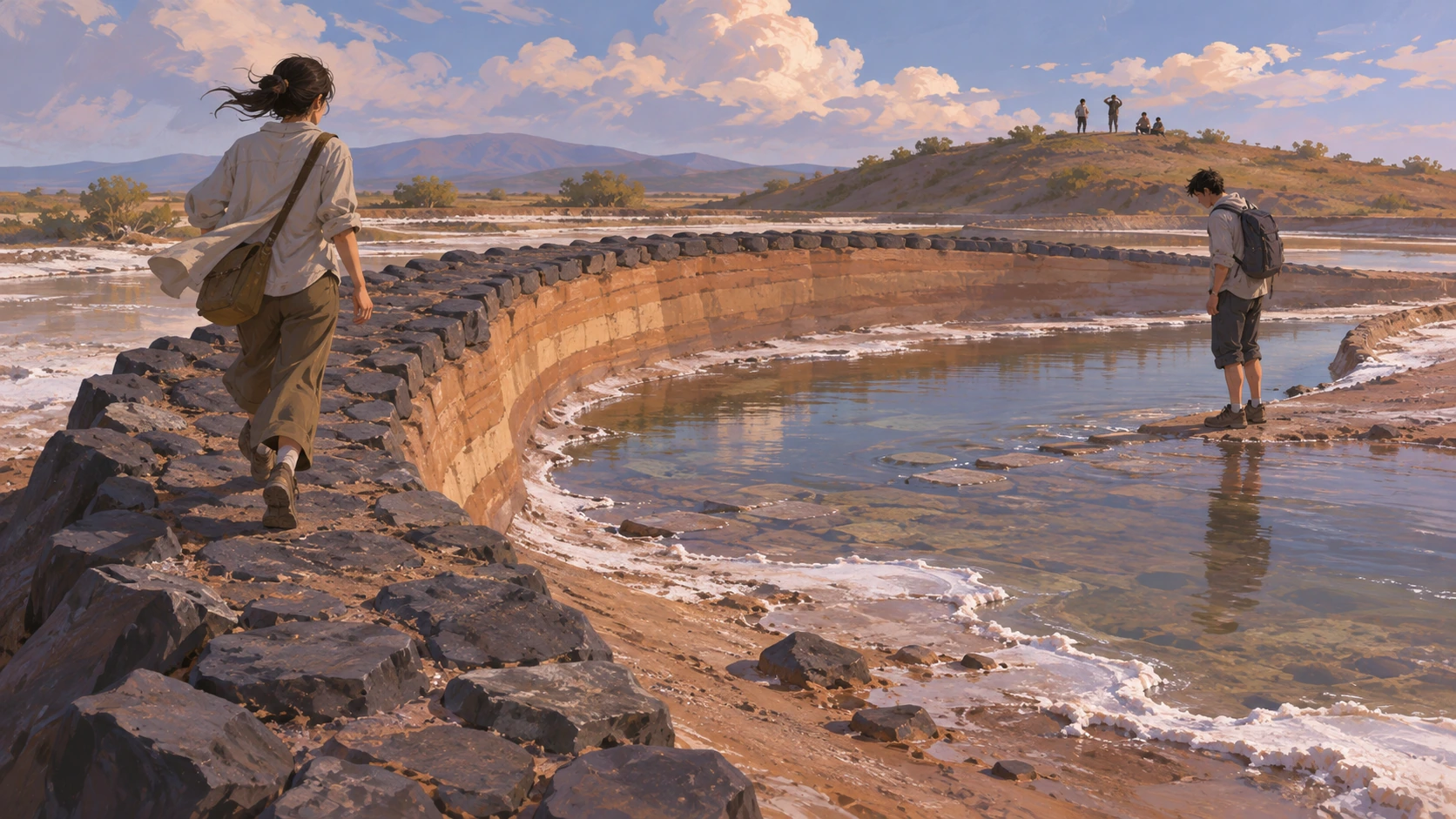
At ground level, a visitor may see only part of a curve or slope; a higher viewpoint reveals the whole. Sun angle and terrain shadows keep changing the experience. Do not rely entirely on aerial views when materials, occlusion and reflection can explain the walk.
Sound and graphics
Wind, particles underfoot, water and acoustic distance establish the place. Contours, orientation and walking records can inform graphics without replacing bodily experience. Verify astronomical alignments for real works rather than inventing constellations for arbitrary holes.
Motifs and distinctions
Unlike an independent sculpture on grass, the site participates in the work. Unlike simple natural reclamation, an intentional form usually remains legible. Actual works have particular locations, authors and care requirements. The original illustrations explore invented terrain relationships.
Ideas for game environments
Use geometry revealed by changing water, a path that reads differently from ground and hill, large marks in local materials, or light altered by the sun. Let time change the experience instead of treating the work as a fixed landmark.
Read scene descriptions
Main environment
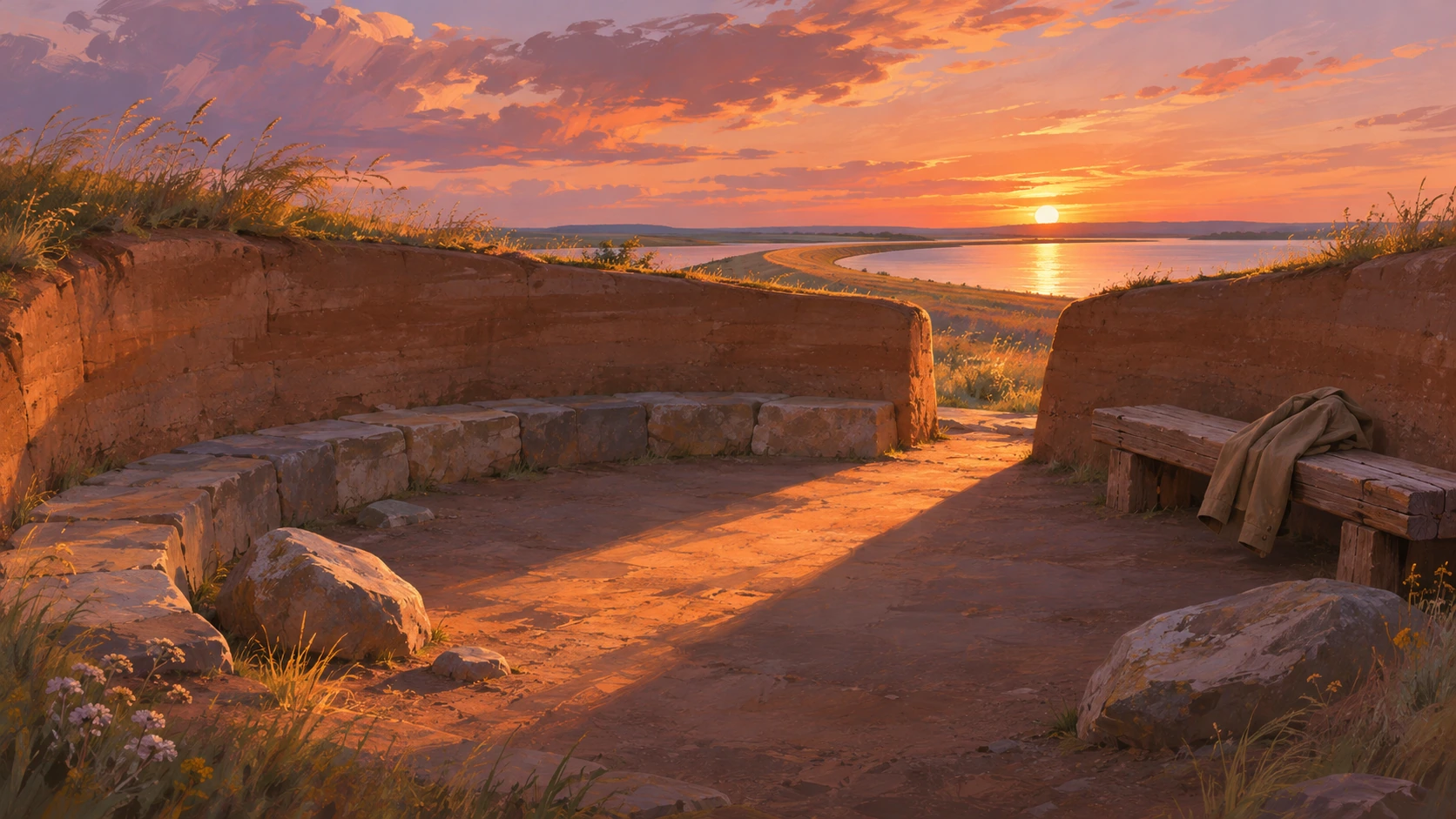
Local dark stone and earth form a broad curved embankment cut by shallow lake water, with a straight stone line meeting a natural slope. Walking reveals fragments; a low hill reveals the whole. Water level, salt, wet rock and angled light shape this original invented site.
Walkers see fragments while a higher viewpoint reveals the whole.
Salinity, water level and deposition shape habitats.
Wet stone, salt crystals and earth edges register time.
An opening in an earth shelter lets the sun shift a band of light.