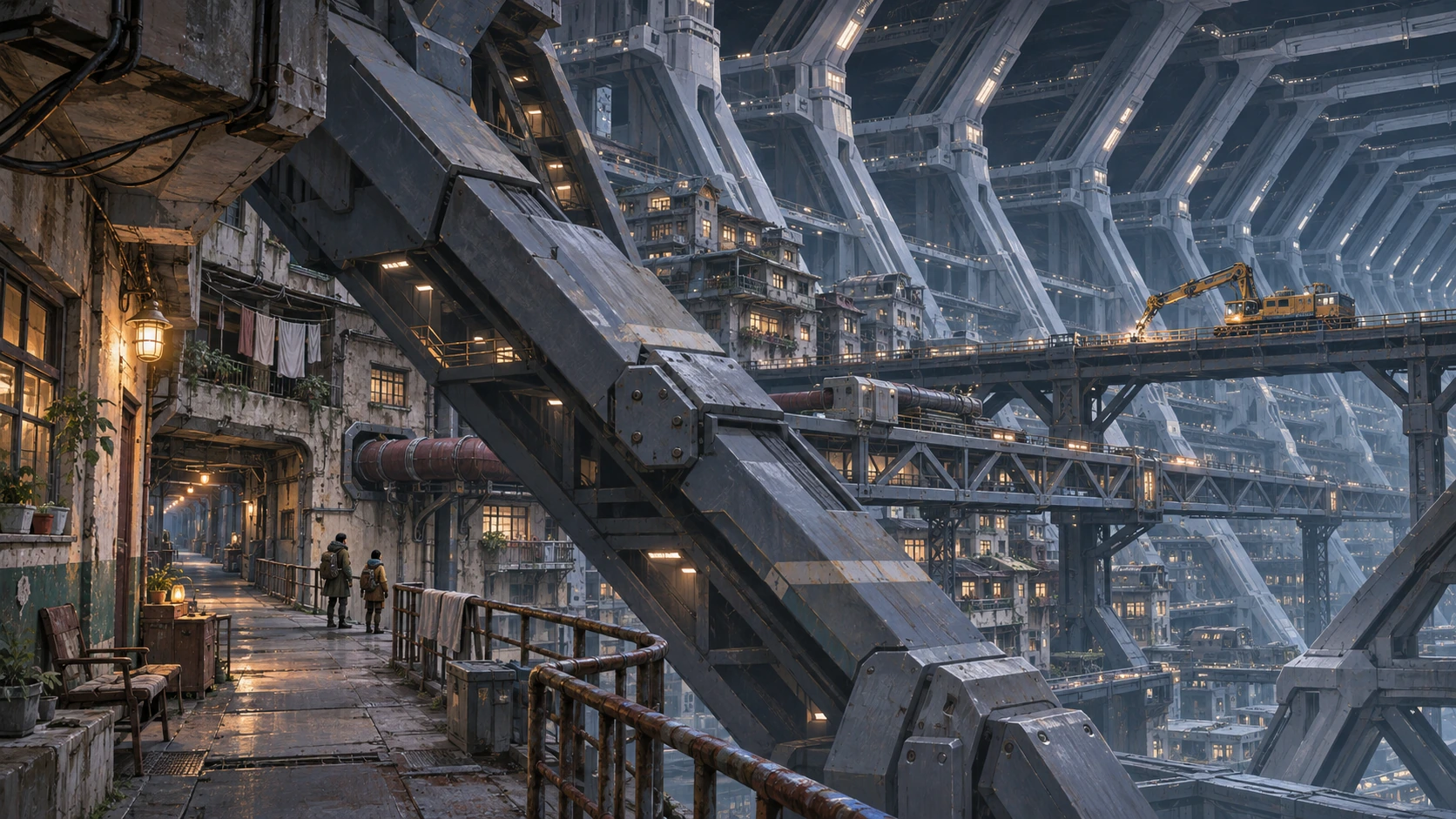
22Endless and Self-expanding Architecture
New structures overtake older worlds beyond any complete view.
Definition and context
This science-fiction direction imagines architecture growing, nesting or covering older space beyond the inhabitants' complete understanding. BLAME! is a vivid reference, not the source of every similar image. Historical imaginary architecture can also inform spatial-depth studies without proving a direct line of influence.
People and ecology
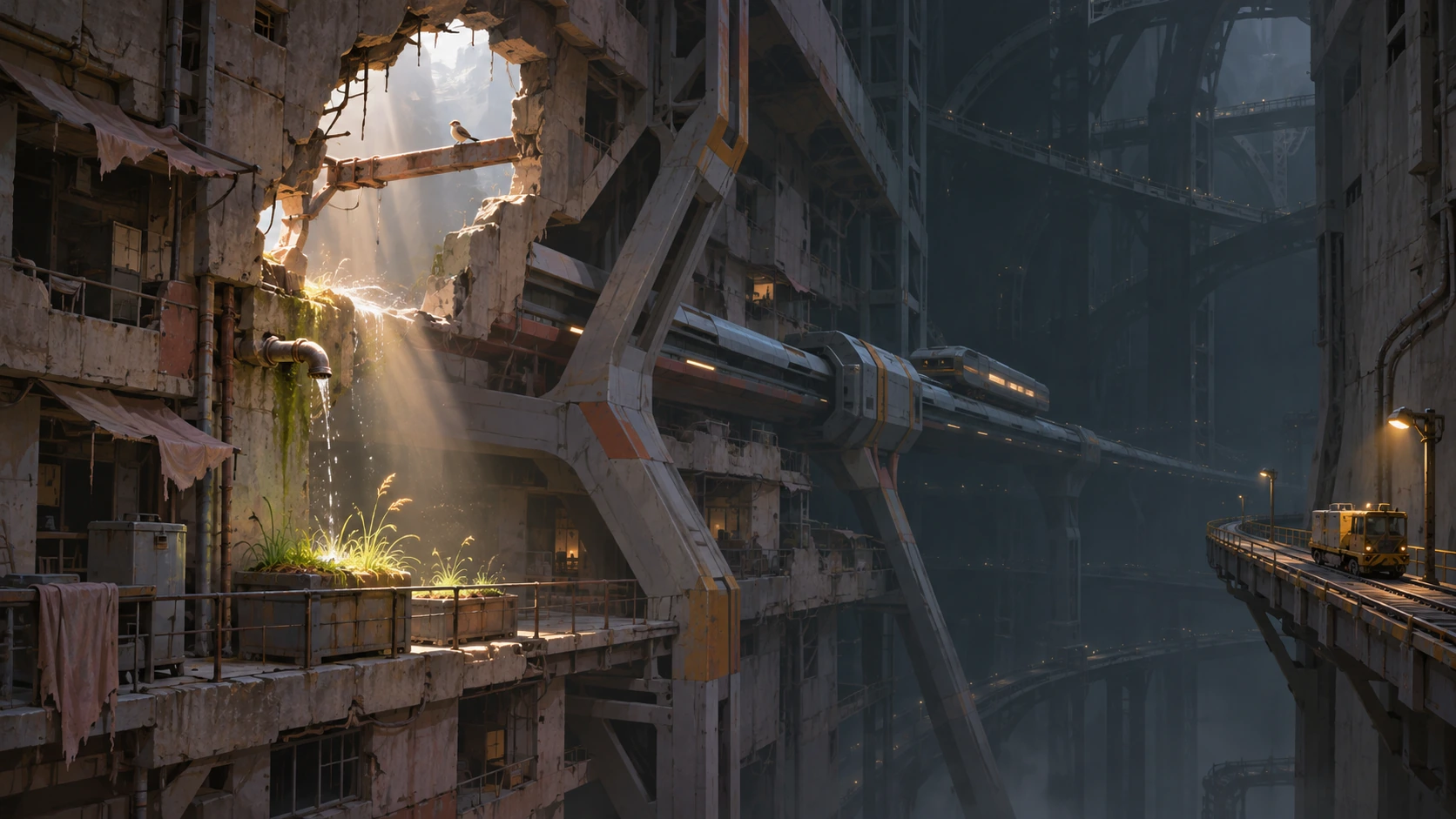
People may occupy only the system's edges while transport, construction and repair machines keep working. Plants, animals and fungi can survive locally or be absent. Explain their distribution through light, water, soil and enclosure rather than applying forest to every old surface.
Spaces and forms
New structures sever old passages, large pipes cross former rooms, and a larger generation encloses an entire district. Different seams, modules and routes establish a building history. Growth redefines an older world rather than merely adding another tower.
Color and materials
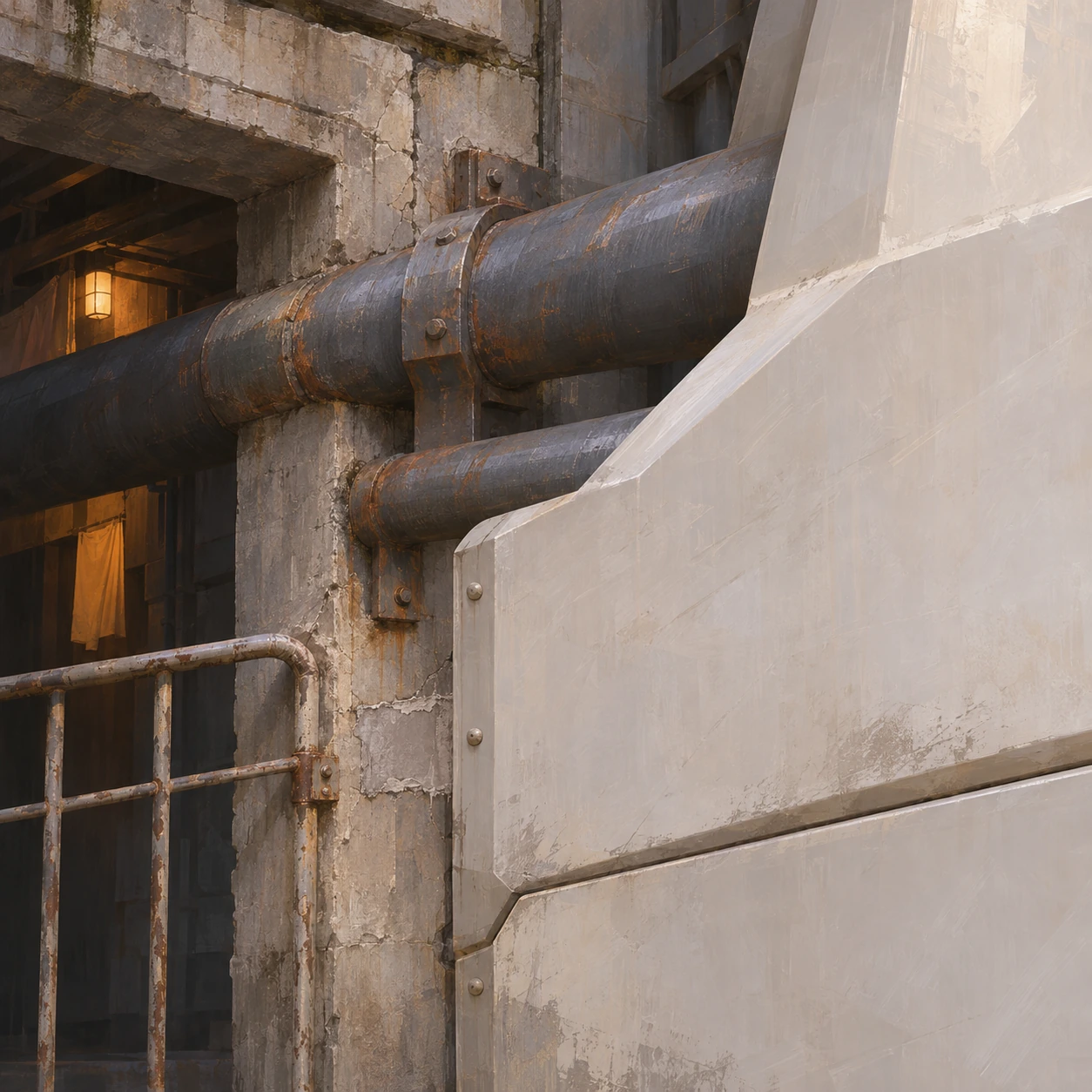
Keep large masses and sparse lights at distance, with rivets, wear and patches nearby. Separate metal, concrete, ceramics and unfamiliar materials by age or function. Equal mechanical detail at every depth reduces the whole to texture.
Light, composition and scale
The ceiling may be as remote as a sky, and local lamps cannot reveal the boundary. Move from a narrow route into a vast cavity, then reveal that the cavity is itself one unit. Ordinary rails, doors and bodies establish scale; clear occlusion supplies depth.
Sound and graphics
Distant construction pulses, transport cycles, hidden services and immense silence alternate. Signs explain local nodes, and old numbers may outlive what they named. Preserve direction and hierarchy instead of giving every distant machine the same loudness.
Motifs and distinctions
Unlike a planned megastructure, this direction foregrounds growth, overbuilding and lost overall control. Unlike the Backrooms, structure and machinery are central. It need not be entirely stopped or abandoned; domestic life and ongoing construction can coexist.
Ideas for game environments
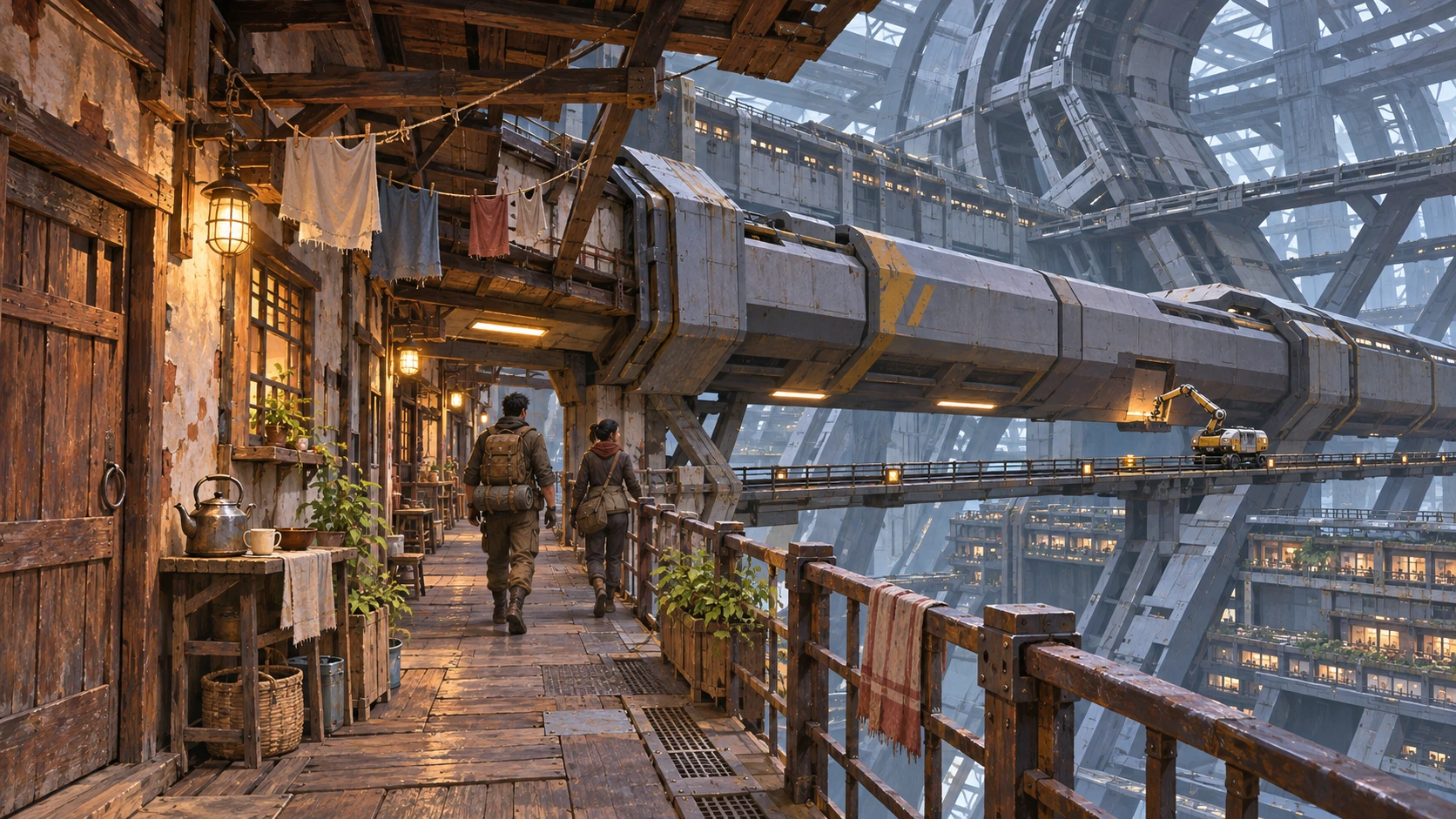
Intersect three generations: an old dwelling door, a newer transport beam and a much larger outer frame. Give machines traceable routes and people small habitable spaces. A nearby destination can require a changed journey because later building has cut across it.
Read scene descriptions
Main environment
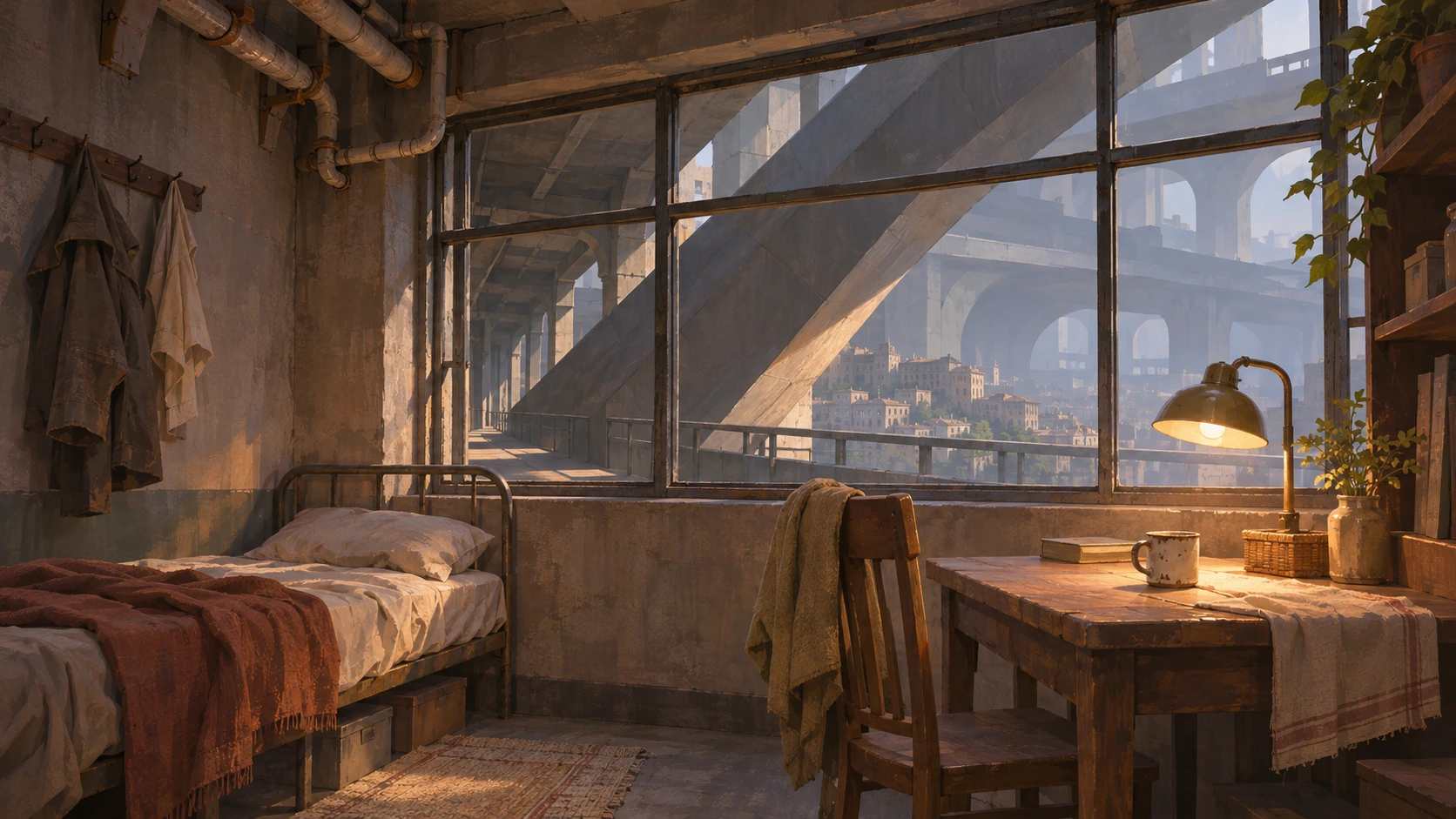
In an apparently unbounded cavity, a transport frame cuts across an older dwelling passage while a third generation encloses the former district. Modules, joints and materials distinguish the layers. Tiny travelers and working machines follow separate routes under local lights.
An old domestic platform, transport beam and outer frame retain three scales.
Local life occupies places with light, water and accumulated soil.
New panels cover old connections while seams and wear register sequence.
A small occupied room retains warm light beneath continuing overbuilding.