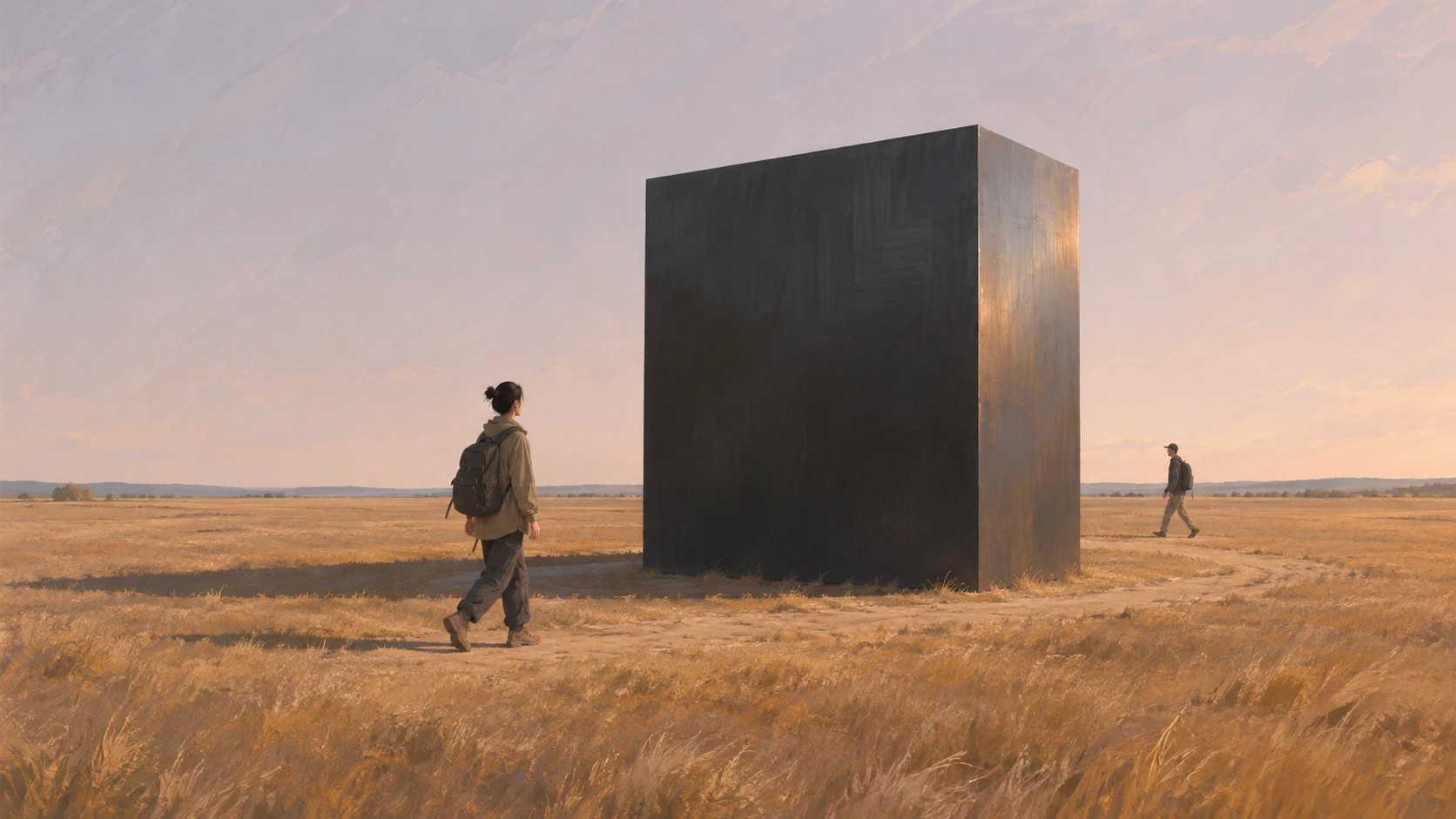
20Minimalist Sculpture and the Monolith Motif
Whole forms, intervals and bodily movement take the foreground.
Definition and context
Minimalism attends to reduced forms, materials, space and the viewer. A monolith or black block is one possible motif, not evidence of an artist, movement or source. This entry compares an artistic practice with a geometric motif while keeping them distinct.
People and ecology
The body participates by approaching, circling, occluding and providing scale. Grass, animals, insects and fungi may belong to the surrounding environment or be absent. A static object and a moving viewer can be sufficient without biological or mechanical activity.
Spaces and forms
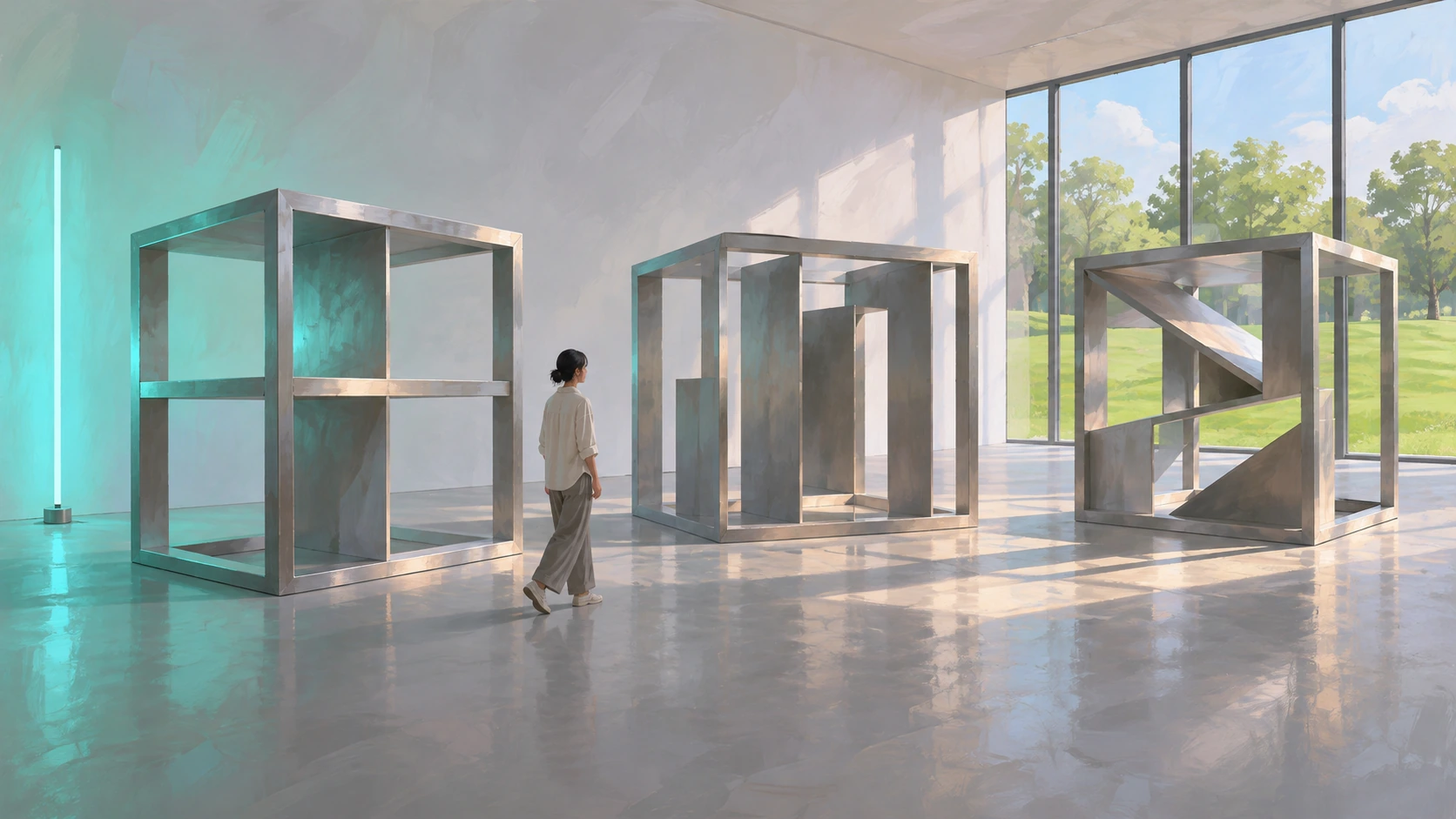
Cubes, slabs, columns, repeated units and planes all offer possibilities. With fewer details, edges, ground contact, spacing, thickness and negative space gain importance. Decide how a whole form occupies space before adding internal divisions or repetition.
Color and materials
Black is only one option. Wood, metal, fluorescent light, paint and translucent industrial materials produce different weight, reflection and color. Equal outer dimensions can contain different internal relationships; reduction does not erase difference.
Light, composition and scale
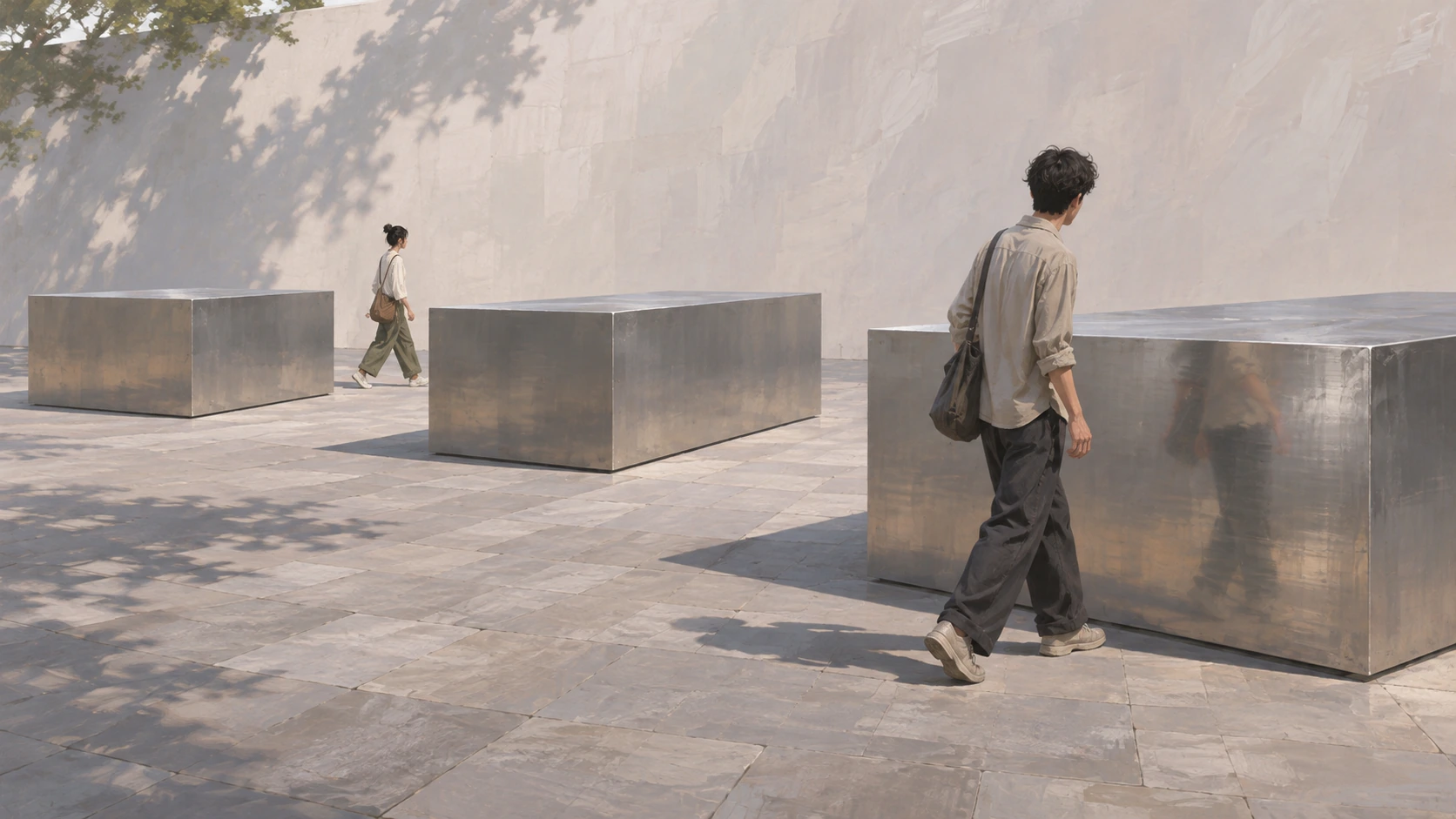
Sideways movement changes reflections, occlusion and intervals. A form can block a horizon or reflect its setting. Stable light and empty space direct attention to relationships. An ordinary-sized slab near the body can matter as much as a huge object.
Sound and graphics
Ambient sound, footsteps and small material sounds may suffice without imposing a threatening bass drone. Strict spacing, repetition and limited color can inform graphics while leaving form in the foreground.
Motifs and distinctions
Unlike concretecore, materials and dimensions are unrestricted; unlike a megastructure, no urban system is required. A black block with red light is not the only template, and white or metal alone does not establish Minimalism. Discuss real works through their actual contexts; the original illustrations study general spatial relationships.
Ideas for game environments
Use position-dependent reflection, precise ground contact, one changed interval in a repeated series, or a shape made by a gap. Let players discover that the object remains unchanged while their position alters the experience. Not every form needs to be a mechanism.
Read scene descriptions
Main environment
A roughly three-meter black brushed-metal monolith stands in ordinary dry grass without doors or symbols. Two visitors circle it at different distances. Low light reveals its thickness, side reflection and shadow against a simple horizon.
Circling bodies change the occlusion and intervals of repeated units.
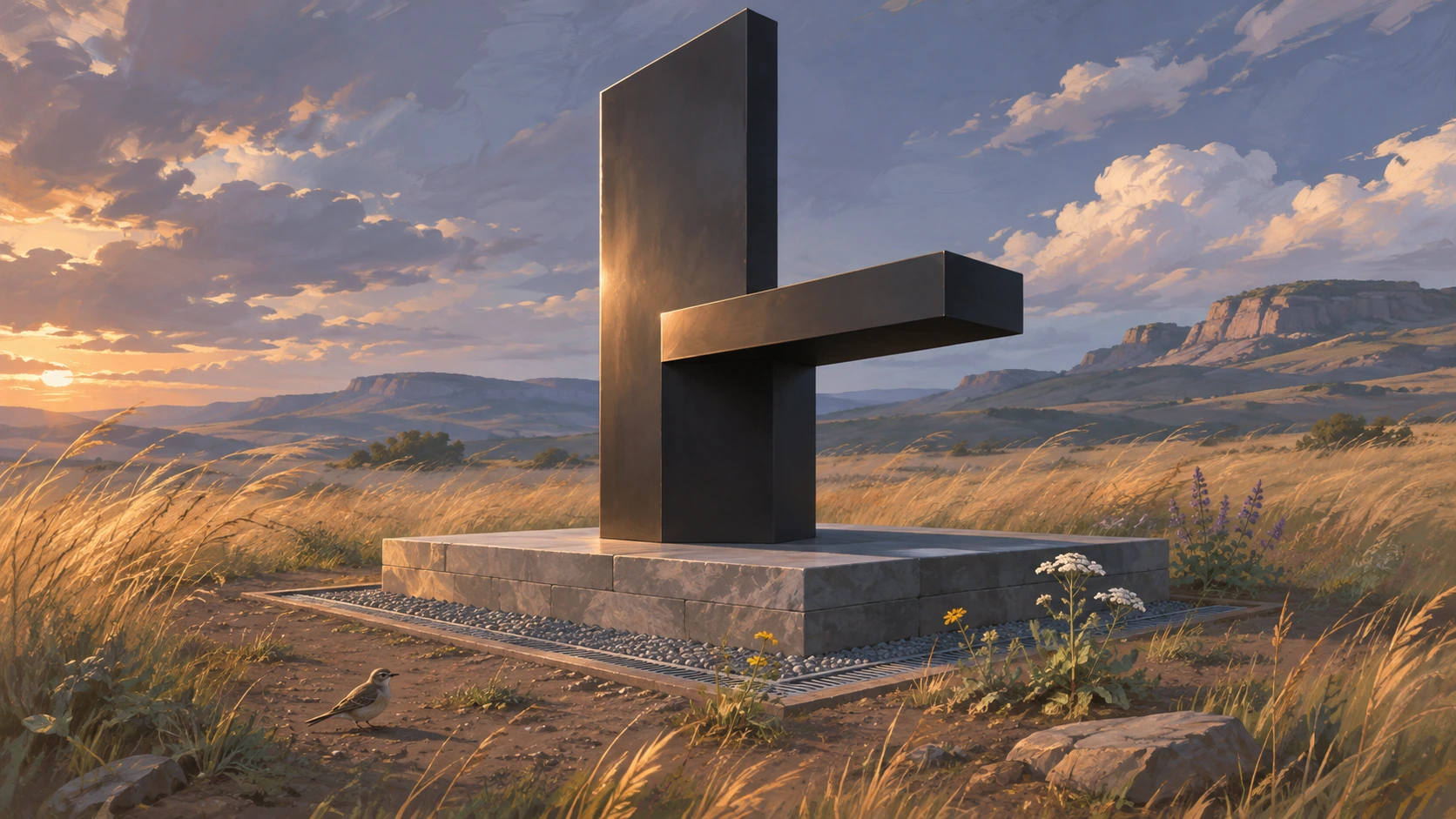
Irregular grass meets a rigid form while life stays rooted in suitable soil.
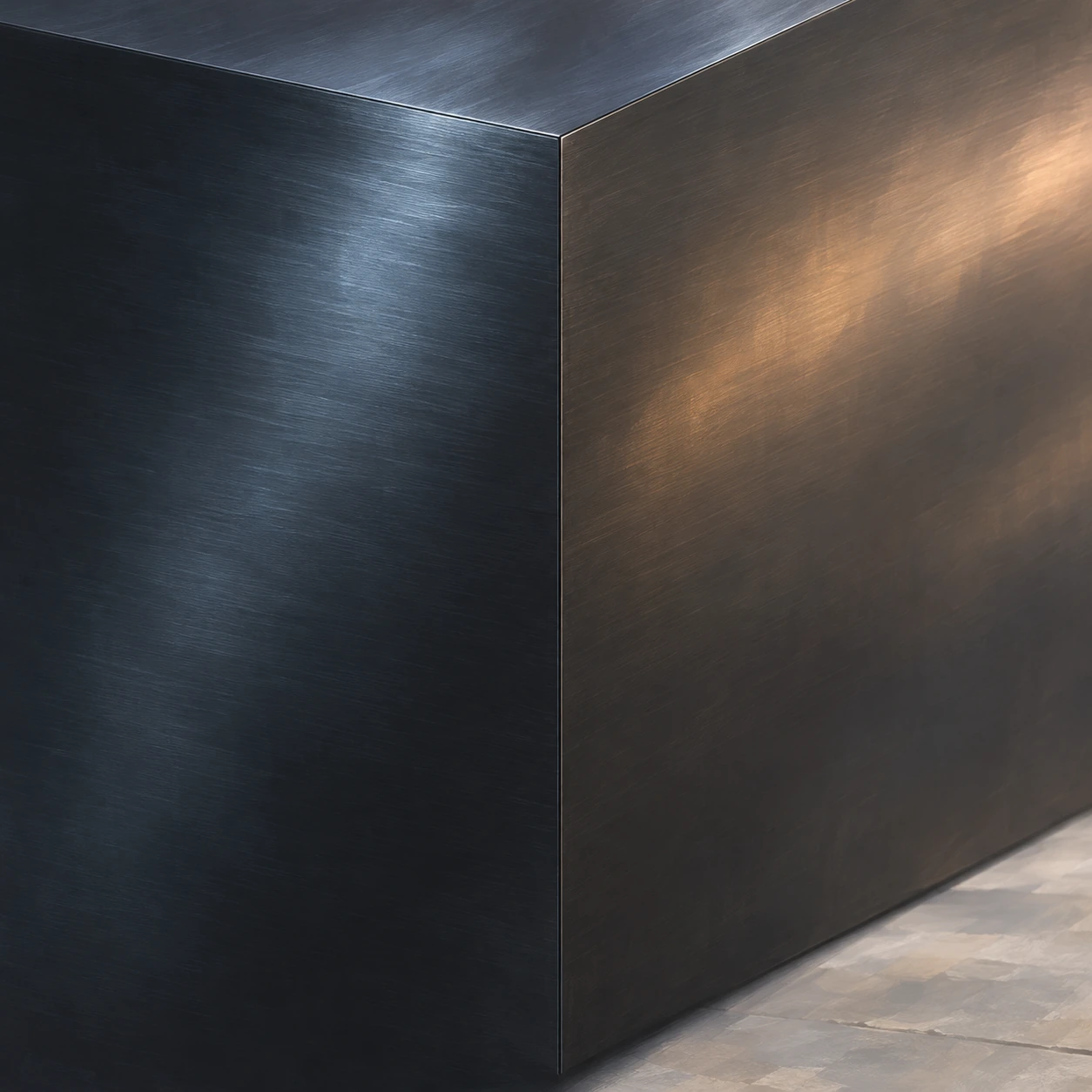
Light, reflection and a fine joint reveal a brushed-metal corner.
Internal differences and localized color alter related outer forms.