68Body Horror
Build intimate unease through changing bodily boundaries and an unstable sense of control.
Definition and context
Body horror focuses on how a body changes, senses and becomes unfamiliar. Transformation, fusion, replacement and uncontrolled growth may participate, yet intensity is not determined by gore alone. Different films and games offer comparisons of bodily autonomy and boundaries without making every differently shaped character inherently horrifying.
People and ecology
A character observing, testing and hesitating can create more intimate involvement than simply displaying an anomaly. They might find that a new outer surface responds differently from their intentions while retaining expression and choices. Actual illness, disability or bodily difference is not proof of evil: unease arises from changes and control within a specific situation.
Spaces and forms
Establish a familiar outline and everyday use before selecting one clear change, so viewers can identify what is no longer the same. Joints, contact boundaries and movement feedback carry more information than purposelessly accumulated limbs. Formerly suitable desks, sleeves and handles can suddenly reveal a changed relationship between body and space.
Color and materials
Skin, fabric and an invented new surface can contrast in hardness, moisture, elasticity and reflection. Intact surfaces without visible wounds can still be unsettling, such as continuous layers that were absent from the body's previous form. Give the change a local pattern instead of making every material wet flesh.
Light, composition and scale
Close distance, limited sightlines and a familiar room can return attention to the body; gentle light can reveal abnormal texture. Ordinary objects must remain readable as comparisons. Darkness and red light are available without being the only emotional tools.
Sound and graphics
An interaction might delay bodily response slightly or require a familiar grip to be understood again. Feedback needs enough clarity to locate unease in the situation rather than an unexplained control failure. Choices, refusal and self-observation can also become part of the narrative.
Motifs and distinctions
Compared with biomechanical aesthetics, the focus extends beyond organ–machine fusion to bodily experience and autonomy. It usually involves the body more directly than the broader grotesque. Unlike speculative evolution, sudden individual transformation is not equivalent to population adaptation over generations.
Ideas for game environments
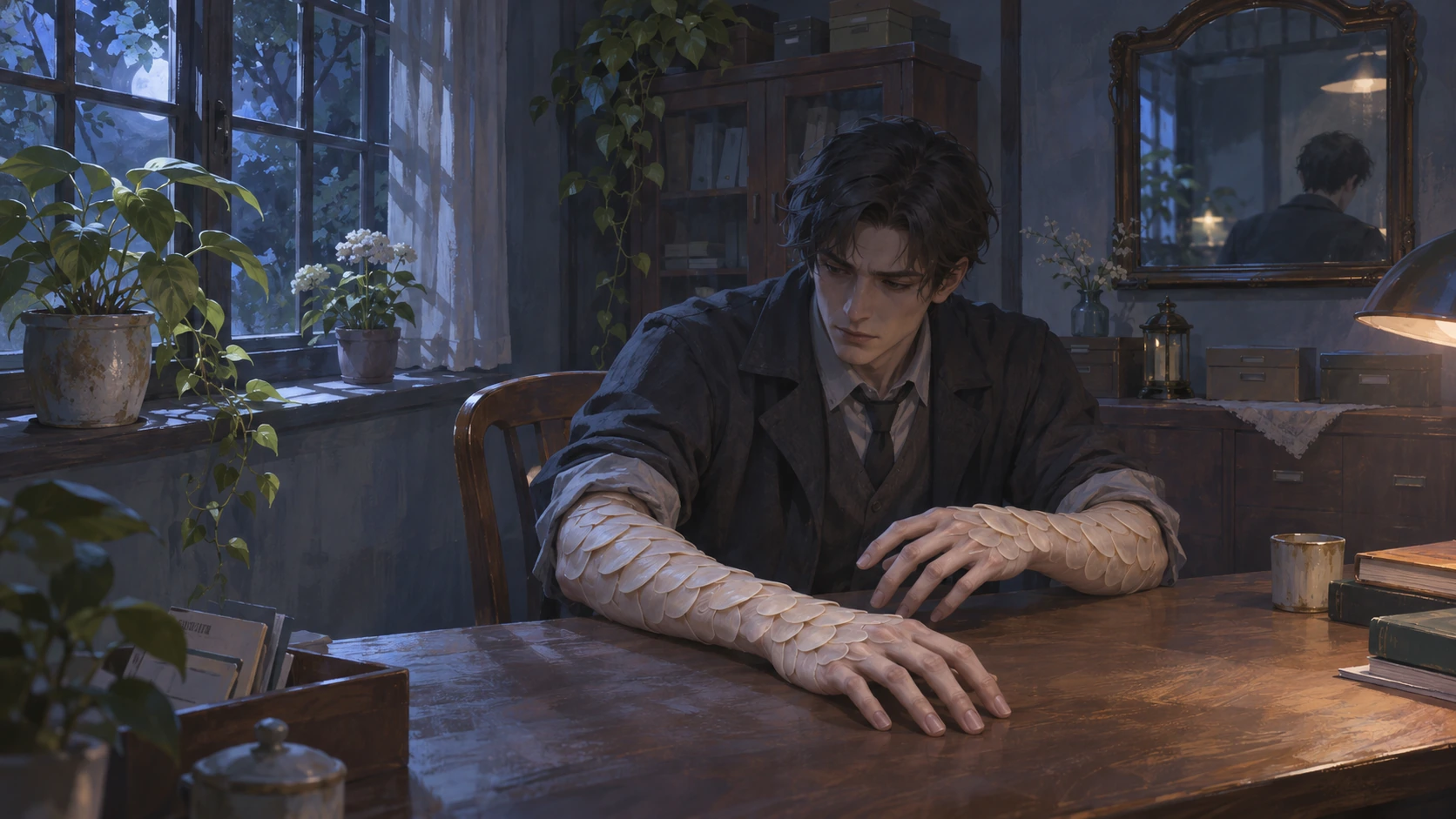
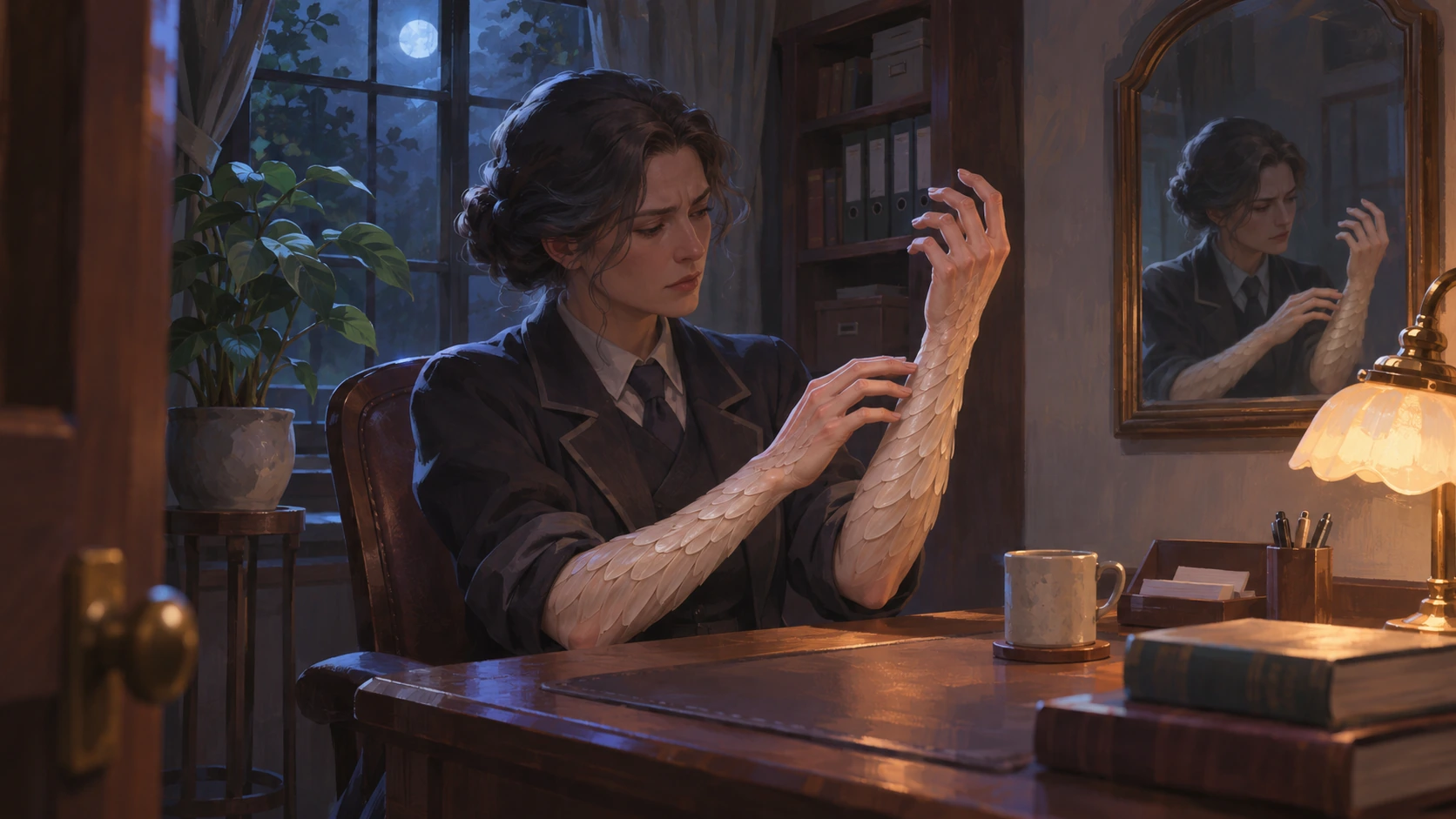
Design a night attendant's room. An adult discovers continuous pale, keratin-like plates along their forearms and the backs of their hands: the intact new surface still moves but alters familiar touch. A wooden desk, sleeves, mirror and window plants provide comparisons, establishing unease through non-graphic change and cautious observation.
Read scene descriptions
Main environment
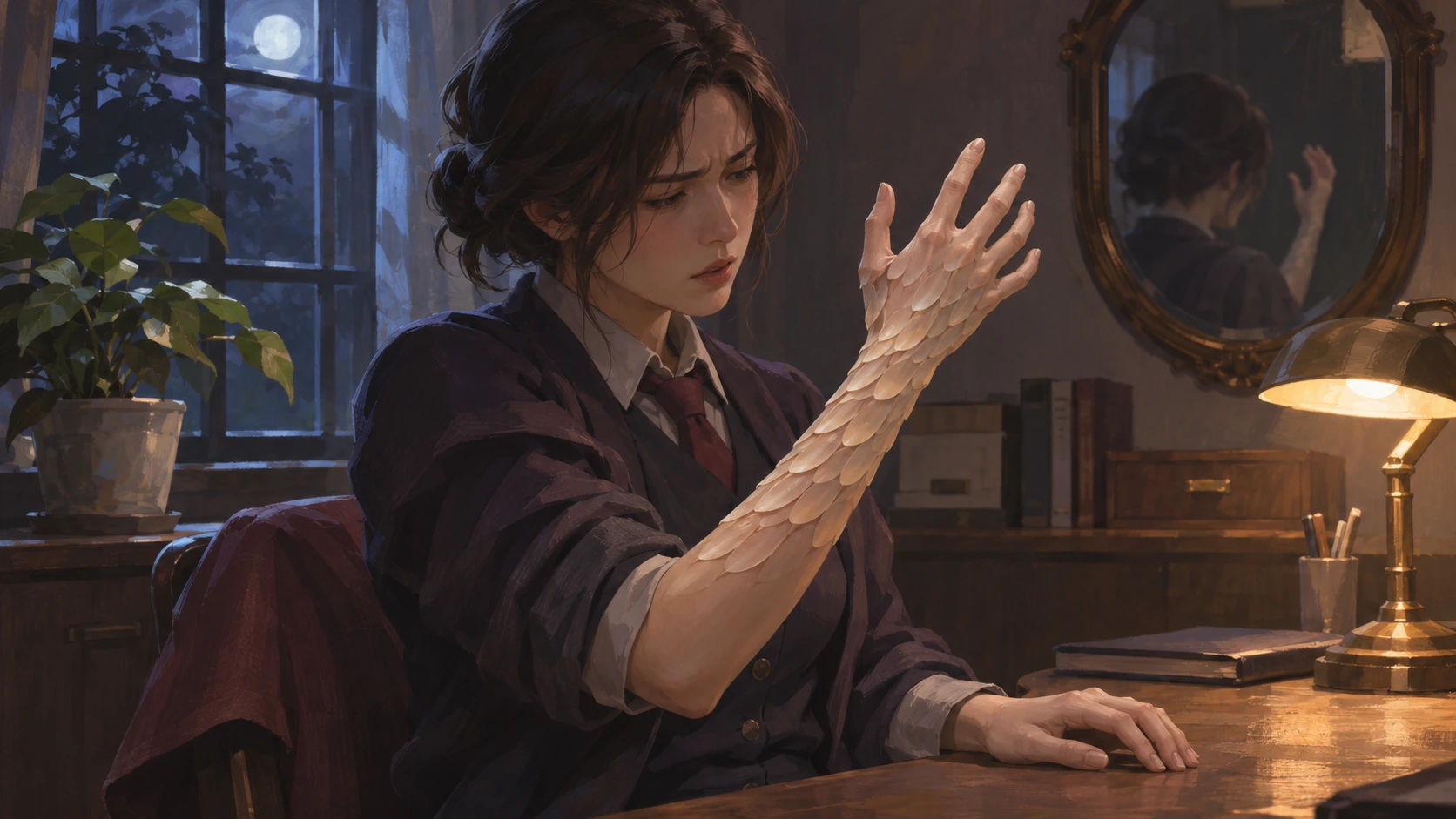
In an original night attendant’s room, an adult studies continuous pale, keratin-like plates along their forearms and the backs of their hands. Intact surfaces, ordinary sleeves, a wooden desk and mirror preserve familiar scale, with window plants and cautious posture emphasizing non-graphic bodily unfamiliarity.
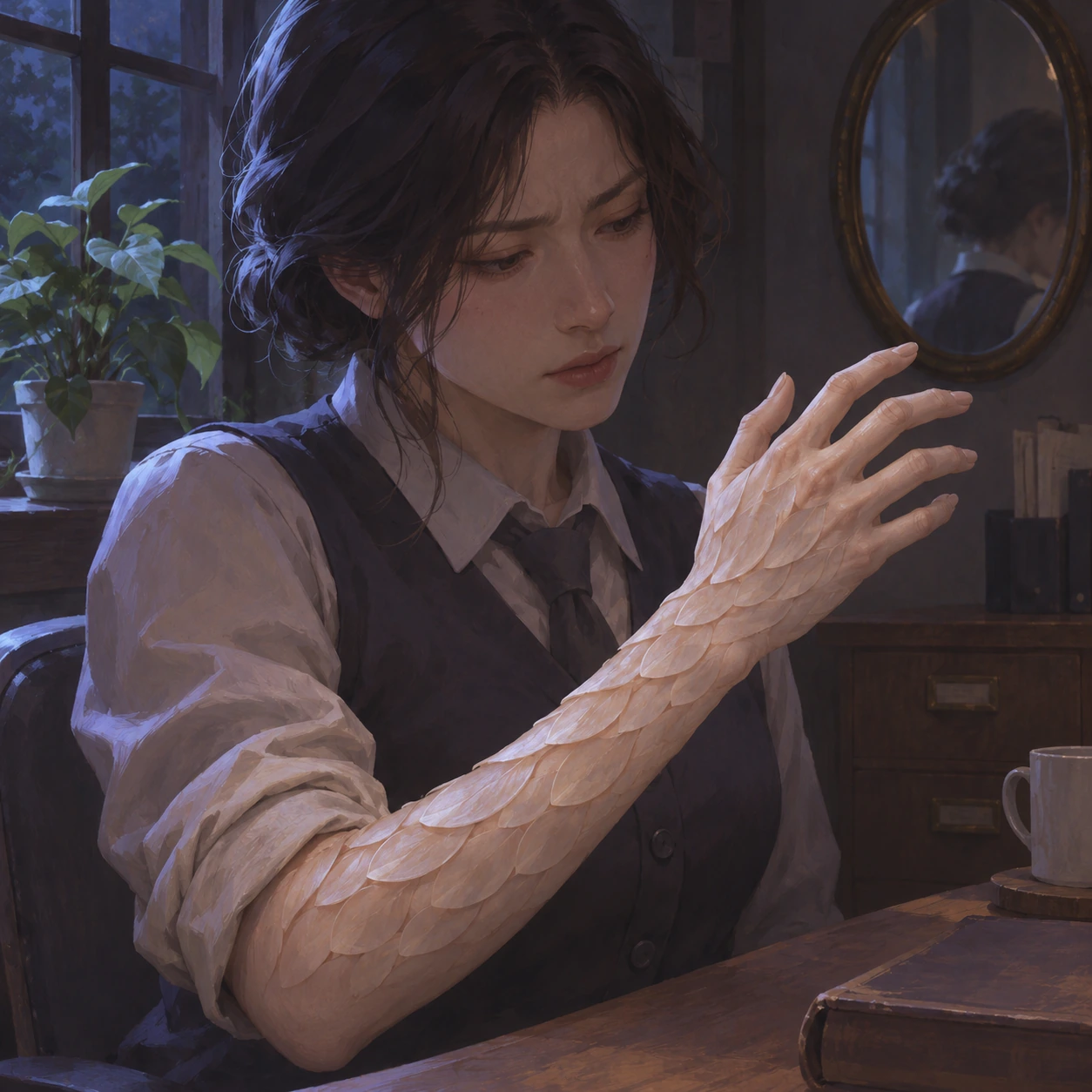
The character studies a new surface that still moves, conveying bodily experience through action and hesitation.
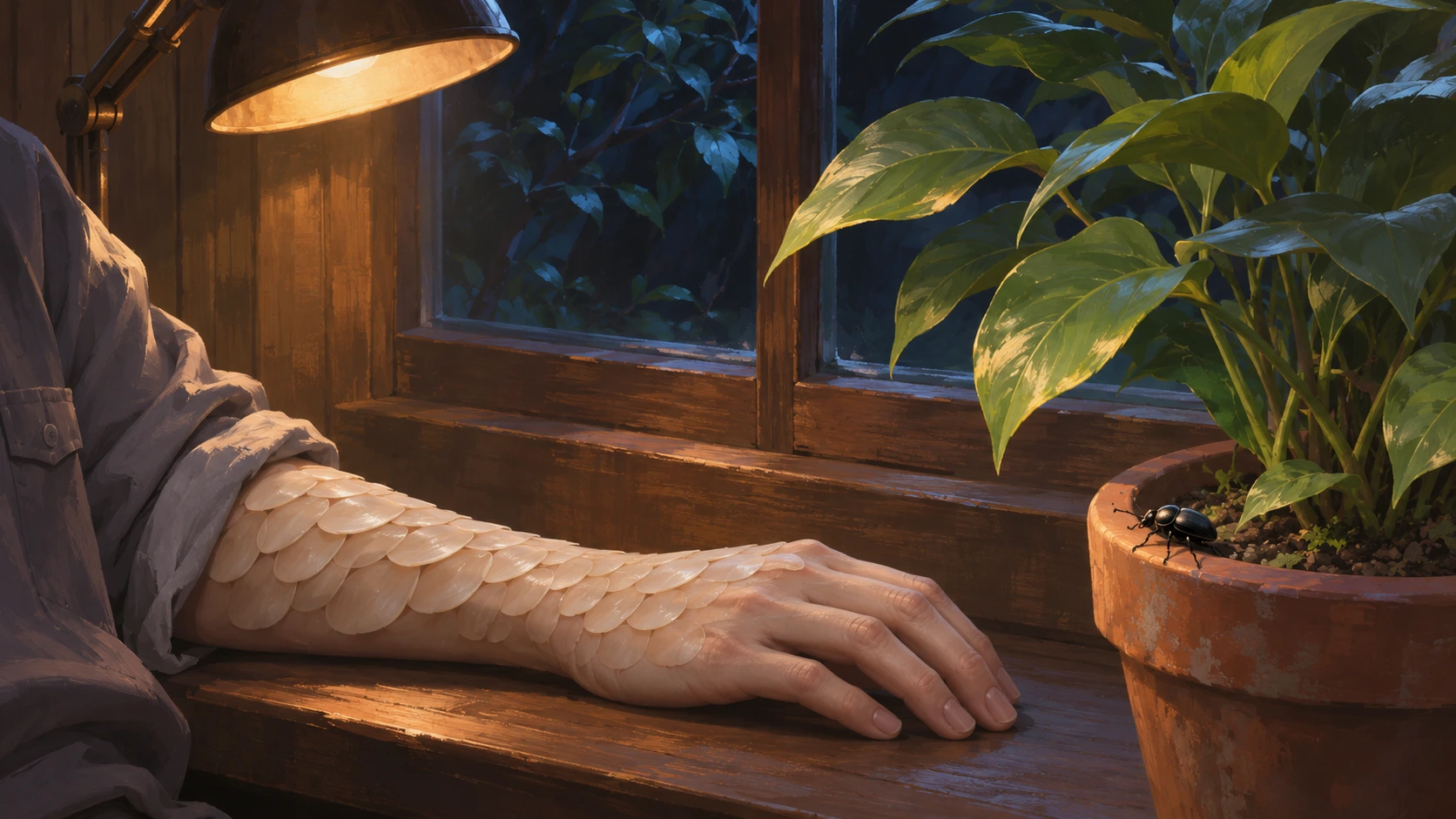
Real window plants and an intact small beetle provide natural comparisons for the imaginary change.
Continuous layers meet an ordinary sleeve, contrasting hardness and softness without broken surfaces.
An everyday room, mirror and stable desk provide familiar references for bodily change.