67The Grotesque
Create discord between familiar forms, letting comedy, strangeness and unease coexist.
Definition and context
The grotesque is not simply a synonym for ugliness, gore or monsters. Historical grotesque ornament arranges plants, animals, figures and architectural fragments within delicate frameworks; broader modern uses can also involve conflicting proportions, categories and emotions. Museum panels, prints depicting masks and objects offer different clues rather than one uniform style.
People and ecology
People can observe, use or repair objects, with ordinary actions contrasting against abnormal relationships. A mask may resemble both a face and foliage, while an object may have animal-like feet, without defining a character as evil. Real bodily differences should not become a shortcut for treating a group of people as monsters.
Spaces and forms
Retain a recognizable whole before creating contradictions of scale, connection or category. A thin vine might support an oversized mask, a pot handle resemble an architectural arch, or an ornamental animal become foliage. Mixed parts should remain traceable through shape; randomly adding eyes does not automatically create effective grotesquerie.
Color and materials
Carved wood, colored glaze, stone, paper and metal give hybrid forms different tones. Rounded porcelain may make a shape comic, while heavy stone can make the same shape feel oppressive. Cracks, coatings and joints can reveal how an object was made instead of covering everything with a uniform rotting texture.
Light, composition and scale
An orderly frame around a locally excessive form can be stronger than complexity everywhere. Side light can reveal exaggerated contours and slender supports together; a bright environment can still hold unease. The grotesque may emerge from overly polite, ornamental or cheerful surfaces as readily as darkness.
Sound and graphics
Interactions can disrupt familiar proportions: opening a small door might move an enormous ornament slightly, or turning a pot handle might shift distant leaves. Surprising effects can retain traceable connections. The transition between comedy and unease arises from relationships rather than simply increasing the volume of a scare.
Motifs and distinctions
Unlike body horror, this category need not center lost bodily autonomy or physiological change. Compared with surrealism, it focuses on emotional tension from hybrids, exaggeration and discord rather than every form of dream logic. Historical grottesche and broad grotesque narratives can illuminate each other without being interchangeable.
Ideas for game environments
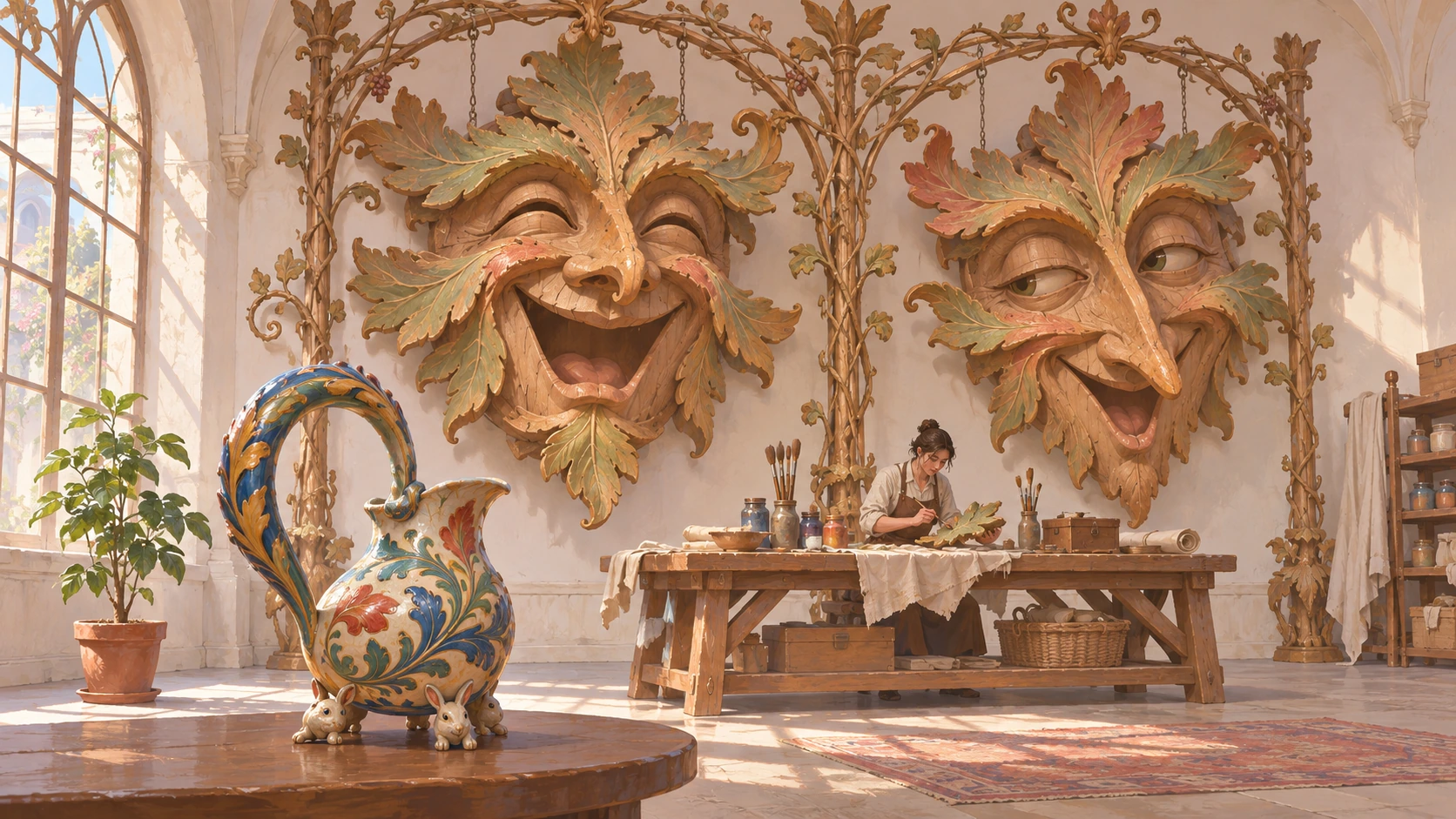
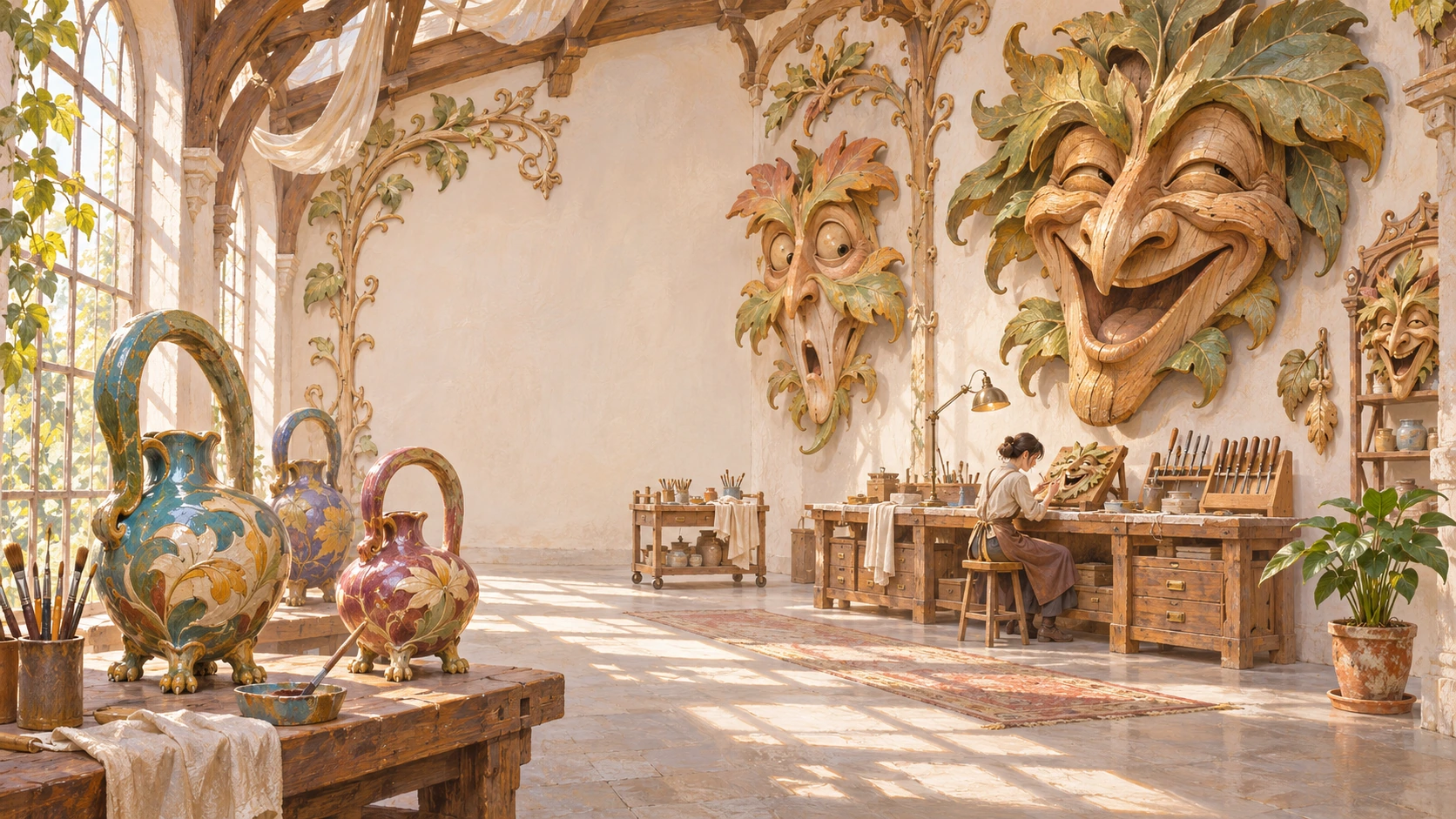
Design an absurd prop-repair hall. Thin vine frameworks on pale walls support oversized leaf-face masks; ceramic pots carry enormous arch-shaped handles and small animal feet. An ordinary restorer works at a stable wooden table, with real potted plants separate from carved leaves. Legible construction and familiar uses ground the disproportionate forms.
Read scene descriptions
Main environment
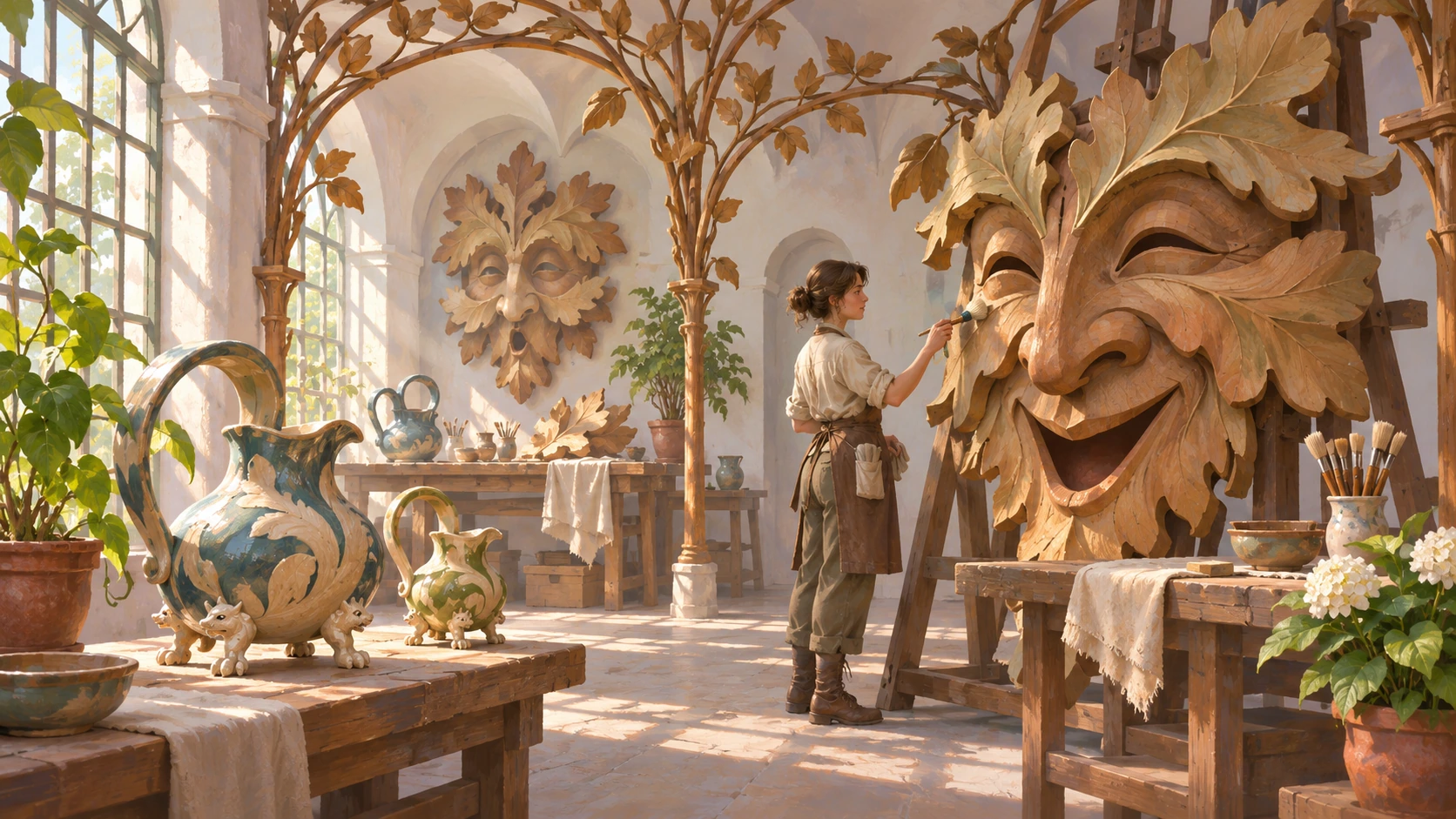
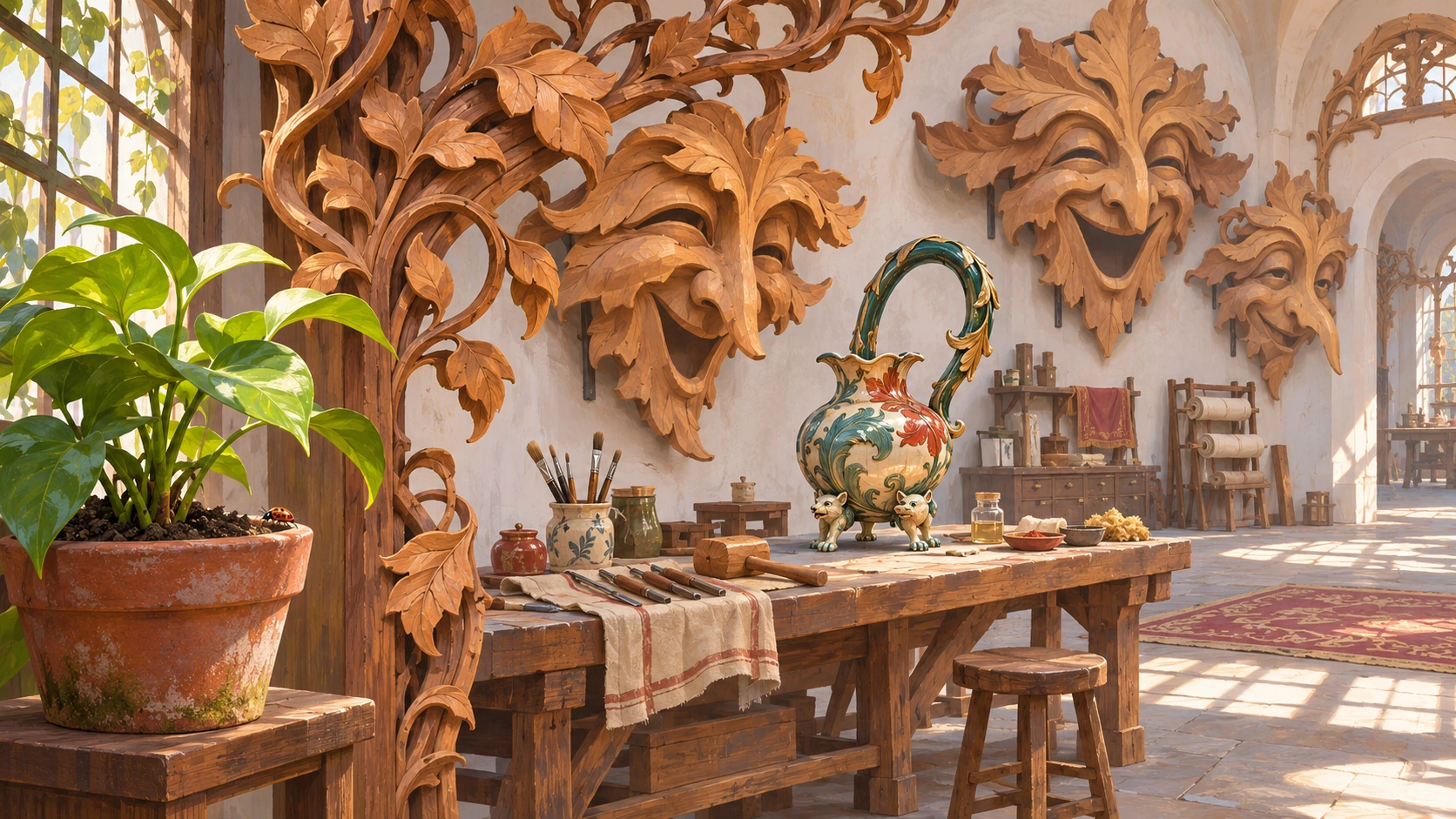
An original prop-repair hall combines thin vine frames, oversized leaf-face masks and ceramic pots with enormous arch handles and small animal feet. An ordinary restorer, stable wooden table and real plants retain everyday scale among distinct carved, glazed and pale wall surfaces.
Ordinary repair work and an oversized mask let everyday and abnormal relationships coexist.
Real plants remain separate from carved leaves, keeping categories legible around hybrid forms.
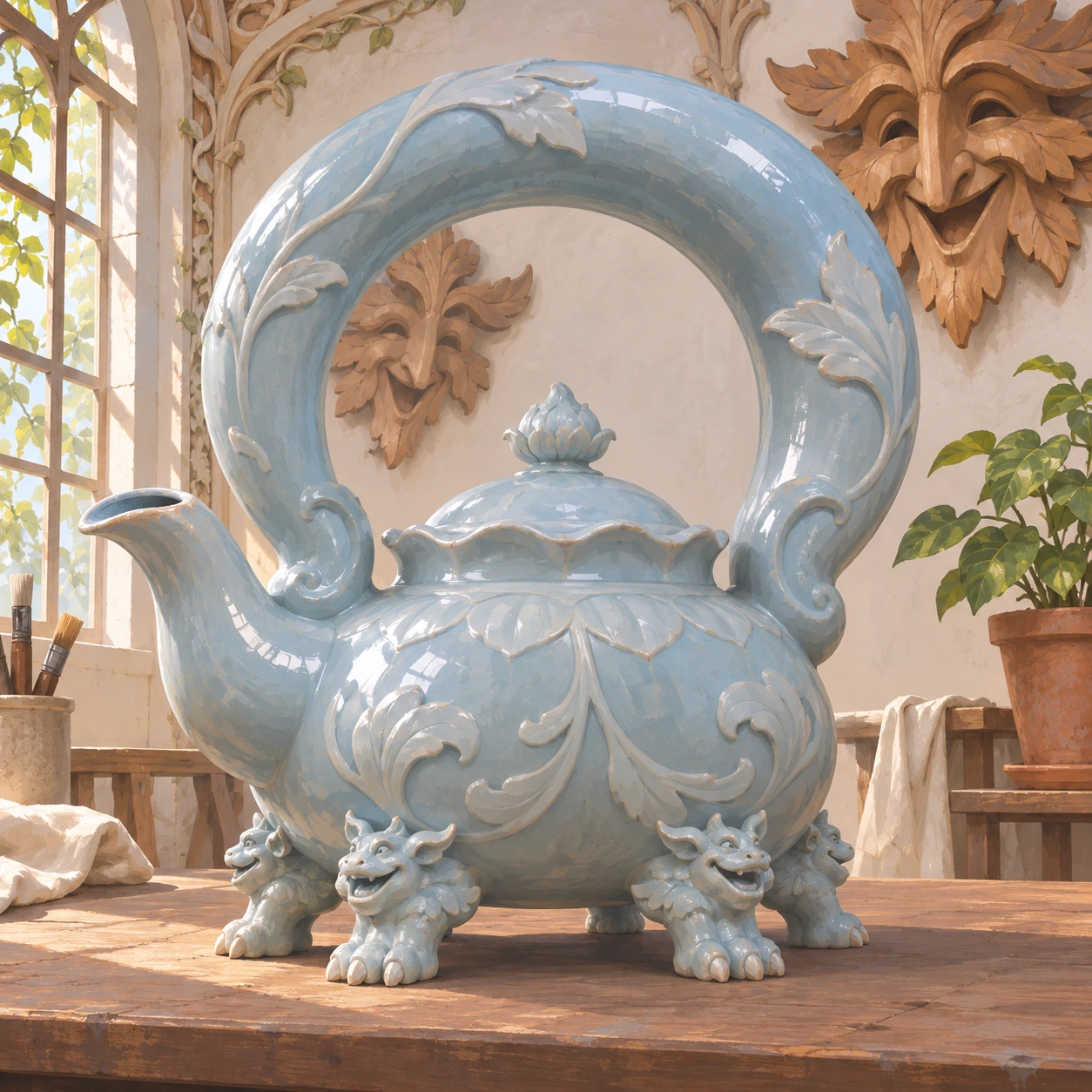
A glazed vessel body, exaggerated handle and small animal feet attach conflicting proportions to an object.
Fine frames, enormous ornaments and open space support local excess with order.