66Vectordelia / Vector Pop
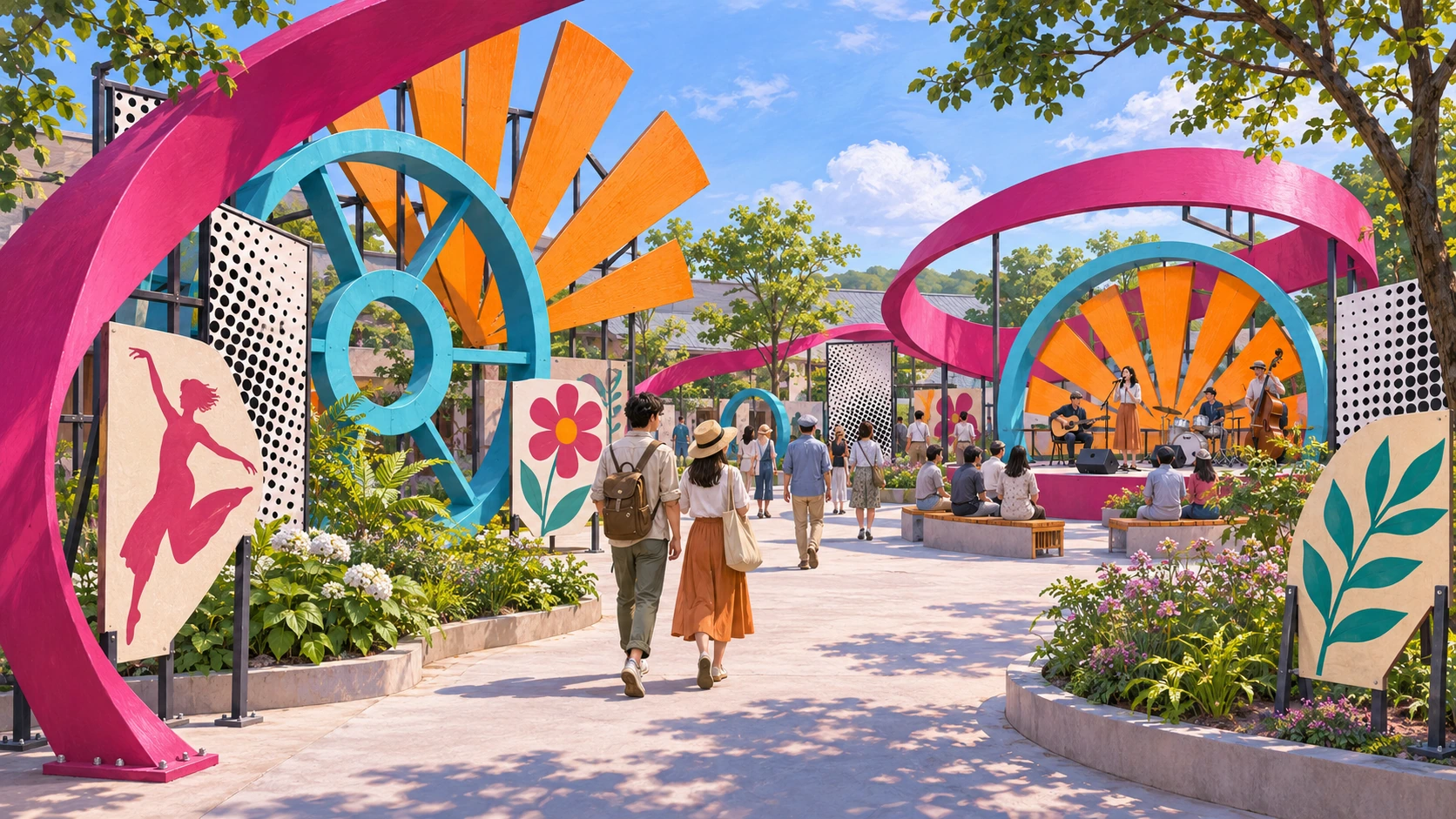
Combine curves, silhouettes, radial forms and halftones into dense but ordered compositions with crisp edges.
Definition and context
Vectordelia and Vector Pop are retrospective names for a family of elaborate vector-collage imagery from the 2000s. Researcher Evan Collins's public work-in-progress connects it with psychedelia, pop and several commercial image traditions. Frutiger Metro is a common online name, but Collins notes that the style's main influences are unrelated to Frutiger typefaces or Microsoft's Metro design language; naming boundaries differ between sources.
People and ecology
People may be actual users performing actions or flat silhouettes within graphics; keep the roles distinct. Music, sport and collective activity can provide movement. Flowers, butterflies and vines can become graphic motifs, distinct from real plants present in the setting.
Spaces and forms
One or two visual centers can organize curves, rings, arrows, rays and halftones through changes in scale and overlap. Complexity is not indiscriminate accumulation: quiet background, clear outer contours and changes in direction preserve hierarchy. Photographic fragments can meet flat forms when their relationships remain readable.
Color and materials
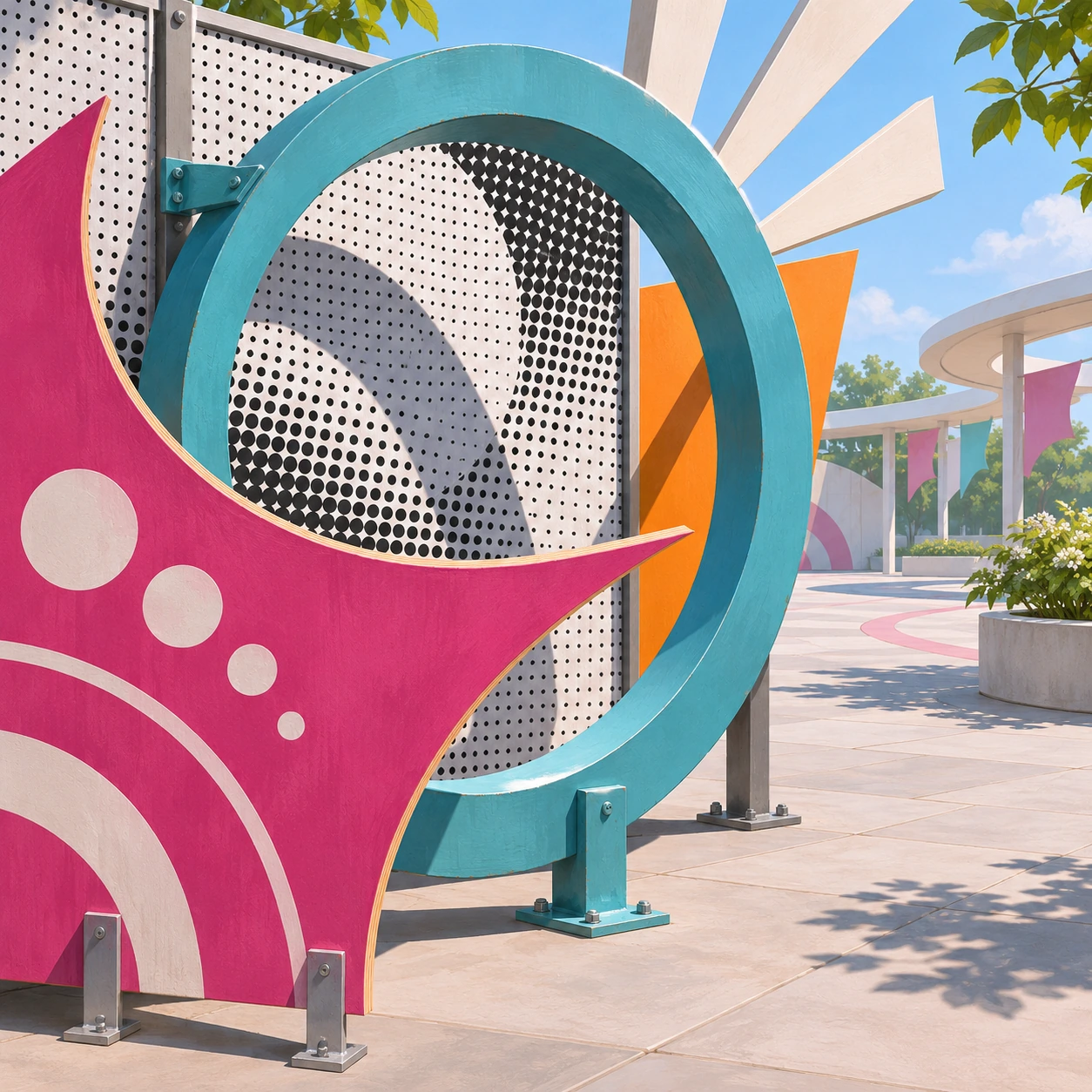
Begin with crisp color fields, gradients, halftone density and sharp edges before choosing materials for a spatial adaptation. Thin wooden panels, printed surfaces, colored metal and transparent sheets can carry different layers. Making every curve a glowing tube would lose the identity of flat graphic forms.
Light, composition and scale
Cyan, magenta, yellow-green, orange, black and white offer strong contrasts without requiring every color at once. Radial direction and neighboring color blocks often matter more than realistic shading. In a spatial adaptation, one natural light source can explain thickness while graphics remain flat and clear.
Sound and graphics
An interaction might rearrange panels, change a few layers' order with movement or follow a curve through activity areas. Keep real routes distinct from decorative lines. A rich visual rhythm should not conceal entrances, controls and places to pause.
Motifs and distinctions
Compared with minimalist vector illustration, the emphasis is on dense layering, ornamental curves and mixed imagery, without making every vector artwork part of this category. Digital edges, commercial imagery and media cues from the 2000s distinguish it from broader psychedelic art. Nearby labels such as Vectorheart overlap, so one ring alone cannot establish a classification.
Ideas for game environments
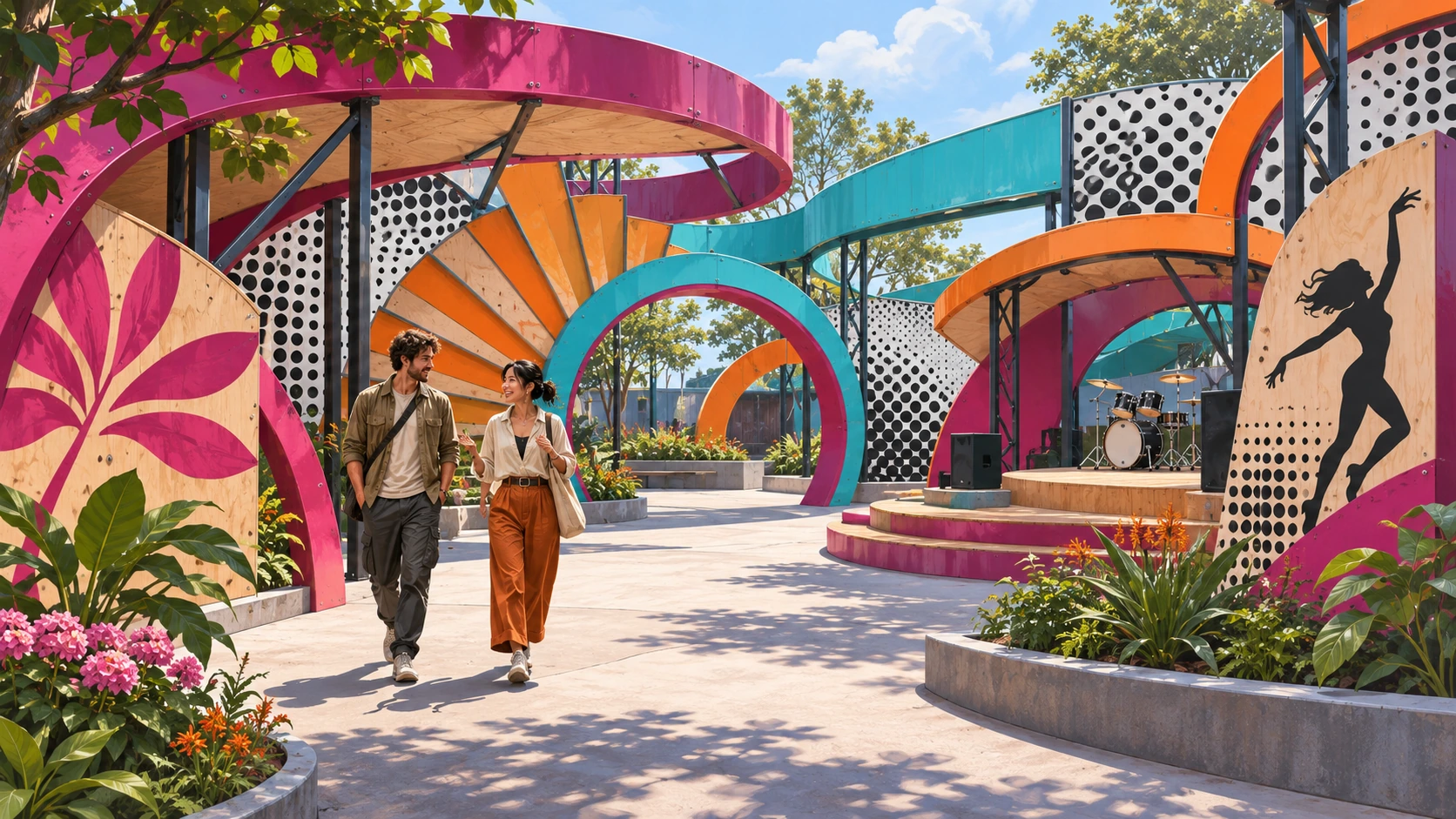
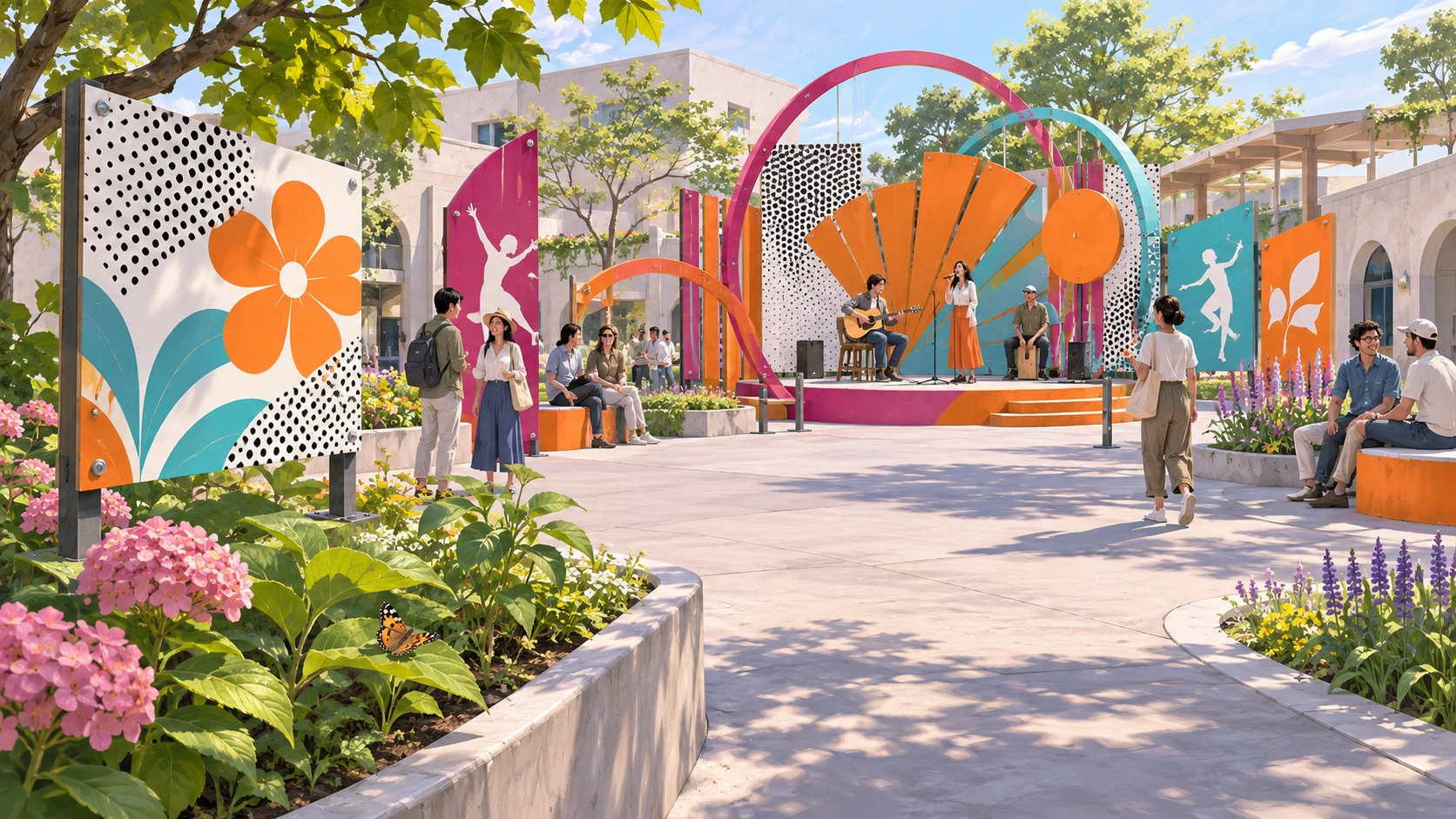
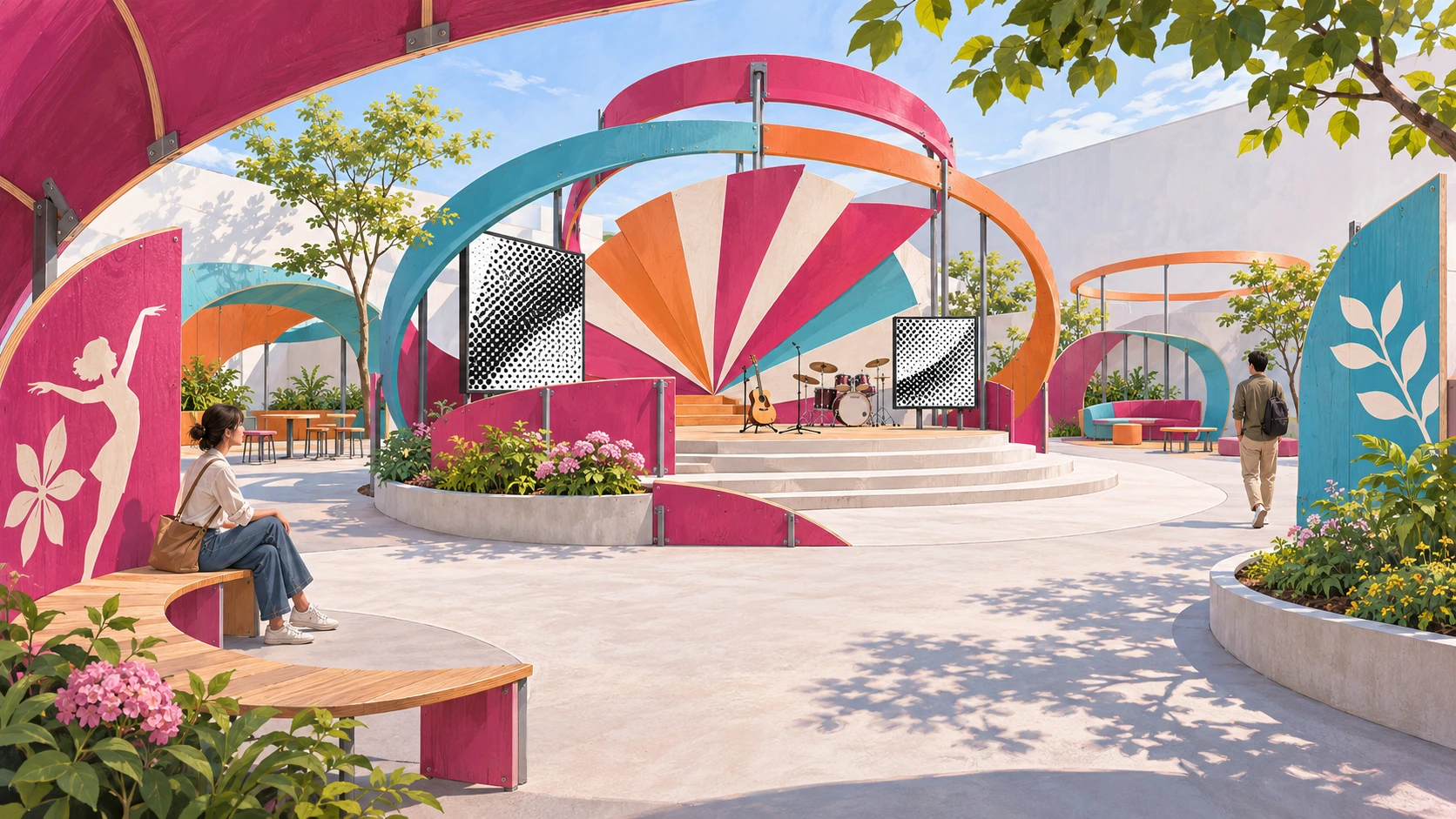
Design a community music courtyard. Thin magenta, cyan and orange curves, rings, radial panels and halftone screens overlap above pale ground while ordinary visitors follow clear routes. Actual plants remain in separate beds; silhouettes are graphics on decorative panels. The distinction between flat images and physical space supplies energy.
Read scene descriptions
Main environment
An original community music courtyard layers magenta, cyan and orange curved panels, rings, radial forms and halftone screens. Ordinary visitors follow clear routes over pale ground; actual plants remain distinct from graphic flowers and silhouettes, with density and open areas creating rhythm.
Actual people remain distinct from panel silhouettes, keeping human scale and graphic motion legible.
Real plants in beds retain forms distinct from flat floral graphics.
Panel edges, flat halftones and colored surfaces give layers readable thickness.
Curves, radial forms and open areas organize activity zones around clear routes.