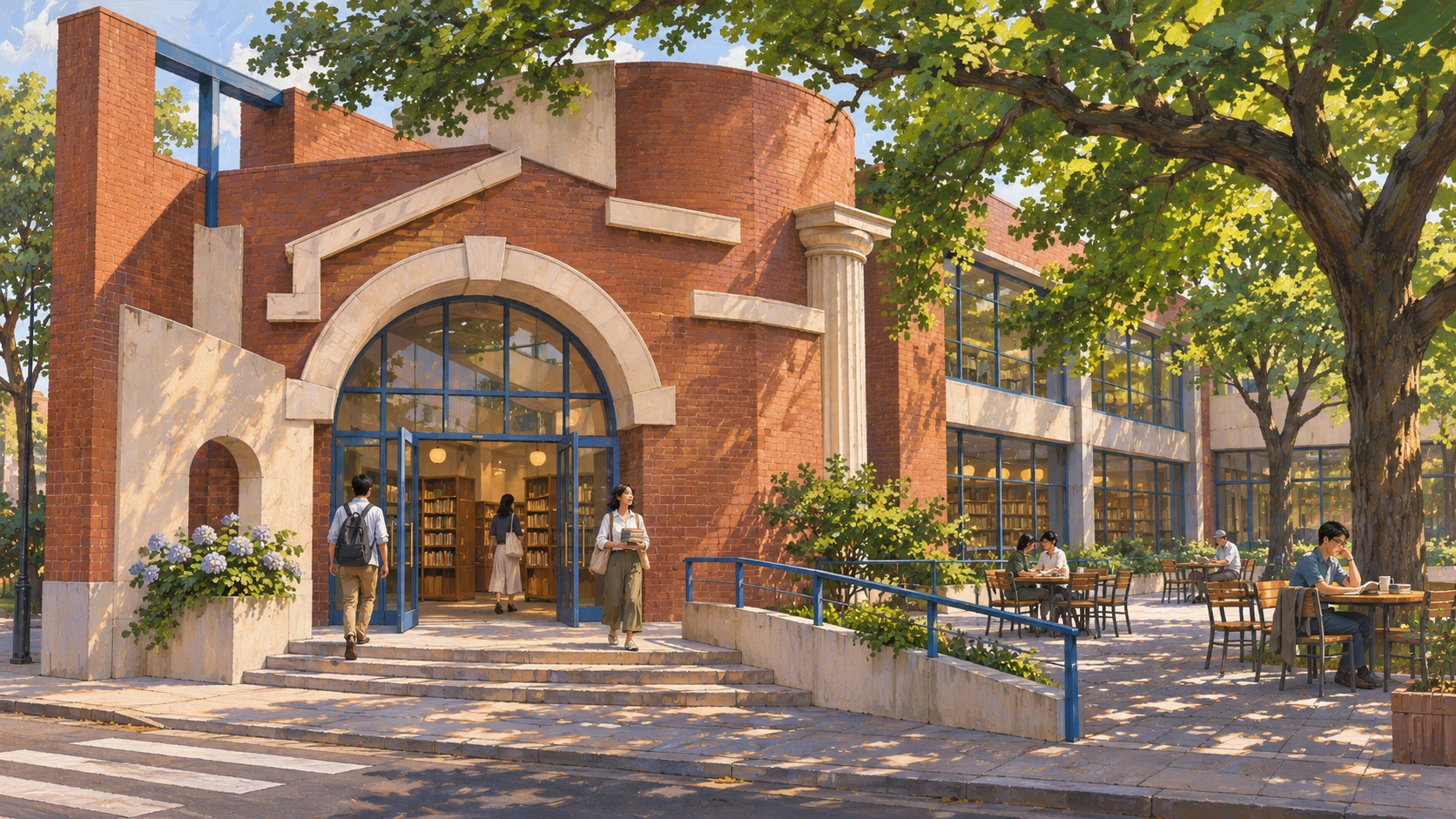
59Postmodern Architecture
Let familiar architectural language speak through new relationships.
Definition and context
In late-twentieth-century architectural debate, postmodernism used historical reference, everyday signs, complexity and multiple meanings to question ideals of a single pure form. Collaborative Venturi and Scott Brown work, and selected Stirling projects with his collaborators, offer different comparisons. Critical classification does not mean every architect accepted the label or that all periods of a career belong to it.
People and ecology
Approaching, finding an entrance, waiting and crossing a court connect architectural expression to use. Ordinary trees, planting beds and public seats can coexist with exaggerated elements. Let actions explain how a building is understood rather than simply line up tiny people before its facade.
Spaces and forms
Gables, columns, arches, cornices and rotundas may be enlarged, flattened, interrupted or recombined. Reference need not produce an entire revival palace; relationships between contemporary openings, stairs and historical outlines matter more. Establish entrance and movement before deciding how form suggests meaning or a small contradiction.
Color and materials
Brick, stone, colored panels, metal rails and ordinary plaster can remain distinct. Surface patterns, solid elements and structural support may perform different roles, so identify their relationships. Historical reference need not become ornament everywhere or require every surface to shine with bright color.
Light, composition and scale
Color blocks, profiles and framing can establish layers: a distant overall gesture gives way to material and detail nearby. Daylight can contrast heavy walls with lightweight colored elements. Theatricality may serve everyday entrances and courts without becoming a theme park.
Sound and graphics
Interaction can let people approach one entrance from different directions and discover differences between surface suggestion and actual route. Graphics and writing need a particular context when used. Without writing, profiles, openings, color and traces of use can still communicate. Keep visual rhetoric connected to action.
Motifs and distinctions
Unlike neoclassicism, this category may alter, juxtapose or play with historical elements rather than restore one classical order. Unlike vaporwave, it concerns architectural context and meaning rather than merely pink, columns and nostalgia. Nor must it organize space through the cuts and fragmentation associated with deconstructivism.
Ideas for game environments
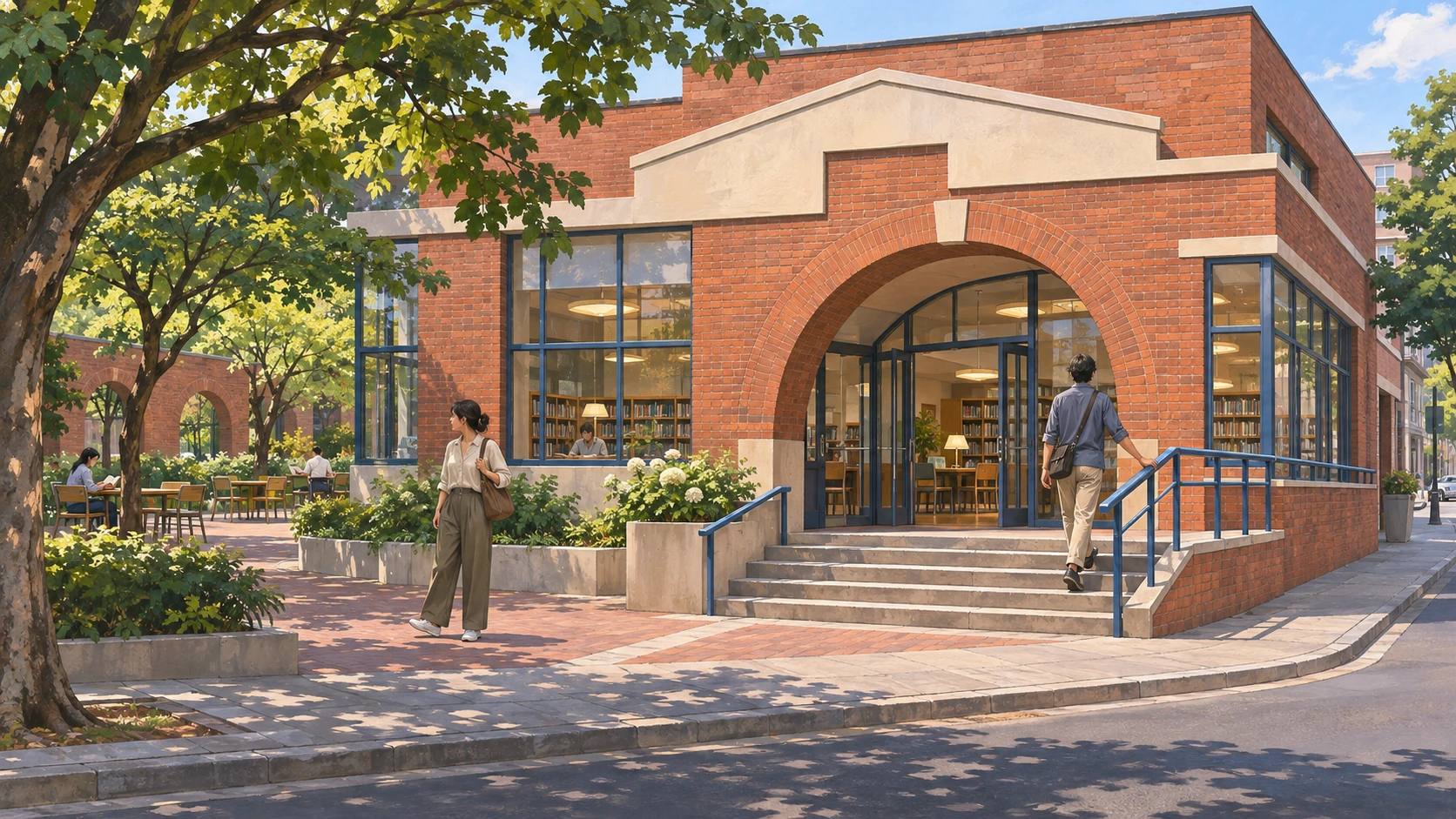
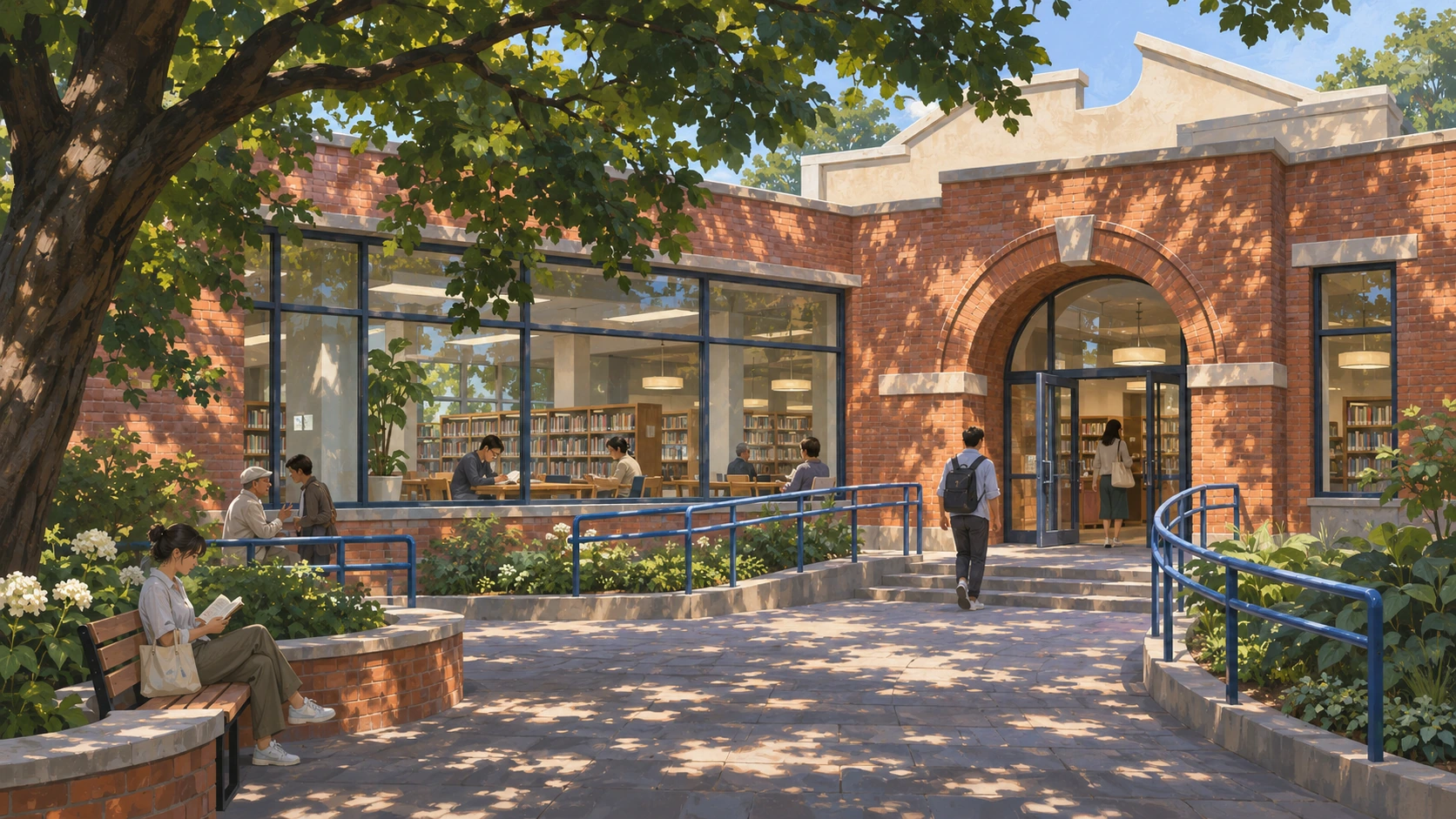
Design a corner public library where brick walls, an offset round-arched entrance and an interrupted pale gable relate to one another. Blue rails lead toward a side court, with ordinary reading tables and tree shade retaining public life. An entrance reads from afar; altered historical outlines become apparent closer up.
Read scene descriptions
Main environment
An original corner library relates brick walls, an offset round arch, an interrupted pale gable and blue rails. Public reading tables and a shaded side court retain daily scale as historical outlines are rearranged around a legible entrance and route.
Approach and pauses reveal the relationship between an entrance image and its actual route.
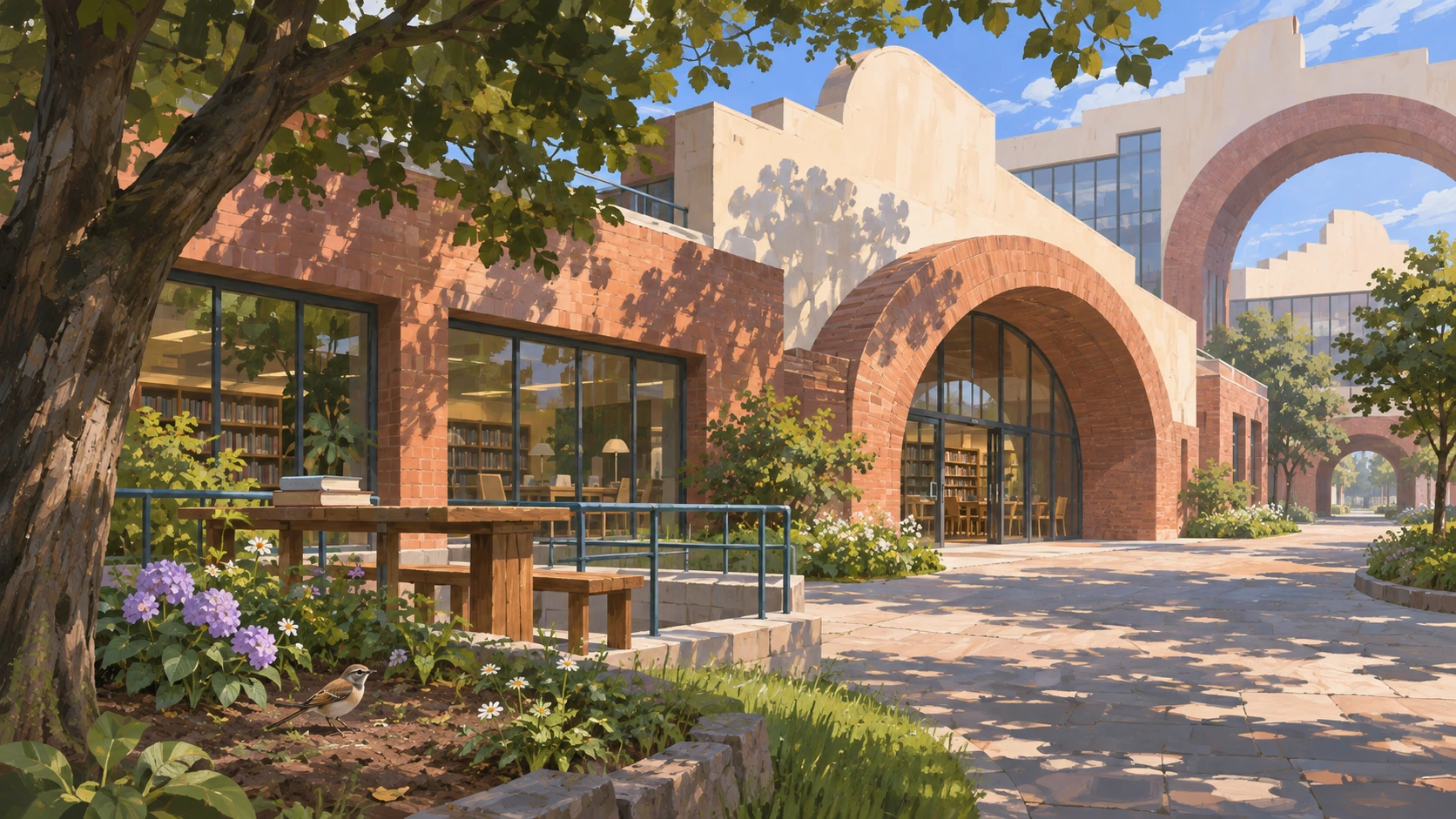
Ordinary court ecology and public seating retain daily scale beside exaggerated forms.
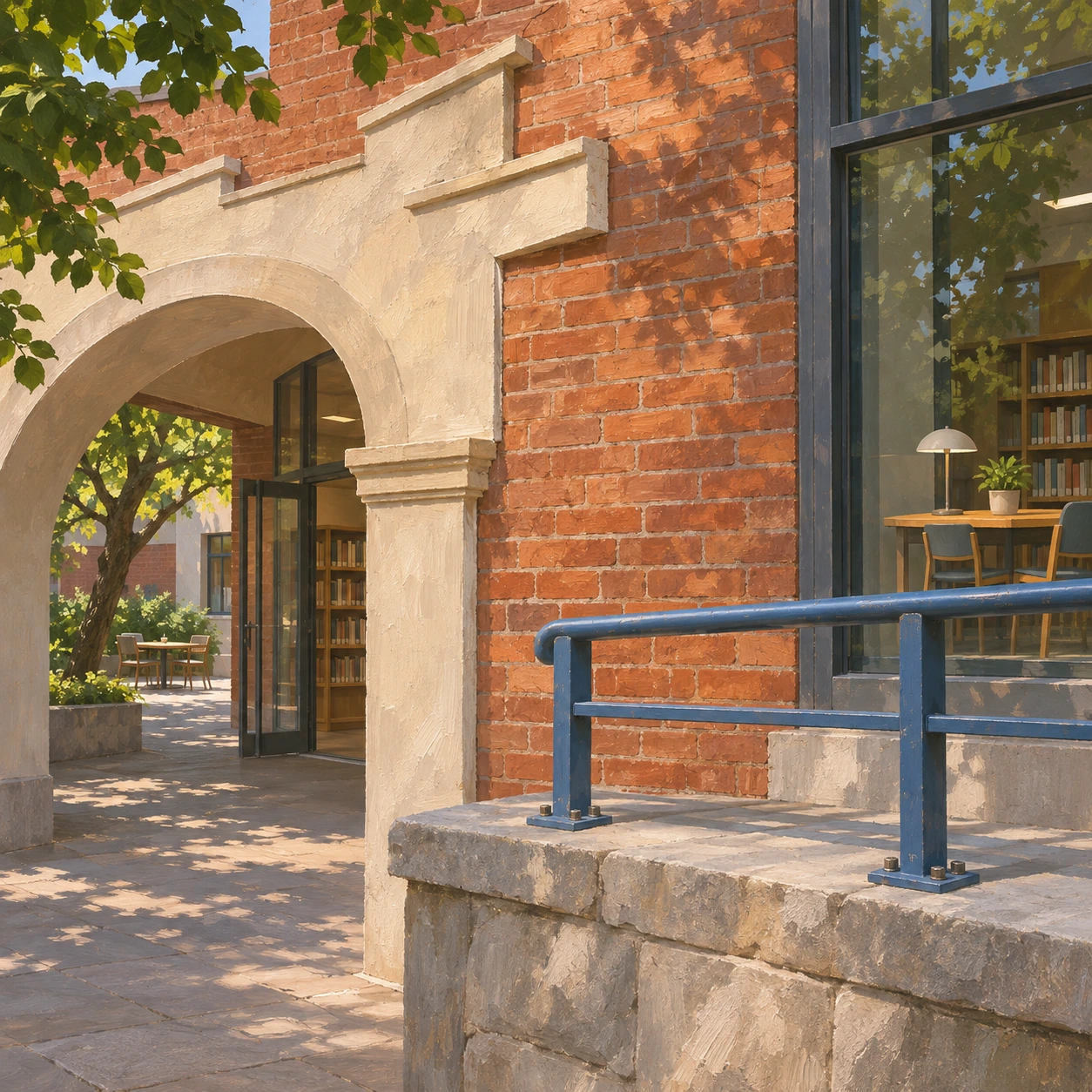
Brick, pale plaster and colored rails give solids and surfaces distinct roles.
Historical outlines and contemporary openings frame a usable side court and reading space.