58Structuralism / Mat-building
Let repeated units accommodate different encounters and daily uses.
Definition and context
Architectural structuralism concerns units, relationships and how people inhabit space rather than simply arranging identical cubes. Mat-building commonly spreads through a relatively low, continuous network of routes, courts and rooms. It overlaps with structuralism without being synonymous. Public Hertzberger archives and historical Free University Berlin images offer different comparisons.
People and ecology
Sitting on steps, pausing at thresholds, arranging work corners and meeting on shared routes give units particular uses. Plants and courts can aid orientation without placing an identical planter in every cell. Let personal occupation coexist with common passage instead of gathering everyone into one central hall.
Spaces and forms
Establish unit connections and main routes before branches, courts and changes of level. Repetition supplies an understandable order; local differences establish places. A low network still needs entrances, light and directional clues. Difficulty finding a route is not a necessary structuralist quality.
Color and materials
Masonry, concrete, wood, glass and other materials can form units and connections. Joints, low boundaries, benches and rails make scale legible. The issue is which spatial relationships a structure enables, not merely how much concrete remains exposed.
Light, composition and scale
Roof lights, courts and lateral openings give depth to interior space, while different light can aid orientation. Keep nearby group activity and a distant continuous route in view together. Light and use can change the experience of a grid without identical brightness or depth everywhere.
Sound and graphics
Interaction can involve route choices, shared tools, movable furniture or changes of use within a unit. A threshold may allow both passage and a brief pause; neighboring units can retain views and boundaries. Personal and public space need not be separated only by total openness or enclosure.
Motifs and distinctions
Unlike megastructures, this category can begin with small inhabitable units and their relationships rather than a superstructure governing a city. Unlike endless architecture, its network need not multiply indefinitely. Mat-building emphasizes low continuous weaving; not every structuralist or modular building belongs to that type.
Ideas for game environments
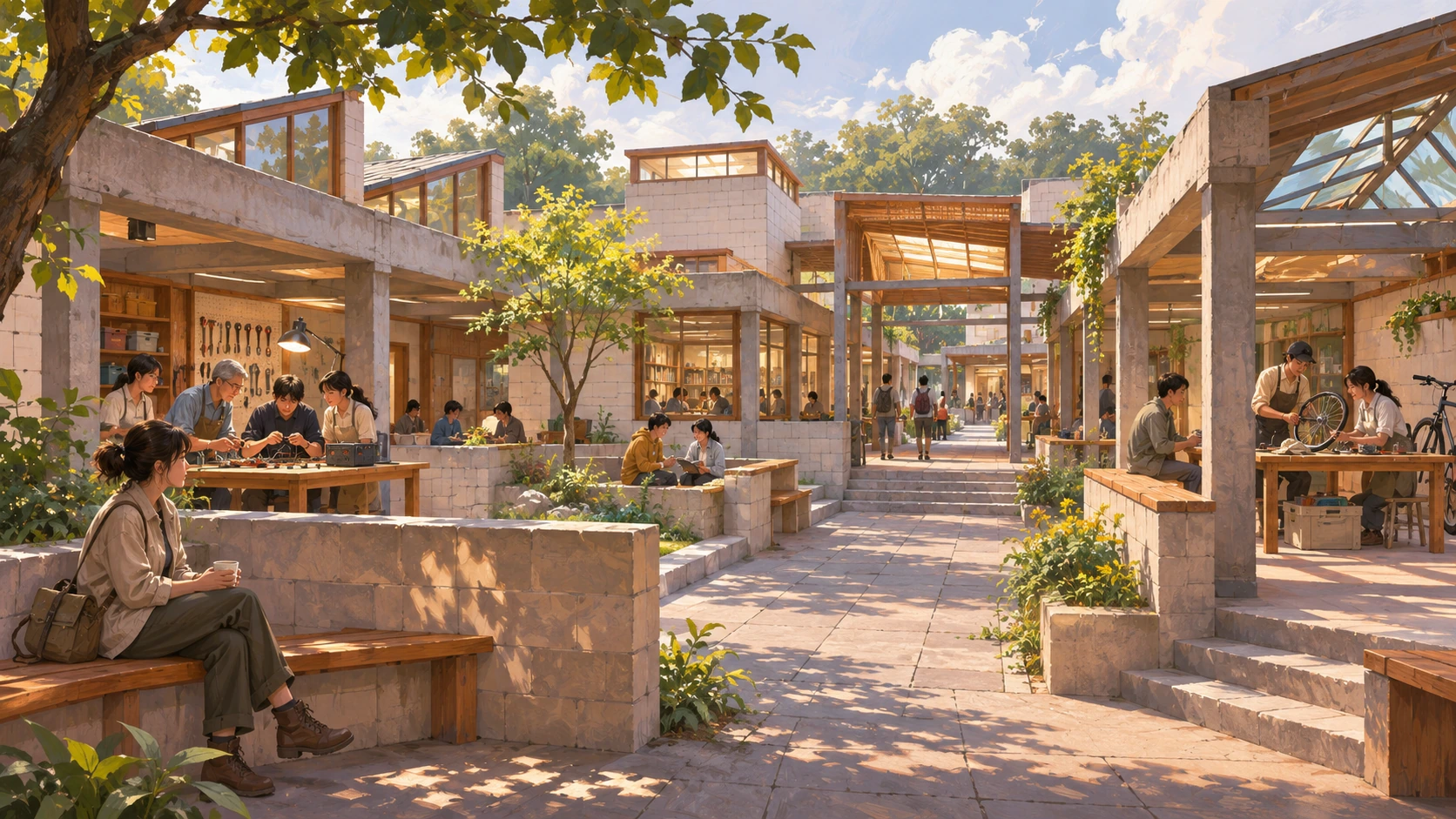
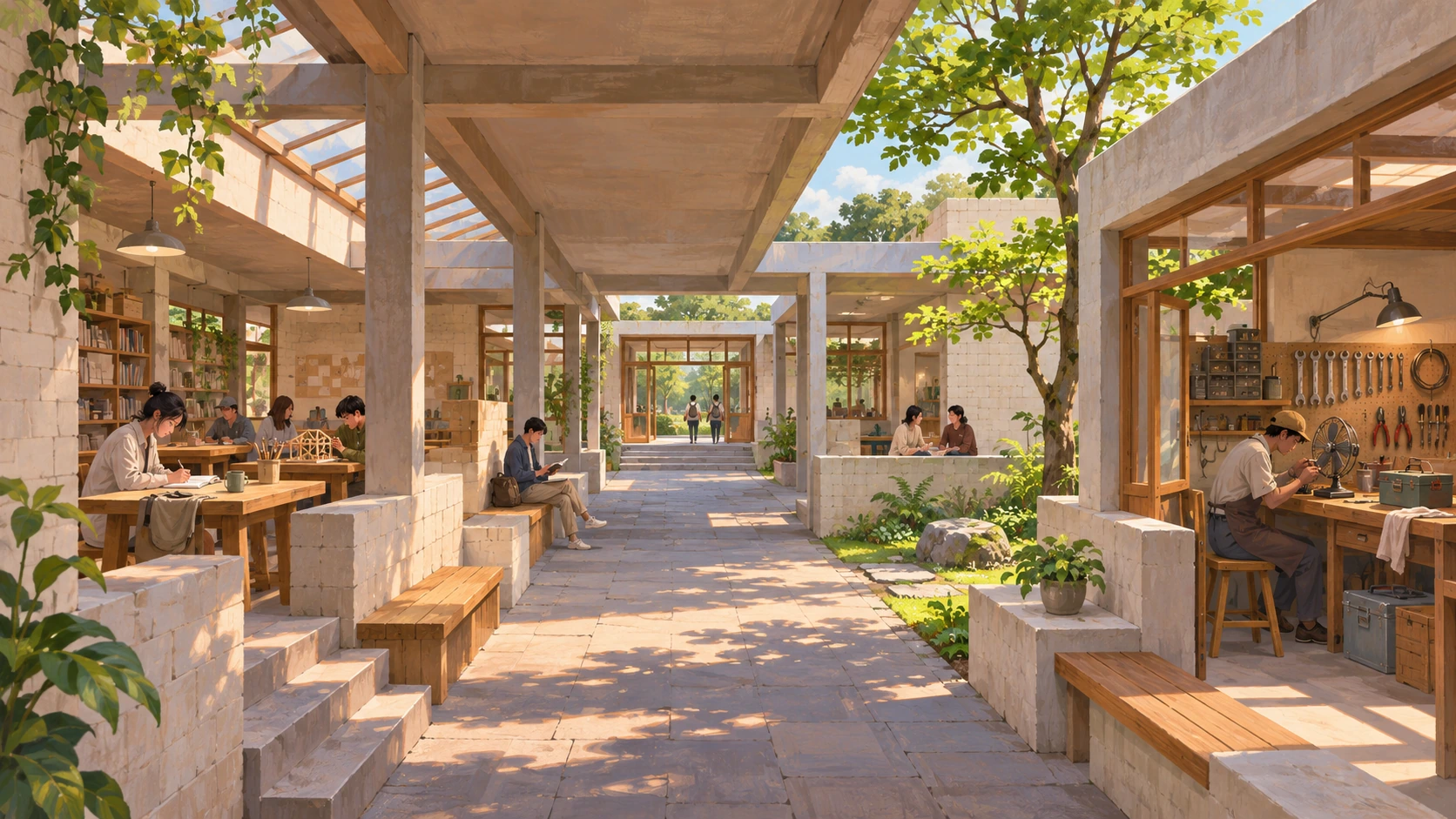
Design a low-rise community learning and repair center. Similar units connect around courts, shared interior streets pass between them, and steps and low walls offer places to pause. Different worktables, plants and light identify uses, preserving inhabitable differences within a common order.
Read scene descriptions
Main environment
An original low-rise community learning center weaves similar units, shared interior streets and small courts. Pale masonry, clear beams and wooden worktables retain scale as steps and low boundaries place passage, pauses and group activity alongside one another.
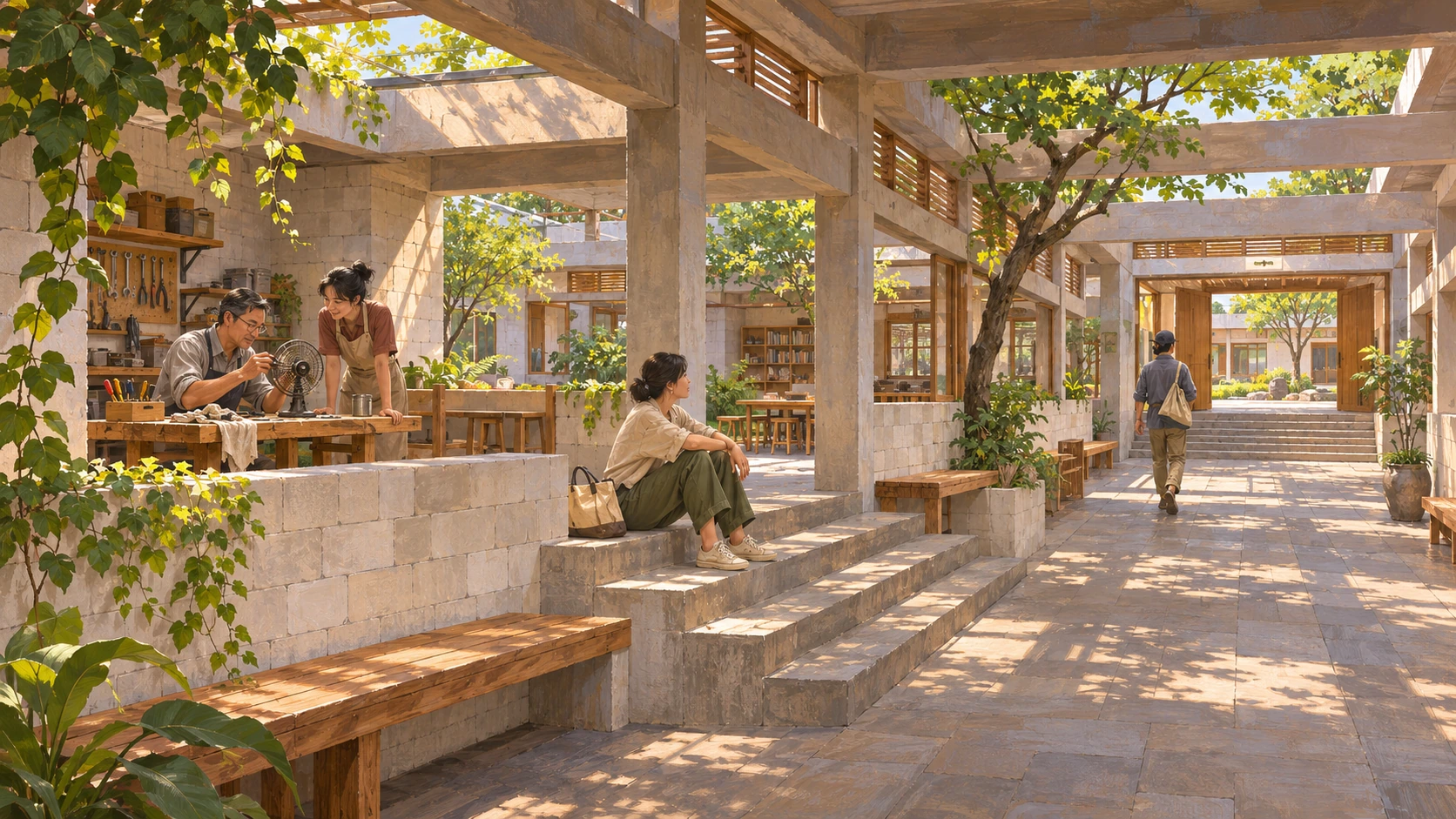
Thresholds, steps and work corners let personal occupation coexist with public passage.
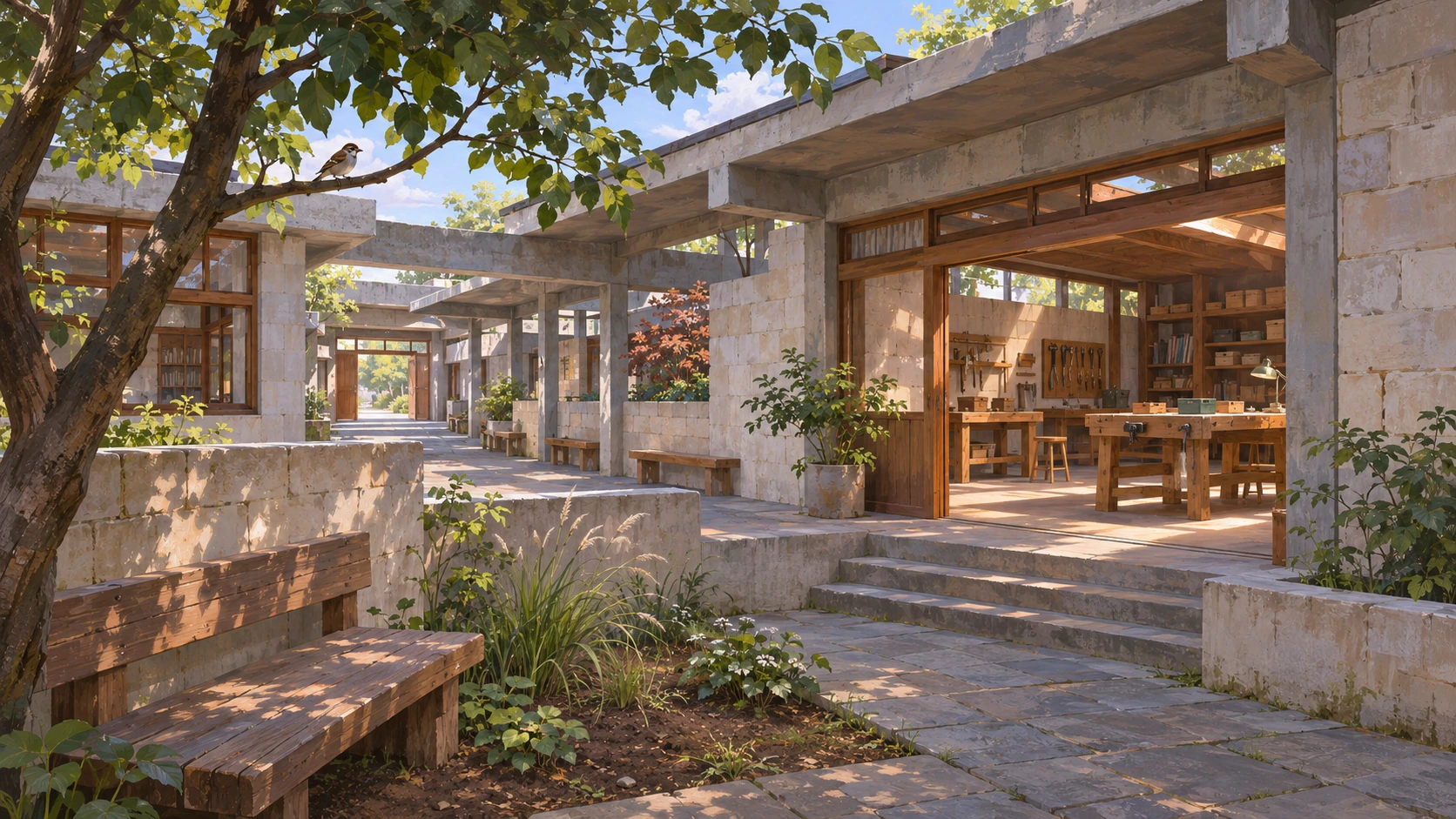
Plants and light in courts give repeated units identifiable places.
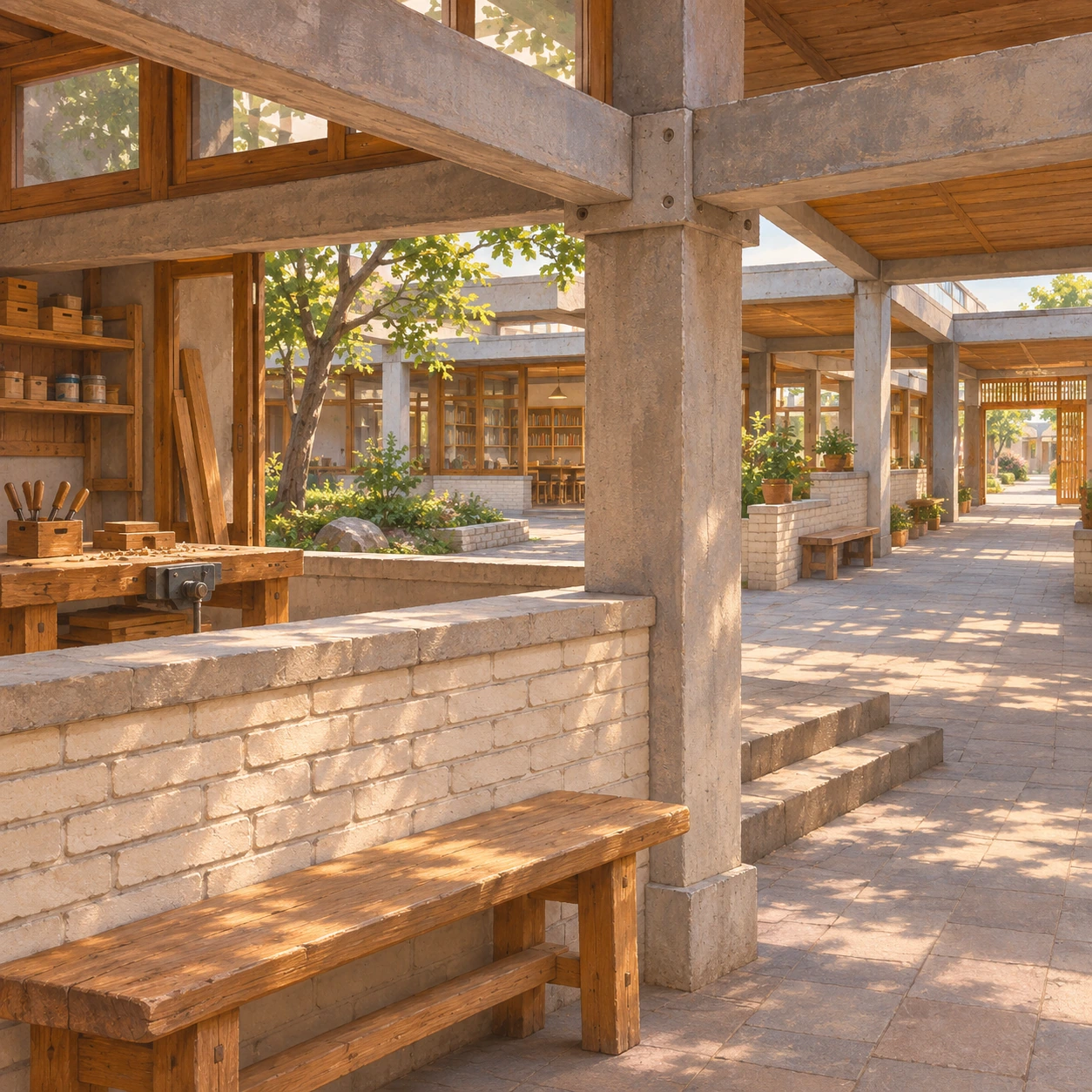
Beams, columns, low boundaries and wooden seats explain connections and human scale.
Low-rise units, interior streets and courts interweave, retaining different uses within repetition.