57Shells, Folded Plates & Structural Art
Read a roof's form through its edges and supports.
Definition and context
Thin shells, folded plates and structural art overlap without naming one structural type or a unified historical movement. Shells use curved geometry, while folded plates organize connected planar surfaces; structural art more broadly concerns structure, construction and formal expression. Candela research and public Nervi archives offer comparisons of different approaches.
People and ecology
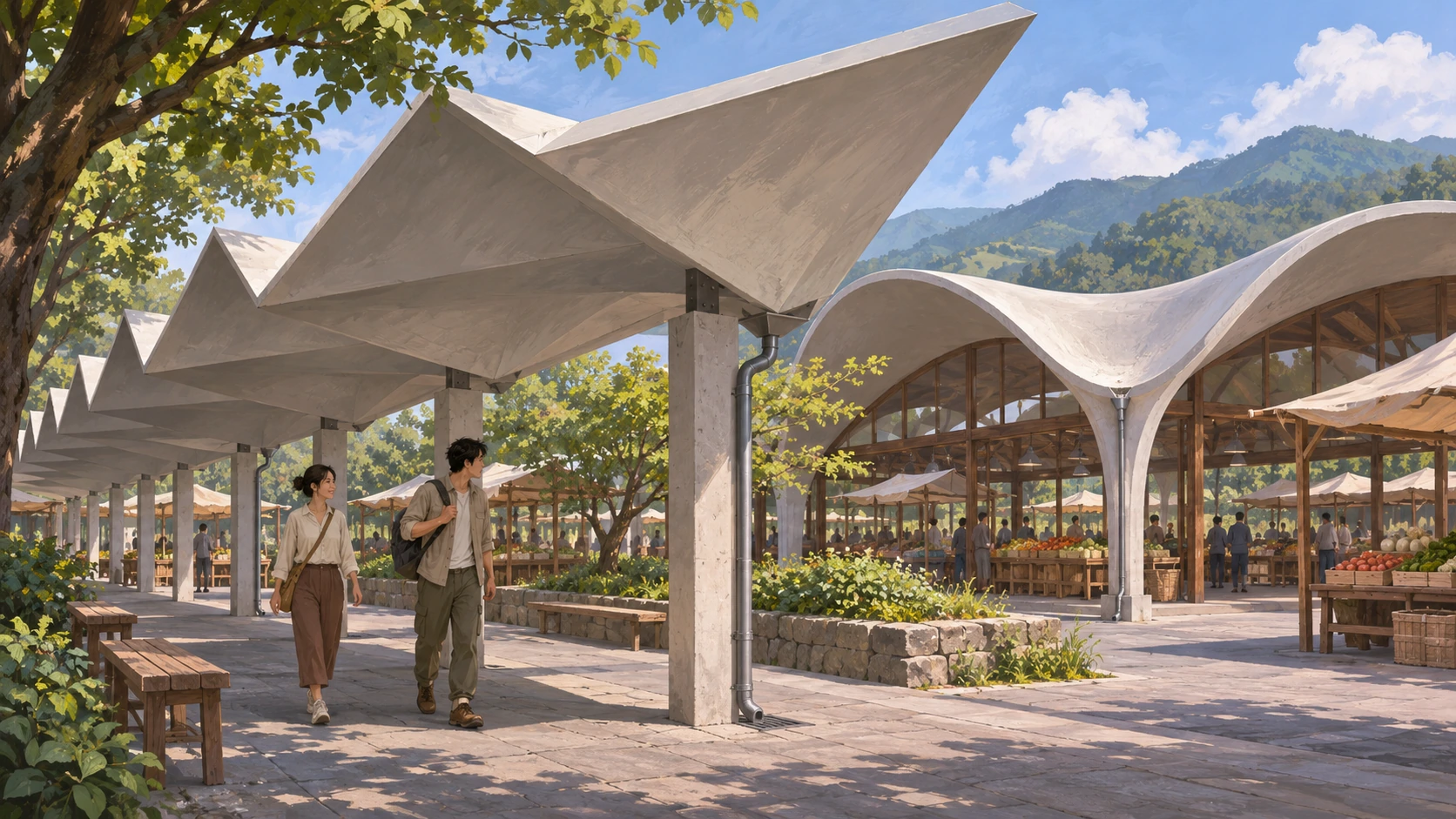
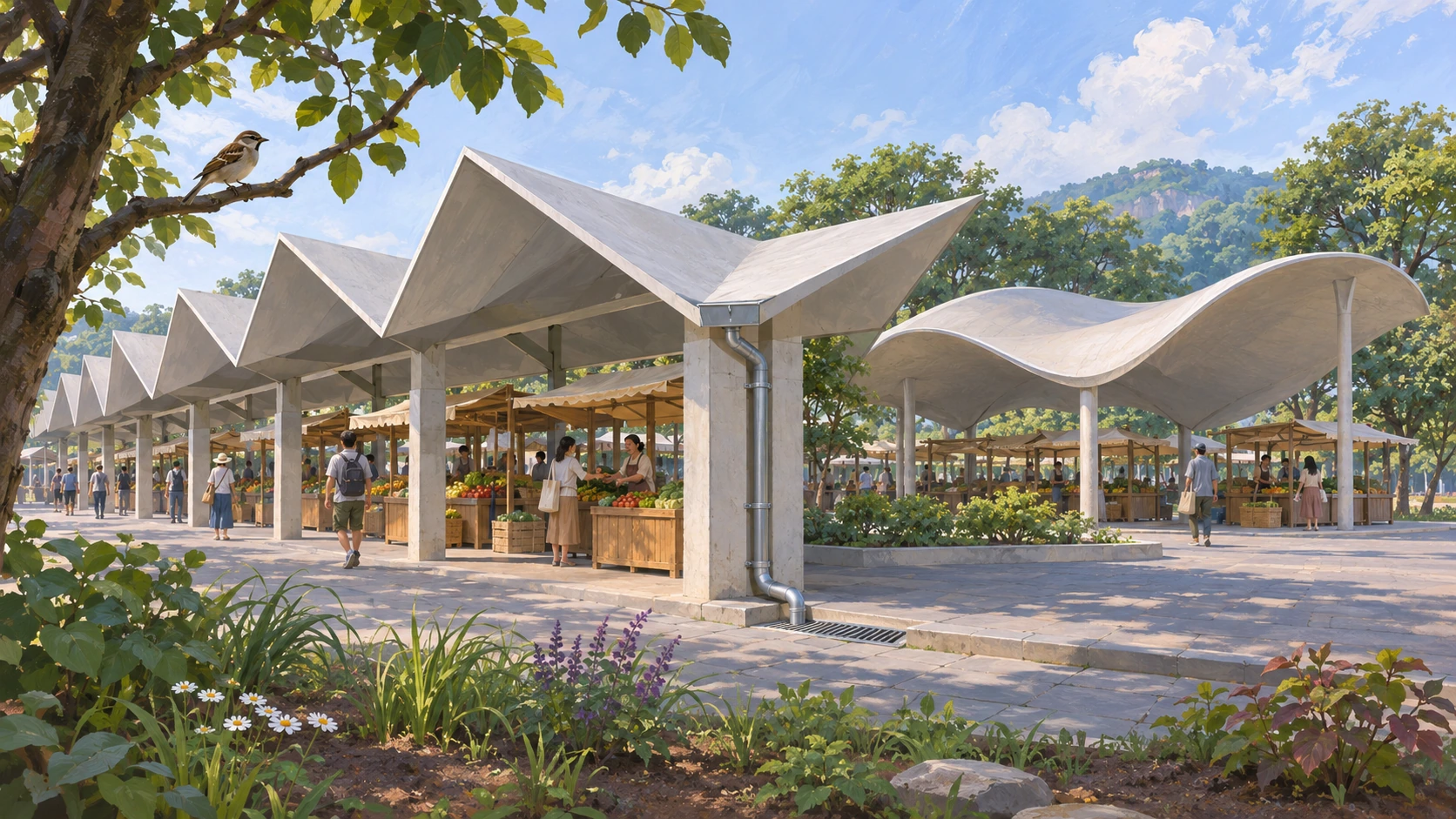
People pausing beneath an edge, passing a support or looking outward can explain cover and openness. Bodies establish thickness, clearance and span. Ordinary plants and birds may occupy the surroundings without turning the roof into a literal organism.
Spaces and forms
Identify continuity between roof, edge, folds, supports and ground. Curved surfaces need legible convexity, concavity and boundaries; folded plates need readable planar connections. Fewer columns do not mean no support. Where a roof meets ground and how an entrance passes beneath it belong to the composition.
Color and materials
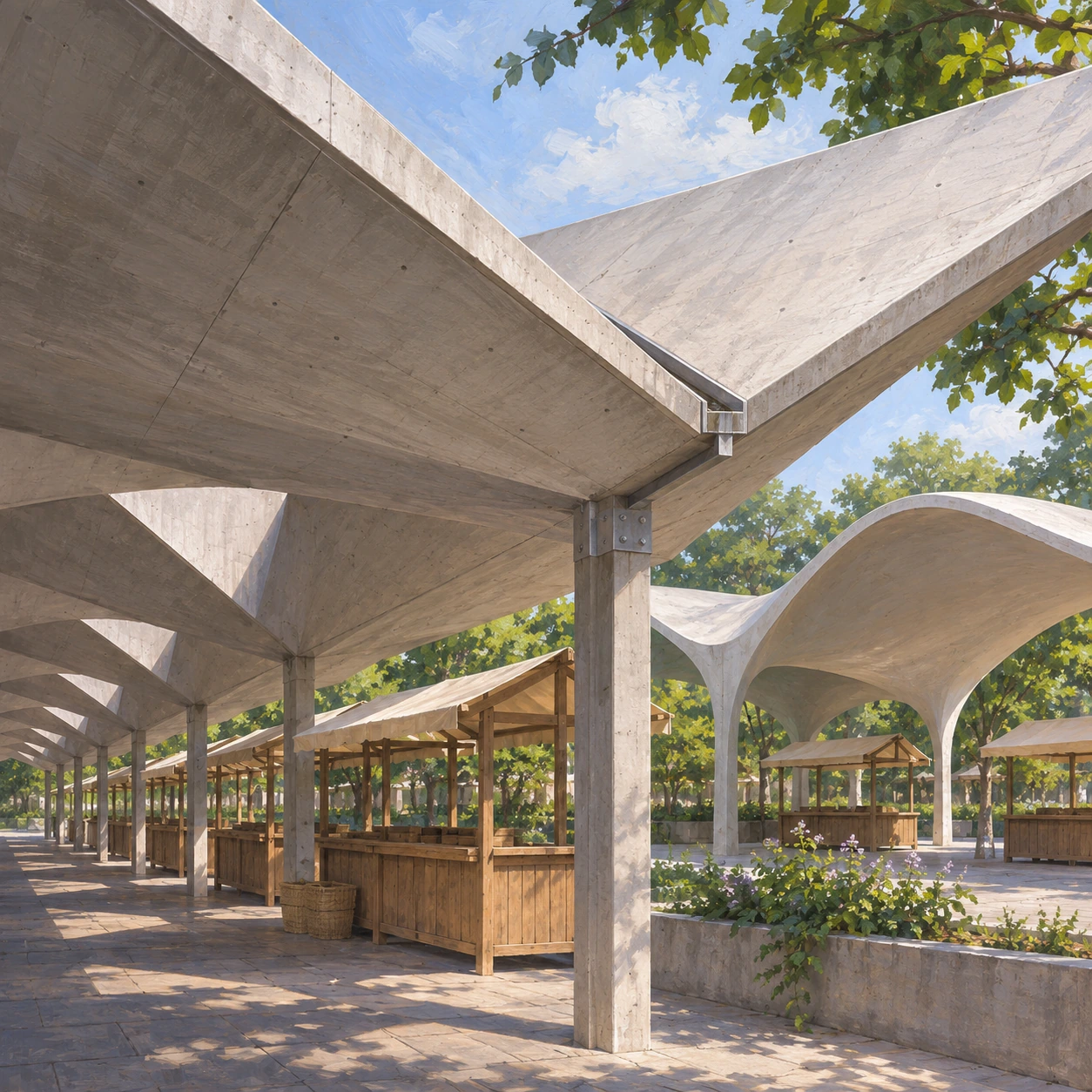
Concrete, steel, wood and other materials can form shells or folded surfaces through different systems, so color alone cannot identify structure. Close views can reveal edges, ribs, joints, formwork traces and drainage. Organize thickness along the form rather than outlining every edge with equally heavy ornament.
Light, composition and scale
Side light reveals changes between planes and continuity along curves. A few clear supports can contrast with a broad covered area, bringing lightness and weight into one image. Complex shadows should remain traceable to the roof rather than substitute dense patterns for structural relationships.
Sound and graphics
Interaction can involve approaching supports, passing edges, crossing shadows and hearing how echoes change beneath different roofs. Water collecting along folds or low points can make geometry visible. Let position alter the reading of a roof instead of showing its outline only from above.
Motifs and distinctions
Unlike biomorphic abstraction, this category need not evoke life; it emphasizes relationships between form and support. Nor are shells and folded plates synonymous with the heavy concrete associated with brutalism. Flowing curves, an origami-like appearance and actual structural behavior are different things to observe.
Ideas for game environments
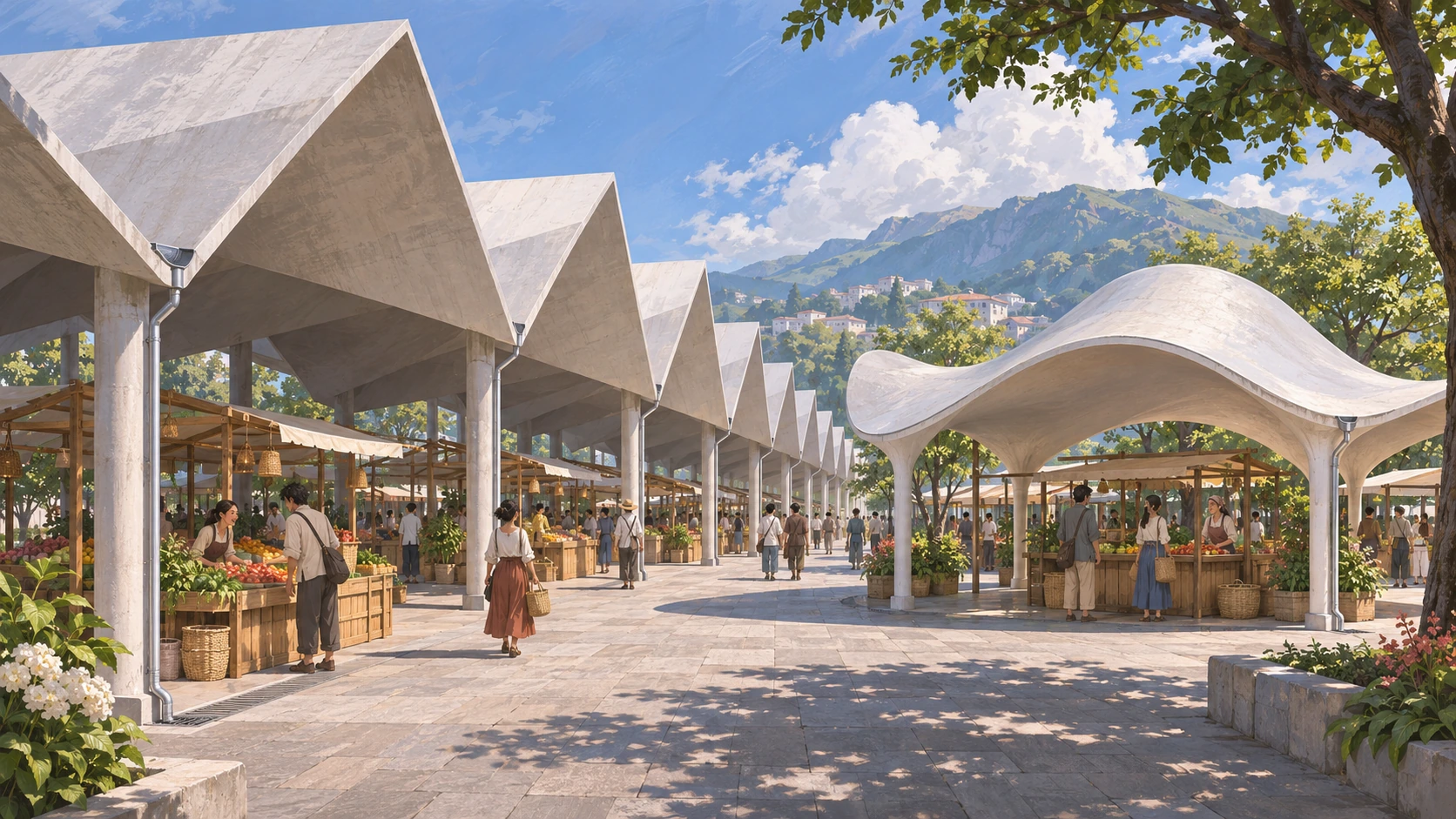
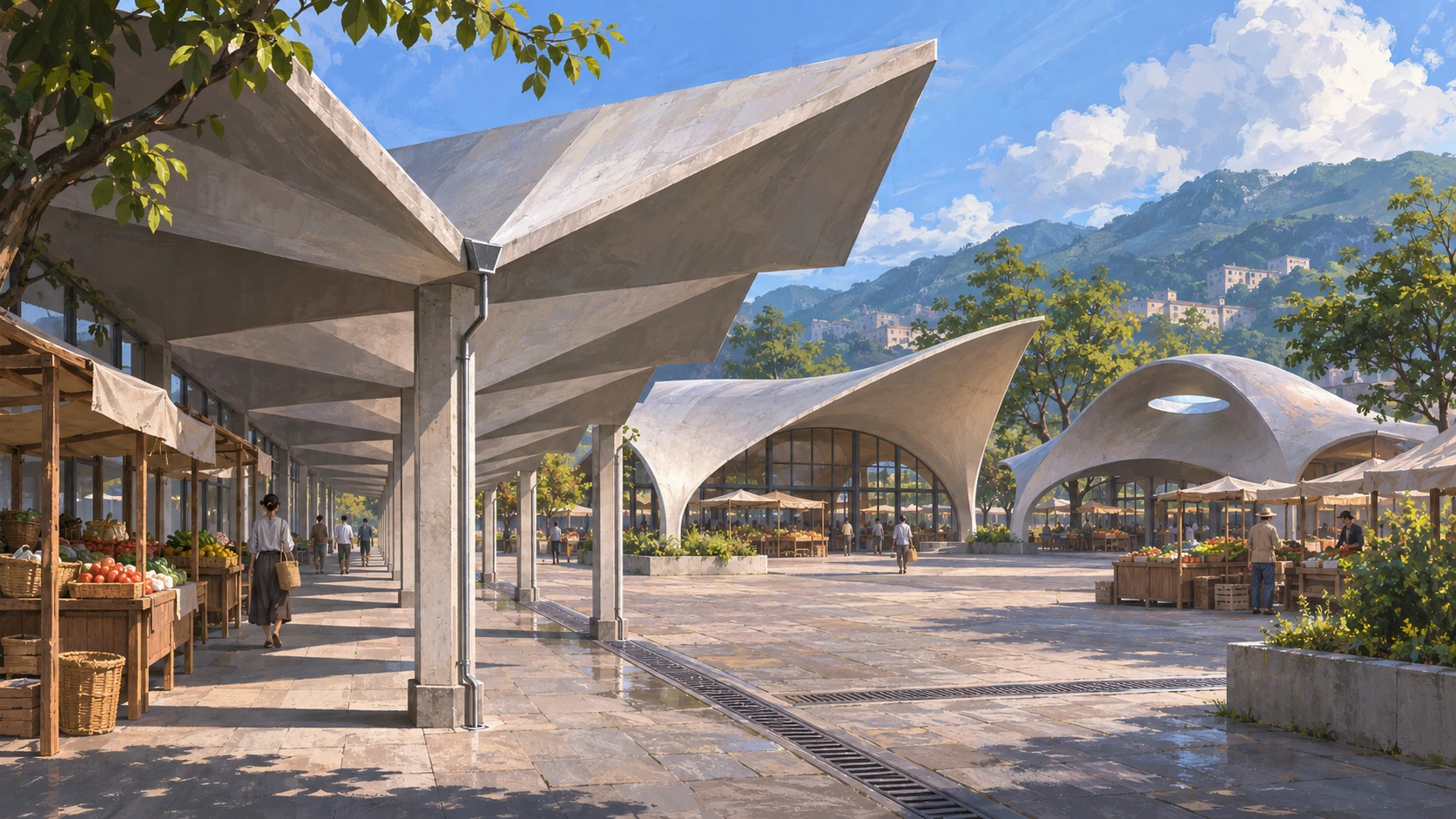
Design a public market pavilion where a planar folded-plate passage meets a small hall with a continuous curved roof. Edges, supports and rain paths remain legible, with ordinary stalls and pedestrians establishing scale. Close views explain planar connections, while a side view compares two kinds of cover.
Read scene descriptions
Main environment
An original market pavilion joins a passage with clear planar folds to a small hall with a continuous curved roof. Edges, supports and drainage remain legible as people and stalls occupy both forms of cover.
People pausing and passing give cover, supports and openness a scale.
Ordinary plants and birds establish the pavilion's surrounding environment and scale.
Clear edges and connected planes reveal thickness and joints.
A folded-plate passage and curved hall compare two forms of cover in one side view.