56High-tech Architecture
Make the spatial relationships between structure, enclosure and services legible.
Definition and context
High-tech architecture makes structure, enclosure, services and assembly important parts of architectural expression. Public project documentation by Rogers, Foster and others allows comparisons of exposed frames, service spaces and transparent skins. Advanced equipment alone does not define the category, nor must every pipe move outside.
People and ecology
Movement, waiting, cleaning and inspection show how a facility works. Distinguish public activity from maintenance, keeping rails, steps, doors and human scale legible. Ordinary plants may occupy outdoor areas or separate planters without intertwining with every service pipe.
Spaces and forms
Establish columns, beams, trusses, braces and major connections before separating enclosure from services. Repeated components need direction and hierarchy; joints explain how spans are perceived. Transparent skins can reveal activity, while exposed equipment still needs access, replacement and maintenance space.
Color and materials
Steel, aluminum, glass, concrete and seals each have a formal language. Bolts, plates, hangers and replaceable panels can become close-view subjects. Rather than repeat one pipe texture, distinguish thin sheets, thick joints, flexible seals and transparent layers.
Light, composition and scale
Daylight can separate structural shadows from activity behind glass. A few colors may identify equipment or circulation within a particular project, not a universal pipe code. Night transparency can reveal inside-outside relationships without turning the building into a neon advertisement.
Sound and graphics
Interaction might involve visible lifts, movable partitions, inspection or public routes. Opening a panel should reveal the space and connections behind it. Public and maintenance routes can cross without becoming indistinguishable. Sound can also convey distance between machinery and public space.
Motifs and distinctions
Unlike the industrial sublime, this category need not seek overwhelming production scale; construction and system expression can take priority. Unlike cassette futurism, it does not center on the period character of bulky electronics. Visible technology also does not automatically imply a particular ecological or social future as in solarpunk.
Ideas for game environments
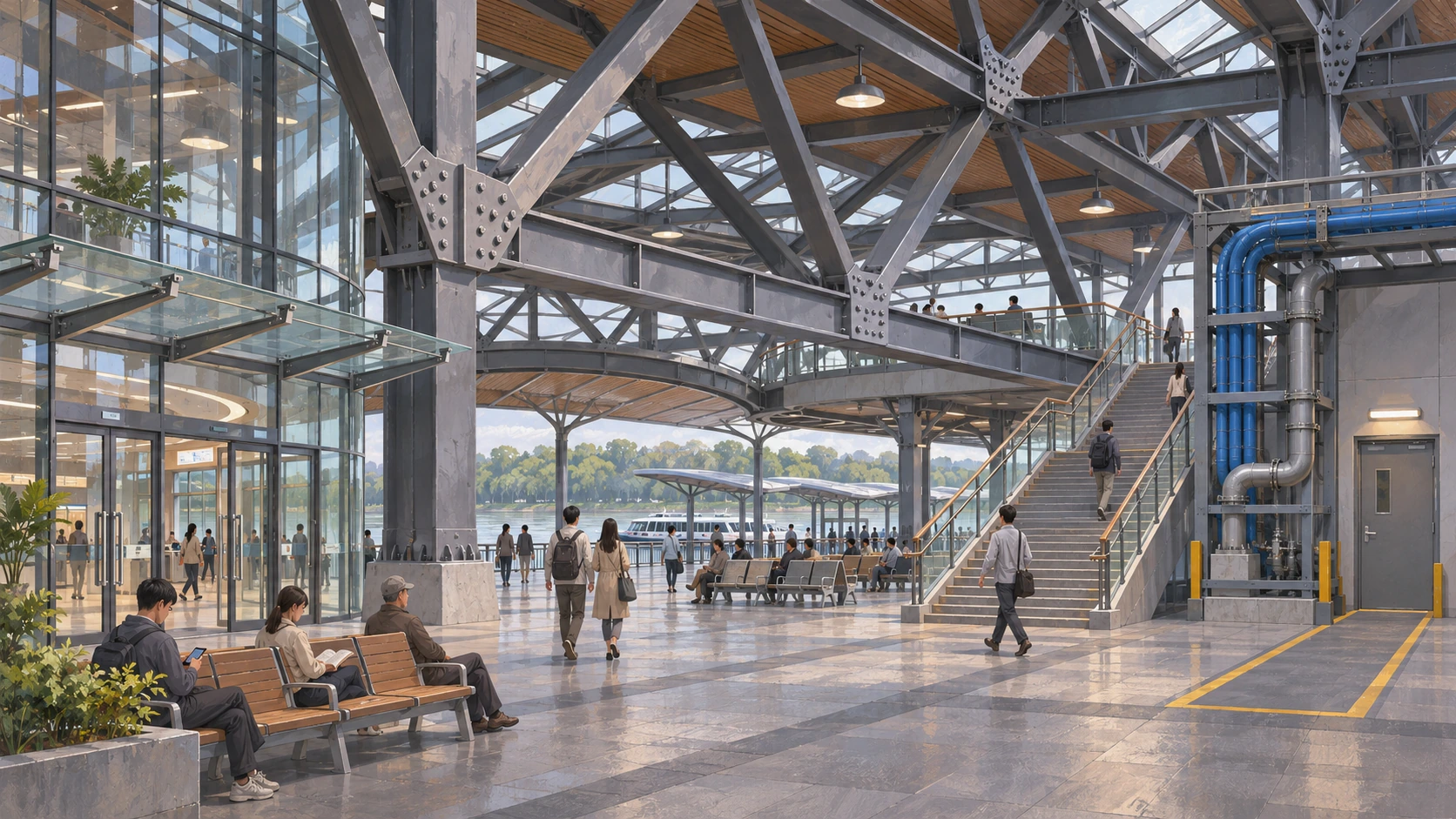
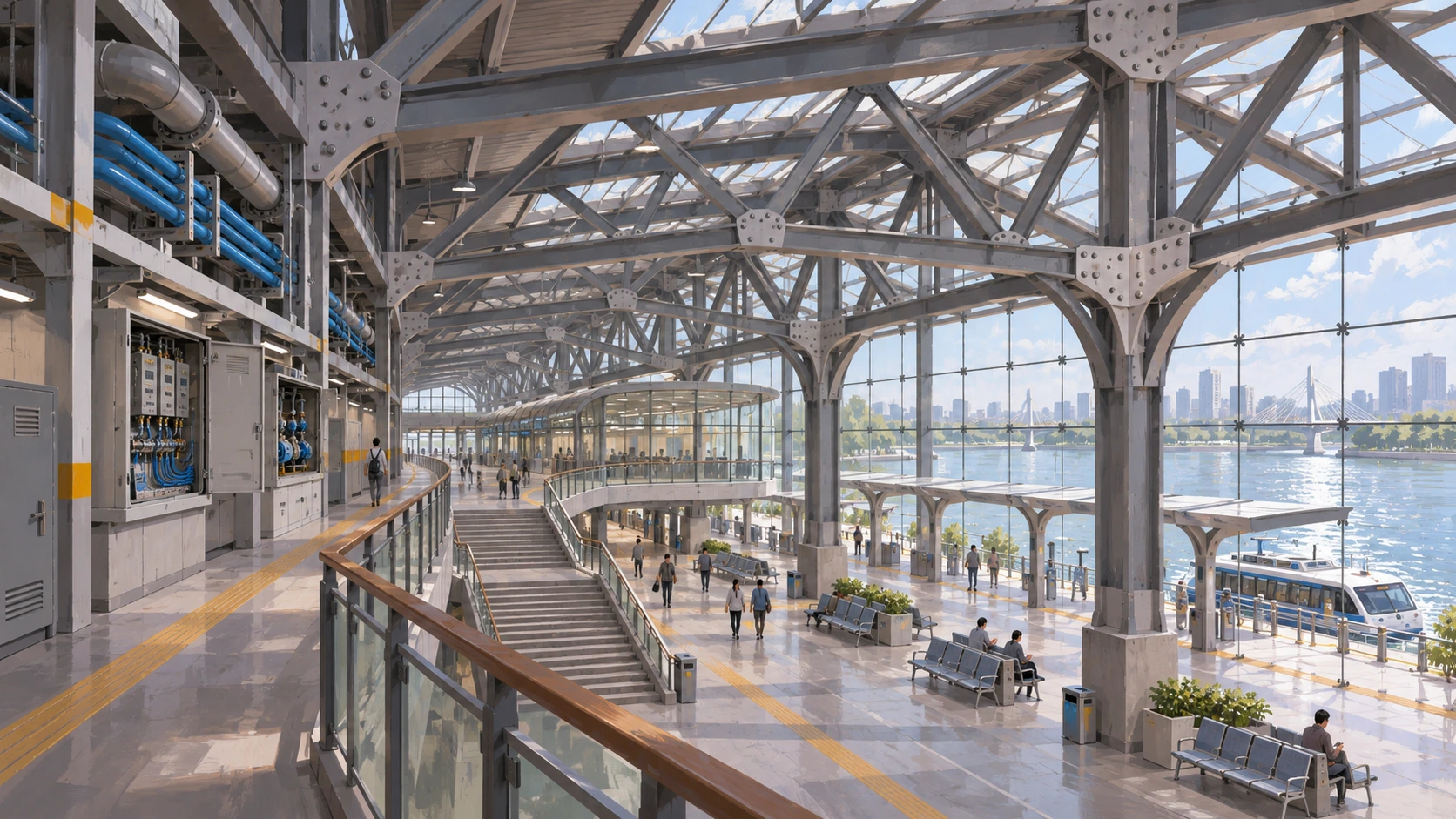
Design a riverside interchange hall. Clear steel trusses span the waiting area, service bundles occupy an inspectable rack along one side, and glass retains views between inside and outside. Public stairs, service doors and structural joints each have a role, making technology a legible spatial order.
Read scene descriptions
Main environment
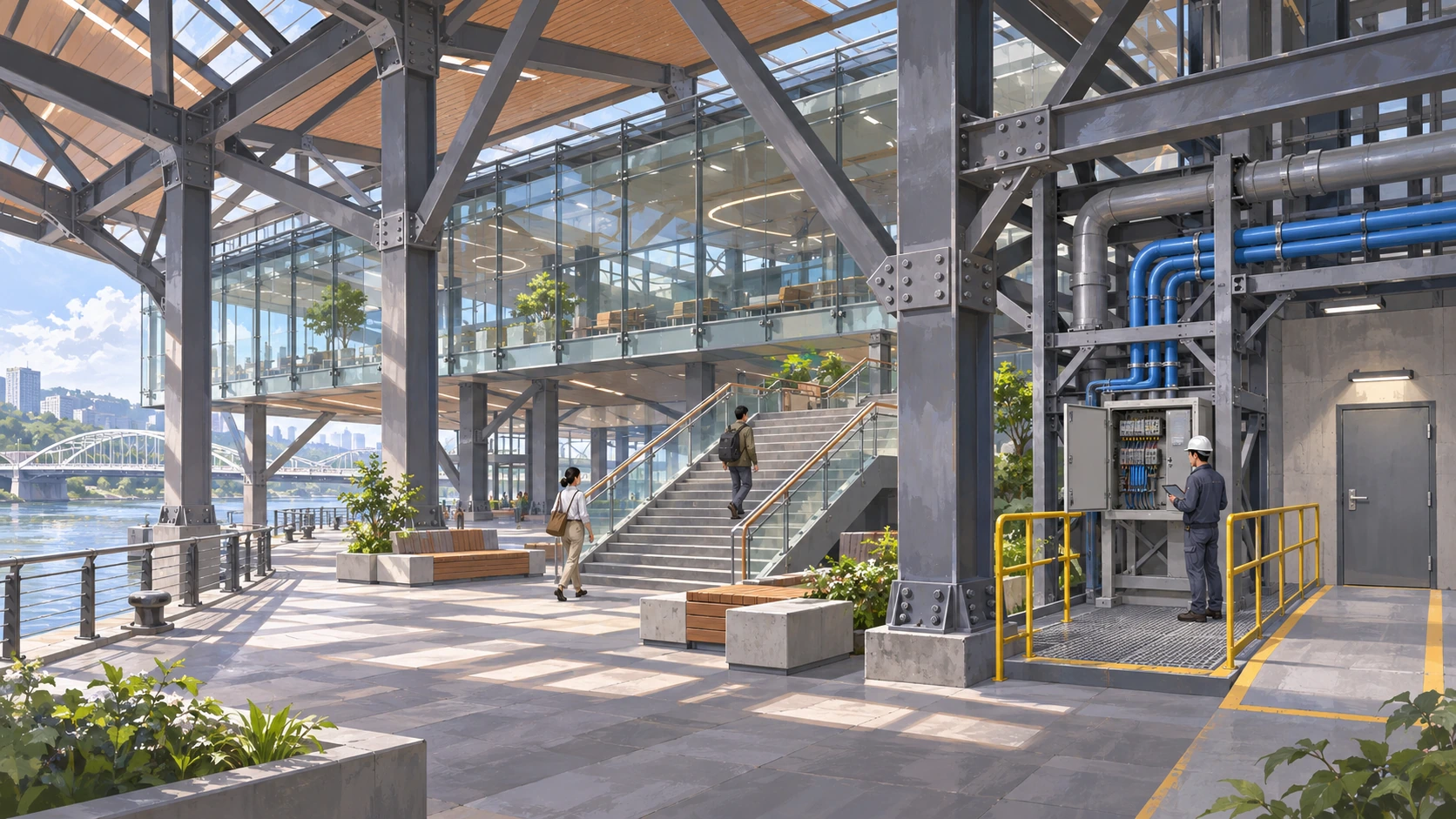
An original riverside interchange hall spans its waiting area with clear steel trusses and reveals daily activity through glass. An inspectable service rack, public stairs, maintenance doors and joints distinguish support, use and services.
Public circulation and service inspection remain distinct through human actions.
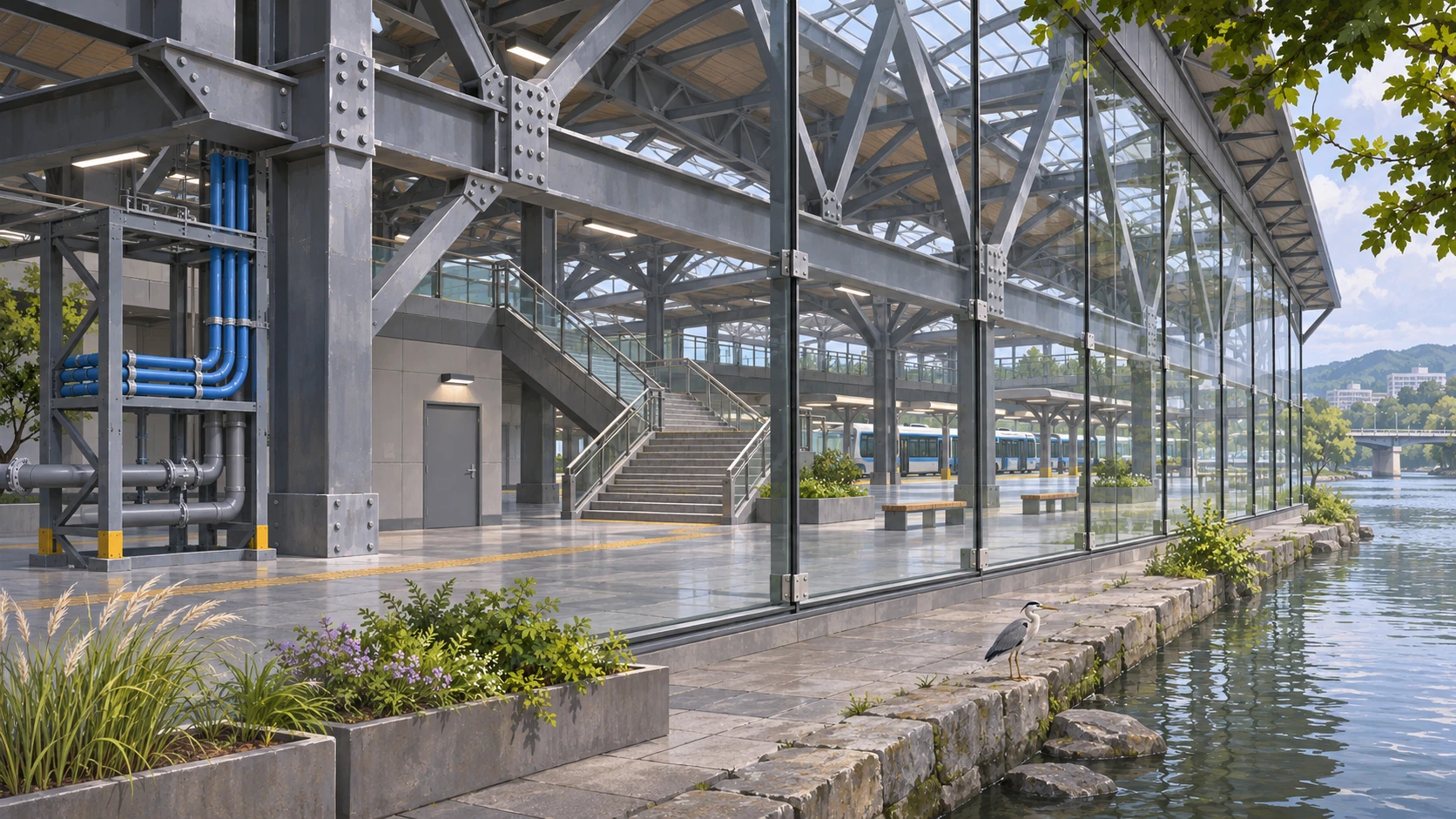
Ordinary plants and a riverside bird establish the surroundings of the technical facility.
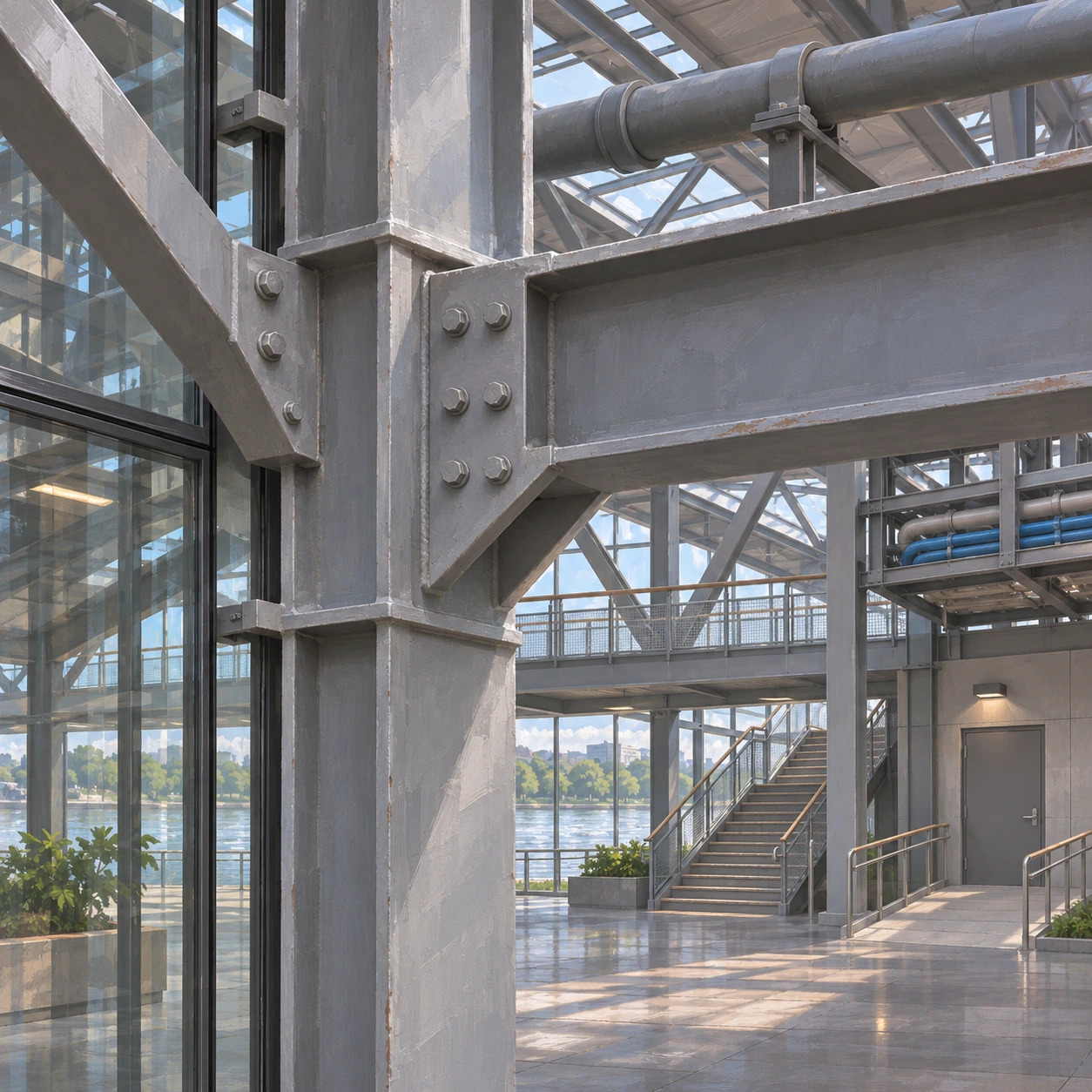
Plates, bolts, glass edges and seals retain distinct construction roles.
Structure, enclosure and services follow distinct continuous paths through the hall.