55Wabi-sabi
Sense finite, continuing time through material, intervals and use.
Definition and context
Wabi and sabi arise from different Japanese historical contexts. Although often paired today, they should not collapse into a beige interior formula. Tea practice and utensils offer concrete approaches to simplicity, time, use and limits. Tea-bowl images published by the Raku Museum reveal form, glaze and hand-held scale, including variation beyond plain surfaces, one color or deliberate damage.
People and ecology
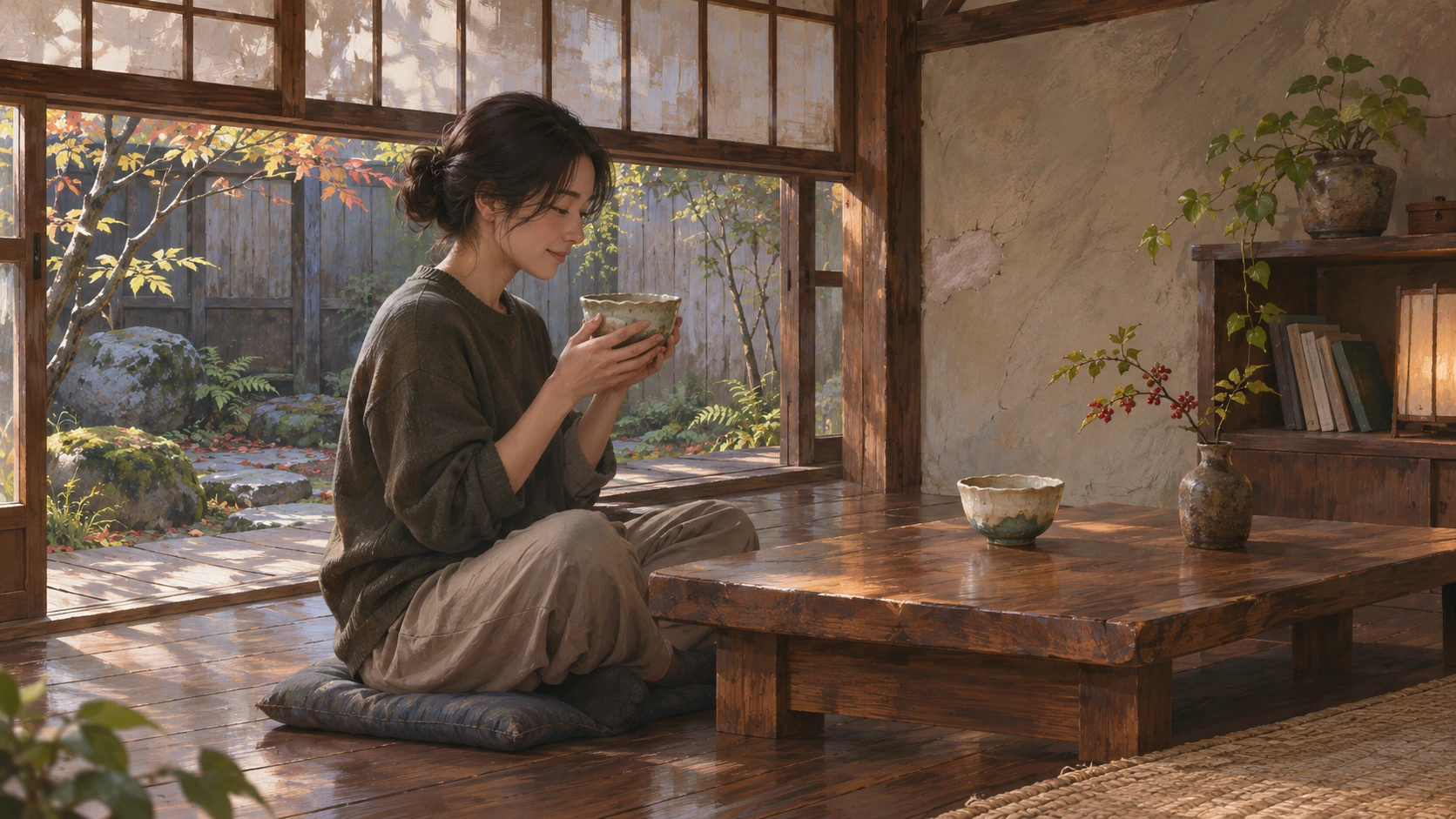
Sitting, pausing, lifting a vessel and leaving intervals can slow attention. Keep bodily actions ordinary and the scale of objects credible. Plants need not be in full bloom; a few particular leaves, moss patches or seasonal changes can suffice without making one bare branch represent all Japanese aesthetics.
Spaces and forms
Organize connected space through thresholds, low windows, court edges and intervals. Having few objects does not mean avoiding design: consider distances between a vessel, wall, light and person. Well-maintained buildings can express time without turning every surface into a ruin.
Color and materials
Differences between wood grain, earthen wall, ceramics, paper and stone arise from particular materials. Wear follows contact, repairs have readable methods, and vessel forms can be subtly asymmetric. Cracks, rust and chips are not mandatory filters; overall form, thickness and use matter too.
Light, composition and scale
Soft side light can reveal glaze variation, wood texture and spatial intervals. Shadows may be deep while retaining detail, and colors need not be limited to grey, white and brown. Select one change to attract attention, such as low-window light moving beside an ordinary bowl, instead of filling every space with dusty haze.
Sound and graphics
Interaction can involve sitting, turning a vessel, opening a shutter or watching light over time. Sounds respond to actual contacts with wood, ceramics and water. Leave intervals for waiting and observation, making restraint a rhythm rather than reducing information until meaning disappears.
Motifs and distinctions
Compared with minimalism, this category calls for attention to Japanese contexts, time and use rather than merely few objects and empty space. Unlike ruin aesthetics, it need not emphasize lost function. Kintsugi, mingei and Zen have their own histories and practices rather than being interchangeable names for wabi-sabi.
Ideas for game environments
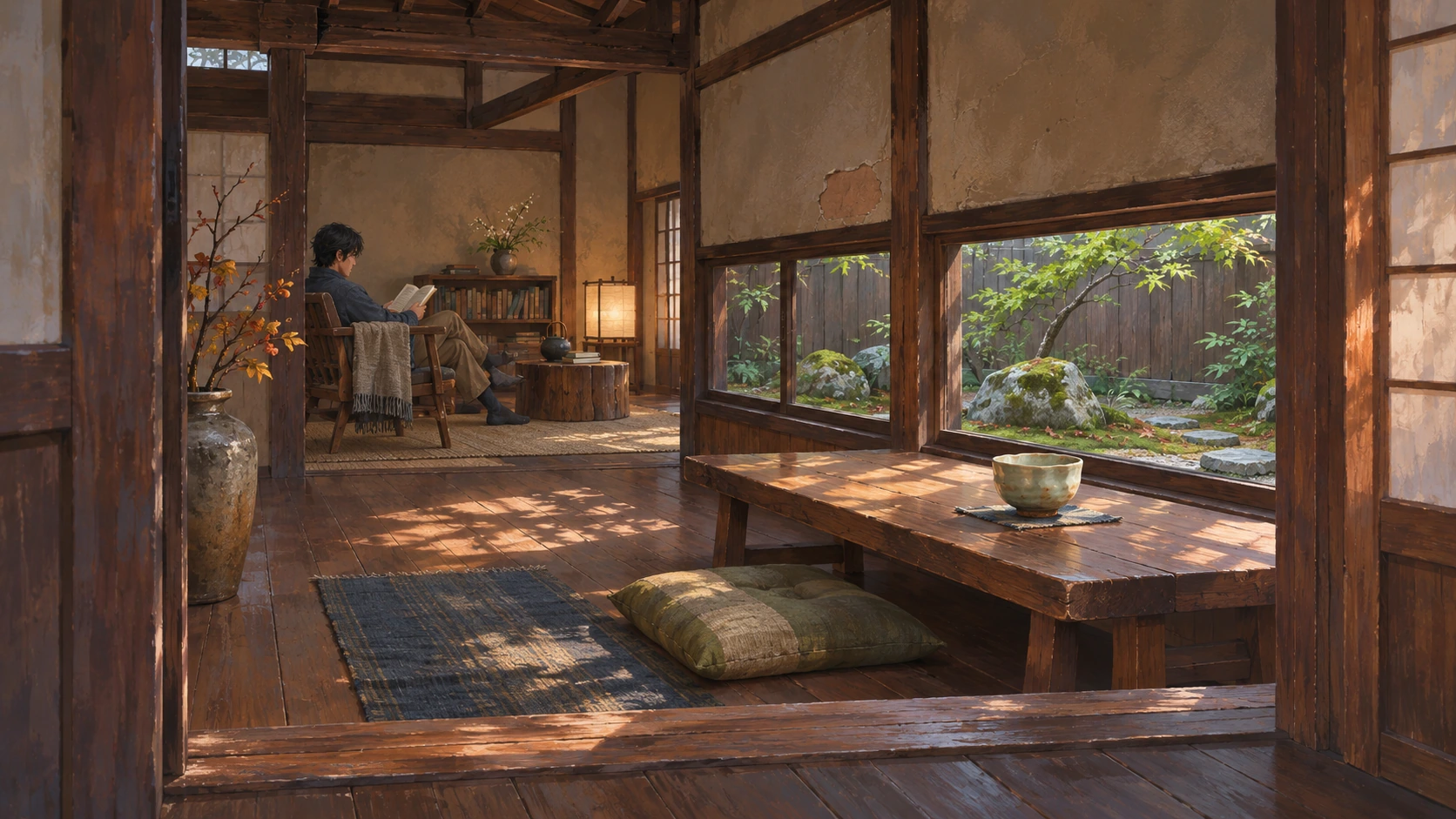
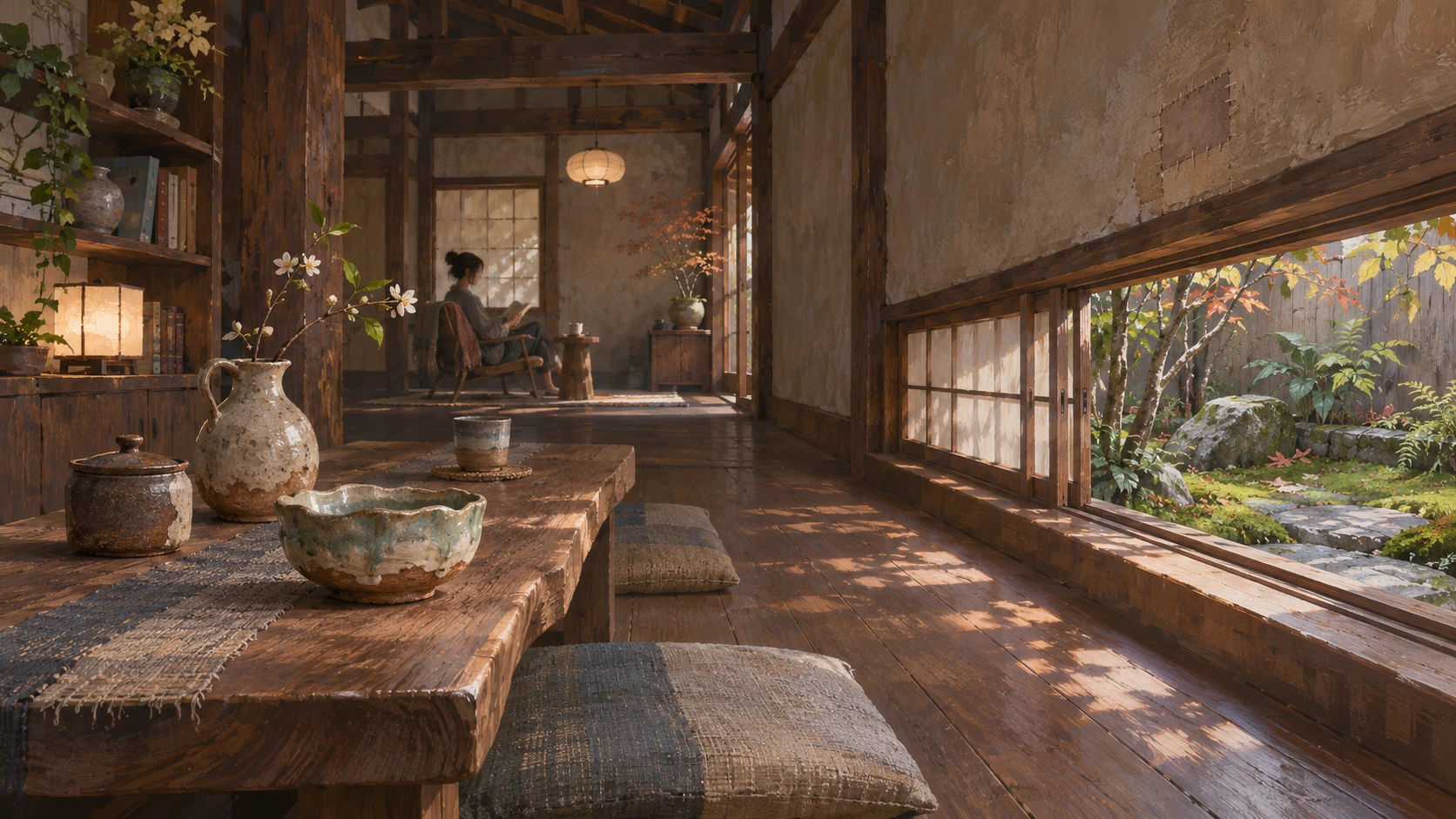
Design a wooden resting room still in use. An original hand-formed bowl sits by a low window, a timber surface shines slightly where touched, and a small repair remains legible on an earthen wall. A few ordinary plants edge the court. Let material, intervals and use convey time without covering the room in cracks.
Read scene descriptions
Main environment
An original wooden resting room remains in daily use. A hand-formed bowl by a low window, timber brightened by touch and a small earthen-wall repair retain different traces of time. Ordinary garden plants and soft side light focus attention on material and intervals.
Ordinary sitting and lifting gestures make scale and intervals legible.
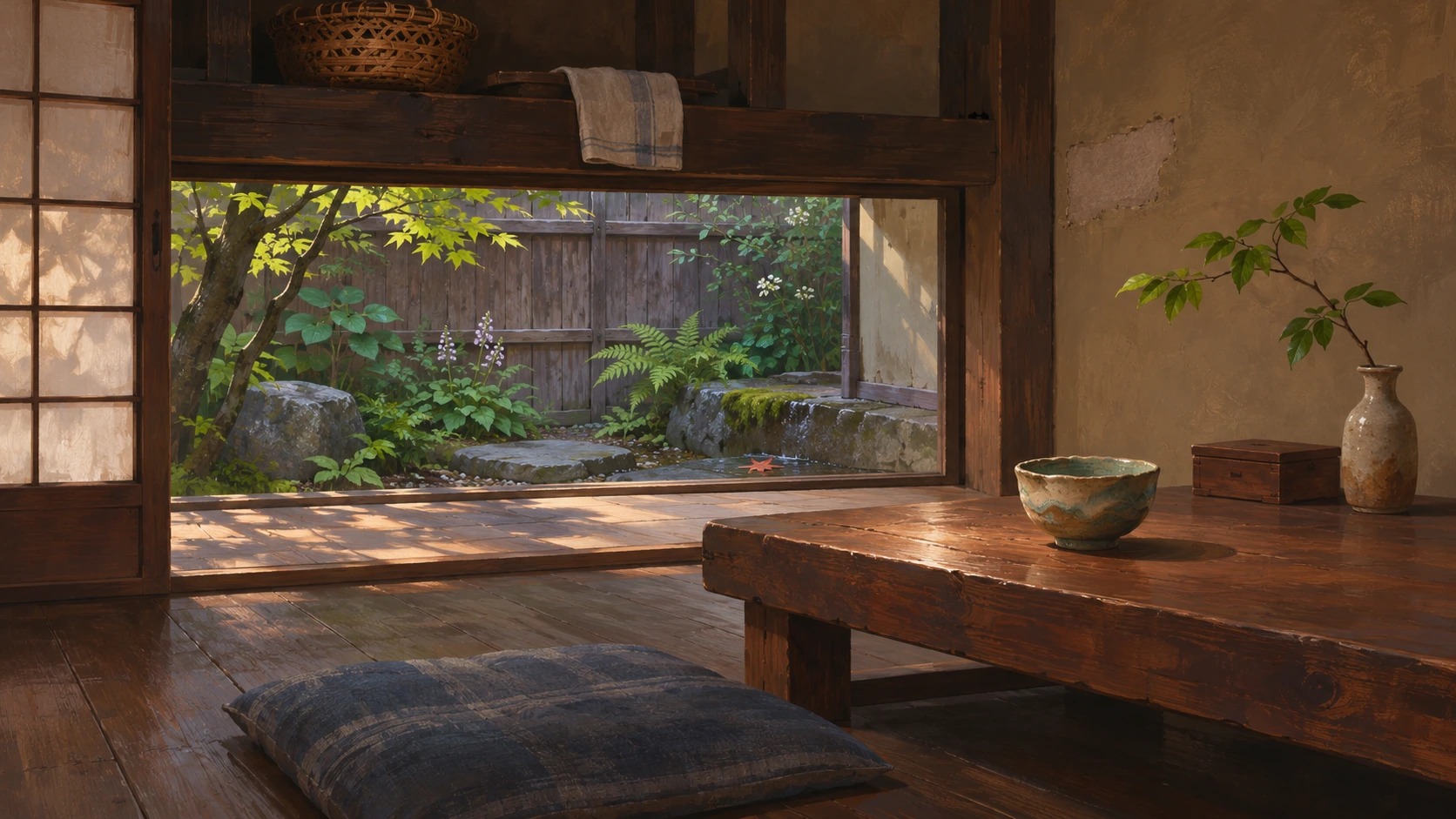
A few plants, moss patches and seasonal traces retain particular states of life.
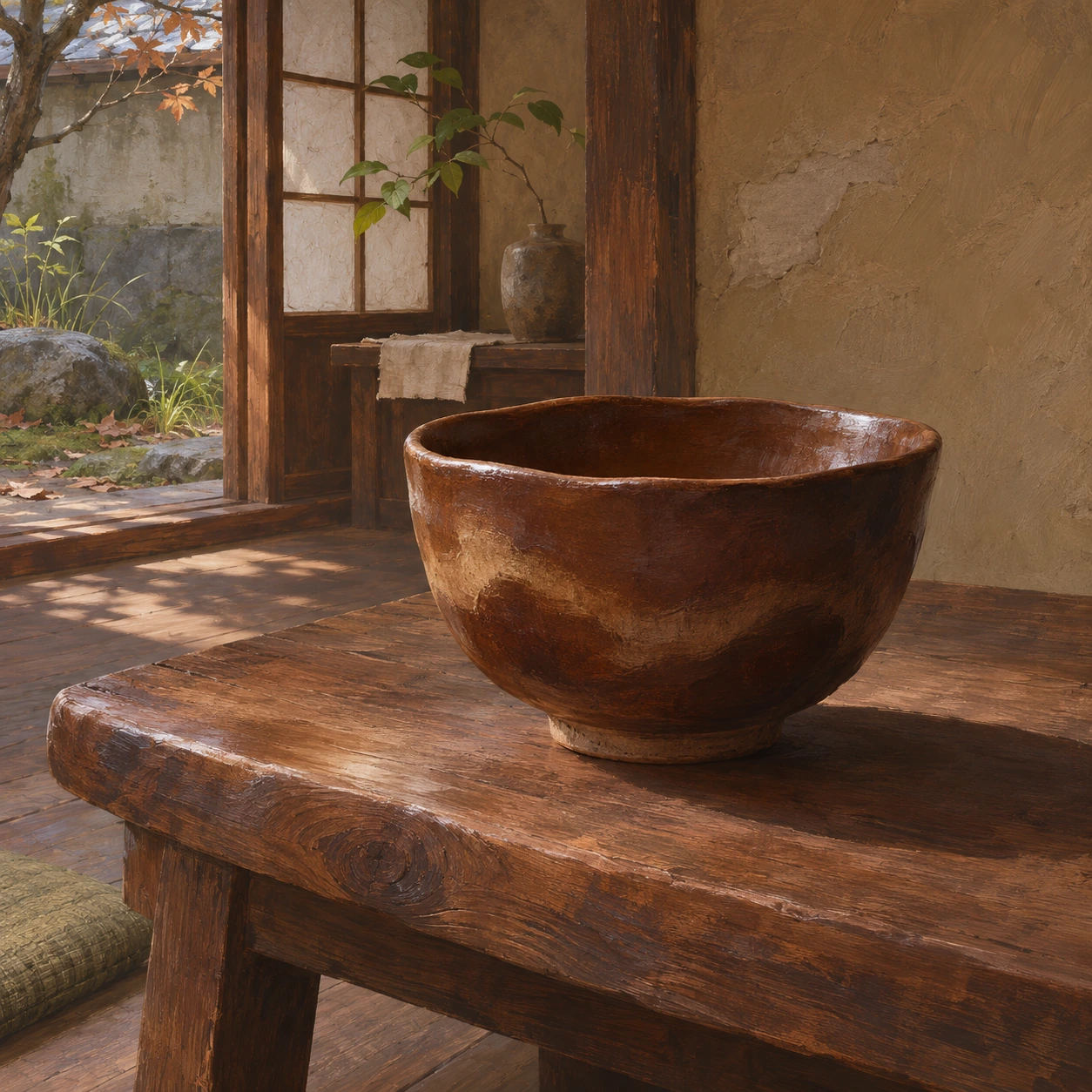
Glaze variation, grain and a small repair let materials retain their own time.
A room still in use organizes intervals through object spacing and light.