54Solarpunk
Express hope through shared spaces that people can use, repair and sustain.
Definition and context
Solarpunk imagines futures through more sustainable technology, ecological relationships and shared life. It involves more than planted towers or a sunny utopia: maintenance, negotiation, labor and resource allocation also belong to the world. Public Solarpunk Magazine covers offer diverse comparisons rather than one mandatory visual formula.
People and ecology
People use facilities, grow plants, care for shared spaces and repair equipment rather than merely supply scale for a vast green city. Give people of different ages visible actions and accessible places. Birds, insects and plants need particular habitats; water needs clear locations and flow relationships rather than arbitrary placement on every balcony.
Spaces and forms
Connect public routes, shade, water collection, energy equipment, planting and repair areas into an understandable network. Old and new buildings can coexist, with distinct roles for roof and ground. A repairable neighborhood can explain continuing life more clearly than endless green towers without supply paths.
Color and materials
Wood, ceramics, brick, reused metal, glass and modern equipment can coexist. Joints, replaceable panels and service access explain material use, retaining differences between clean and worn surfaces. Natural materials need not all be rough, and technology need not disappear from view.
Light, composition and scale
Daylight can reveal relationships between shading and planting, with local shadow offering places to stay. Night scenes also work; the issue is how light serves life rather than permanent noon. Earth colors, greens and blues are options, but color cannot replace spatial relationships of energy and supply.
Sound and graphics
Interaction can make water troughs, shade panels, shared tools and transport nodes respond legibly. Repairing a panel might restore shade; changing a channel might bring water to a planting bed. Make cooperation and maintenance observable rather than merely add solar panels to an image.
Motifs and distinctions
Compared with Frutiger Aero, this category concerns future society and infrastructure working together rather than nature-technology interface imagery. Unlike nature reclaiming, human care and ecological cooperation can continue. Nor is it synonymous with every ecological building; read social imagination alongside technical imagery.
Ideas for game environments
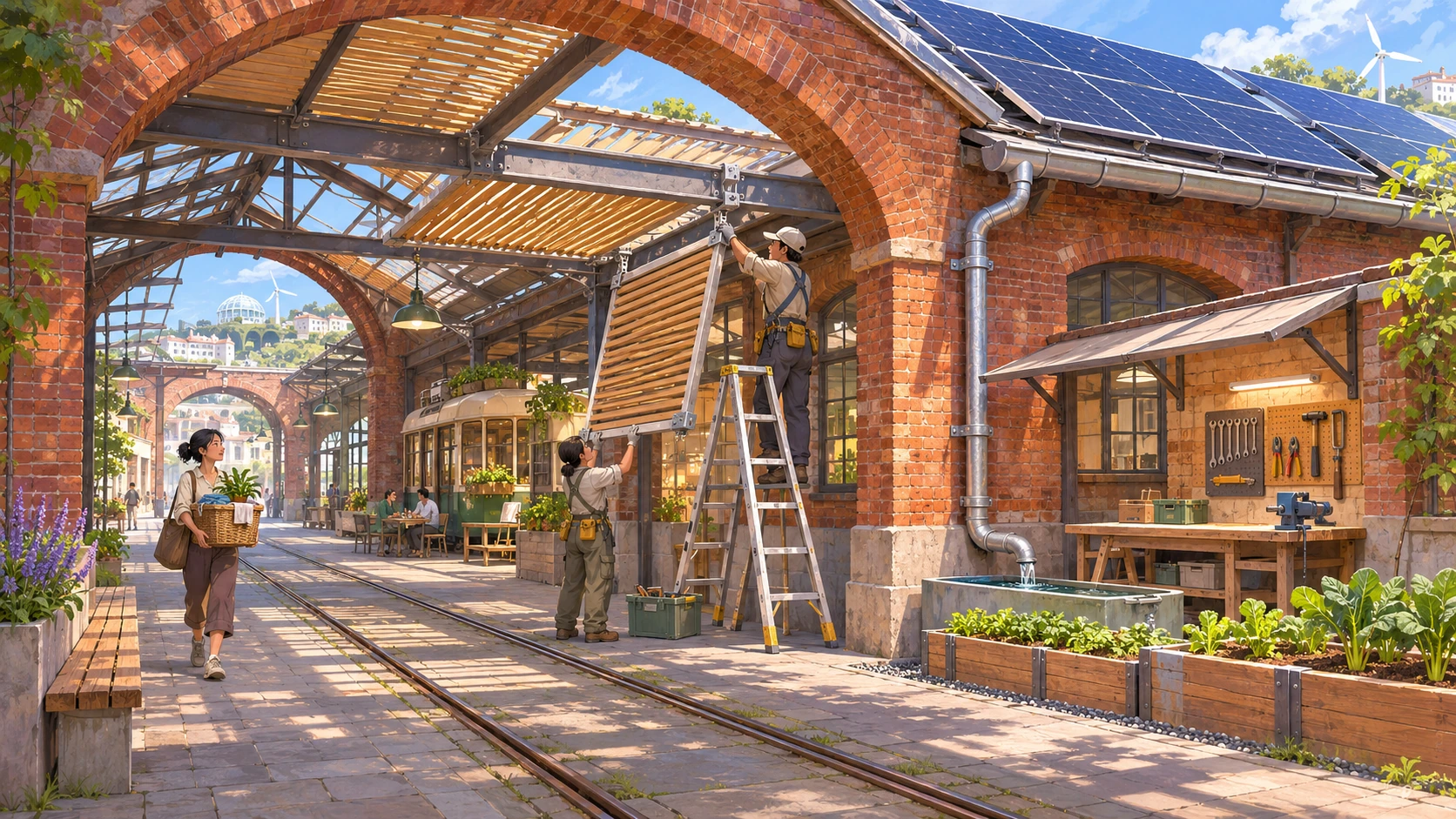
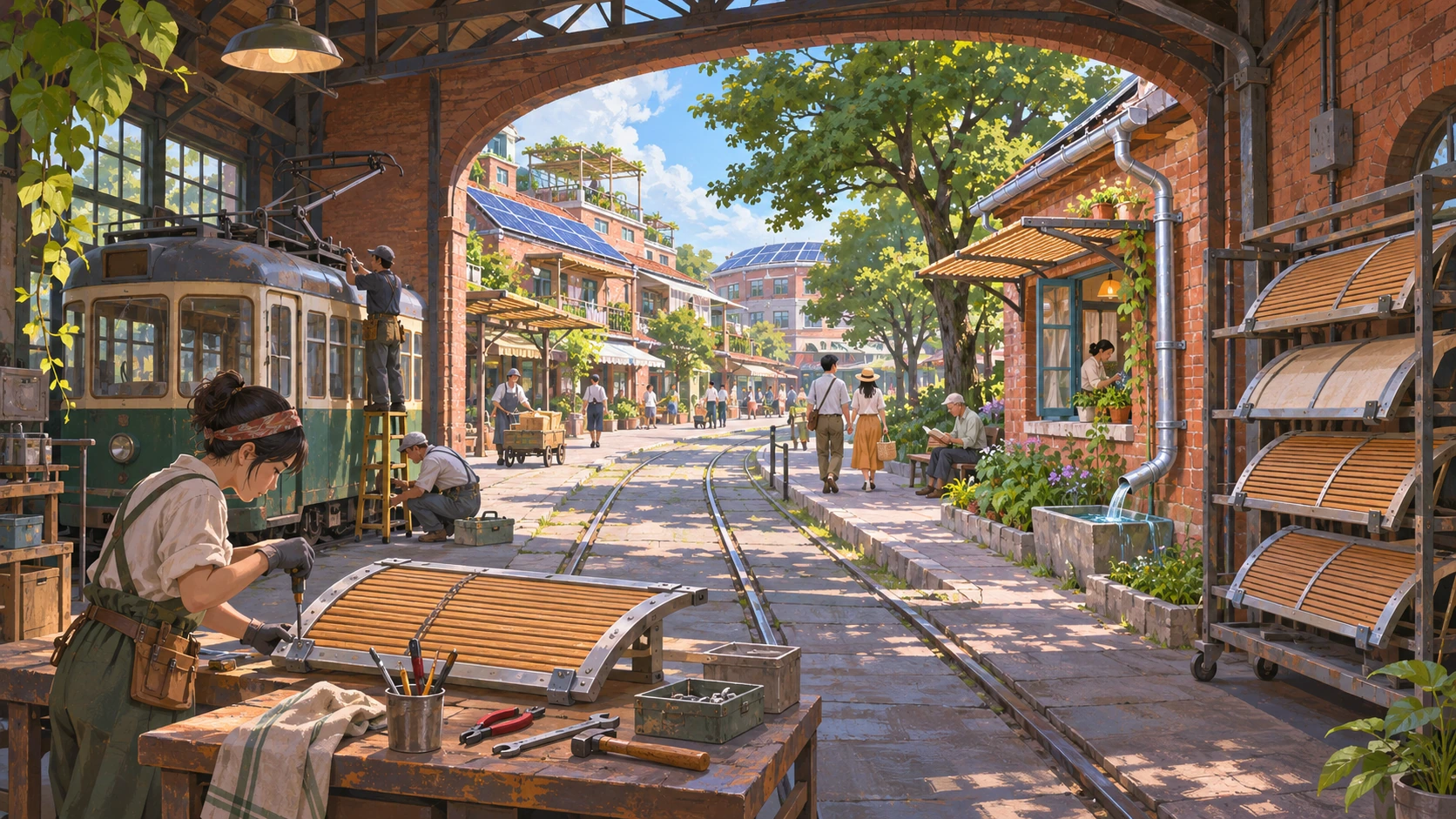
Design a retrofitted tram neighborhood. An old brick depot becomes a shared repair yard, roof areas divide between photovoltaics and shade, and visible rain channels lead to planting beds. Residents and workers share routes. Equipment under repair or awaiting replacement makes hope a capacity for continuing care.
Read scene descriptions
Main environment
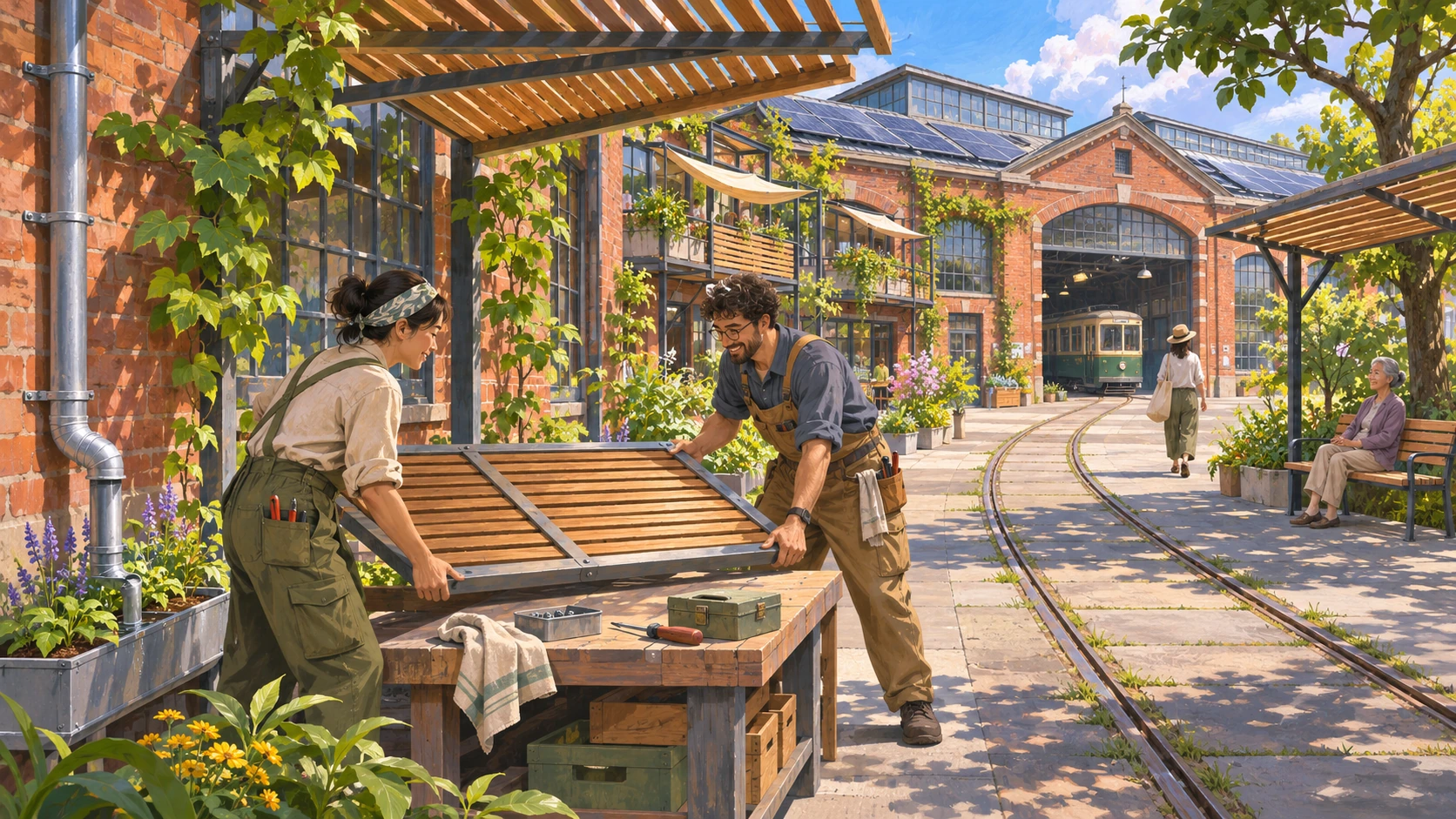
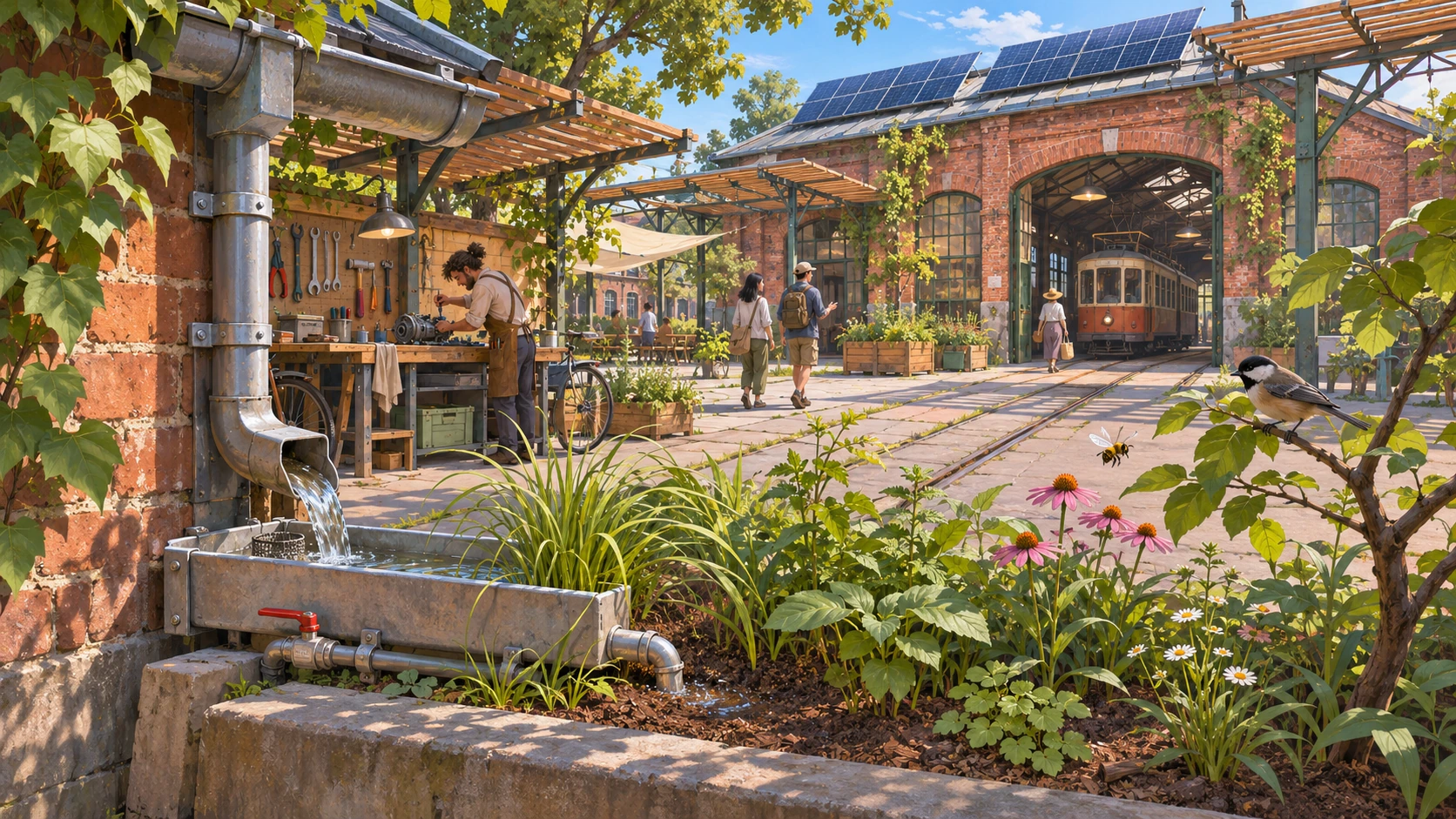
An original old tram neighborhood becomes a shared repair and growing space. Brick sheds, rooftop photovoltaics, shade panels and visible rain channels connect as residents share routes; a panel being replaced brings care and technology into daily life.
Different users share routes while repair and care remain visible actions.
Water, planting and ordinary small animals have particular places and conditions.
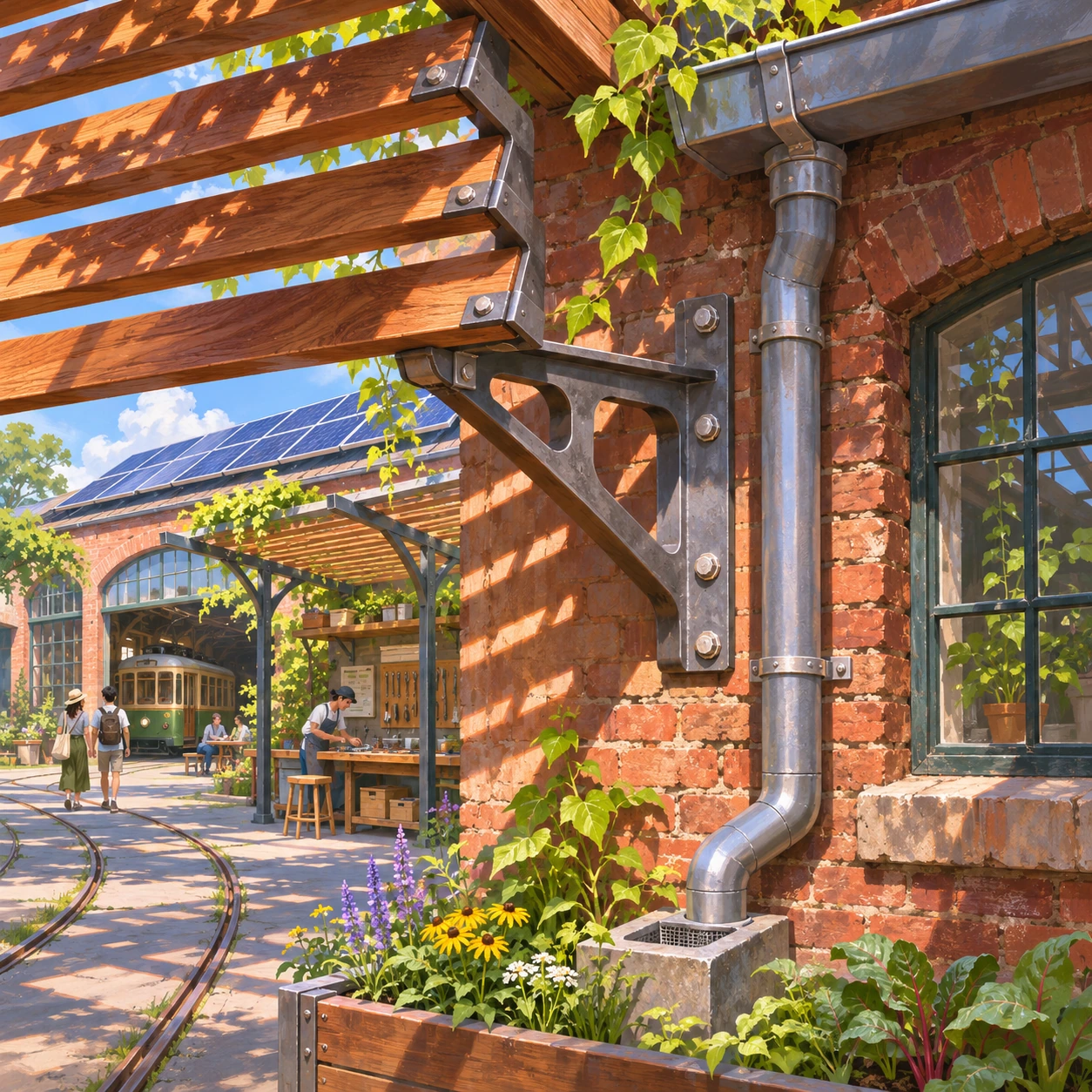
Old brick, reused metal and replaceable panels retain serviceable joints.
Water collection, shade, energy and repair connect within one everyday neighborhood.