53Goblincore / Mushroom Motifs
Attend to soil, old objects and small lives underfoot.
Definition and context
Goblincore attends to soil, moss, snails, old objects and natural details excluded by polished ideals. Mushroom motifs may overlap, but not every mushroom image is goblincore, and goblins need not appear. Related published imagery, woodland game scenes and historical mushroom subjects offer comparisons of collecting, dwelling and small ecologies.
People and ecology
Stooping, pausing, repairing and arranging can reveal a person's attention better than a uniform costume. Invented goblins may appear, or ordinary people can express the theme through worn clothes, bags and work positions. Give snails, beetles and small plants spaces of their own rather than treating them only as accessories.
Spaces and forms
Build a ground-level world from root gaps, low sheds, stone crevices, paths and storage corners. Keep changes of scale comparable through leaves, cups or ordinary doors. Leave room to move, place things and observe among the objects instead of making a purposeless heap.
Color and materials
Wet soil, soft moss, rough wood, old ceramics and worn metal can coexist. Place stains, rust and repairs along actual contact points, with a few shiny objects drawing attention. Mushroom caps, gills and stems can differ rather than repeat one red cap with white spots.
Light, composition and scale
Low daylight, leaf shadows and local warm lamps can reveal layers near the ground. Caps, old glass and small flowers can add color beyond green and brown. Comfort and dampness, disorder and care can coexist; every scene need not be sinister, dirty or cute.
Sound and graphics
Interaction might involve arranging old objects, repairing vessels, observing small creatures or finding paths around roots. Moving a cup could reveal moisture and an insect beneath it, establishing a scale of attention. Rain on leaves, ceramics and soil can produce different sonic textures.
Motifs and distinctions
Compared with cottagecore, this category may favor damp ground, old objects and less-celebrated small organisms. Mushroom-focused imagery can also belong to scientific illustration, decorative art or fantasy. Unlike nature reclaiming, goblincore need not depend on abandoned cities or the replacement of human infrastructure.
Ideas for game environments
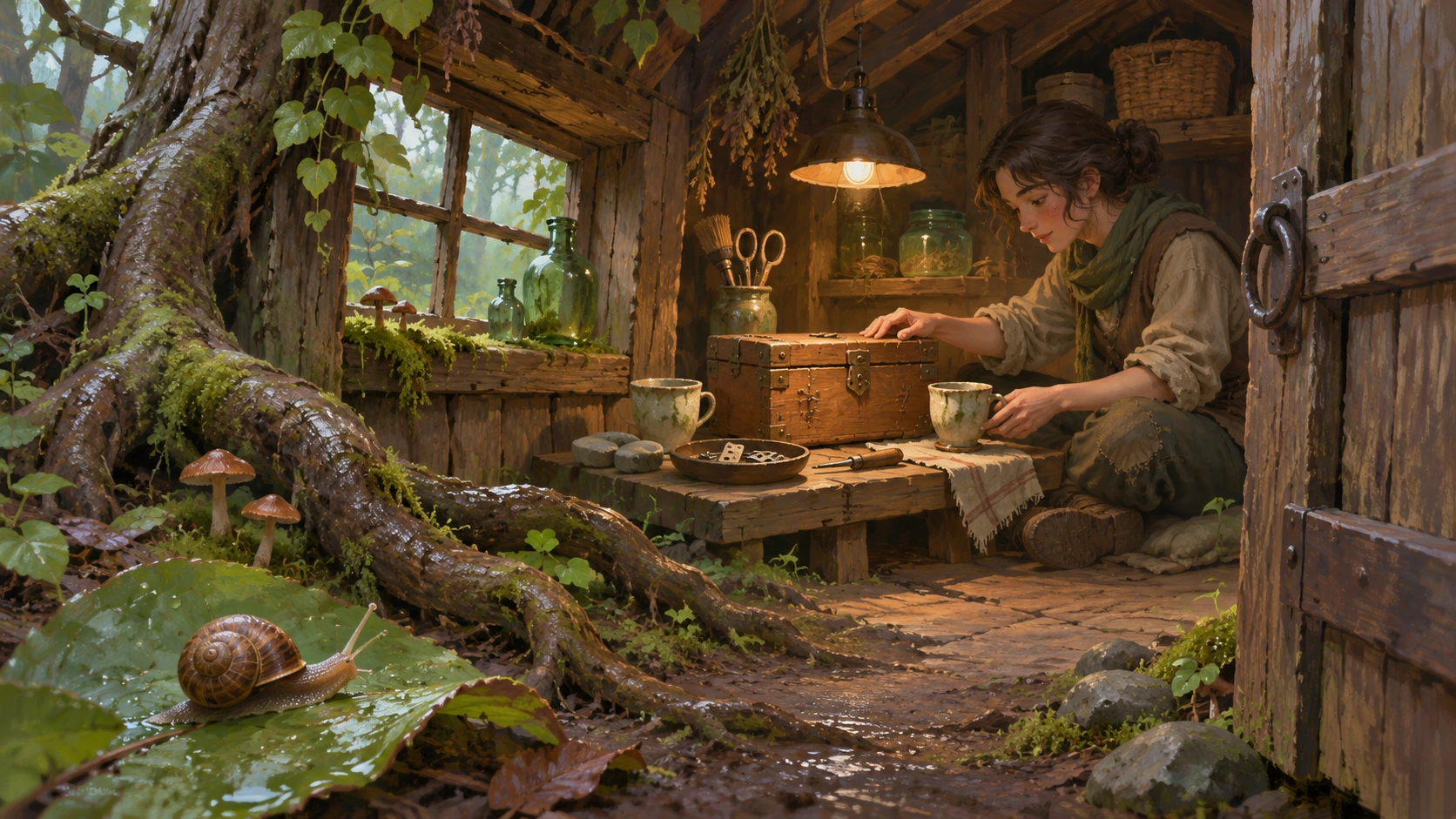
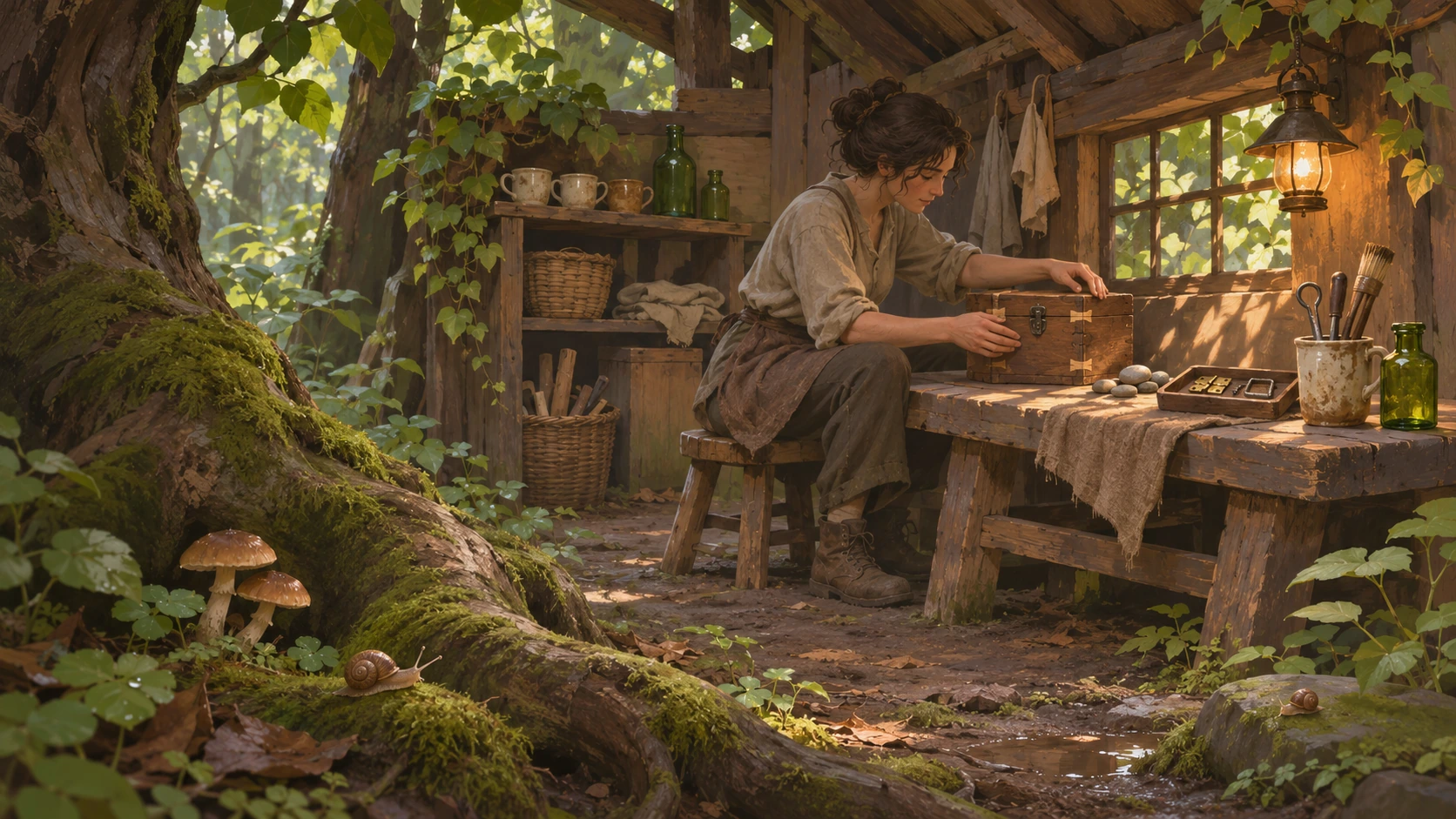
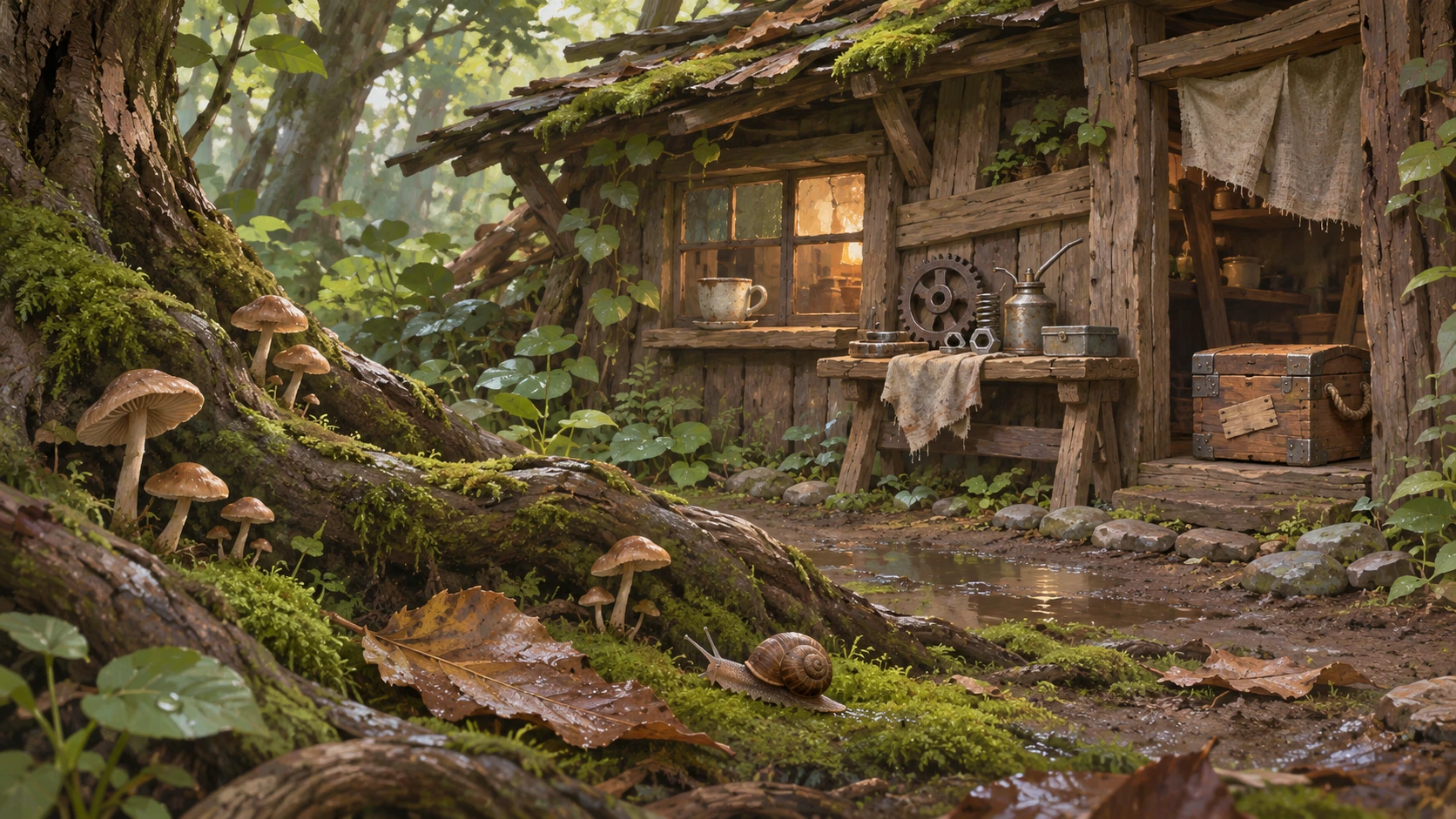
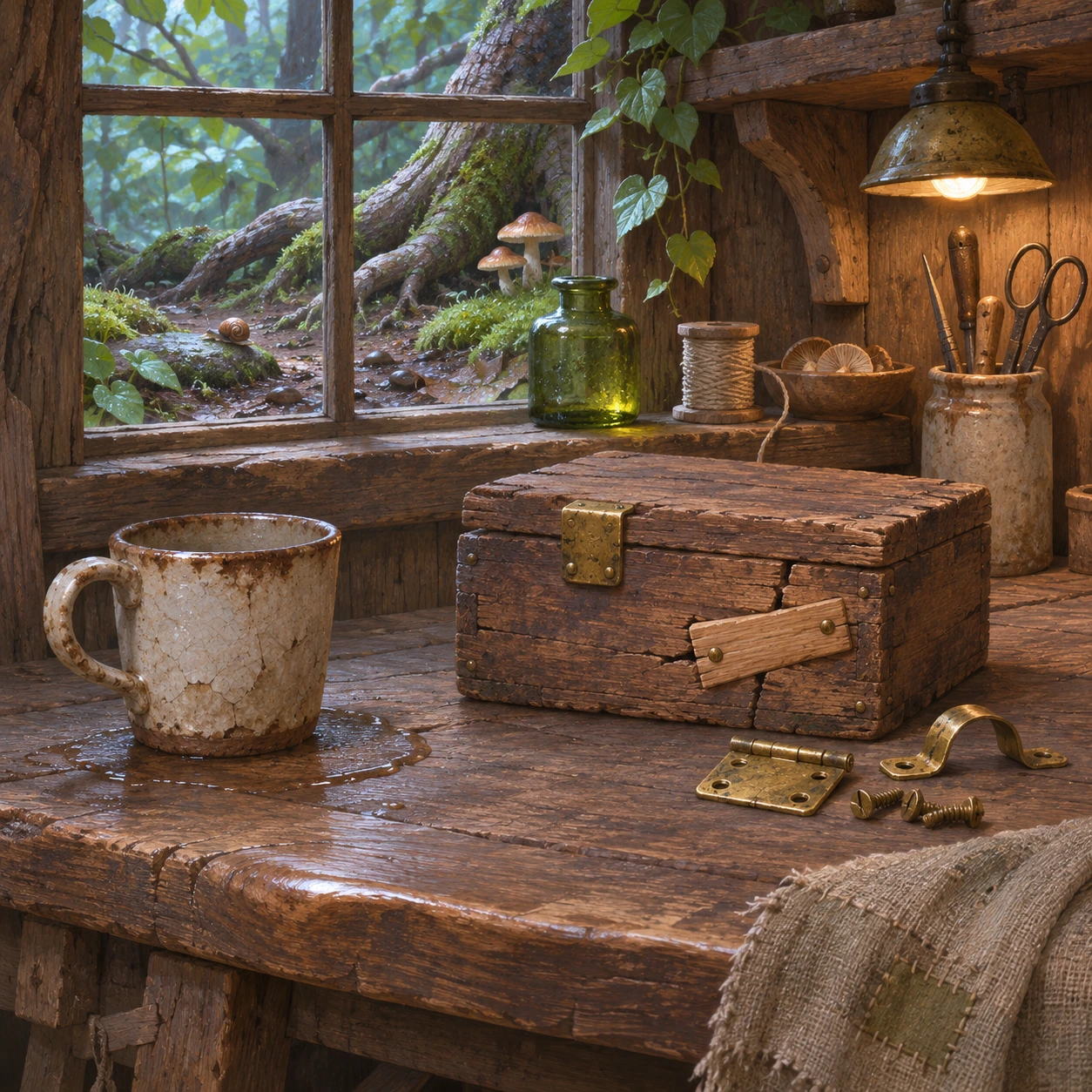
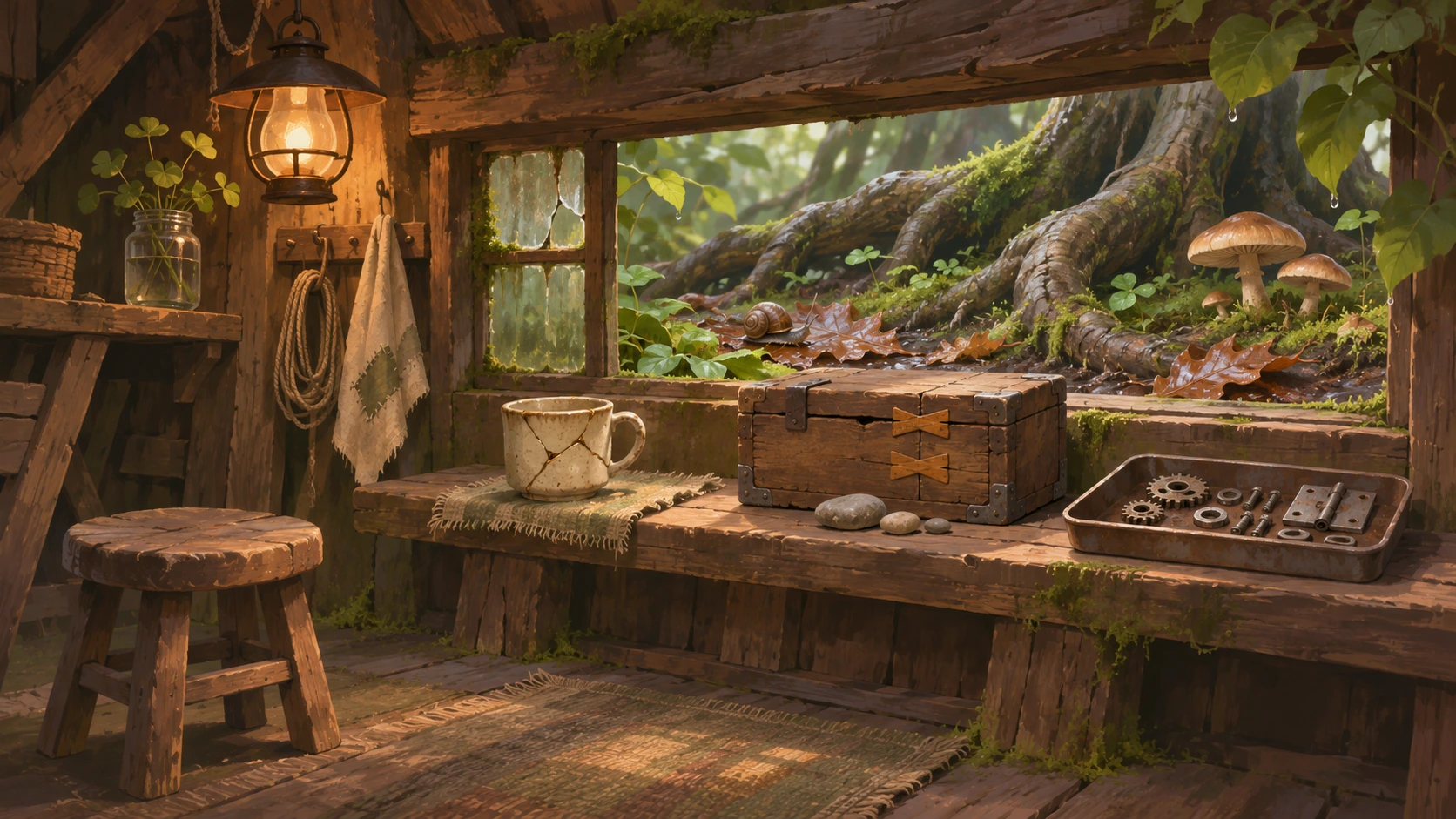
Design a small mending shed beside tree roots. Old cups, repaired wooden boxes and a few ordinary pebbles have particular places, while a low window overlooks moss, mushrooms and a snail. Enter through the scale of a cup, then discover how dwelling, care and small ecologies coexist.
Read scene descriptions
Main environment
An original woodland mending shed sits beside broad roots, with useful old cups, repaired boxes and ordinary pebbles. Moss, mushrooms and a snail outside a low window bring damp ground close to the work area.
Arranging and mending show how a person values ordinary small things.
Mushrooms, moss and a snail each occupy a place on damp ground.
Rough wood, old ceramics and worn metal retain contact and repair on their surfaces.
Useful small objects and a low window place dwelling beside a small ecology.