52Biopunk
When technology changes life, who uses, maintains and decides?
Definition and context
Biopunk explores how biotechnology changes bodies, environments and social relationships. Genes, cultivation, patents, maintenance and access can organize a fictional world. BioShock's invented modifications and commercial infrastructure provide one comparison; underwater cities, Art Deco and green liquids do not define the category.
People and ecology
Not every character needs to be a mutant. Operators, modified people, maintenance users and those without access can express relationships through position and action. Keep ordinary bodies, wearable devices and cultured organisms distinct, connecting bodily choices to life, work or dependency.
Spaces and forms
Arrange cultivation, supply, use, recovery and maintenance into a spatial chain. Transparent vessels, clean zones, old factories and public counters can contrast, but biotechnology needs more than rows of test tubes. Distances between an entrance, service desk and back room can reveal who may enter where.
Color and materials
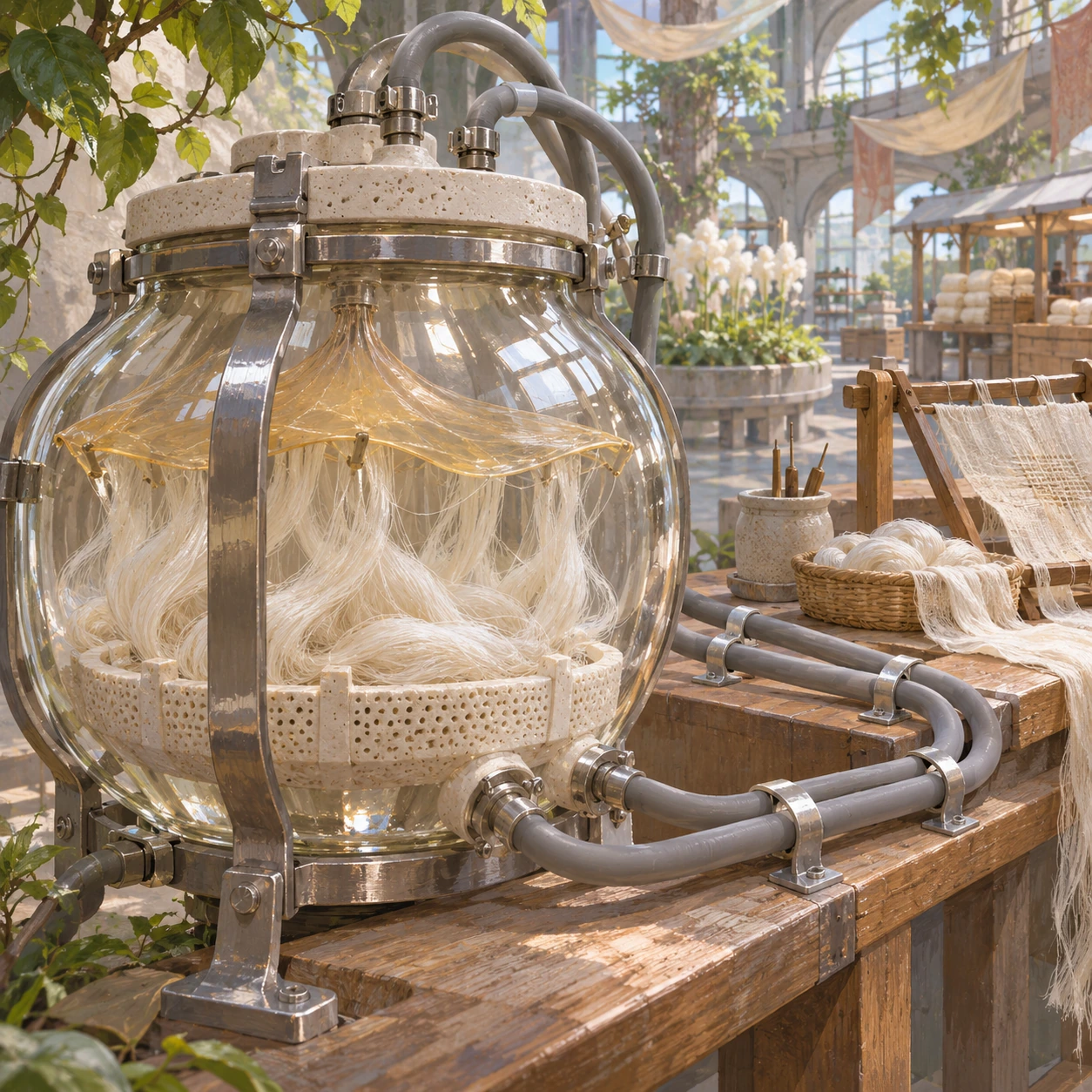
Glass, ceramics, rubber, fibrous membranes and ordinary metal can coexist. Give a culture a clear vessel, attachment surface and local form, with traceable connections. A few differences between flexible organic matter and rigid supports convey more than covering every surface in slime.
Light, composition and scale
Neutral work light makes observation and labor readable. Local contrasts between warm and cool light can separate cultivation from daily activity. Fluorescent green is optional, and an altered organism need not glow. Focus attention on relationships between interfaces, supplies and users.
Sound and graphics
Interaction might involve replacing culture modules, allocating supplies, waiting for repair or choosing a maintenance route. Actions should leave understandable feedback, such as a flow stopping when a module is replaced. Let technology change dependencies within the world rather than merely supply collectible colored bottles.
Motifs and distinctions
Unlike biomechanical art, this category emphasizes technological intervention in life and its social consequences; forms need not resemble skeletal machines. Unlike ecological weirdness, the cause can be an identifiable human-made system. Body horror may overlap, but modification can also be an ordinary, calm service.
Ideas for game environments
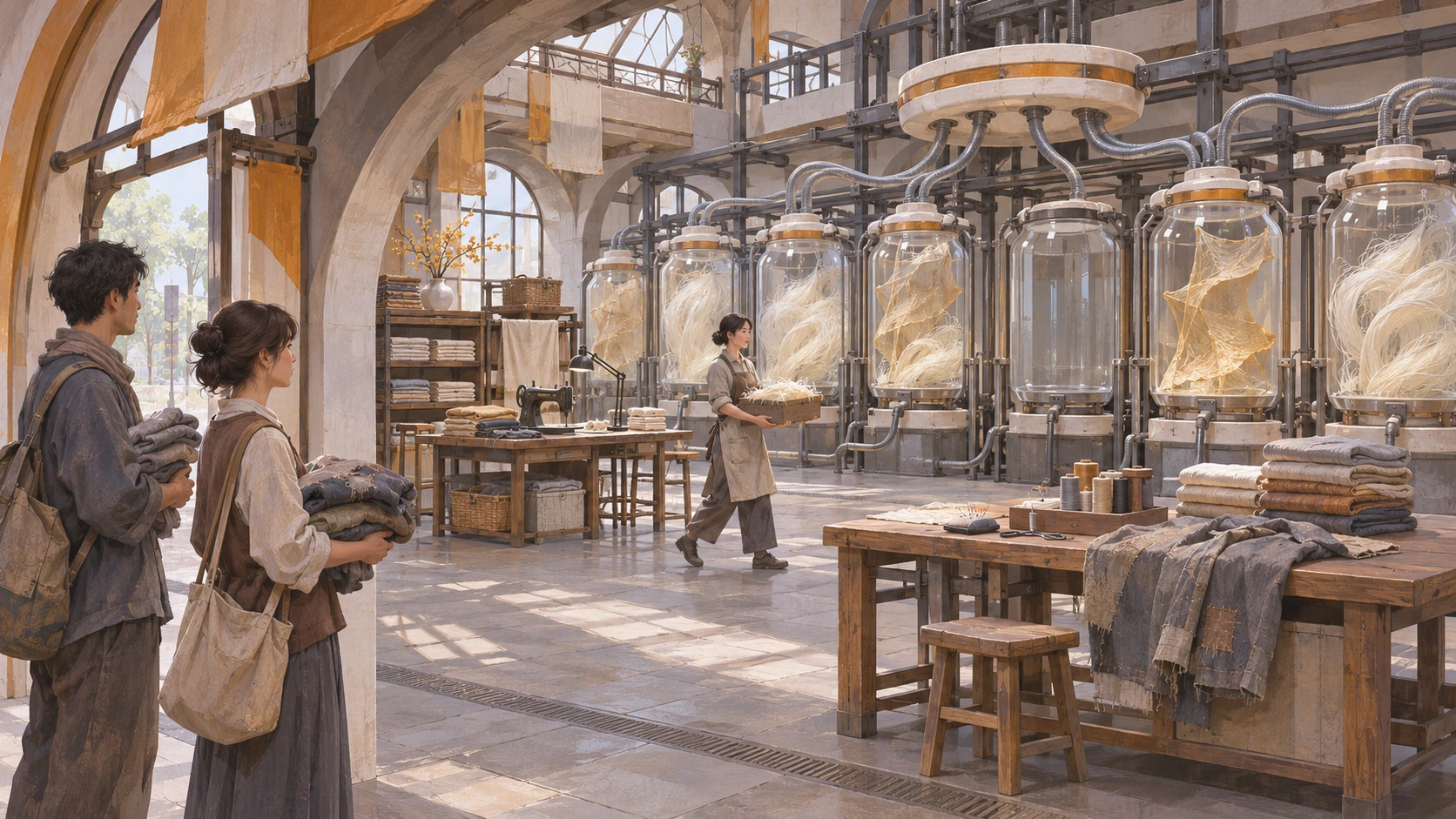
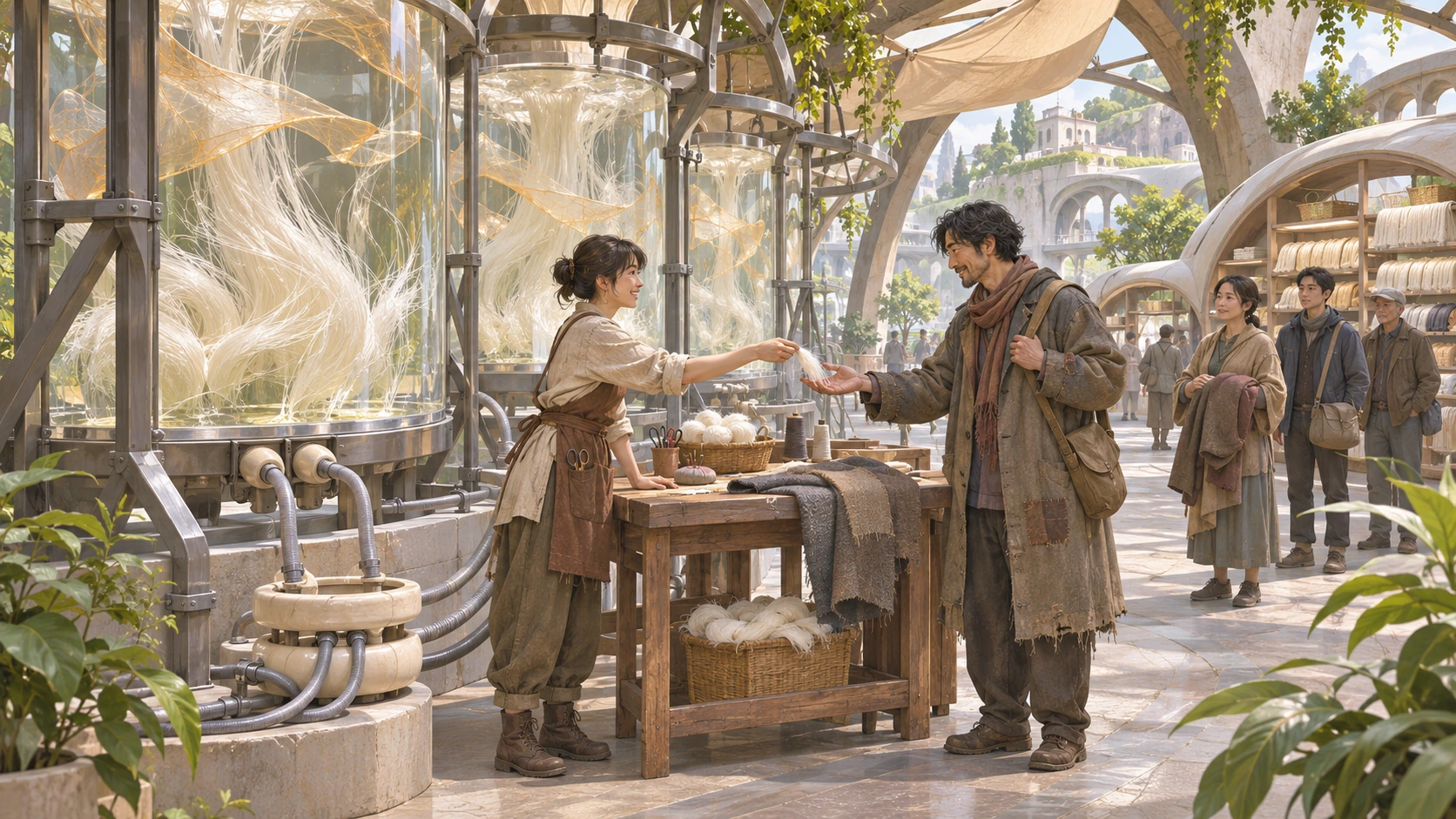
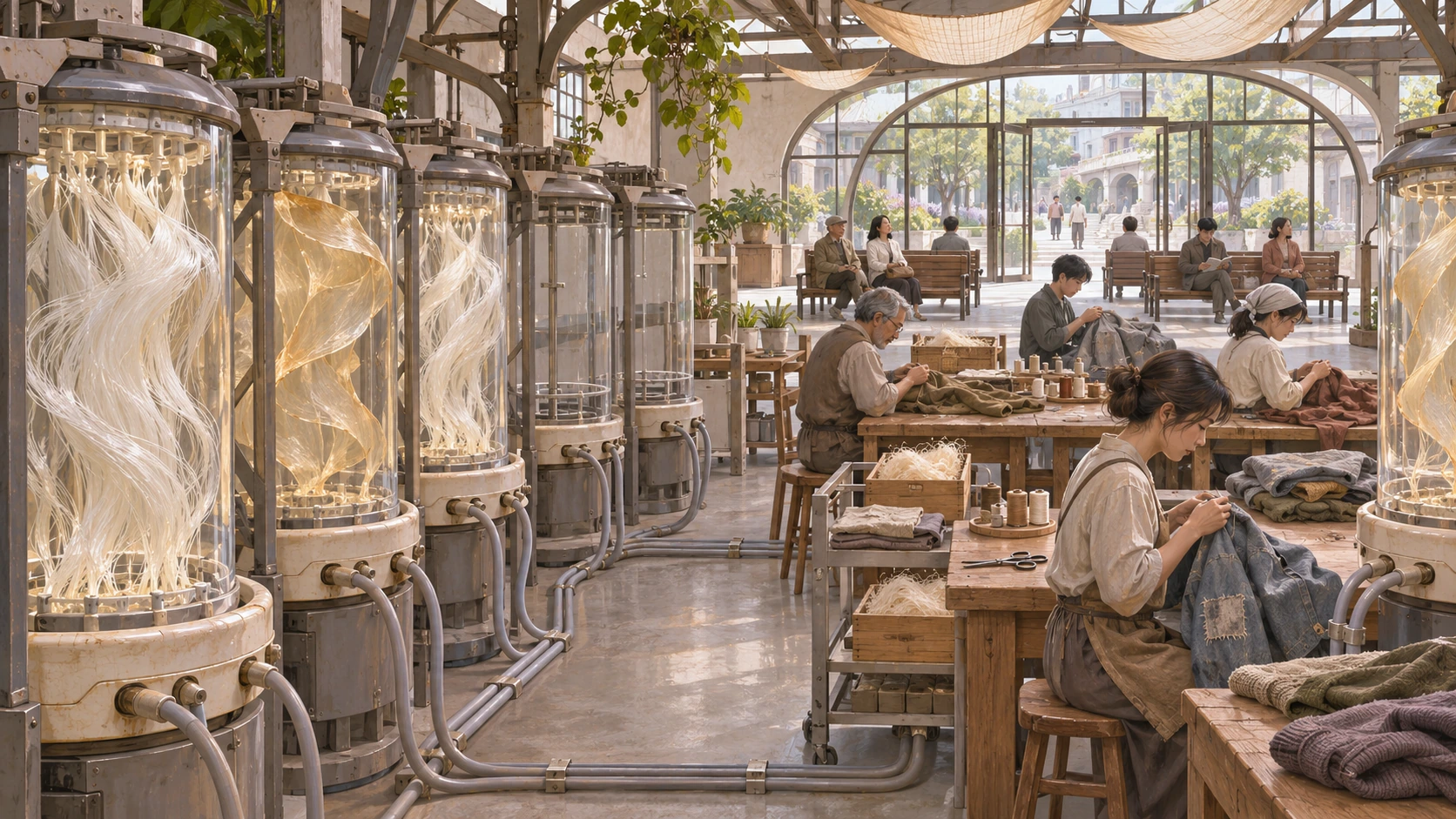
Design a public fiber-cultivation and mending station. Residents bring worn clothes; staff grow invented fibers in transparent modules and move the results to ordinary repair benches. Shared supply lines, empty modules and waiting positions reveal resource differences while keeping bodies and everyday life legible.
Read scene descriptions
Main environment
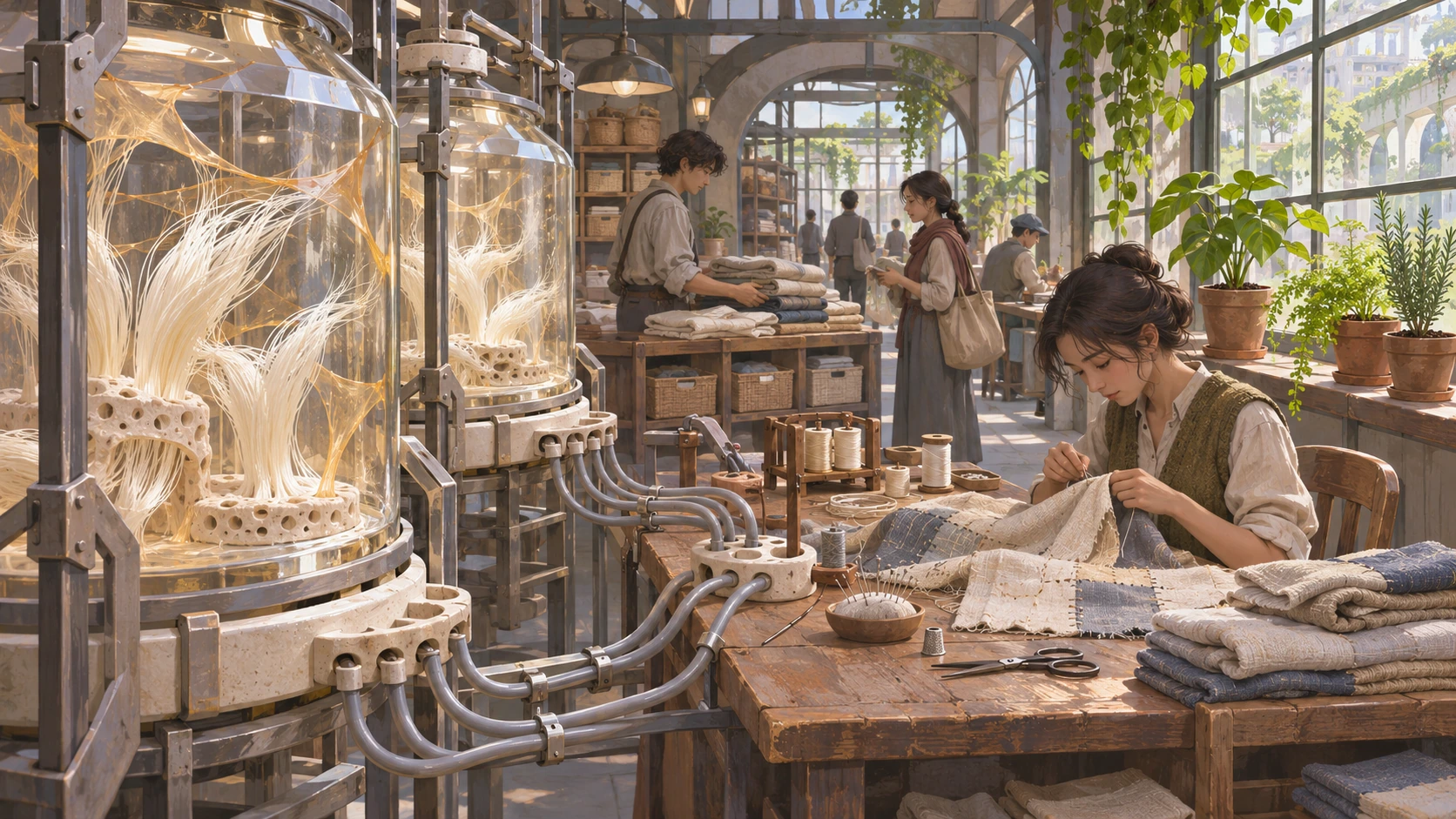
An original public fiber-cultivation and mending station links transparent culture modules, ceramic supply rings and ordinary sewing benches. Residents wait with clothes while staff maintain invented fibers; empty modules and work positions suggest resource allocation.
Residents, workers and culture modules reveal service and dependency through their positions.
Invented fibers in vessels and ordinary window plants occupy different growing environments.
Glass, fibrous membrane and rigid connections make cultivation and maintenance legible.
Shared supplies, empty modules and mending benches leave traces of resource use.