50Biomorphism / Biomorphic Abstraction
Forms can evoke life without depicting a species.
Definition and context
Biomorphic abstraction uses relationships of form that evoke life, plants, bodies or natural growth without depicting a named species. It can occur in sculpture, painting and spatial design; it is not synonymous with every curve or sphere. Artist archives provide organic masses, cavities and grouped forms for study, while these new spaces avoid copying a particular sculpture.
People and ecology
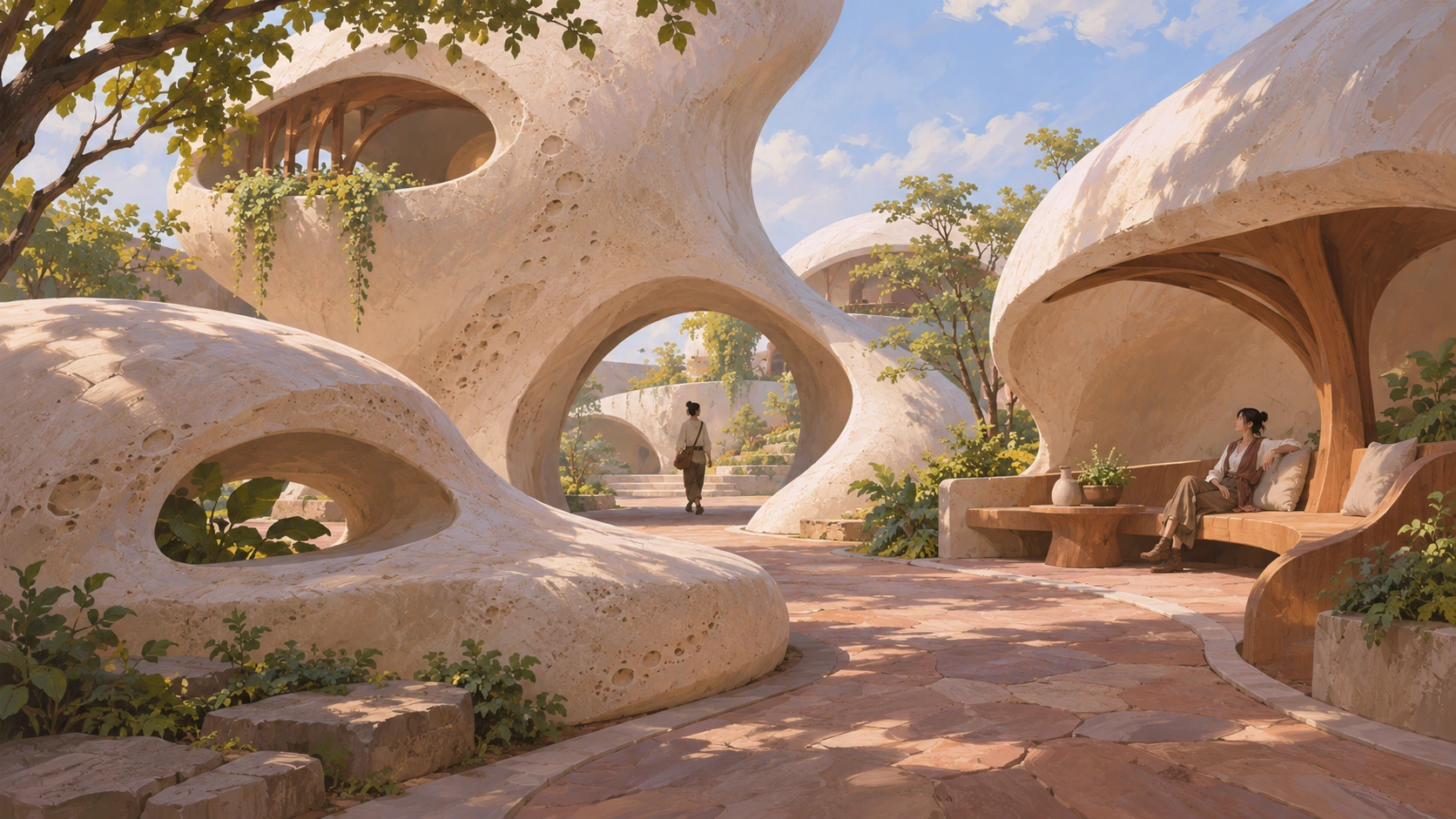
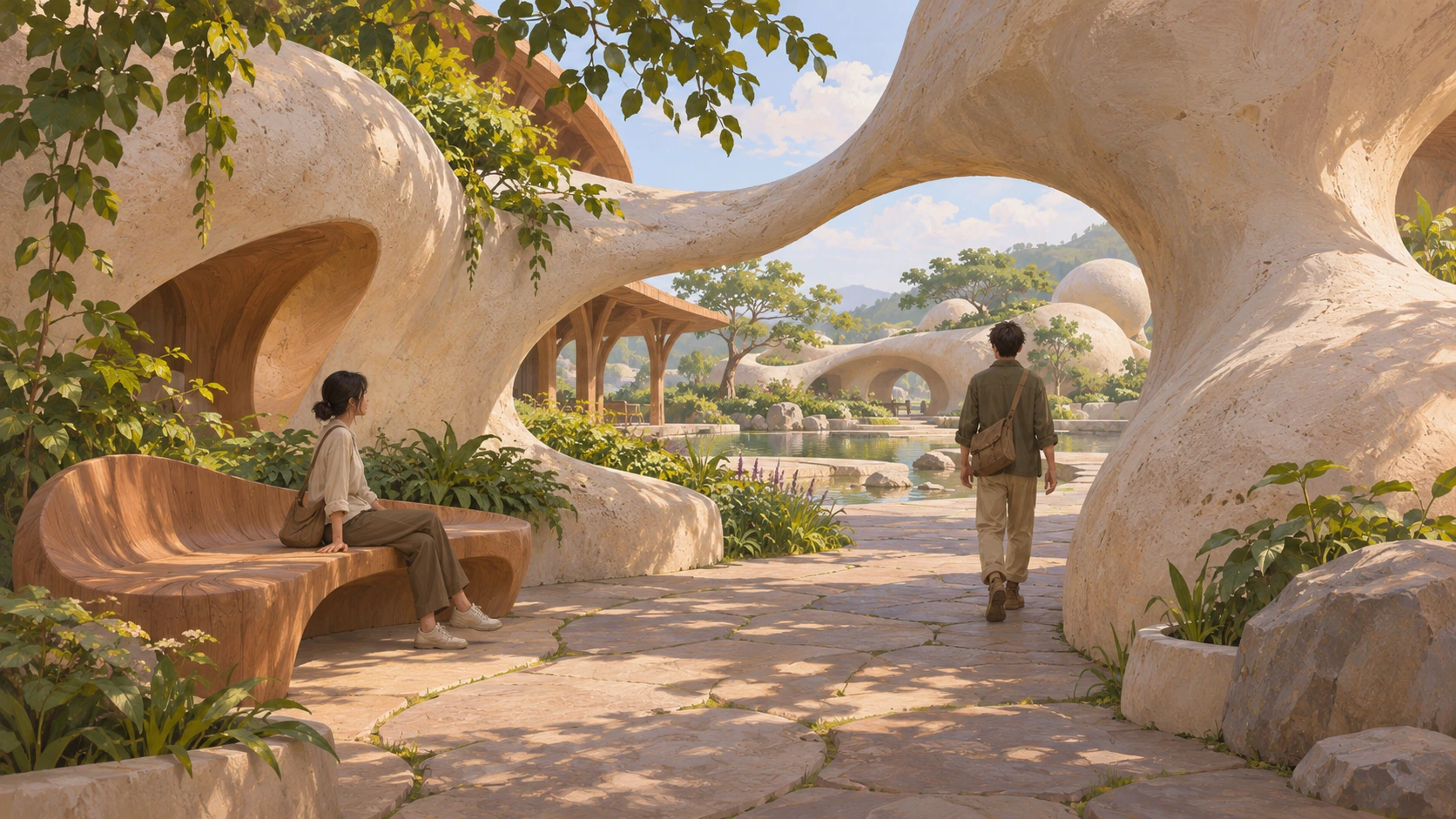
People and ordinary organisms establish scale and comparison. Abstract forms need not become monsters or literal organs. Swelling mass, a narrowed neck and an off-center opening may suggest a seed, torso or pebble without becoming any one of them.
Spaces and forms
Organize space through continuous curves, asymmetry, cavities, contact and separation. Voids matter as much as solids: how an opening frames a person or a group leaves a route should remain clear. Mechanically repeating identical rounded modules is not sufficient.
Color and materials
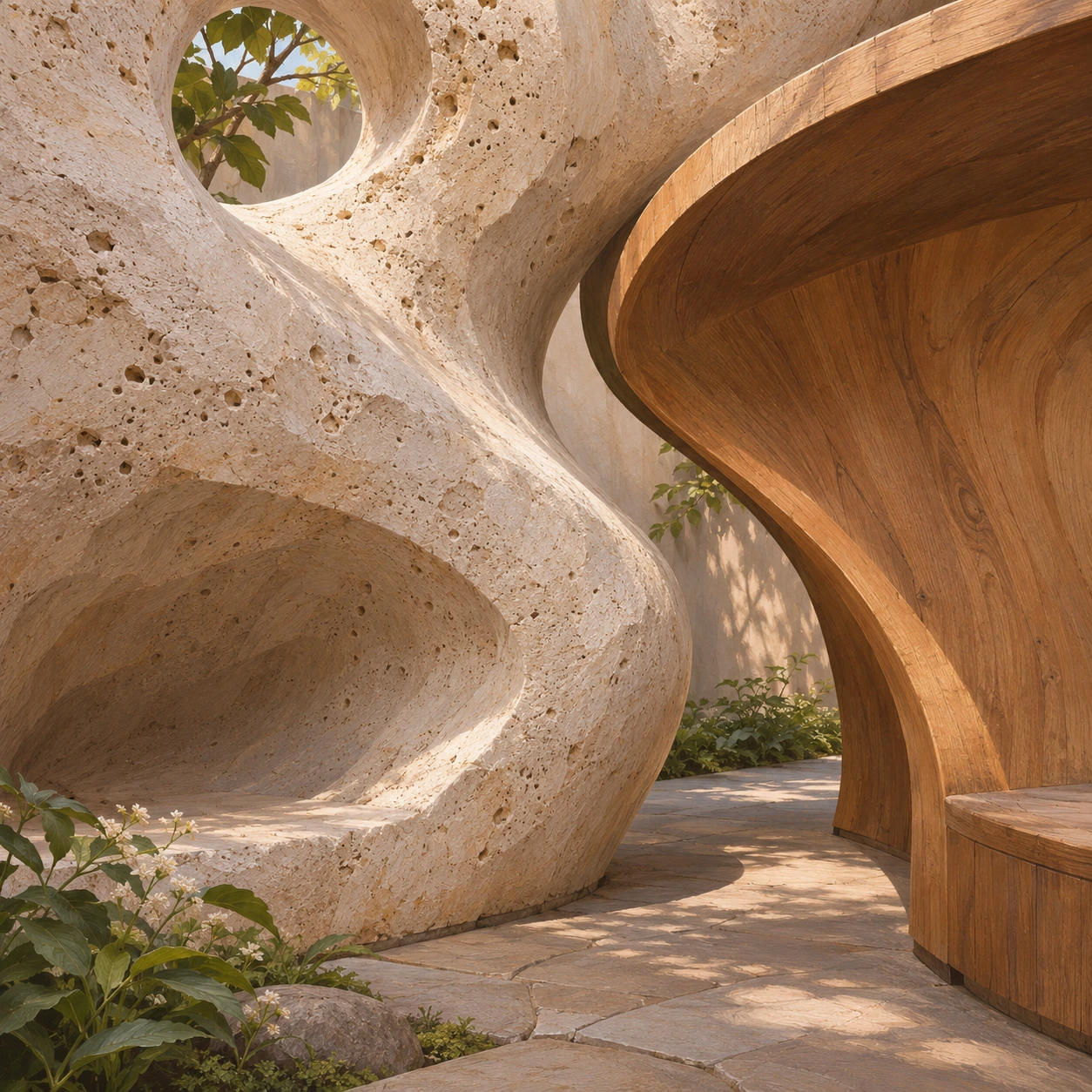
Stone, wood, clay, metal and other materials can carry biomorphic form. Surfaces may be smooth or textured; transitions and volumetric relationships are the concern. Grain, pores and joints belong to specific objects rather than turning everything into slime or transparent plastic.
Light, composition and scale
Model light along curves to reveal swelling, hollows, thickness and openings. Use selected shadows to explain interior space instead of flattening all volume with uniform soft light. Warm white, wood and muted earth tones are options, not a required palette.
Sound and graphics
Interaction can study walking around, passing through, leaning and looking through openings. Abstract space still needs ground and human scale.
Motifs and distinctions
Unlike biomechanical imagery, this category requires no fusion of organism and machine. Unlike ecological weirdness, its forms can be calm and nonthreatening without a fictional living system. It may overlap with minimal sculpture while emphasizing organic association and asymmetrical relationships.
Ideas for game environments
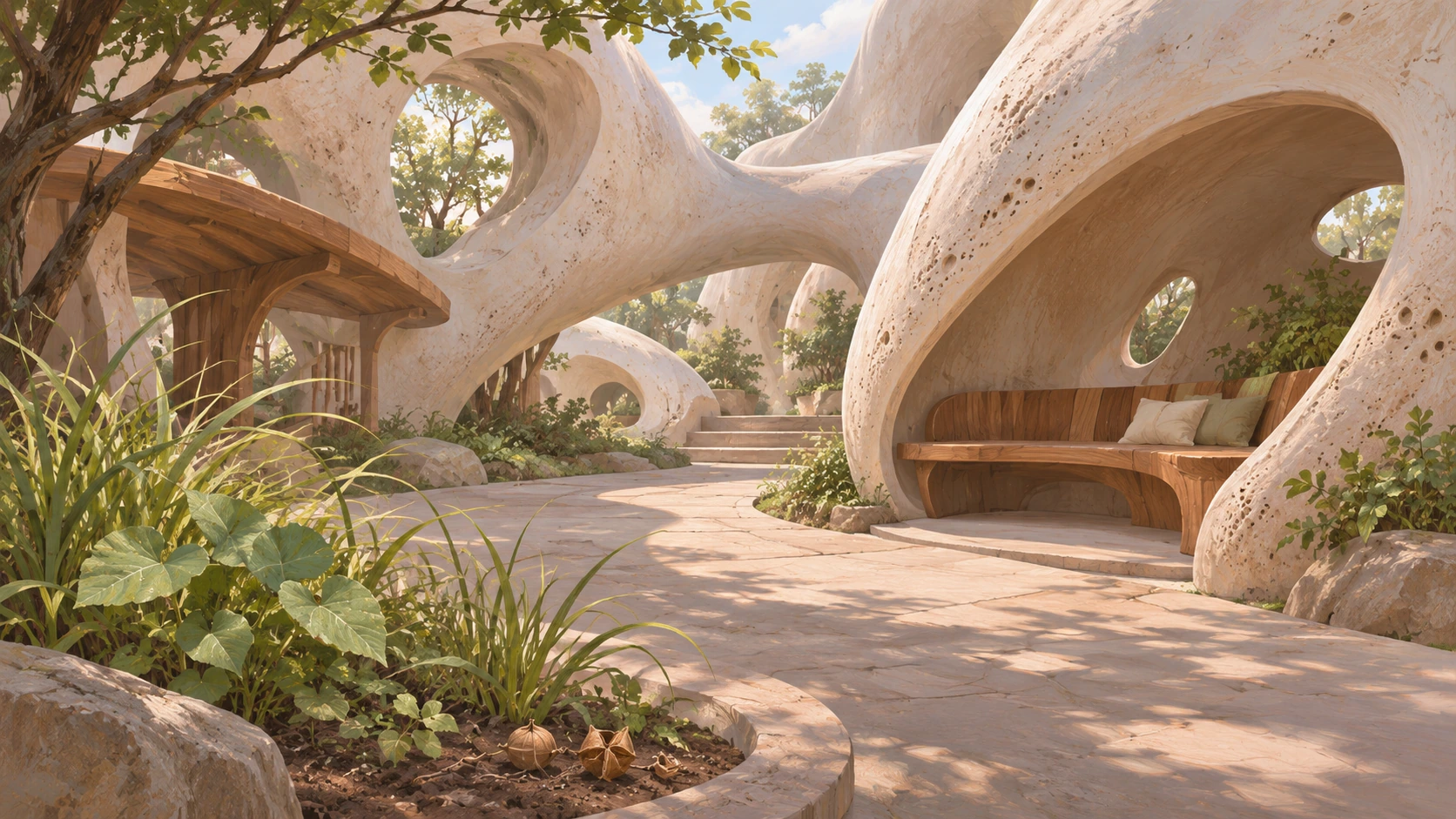
Let an offset opening change a pedestrian's view. Enclose a resting place with two related but nonidentical masses. Set ordinary seed pods near abstract forms to suggest a source without making enlarged specimens. Keep associations open among solid, void and scale.
Read scene descriptions
Main environment
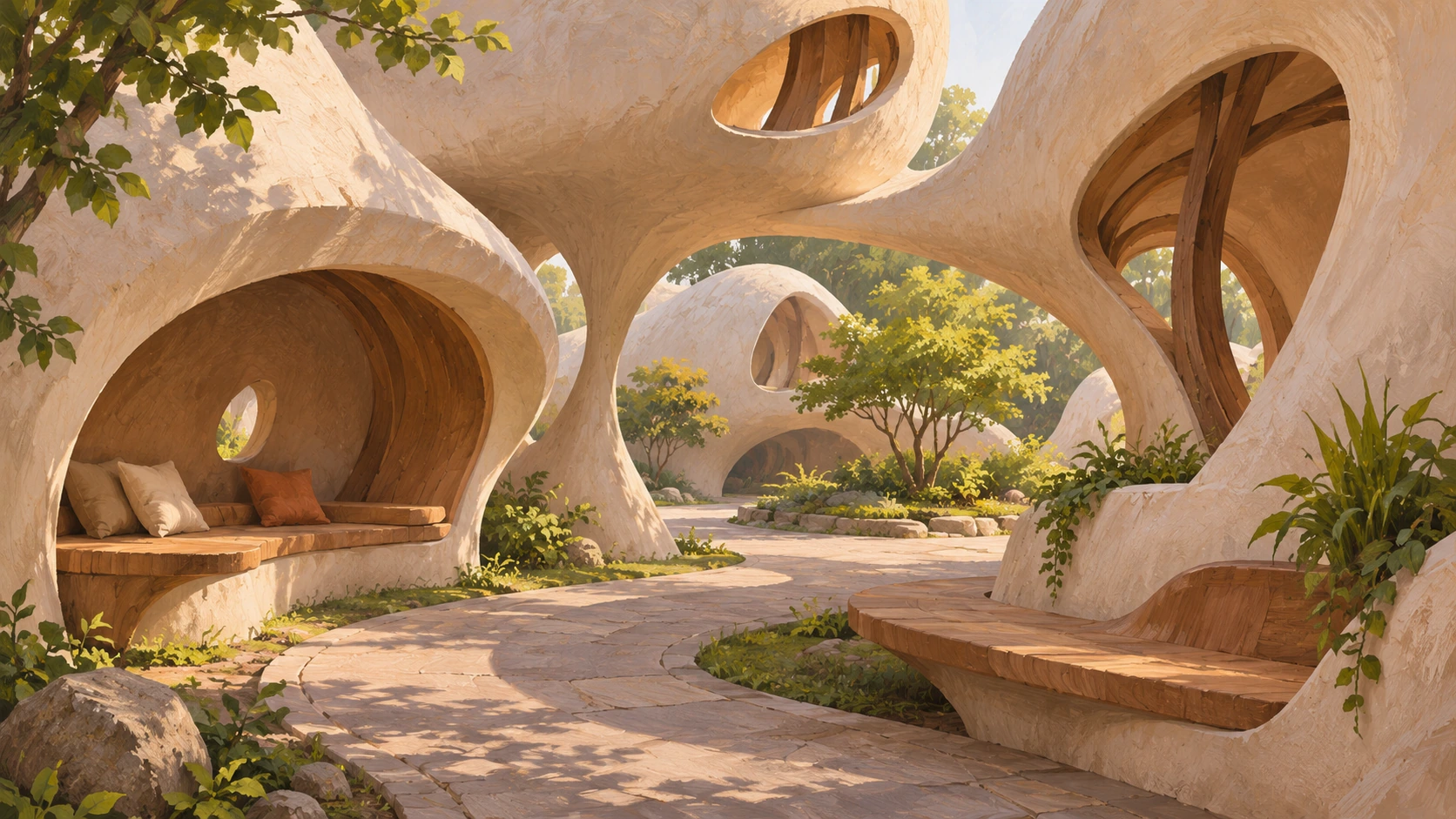
An original resting court uses asymmetric swelling masses, offset openings and meeting curves. Warm-white stone, wooden elements and ordinary plants retain distinct materials as people pass among cavities.
Human scale and openings make abstract space enterable.
Plants and seed pods suggest a source without fixing abstraction to a species.
Grain, stone pores and changing thickness explain material and volume.
Solids and voids together frame routes and resting places.