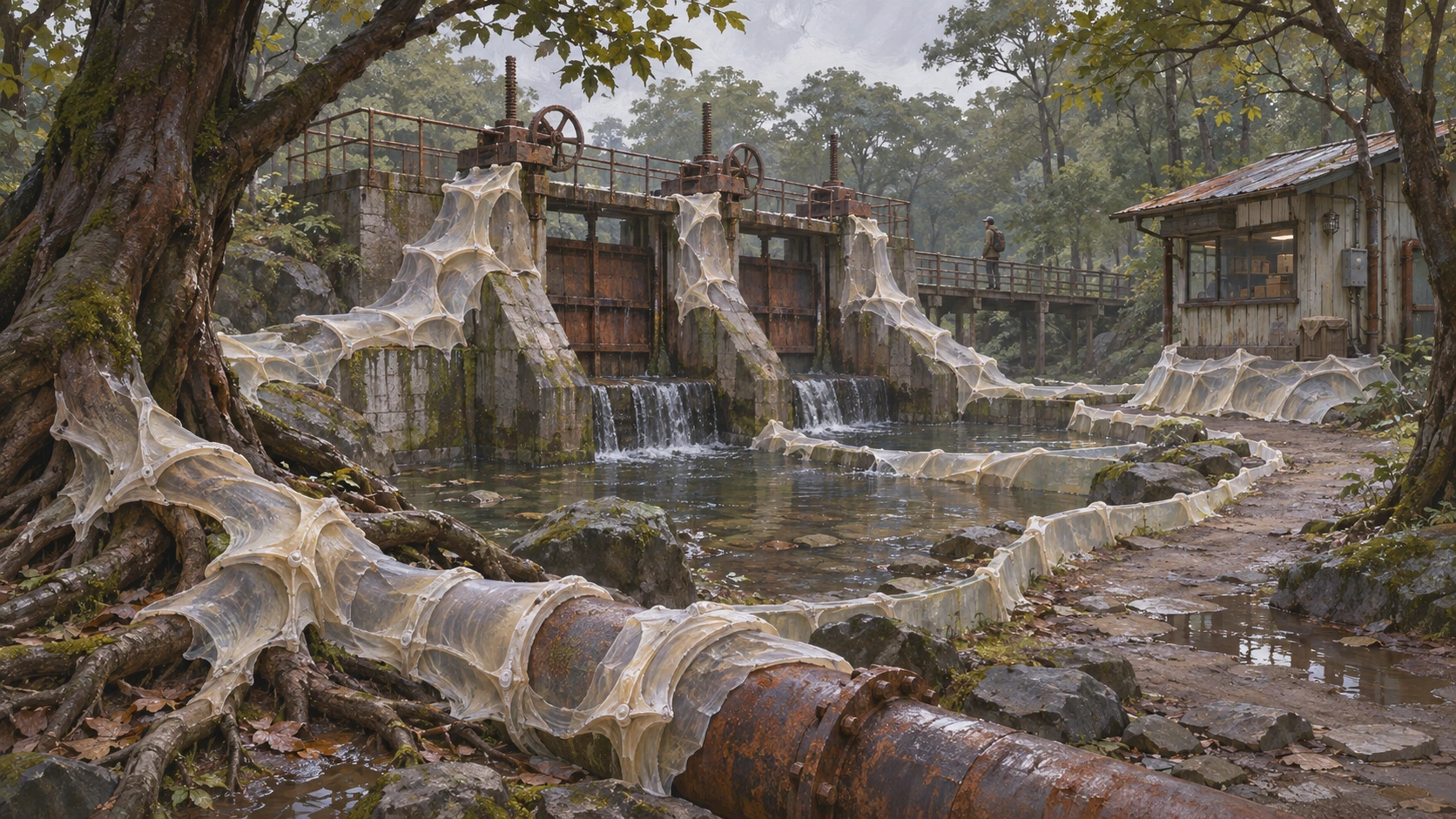
49Ecological Weird / Eco-horror / New Weird
The unknown is not only an organism: environmental relationships begin to change.
Definition and context
Ecological weirdness, eco-horror and New Weird are compared here rather than treated as interchangeable. The first two can concern unsettling relations among humans, environments and nonhuman processes. New Weird crosses boundaries such as fantasy and horror, extends beyond ecology and has no universal mushroom or tentacle formula. These original spaces begin with ecological relationships that resist classification.
People and ecology
People need not face a pursuing monster; they may observe a system no longer centered on them. Ordinary animals, plants and fictional growth can coexist with distinct behavior and scale. Normal animal life can reveal changed relationships more clearly than universal mutation.
Spaces and forms
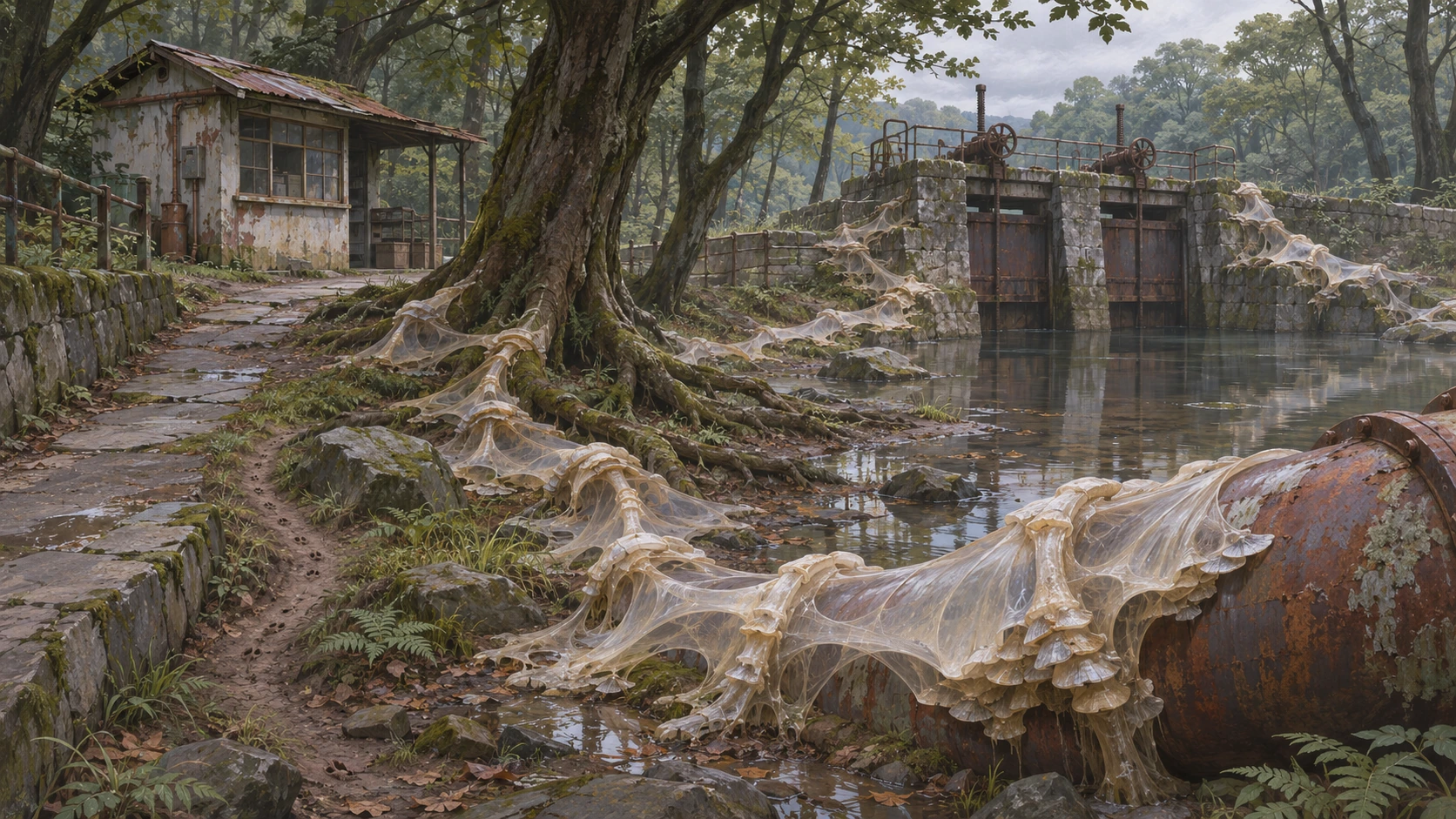
Choose a meeting of water, soil, roots and infrastructure, such as an old woodland sluice and service shelter. Spread the anomaly along specific connections rather than make an entire forest glow. Crossing pipes, roots and water edges should change a local route, boundary or use.
Color and materials
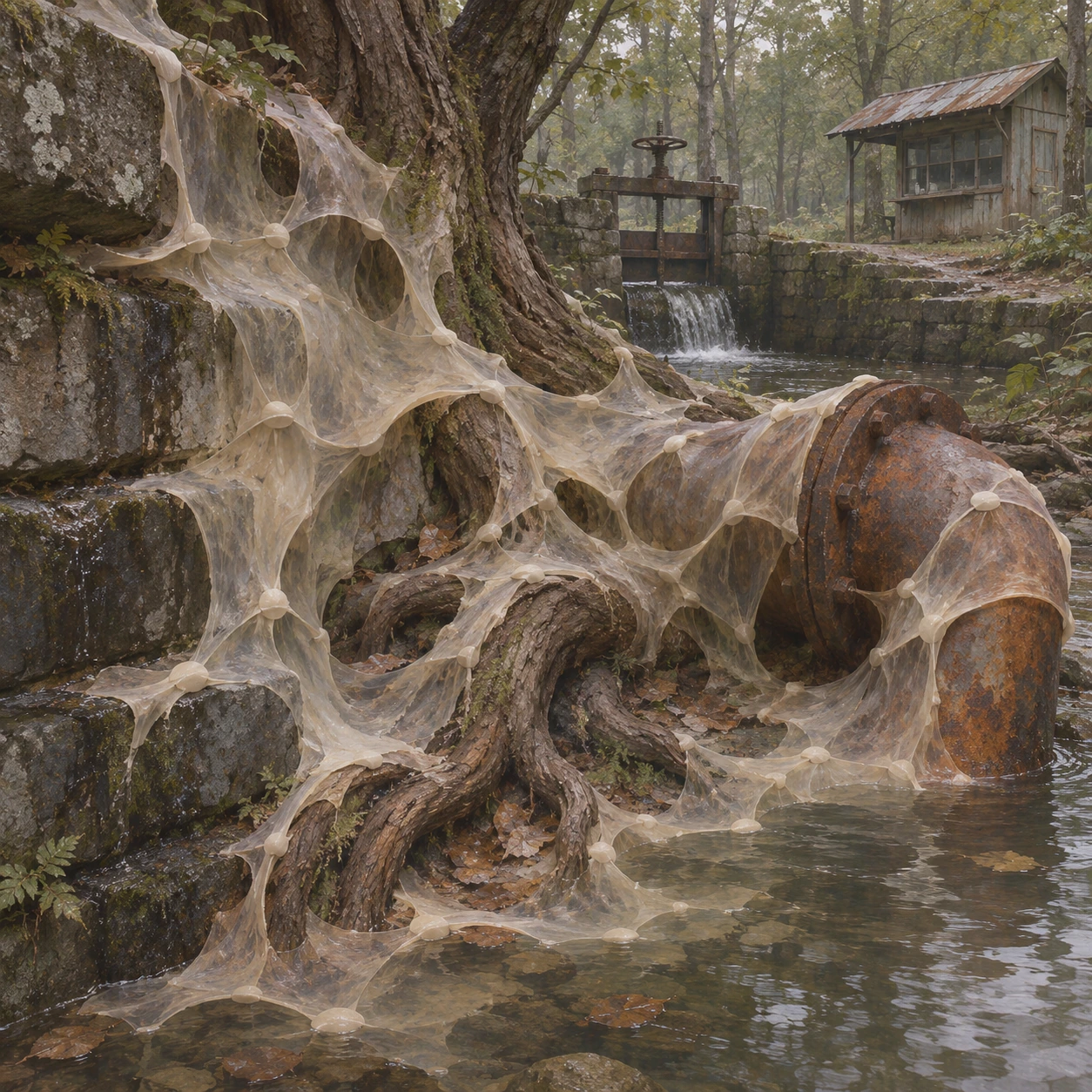
Relate wet stone, roots, rusted pipes and an unknown membrane- or shell-like growth. It need not be flesh, nor must every leaf have teeth. Give it edges, joints and thickness so the viewer can judge whether it attaches, covers or replaces.
Light, composition and scale
Ordinary overcast light or sun through trees keeps the setting readable. Pale local reflections can mark the anomaly without filling the image. Water levels, ground and trunks provide a baseline. Green fog or fluorescent liquid alone does not define ecological horror.
Sound and graphics
Interaction might connect an intervention in one place to a change elsewhere, with legible feedback rather than random punishment. Static art suggests a network. Nature need not be described as taking revenge on humanity.
Motifs and distinctions
Compared with nature reclaiming, this category adds uncertain classification, anomalous interaction or unclear causes. Compared with cosmic horror, questions can remain local rather than concern universal laws. Unlike body horror, injury to a human body is not a necessary subject.
Ideas for game environments
Give one fictional growth the same joining rule on roots and pipes. Redirect an ordinary animal path around a changing water edge. Let removal of one structure affect another. Put the unknown in a network of relations rather than only design a green monster.
Read scene descriptions
Main environment
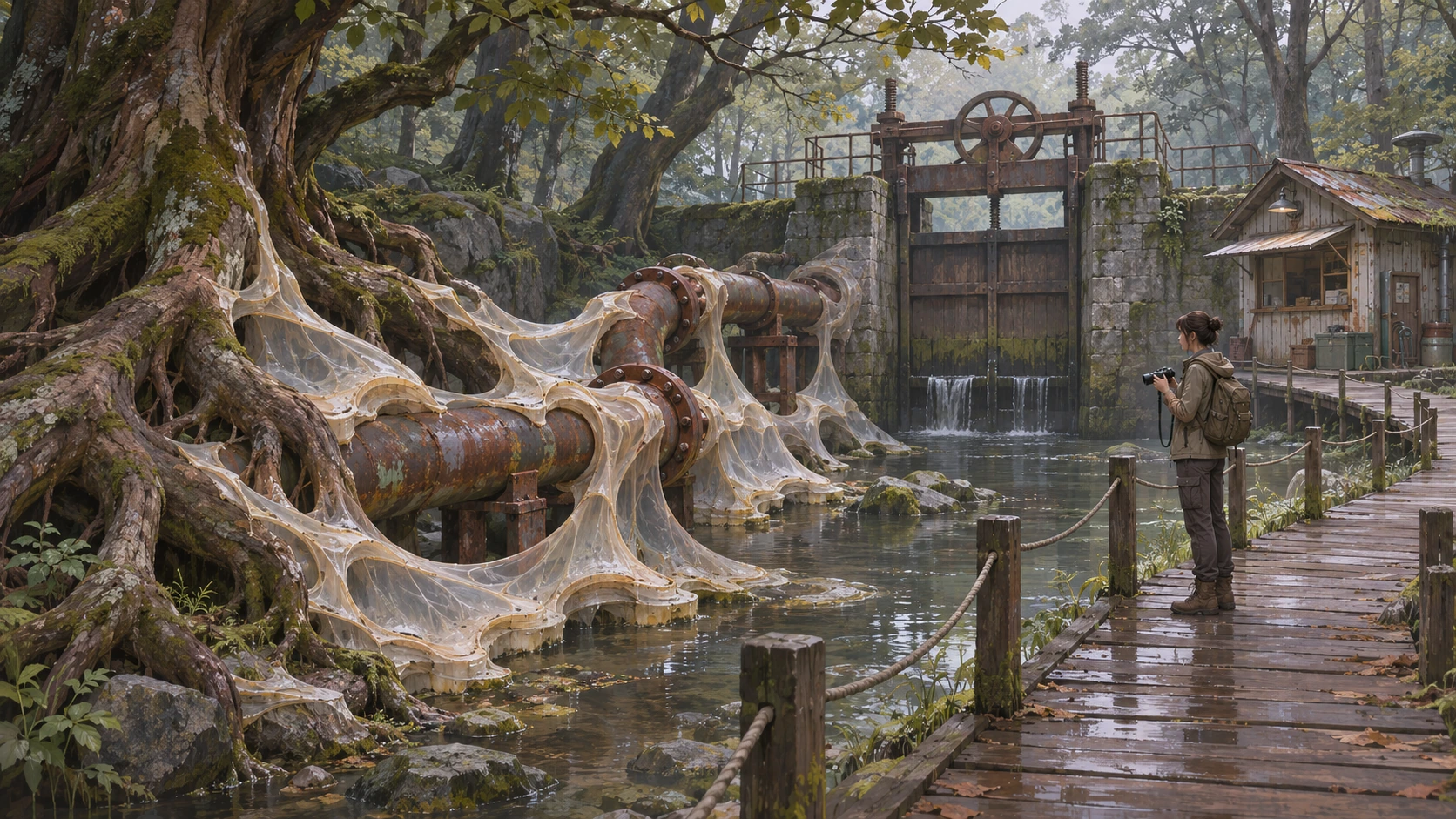
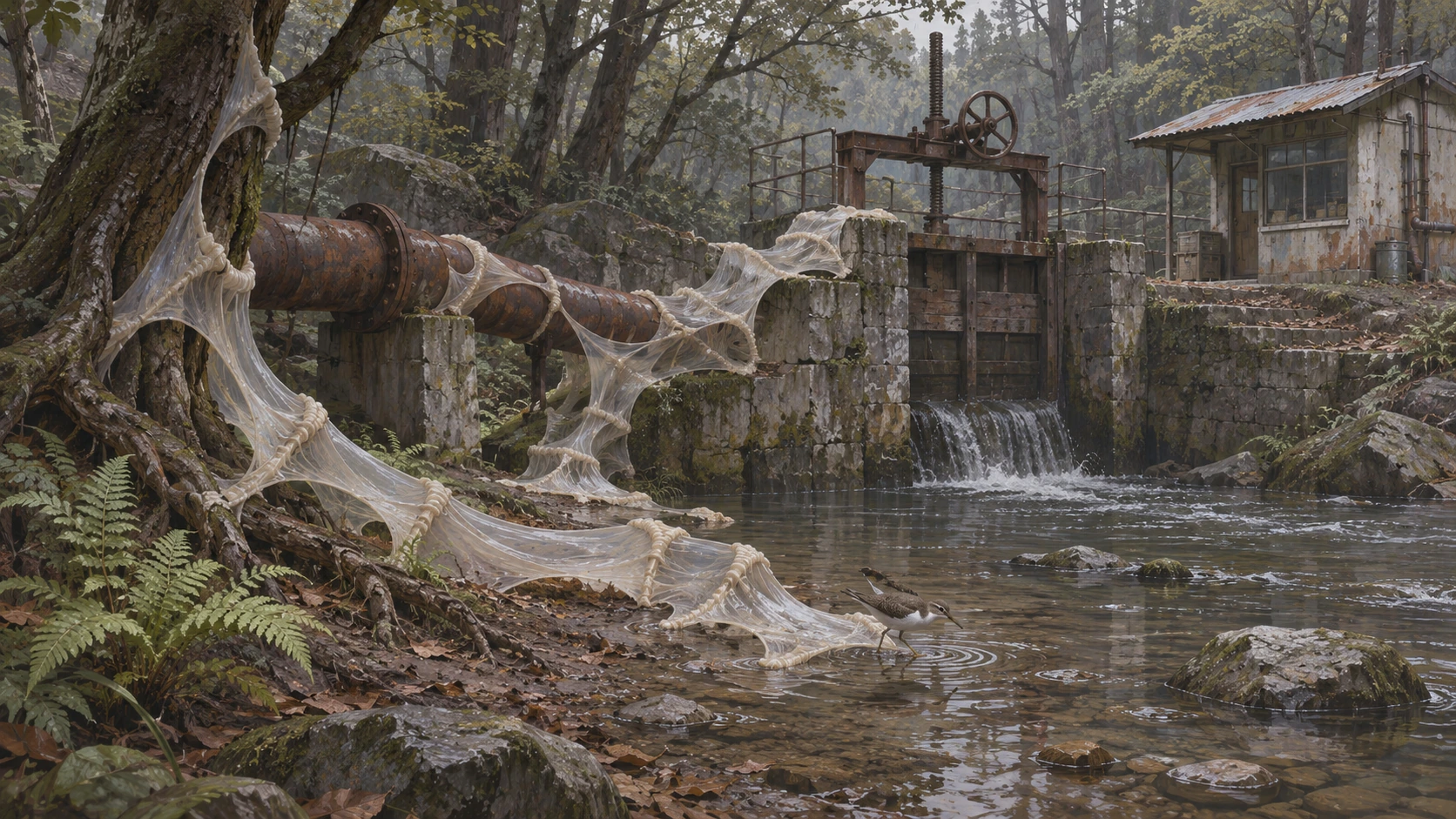
An original woodland sluice joins roots, wet stone, pipes and shallow water. A fictional pale membrane follows one joining rule across these boundaries while ordinary animals and an observer remain distinct.
An observer acts normally while environmental connections carry the unknown.
Ordinary animals and fictional growth have different routes and scales.
A membrane-like edge crosses roots and pipes to unsettle material boundaries.
One joining rule links local changes across several areas.