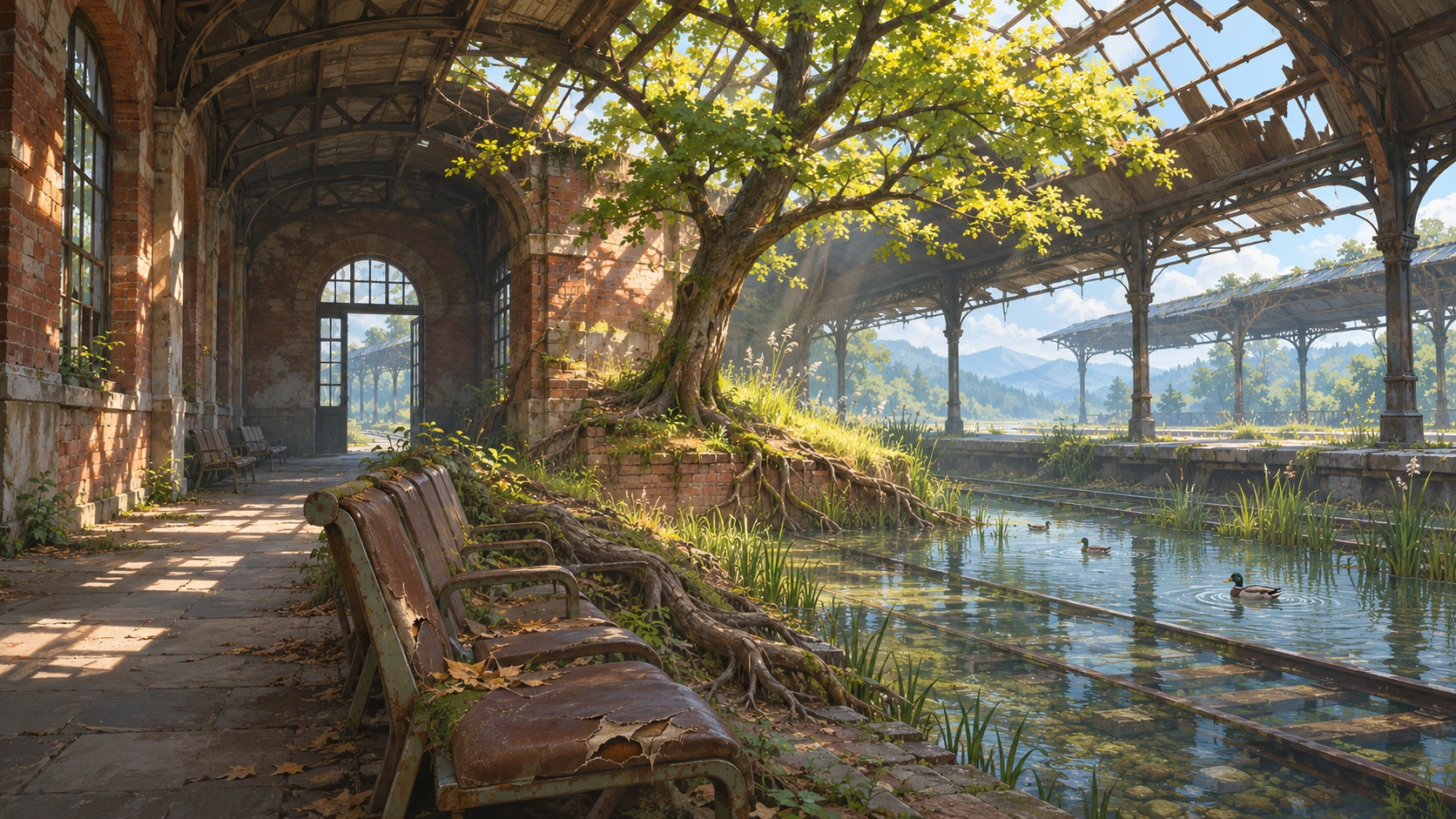
48Nature Reclaiming / Posthuman Landscapes
Human facilities retain outlines while life and flow reorganize their use.
Definition and context
Nature reclaiming and posthuman landscapes place human facilities within longer ecological time. The concern is not adding green to a ruined facade, but organisms, water and materials changing former use. Distinguish photographs, fictional games and original future concepts. Plants entering a building do not automatically prove complete ecological recovery or humanity's disappearance everywhere.
People and ecology
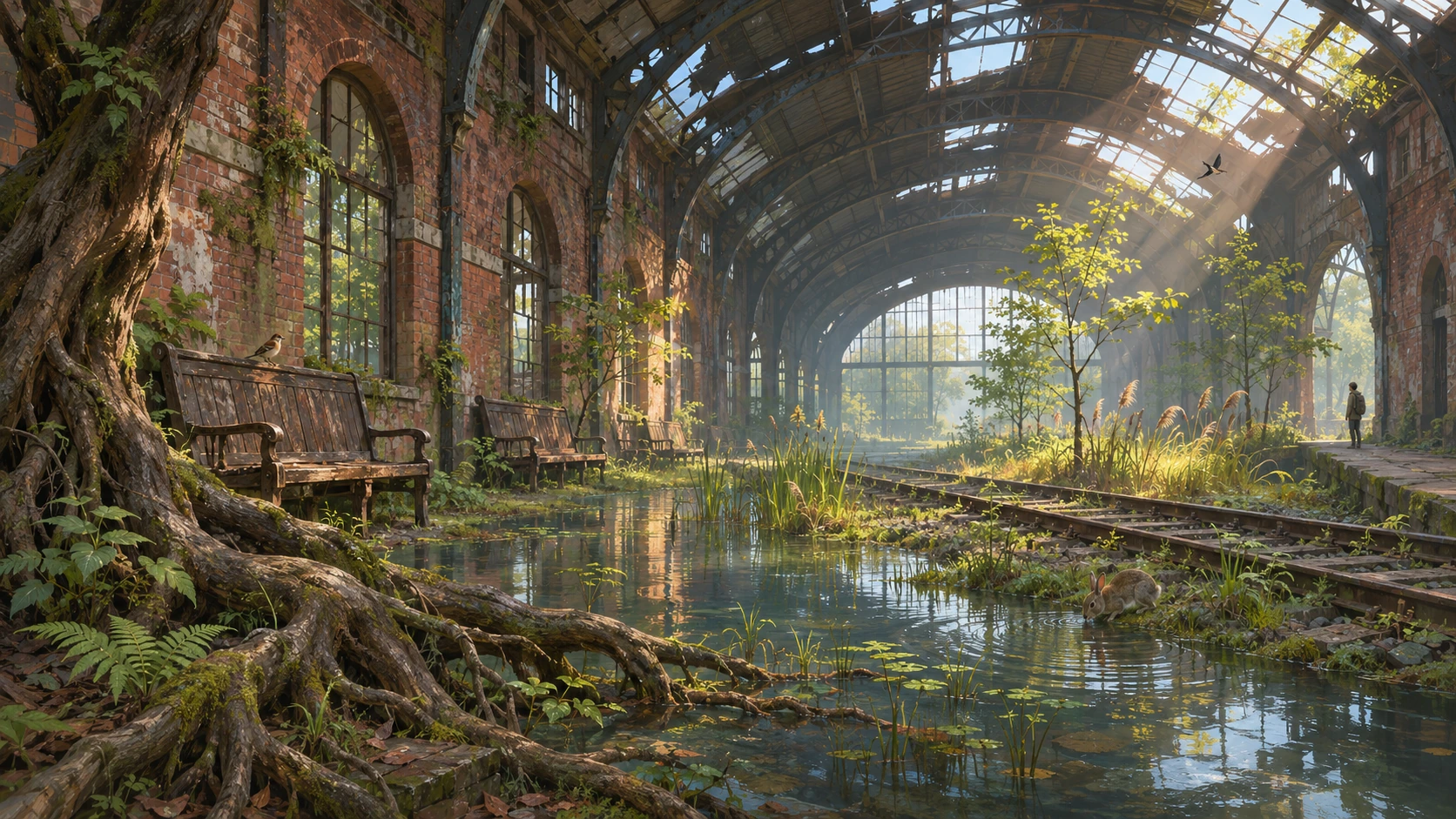
People may be absent or appear only as small observers. Animals need not perform for humans; nests, feeding places and movement routes can become new spatial centers. Ordinary organisms let changed relationships carry the theme without universal giant mutations.
Spaces and forms
Organize growth through entrances, skylights, cracks and low drainage points. Roots, soil and water alter floors, rails and routes over time. Light, moisture, substrate and duration should vary across areas rather than covering every wall with identical vines.
Color and materials
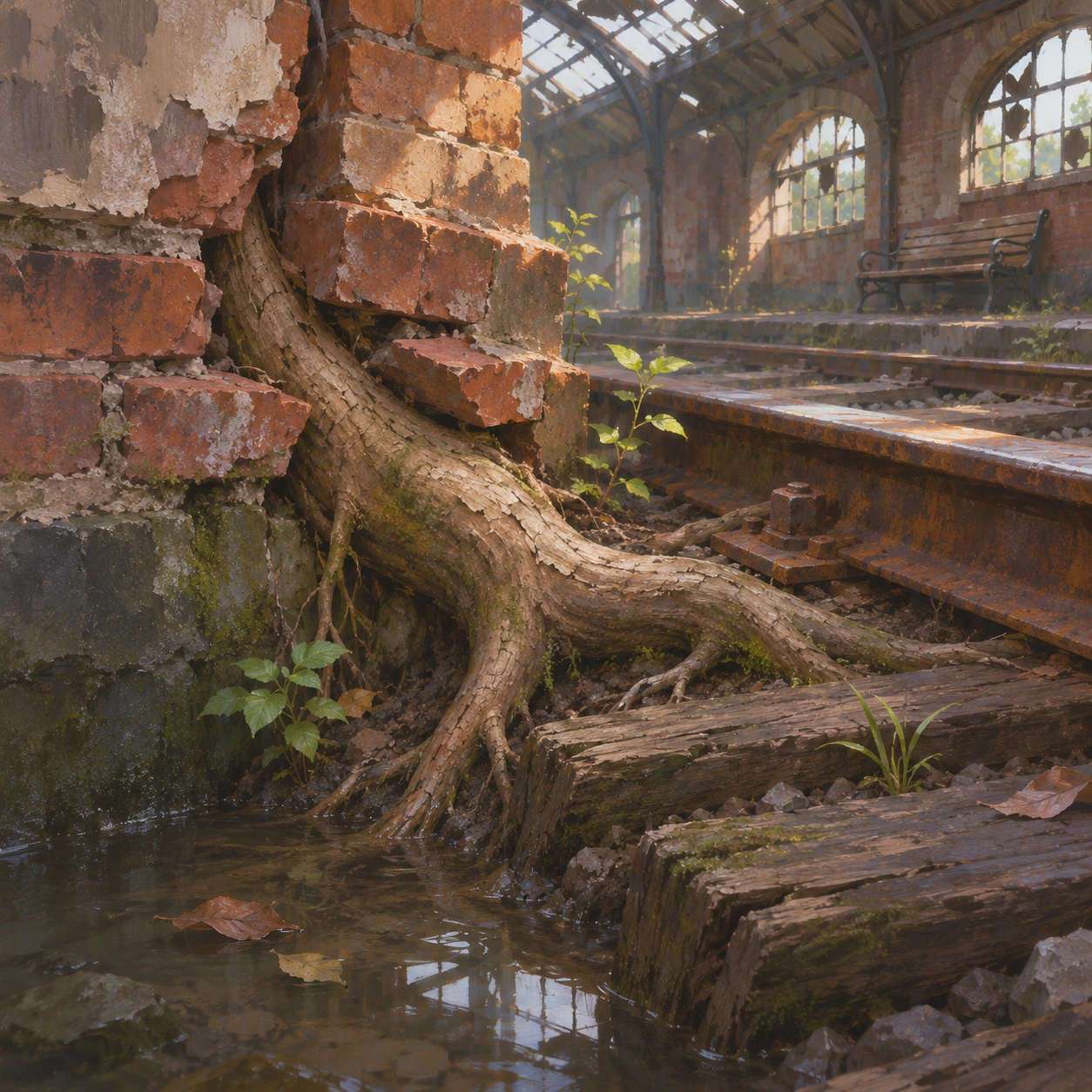
Distinguish damp masonry, decayed timber, rusted steel, deposited soil and new roots. Growth should contact and affect architecture: roots use joints, leaves accumulate and water follows slopes. Give establishment a cause rather than place a tree arbitrarily in a room.
Light, composition and scale
Daylight entering a damaged roof reveals new growing conditions. Separate wet shadow from bright openings and vary fresh leaves, dead leaves, moss and shade. Retain clues to former use so its reorganization remains visible.
Sound and graphics
Interaction could let animal routes, rainwater and vegetation change human movement. Static art suggests a new order through tracks, old seats, roots and water.
Motifs and distinctions
Compared with ruin aesthetics, nonhuman life and material processes become spatial organizers. Unlike Frutiger Aero, nature is no longer simply deliberately arranged within an operating technological facility. Unlike ecological weirdness, the process may remain ordinary without unknown mutation.
Ideas for game environments
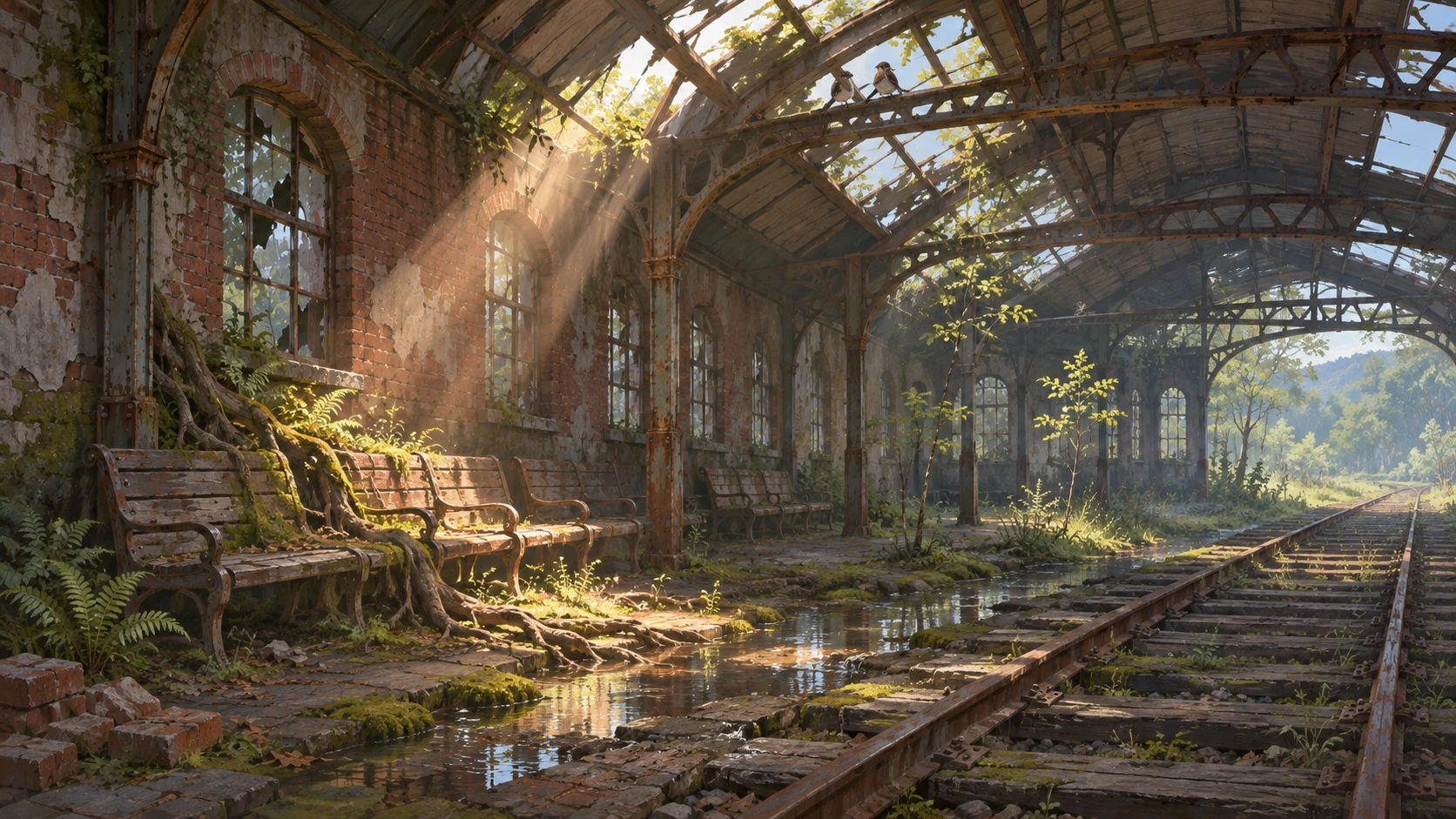
Turn a waiting hall's low floor into shallow water. Follow brick joints and unused rails with roots while preserving sleeper direction. Reuse raised structure for nests and small-animal routes. Change former purpose through traceable growth and flow.
Read scene descriptions
Main environment
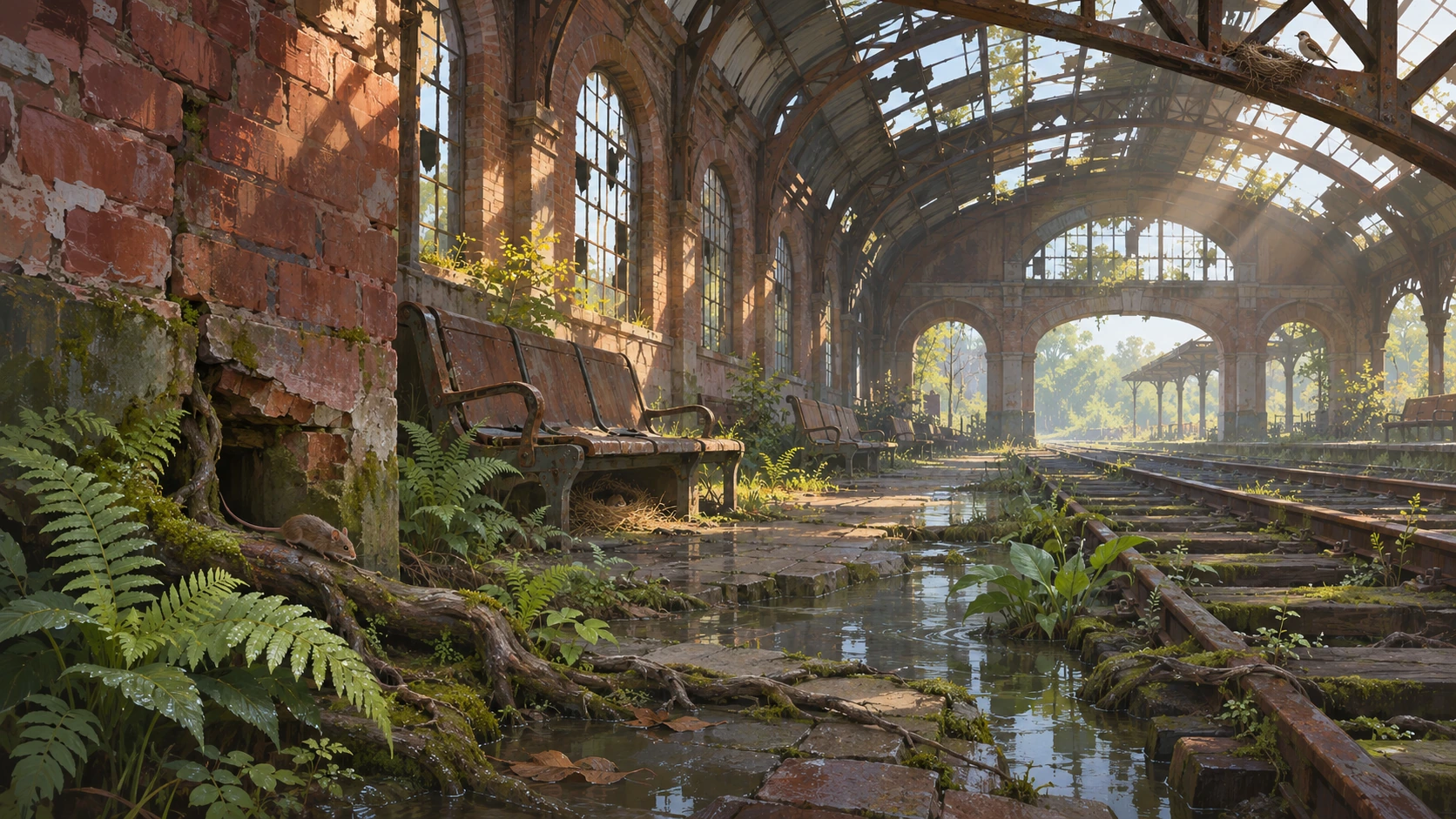
An original disused waiting hall admits daylight through roof gaps. Roots follow brick joints and tracks while low ground holds shallow water. Seats and sleepers retain old use among nests and animal routes.
Human routes recede as growth and water become new organizers.
Nests and small-animal routes reuse raised structures.
Roots, deposited soil and damp masonry change former material boundaries.
Tracks and waiting areas remain legible after their order of use changes.