47Post-apocalyptic / Post-disaster Worlds
After old networks break, life continues through new connections.
Definition and context
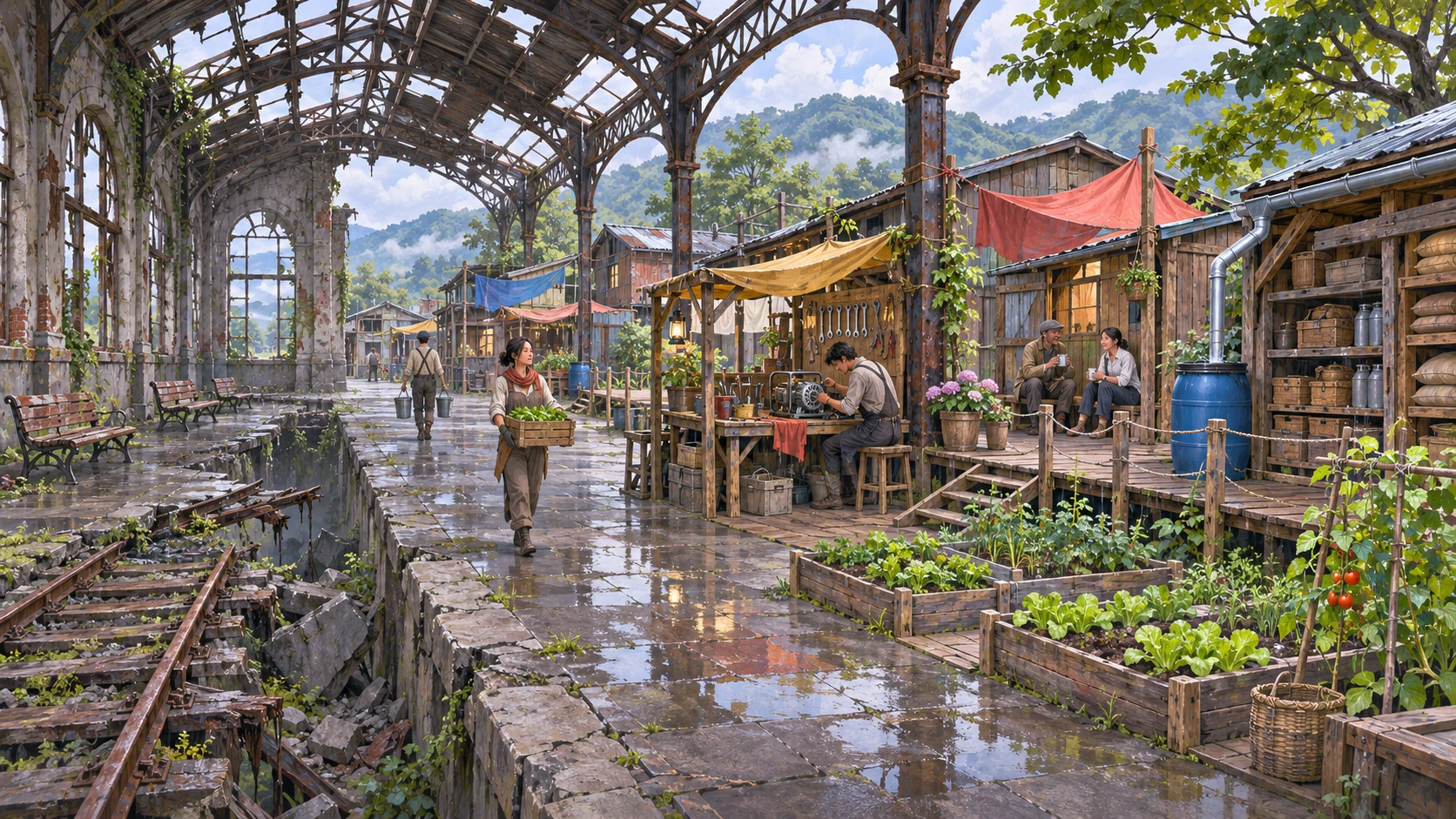
These settings imagine life after a major rupture; its cause, extent and the time elapsed should be established within each fictional world. Desert, zombies and radiation are not universal requirements. Public game imagery offers studies of reused transport, settlements and equipment. This original world assumes disrupted transport and supply networks without presenting real disaster locations as its setting.
People and ecology
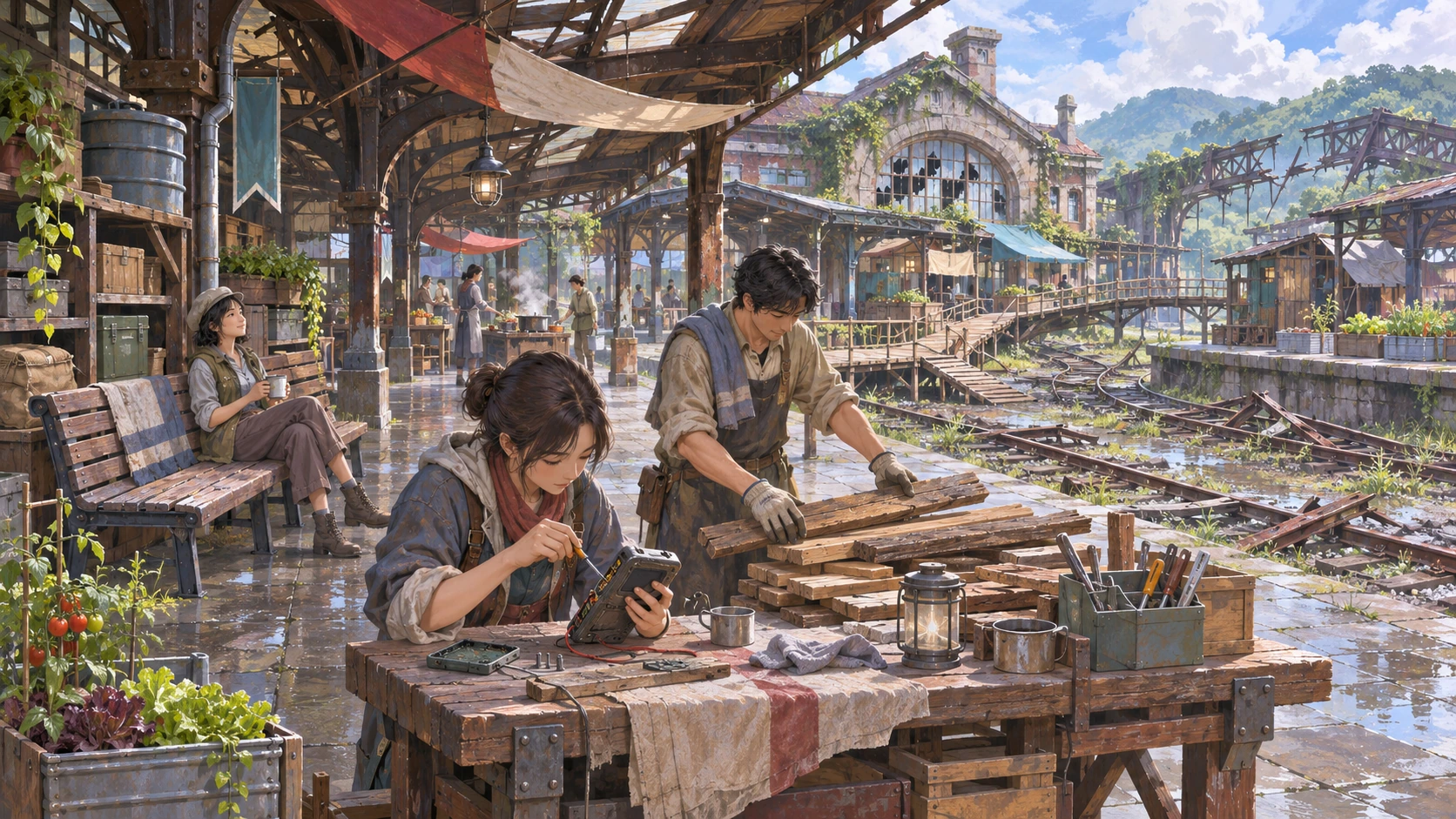
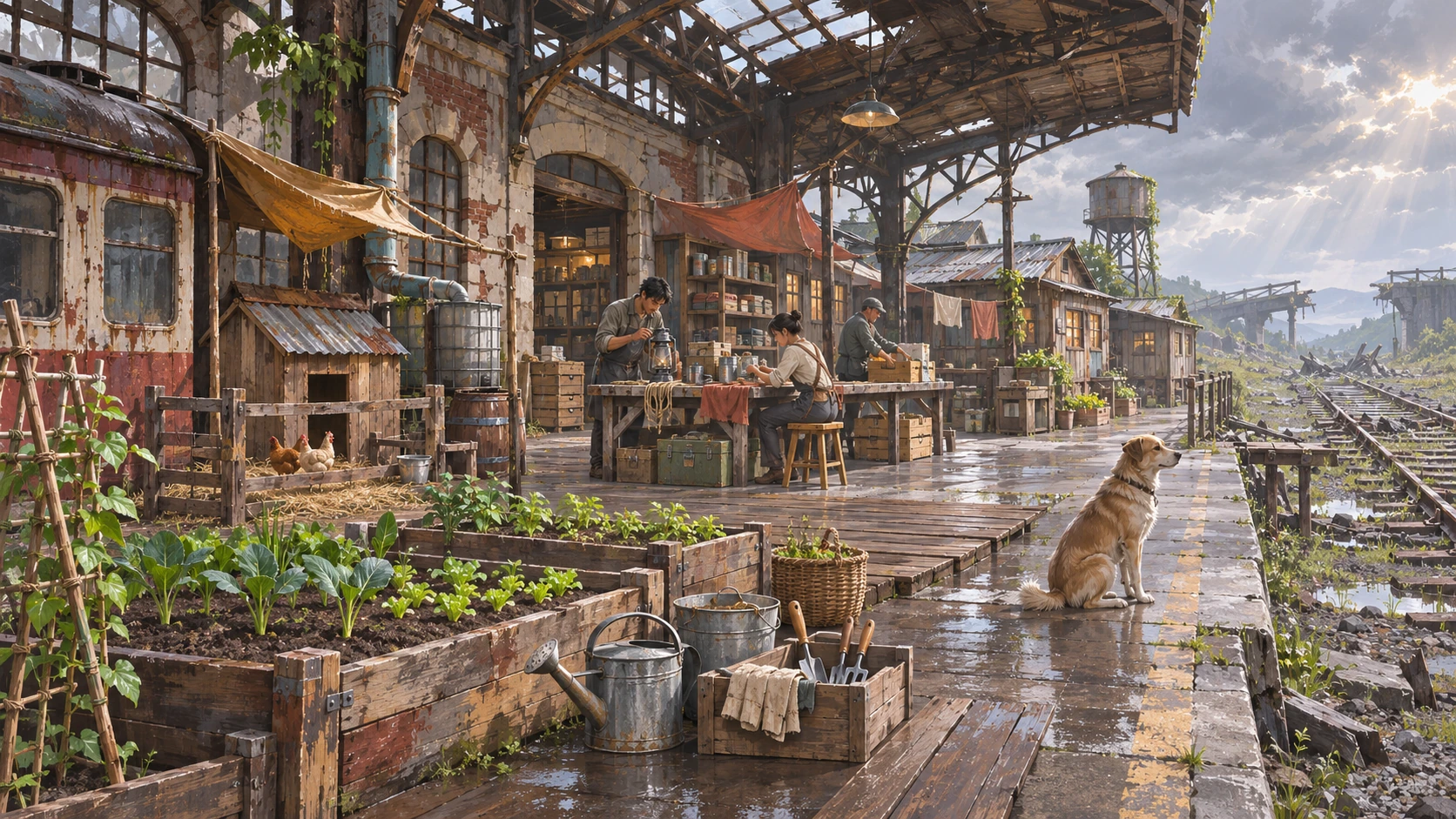
Survivors also cook, clean, cooperate, care for animals and repair things. Ordinary bodies, working poses and tool scales provide evidence of reorganized life. Animals may use new ranges; mutation requires its own premise rather than appearing automatically.
Spaces and forms
Old roads, rails, stations and houses preserve one network. New walkways, buckets, repaired windows and common workbenches form another. Make them comparable in one scene. Damage should alter routes and use rather than act only as surface decoration.
Color and materials
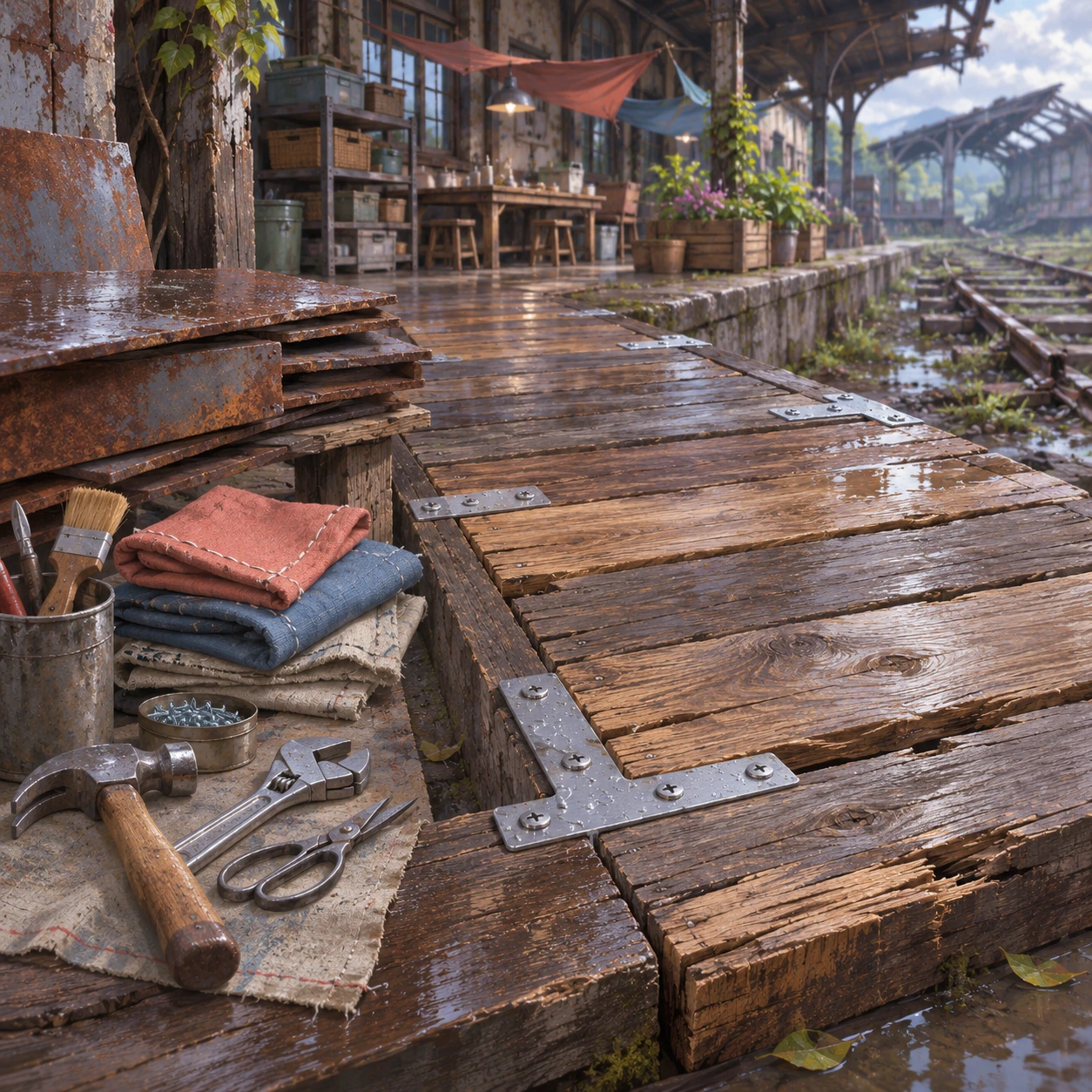
Reclaimed boards, old steel, fabric patches, cleaned tools and unrepaired structure have distinct states. Reuse is not random garbage. Show how new joints are gripped, fastened and maintained so scarcity leads to concrete design.
Light, composition and scale
Weather and daylight change living conditions. The scene may take place in daylight, after rain or on a cold morning. Mark active areas with light while retaining silent parts of the older network. New cloth, plants and activity can add restrained color beyond gray-brown.
Sound and graphics
Interaction could concern boiling water, supplies, repairs and route choices. Storage, patches and work positions suggest such actions in static art.
Motifs and distinctions
Compared with ruin aesthetics, the concern is how life continues after rupture, not only what remains. Compared with dystopia, the old institution may have failed rather than continue total control. Compared with nature reclaiming, human reorganization and resources remain central to the narrative.
Ideas for game environments
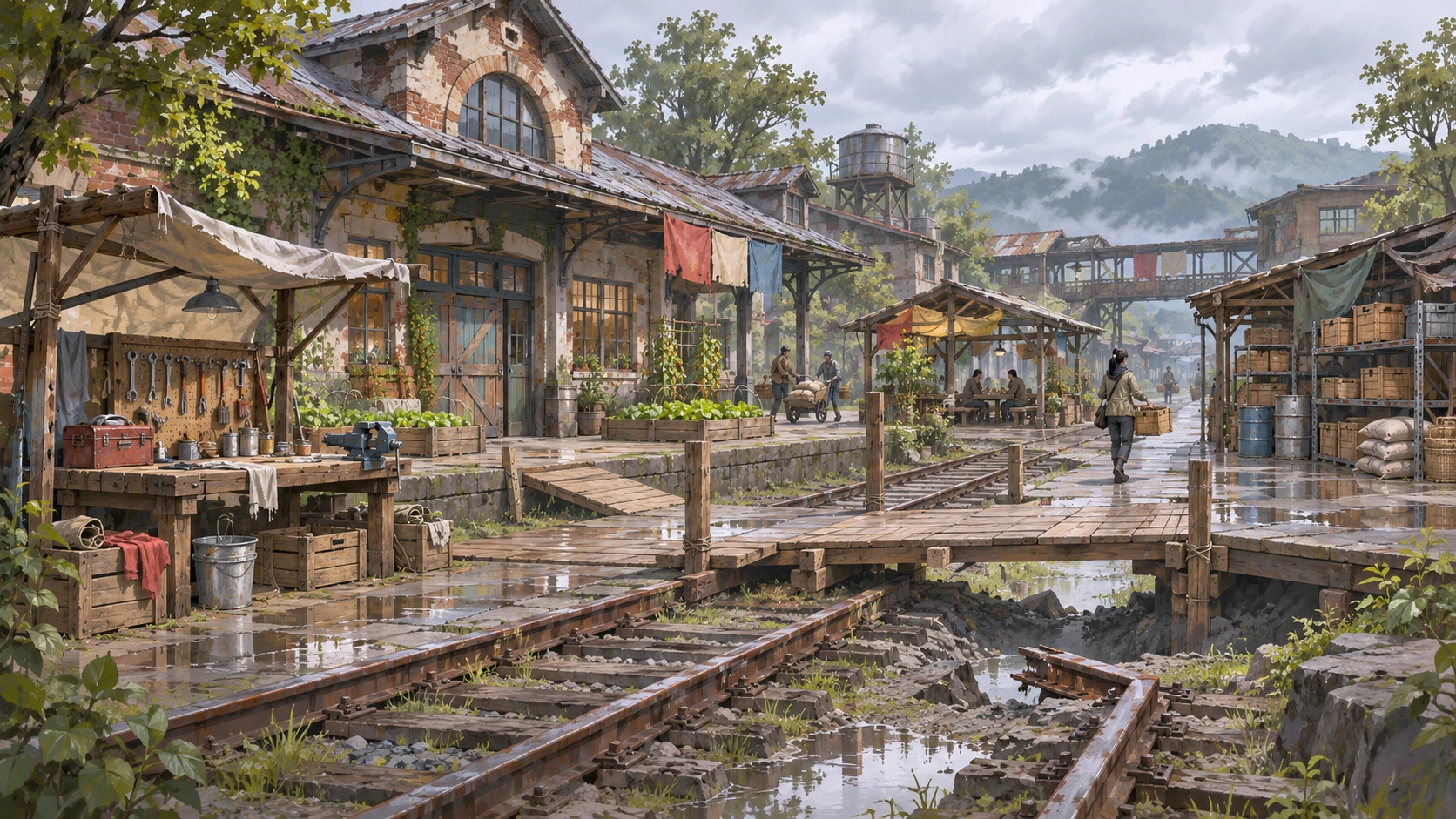
Make an old station a maintainable small settlement. Carry a repaired walkway over severed rails. Connect shared work, rest and storage areas. Show post-disaster life through overlapping networks rather than just ruined cars and weapons.
Read scene descriptions
Main environment
An original station becomes a small settlement after transport and supply networks fail. Severed rails, repaired walkways, common workbenches and organized stores frame ordinary residents and cultivation.
Survivors reorganize daily life through ordinary work and cooperation.
Animals and cultivated plants retain ordinary forms without automatic mutation.
New joints turn reclaimed materials into maintainable daily facilities.
A repaired route crosses the broken old network to connect new common uses.