46Ruin Aesthetics / Ruin Lust
After completeness is lost, material and life leave readable layers.
Definition and context
Ruin aesthetics studies material, time and residual use after a structure loses its former completeness. Ruin fascination can involve actual remains, imagined landscapes or deliberately made ruins; these should not be merged into historical fact. Museum-held paintings and prints offer varied ways of looking, not proof of a site's present condition.
People and ecology
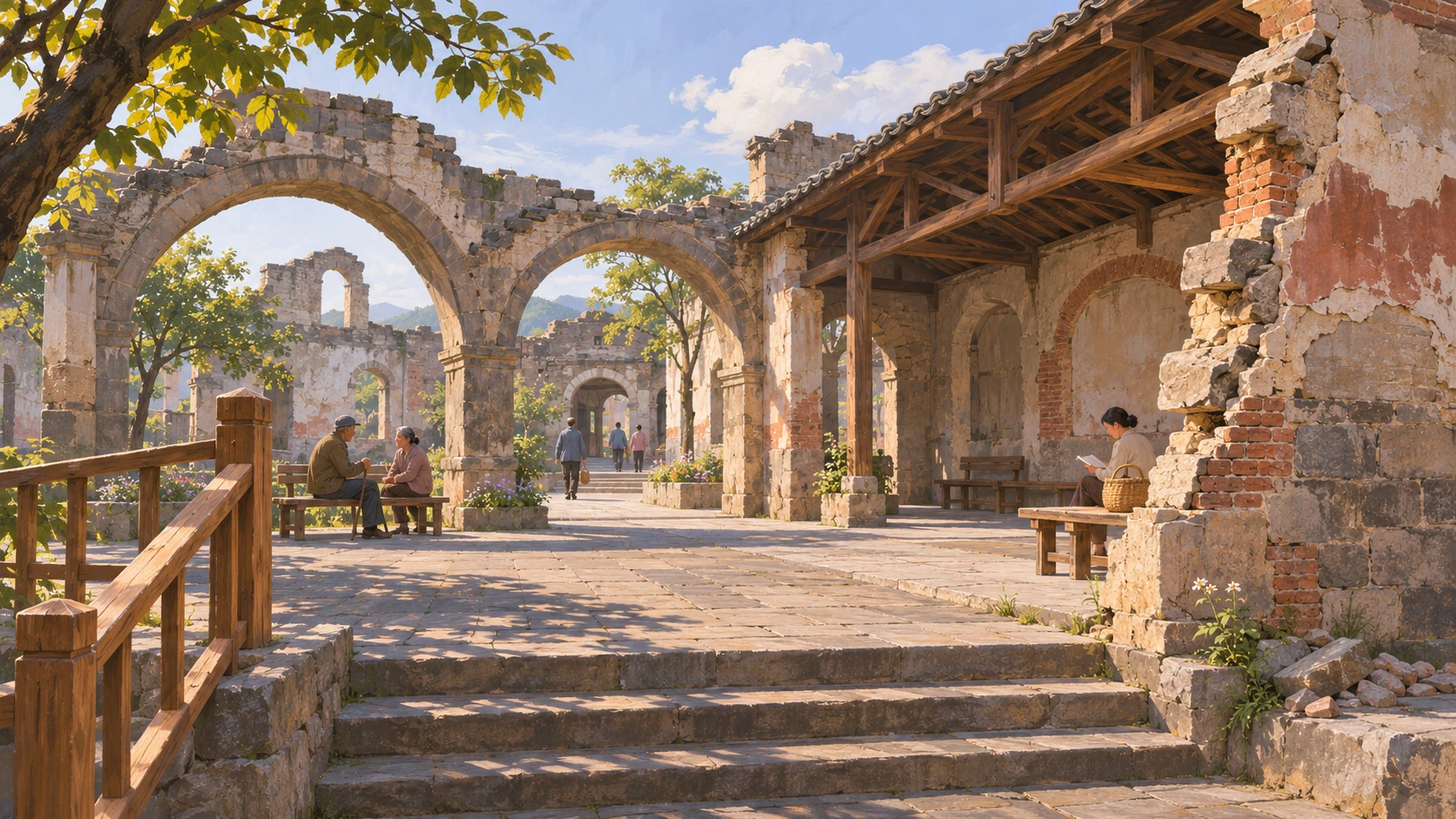
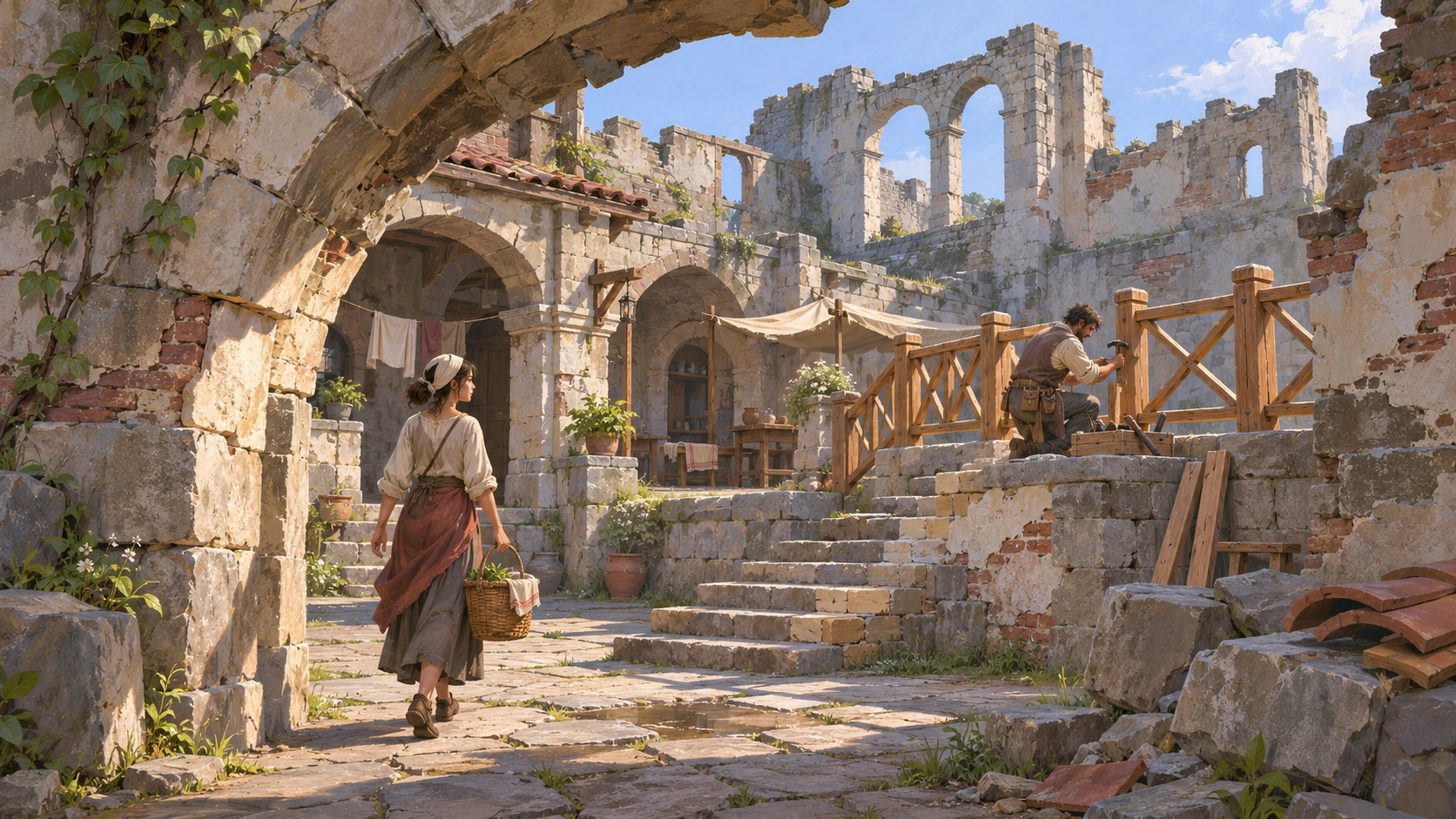
People need not be explorers: they may be neighbors, craftspeople, herders or caretakers. Everyday action makes remains more than empty scenery. Plants and animals can use new cracks and shelters without instantly becoming an all-covering jungle.
Spaces and forms
Broken walls, surviving arches, missing roofs and exposed floors explain former space. Establish what has been lost before arranging the remaining route. Gaps should relate to structure and fragments to a source; scattering rubble over an intact building does not explain time.
Color and materials
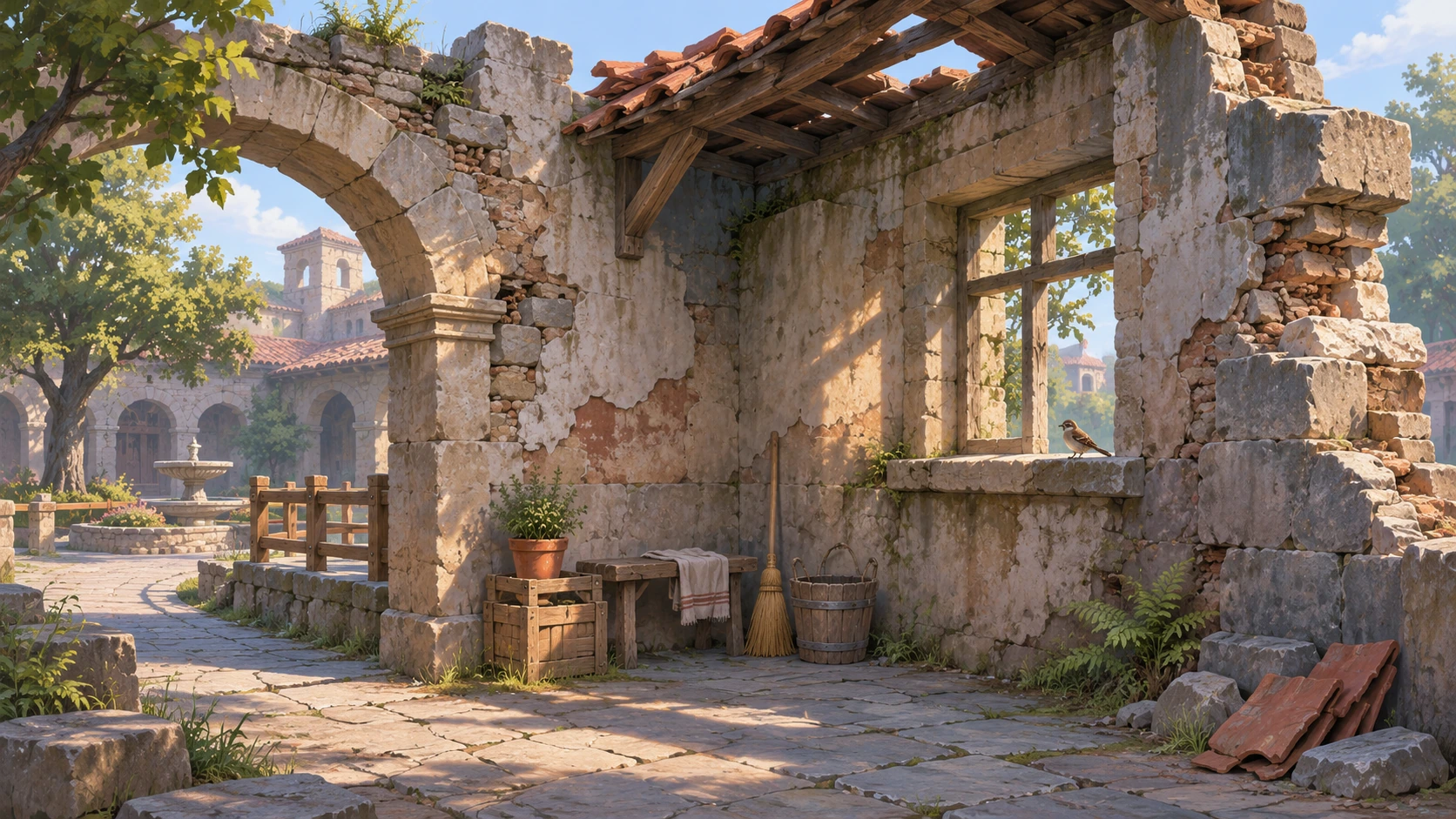
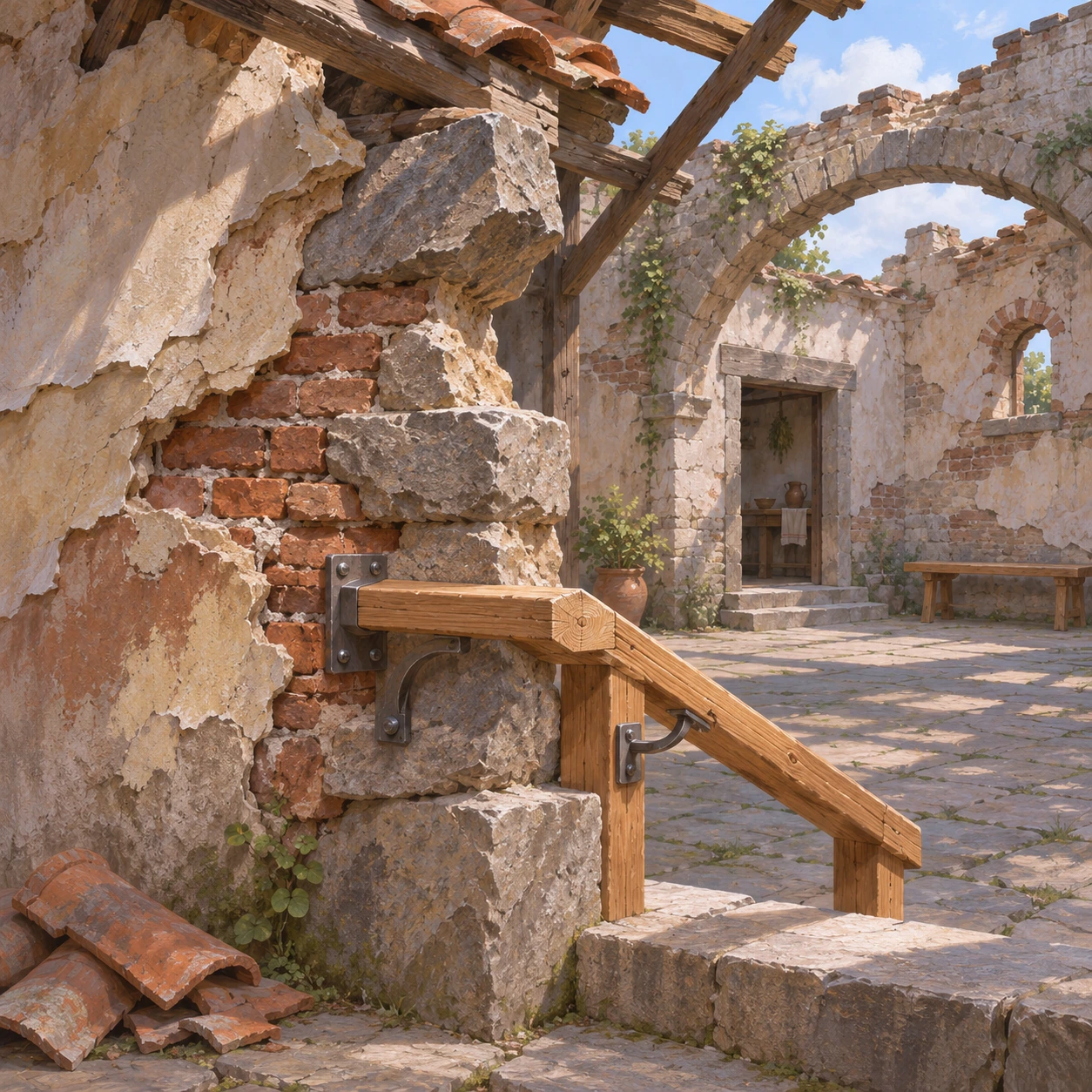
Stone fractures, brick joints, peeling render, corroded metal and accumulated soil have different scales. Exposure and use vary by position. Let new repairs, older masonry and weathering coexist rather than applying uniform black dirt.
Light, composition and scale
Side light can reveal breaks and thickness. Sun through a missing roof shows a changed indoor-outdoor boundary. Shadows retain former rooms while bright areas reveal new uses. Ruins need not all be nocturnal or disaster scenes.
Sound and graphics
Interaction might change footsteps and echo between roofed and open areas, with routes responding to structural gaps. Static art suggests this through ground contact, occlusion and clear steps.
Motifs and distinctions
Compared with post-disaster worlds, this category focuses on material and spatial remains without requiring the reorganization of life after a major rupture. Unlike nature reclaiming, material and spatial remains take precedence over ecological succession. Imaginary ruins can overlap with capriccio, but representational status and intention remain separate questions.
Ideas for game environments
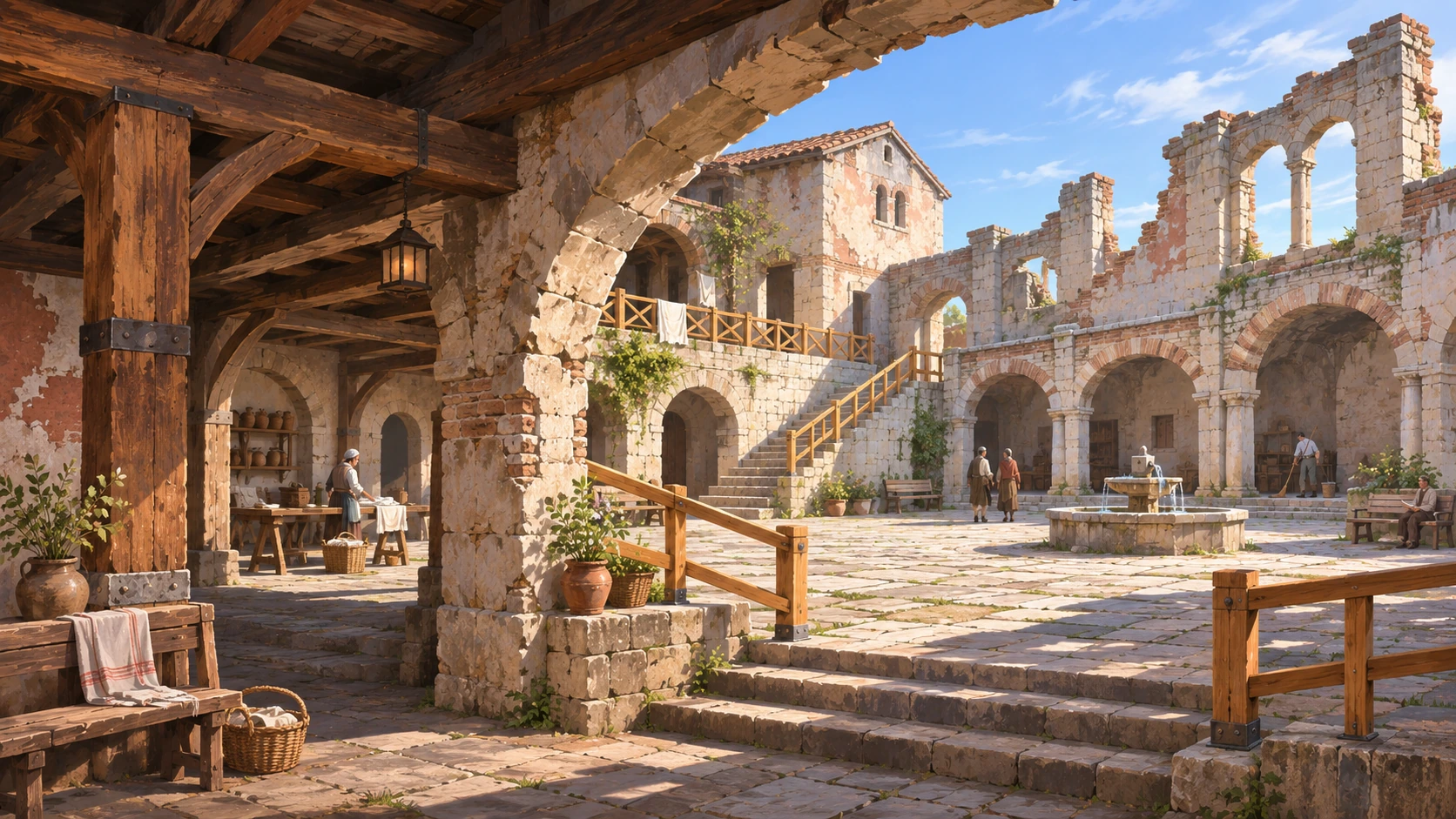
Frame a repurposed court with a surviving arch. Join an old wall and new timber rail with maintained steps. Place fallen roof material where its source is understandable. Keep remains related to structure and life rather than only attractive decay.
Read scene descriptions
Main environment
An original old stone court has lost part of its roof. Surviving arches, broken walls and exposed masonry explain the structure, while new rails, maintained steps and daily use preserve different times.
Everyday activity makes surviving remains more than vacant scenery.
Plants use cracks and accumulated soil rather than cover every surface uniformly.
Fractures, masonry and new repairs retain different temporal layers.
Surviving roof and open gaps redraw the indoor-outdoor boundary.