38Cassette Futurism
The future has thickness, buttons and parts that can be removed.
Definition and context
Cassette futurism is a retrospective category for futures imagined through older tangible electronics. Hardware, concept cars and fictional control rooms in CARI's archive share clues such as thick housings, small screens, mechanical keys and removable modules. They are neither one historical movement covering every old computer nor proof that every concept device entered service.
People and ecology
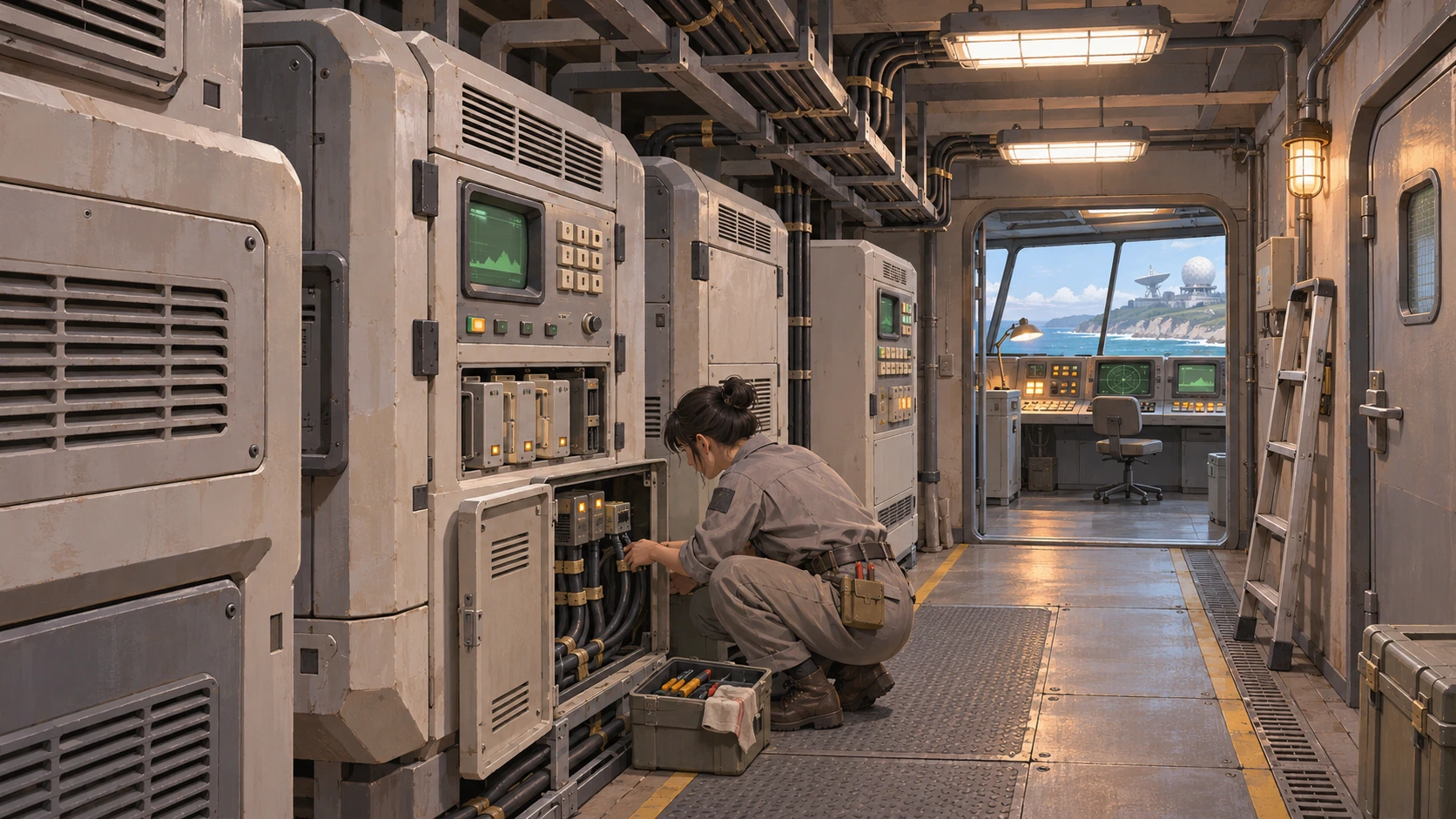
Operators, technicians and passengers approach equipment bodily: reaching for a key, bending to open a cover or carrying a removable module. Keep hands, buttons and hatches at ordinary scales. Plants and animals can belong to a greenhouse, habitat or observation task without becoming mechanical creatures.
Spaces and forms
Workstations, cabinets, cable routes, racks and service passages organize the future. Decide how equipment is used and repaired before arranging its major volumes. Screens sit inside physical housings, with real thickness rather than floating holographic glass.
Color and materials
Off-white or gray plastic, powder-coated steel, rubber guards, ventilation grilles, screws and seams establish hierarchy. Removable modules need grip points and covers need opening clearance. Wear can be local; the future need not begin as a rusting wreck.
Light, composition and scale
Use ordinary work lights to reveal keys and service areas, with small screens adding local green, amber or cool-blue light. Color can distinguish equipment without filling the room with neon. Neutral housings and dark joints make electronic volume legible.
Sound and graphics
Mechanical pressure, relay sounds, fans and insertion resistance can form an interaction language. Analog, early digital and fictional devices may coexist without being described as the same operating principle.
Motifs and distinctions
Compared with Space Age design, this category emphasizes tangible boxes and panels rather than smooth capsule living. Compared with analog horror, its devices can work reliably; old media do not automatically create fear. Unlike a common cyberpunk setting, it need not require social decline or crowded streets.
Ideas for game environments
Lead the player from housing seams to service access. Remove a module to expose a clear slot. Make cable bundles traceable between console and cabinet. Support a convincing older future with technology that can be maintained, carried and pressed.
Read scene descriptions
Main environment
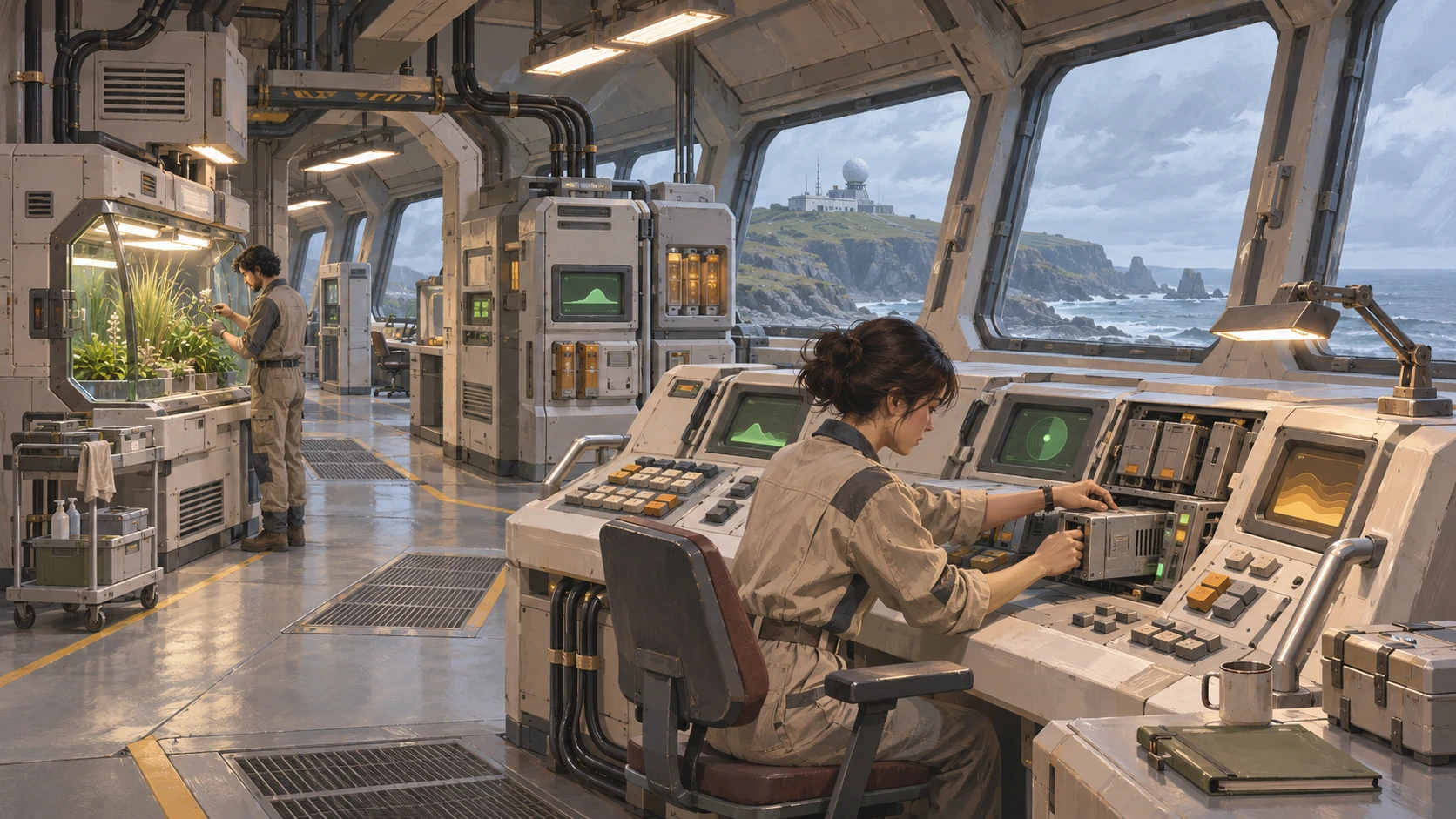
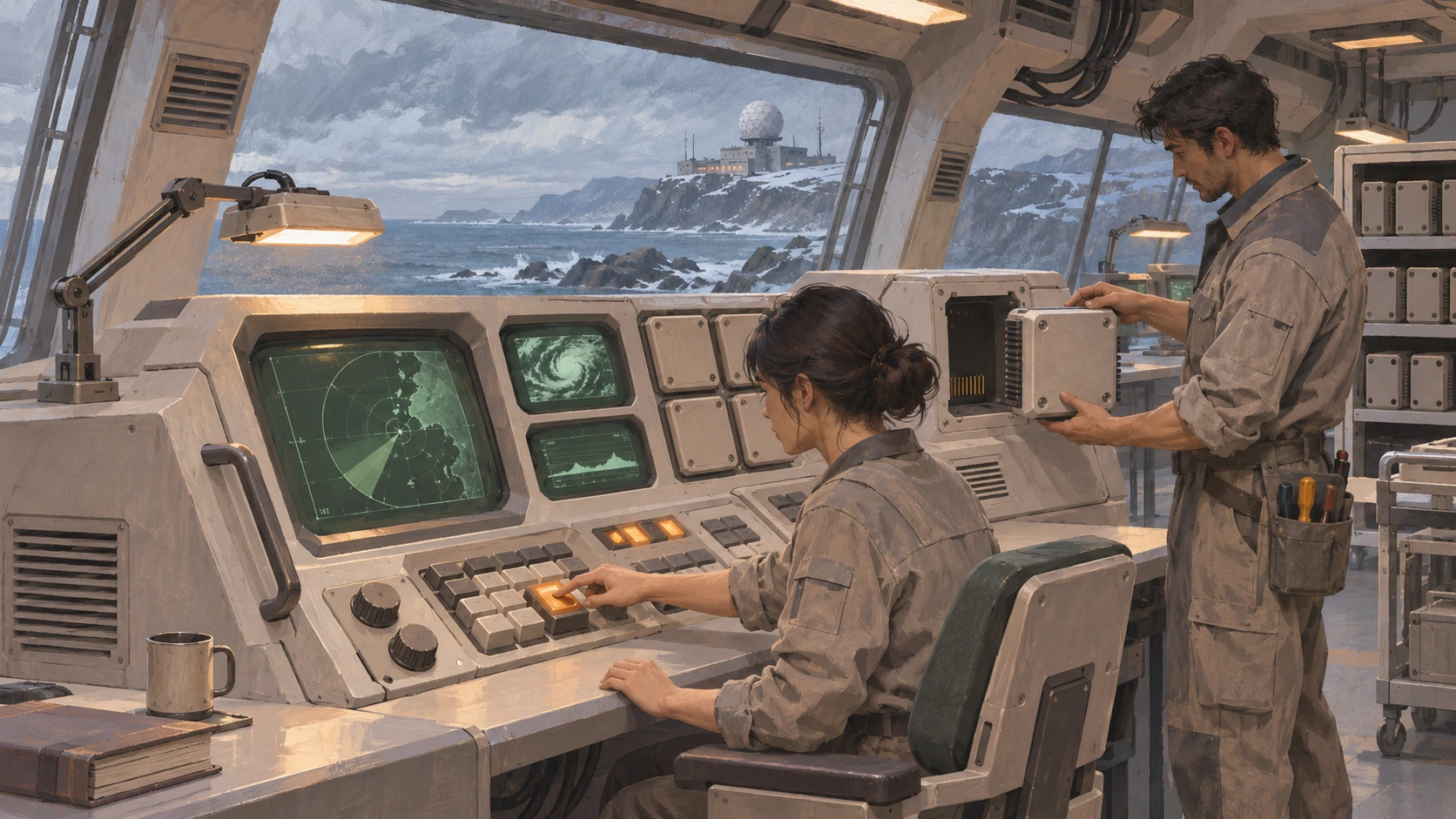
An original coastal observation station uses thick consoles, inset screens, mechanical keys and removable modules. Staff, a plant observation bay and service passages have distinct roles, joined by traceable cables.
Hands, keys and cabinets retain coherent physical scales.
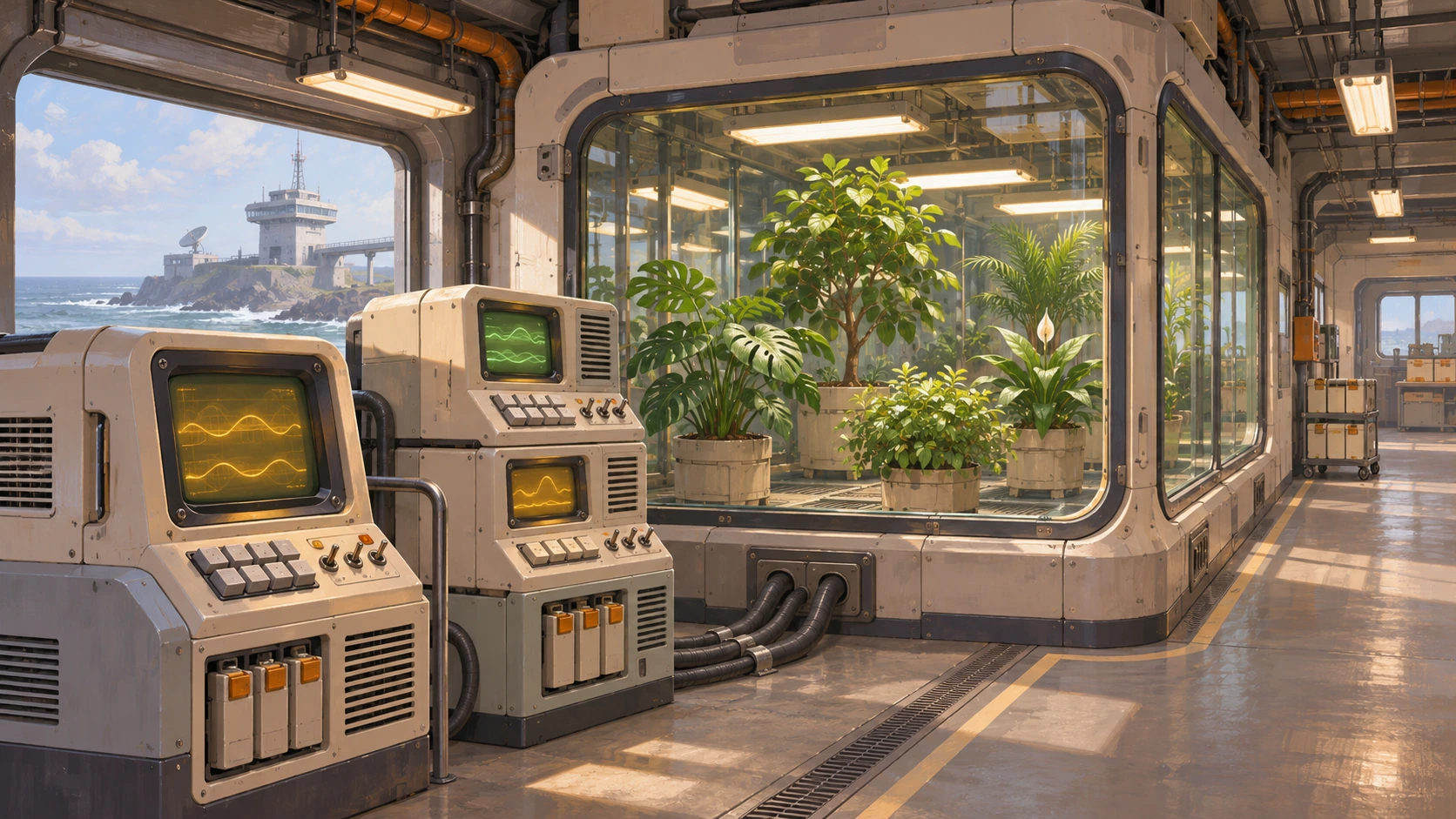
Ordinary plants in an observation bay give equipment a specific task.
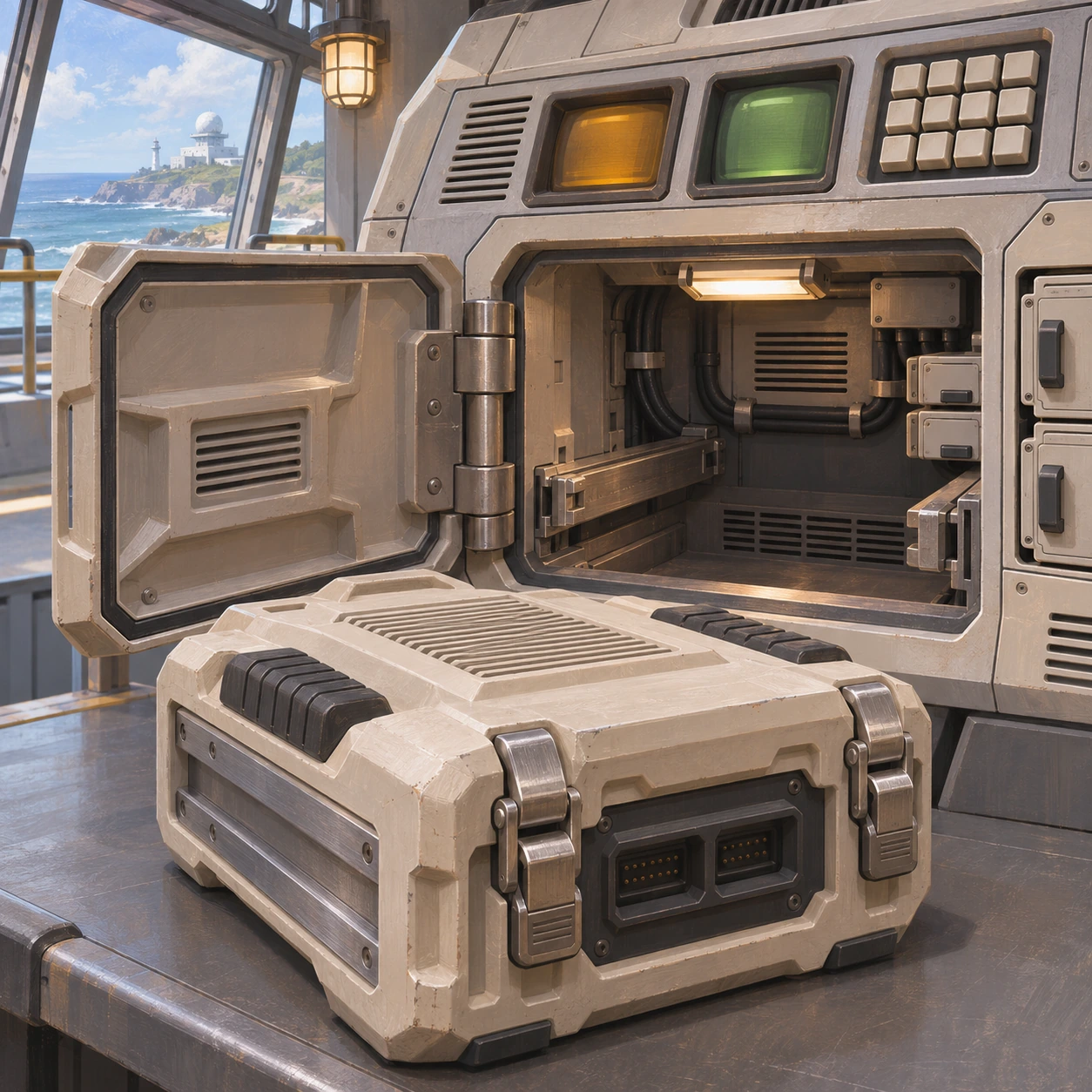
Housing, slots and grip points explain module replacement.
Traceable cables and service passages make the future maintainable.