39Hauntology / Lost Futures
An unrealized future keeps a place in the present.
Definition and context
Hauntology is neither a single architectural style nor the presence of a ghost in an image. Here it is a way of reading time and cultural memory: something past, unrealized or unable to return completely continues to affect the present. Mark Fisher's Hauntology Now offers a theoretical reference; official Ghost Box covers provide one visual practice rather than a universal template.
People and ecology
Figures may be present-day caretakers, subjects of an earlier record or absent users known through traces. Avoid turning people from the past into transparent ghosts by default. Old seats, worn rails and unfinished models can coexist with current daily actions; temporal layers matter more than a visible apparition.
Spaces and forms
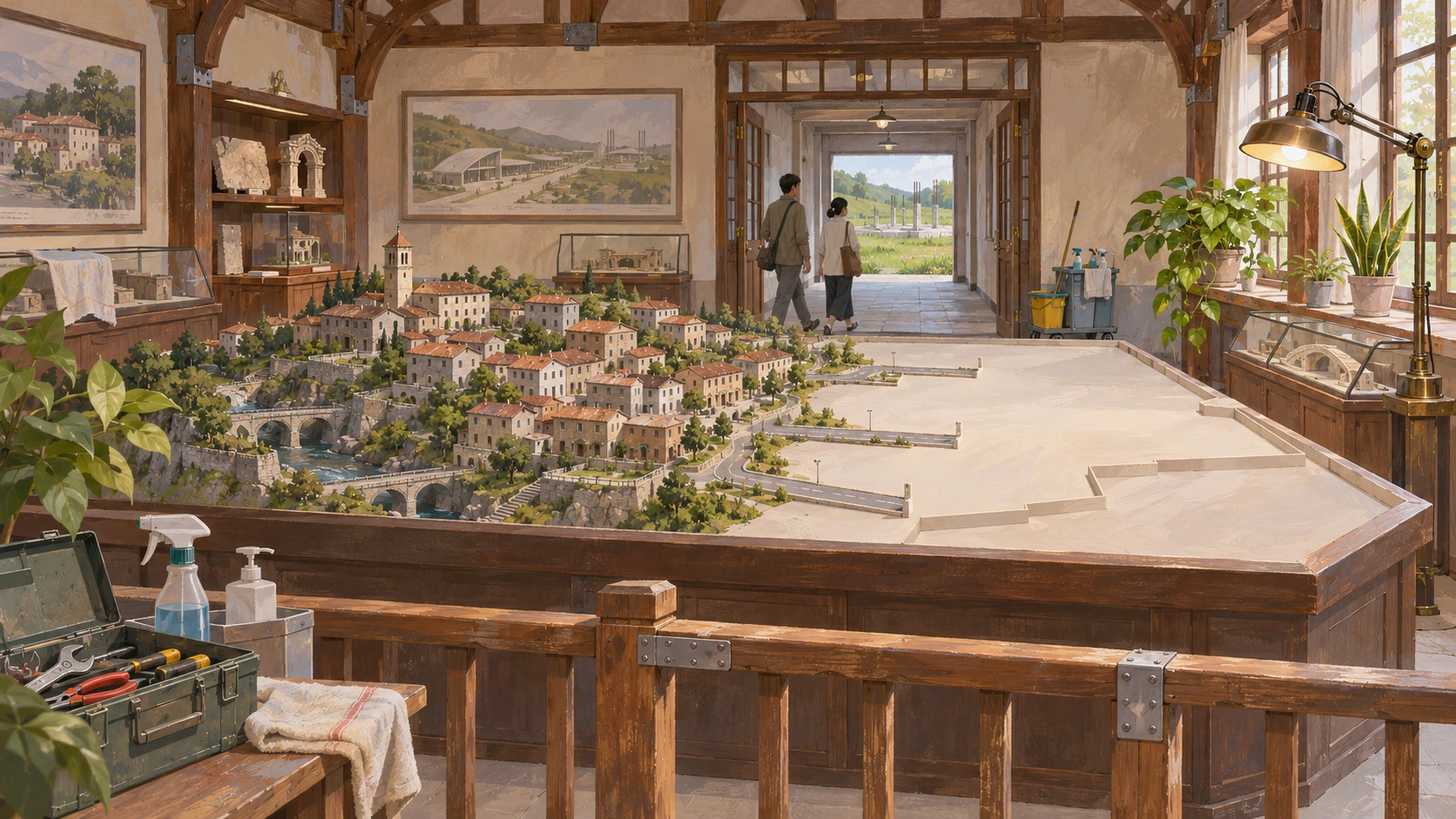
Choose places that once carried public aspirations, such as community exhibitions, training centers or observation facilities whose expansion stopped. The building still operates, but part of its spatial organization belongs to a halted plan. Beyond a door lies a place reserved for an unfulfilled future rather than an arbitrary monster.
Color and materials
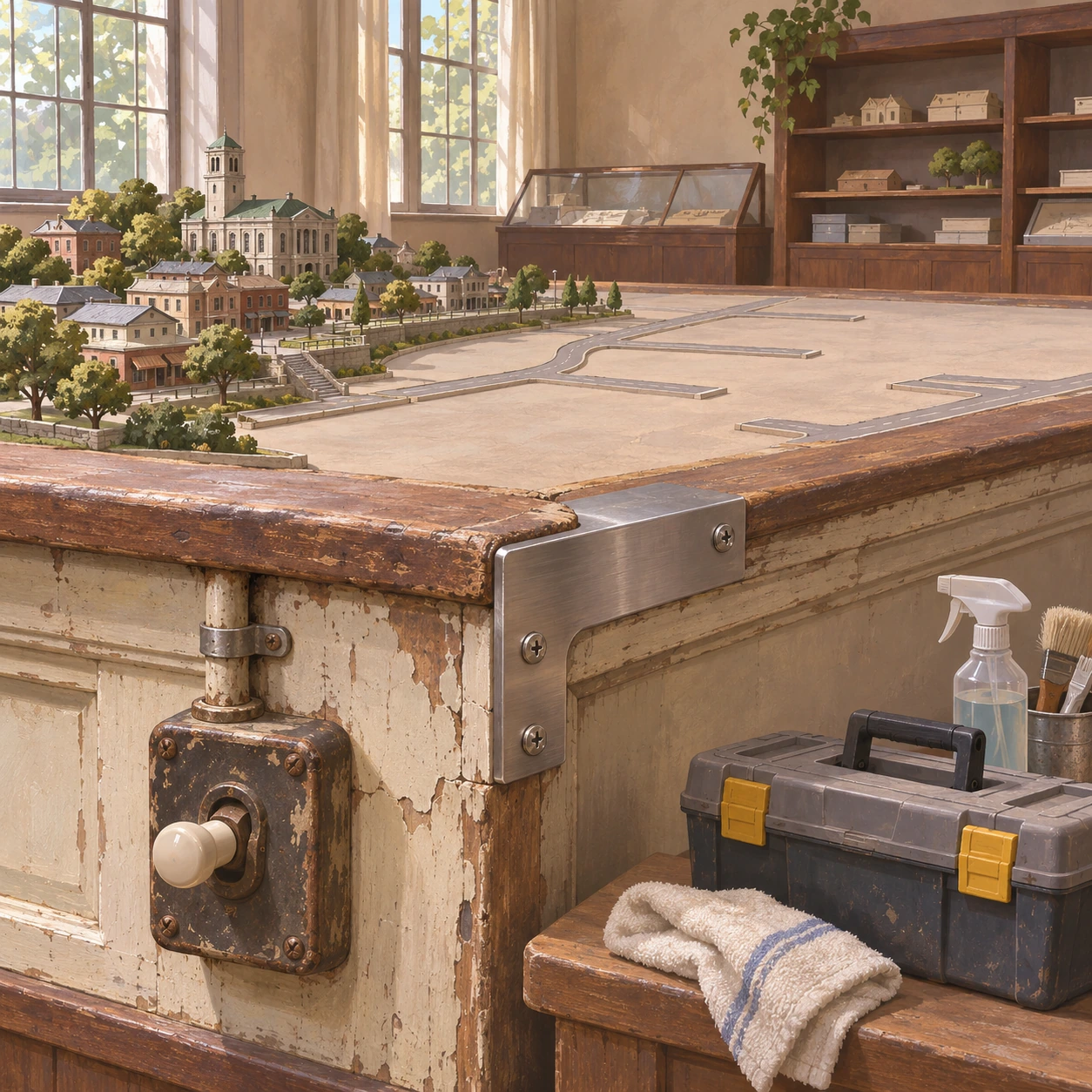
Faded print, repaired wood, old equipment and new replacement parts can occupy the same room. Materials from different periods need reasons to coexist. Yellowing and film grain are possible media traces, not substitutes for a temporal structure.
Light, composition and scale
Use calm daylight and still-operating display lights so the past is not confined to a frightening dark corner. New and old light sources can illuminate one another. A carefully maintained model that is no longer updated can show incomplete passage of time more precisely than uniform abandonment.
Sound and graphics
Repeated educational-film timing, radio residue and interrupted recordings can become sonic clues in an interactive work. Static illustrations suggest those relationships through sources and equipment. The concern is how absence organizes perception rather than making every sound noisy and old.
Motifs and distinctions
Compared with nostalgiacore, this category need not seek a comforting past: it can address unrealized futures and interrupted memory. Compared with analog horror, it requires no hostile broadcast. Compared with ruins, the building can remain clean and active while an unfinished promise persists.
Ideas for game environments
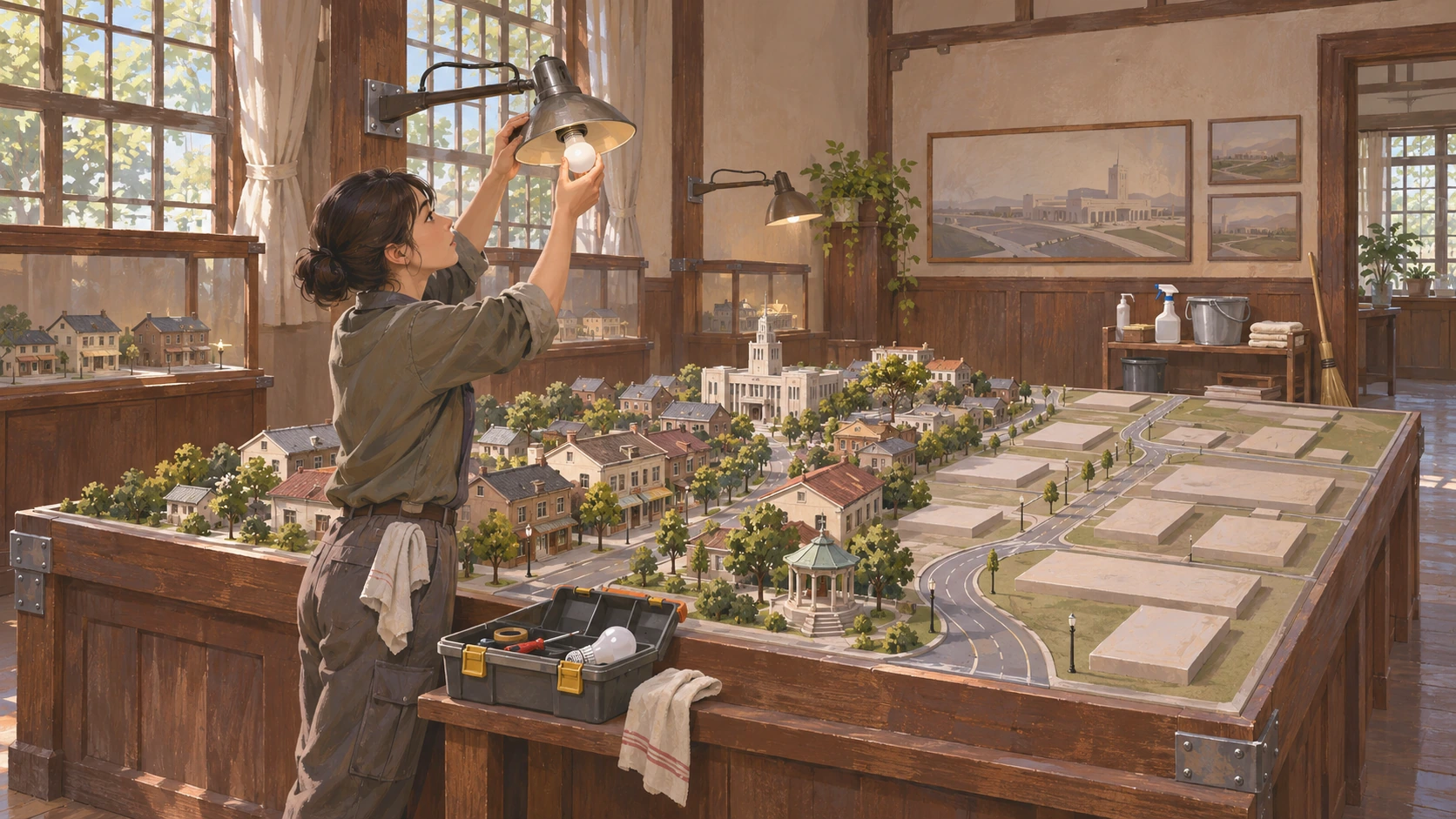
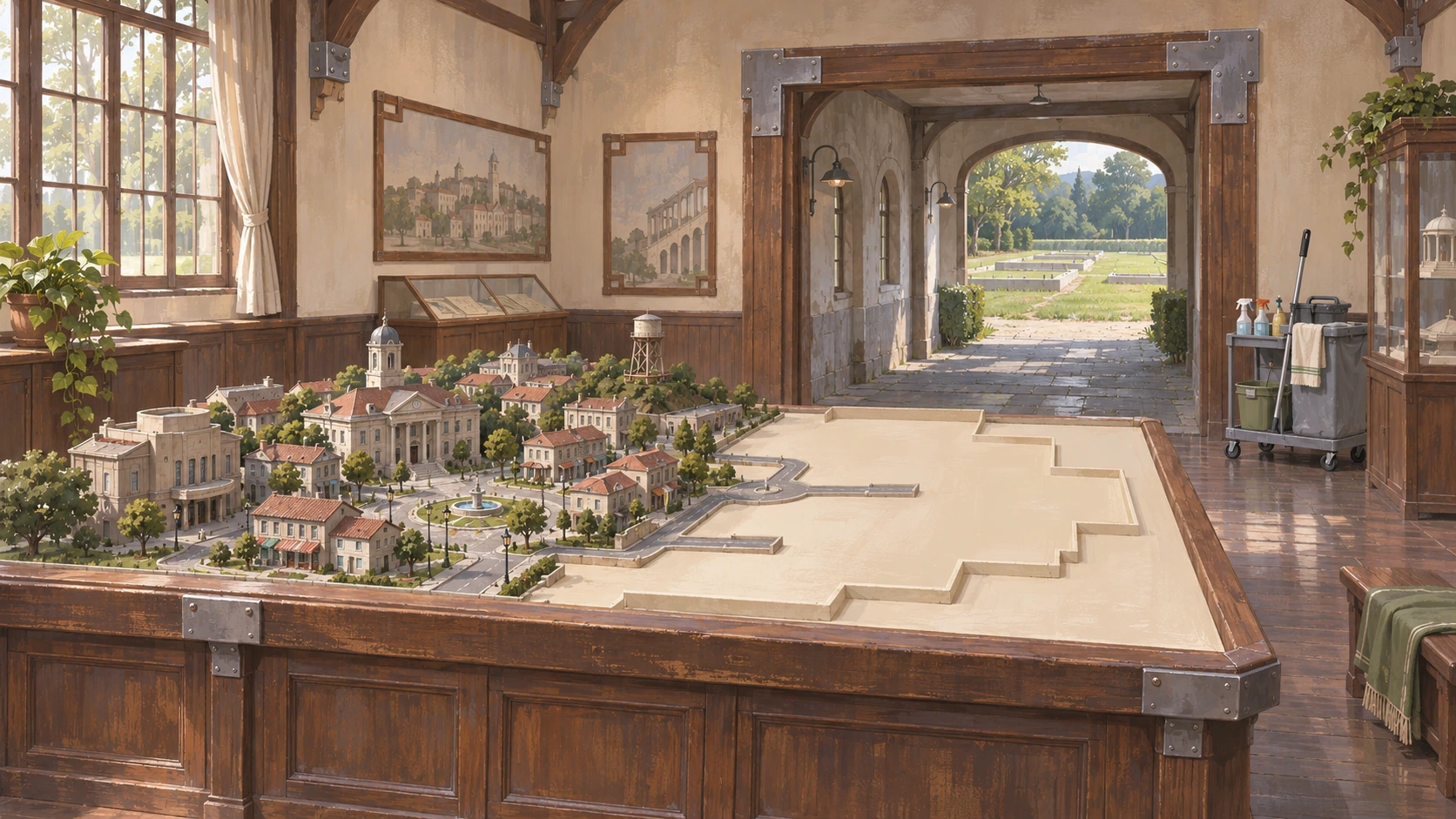
Let a current caretaker replace a bulb in a model of a town that never expanded. End an old passage at land reserved for an unbuilt facility. Place new study supplies beside a display that stopped changing. Overlap time through present action and an absent plan.
Read scene descriptions
Main environment
An original community exhibition remains maintained, while its town model preserves a halted expansion plan. New tools, old display stands and a passage toward empty land share calm daylight.
Present-day maintenance coexists with a model that stopped being updated.
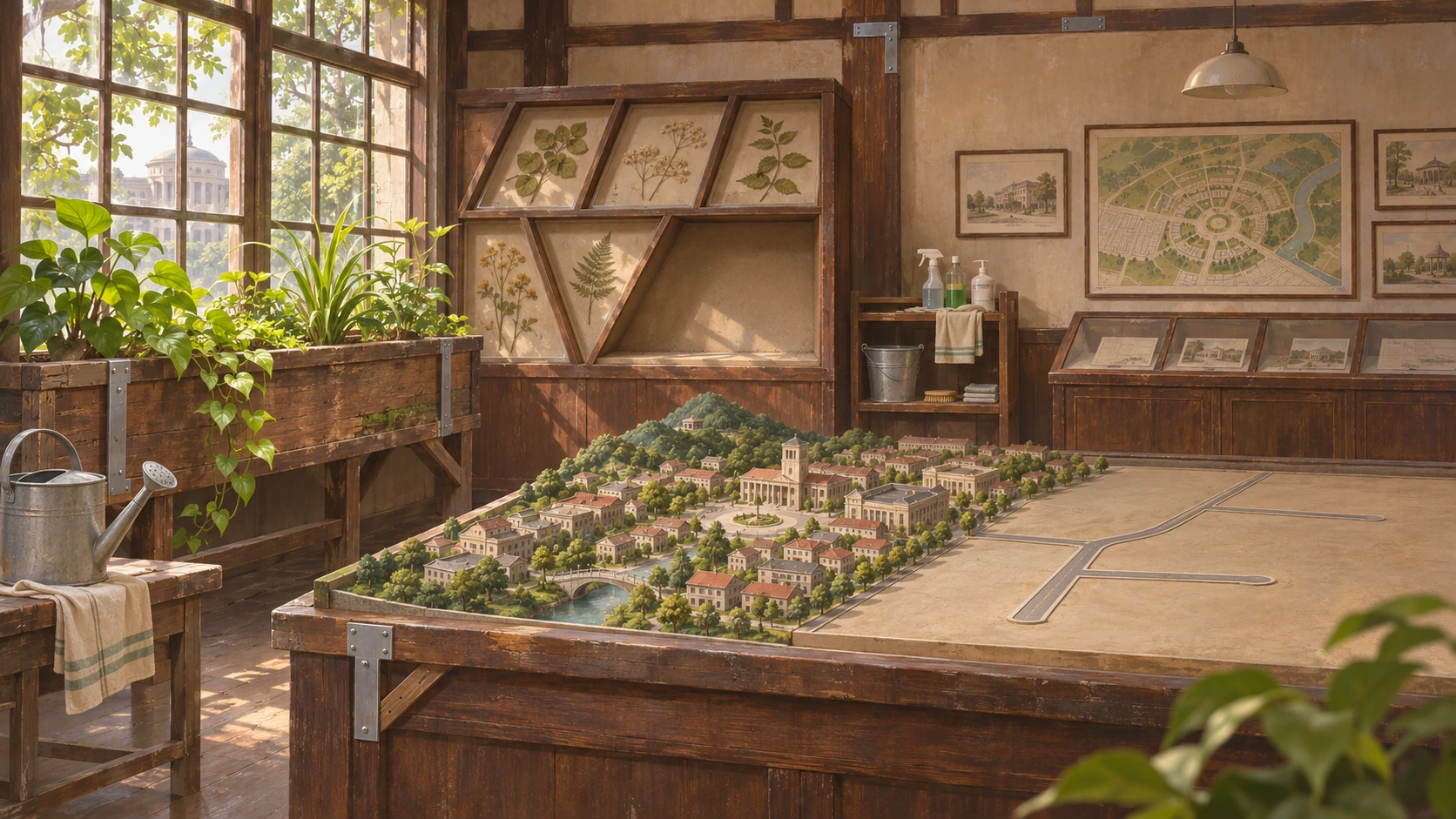
Plants grow in the present beside an older display classification.
Joints between new repairs and older materials reveal temporal layers.
The end of a passage preserves a place for an unbuilt facility.