23The Backrooms
Everyday finishes repeat while ordinary purpose slips away.
Definition and context
The Backrooms is shared online fiction about slipping from everyday environments into anomalous space, developed through multiple communities and creators. Yellow rooms are a recognizable point of entry, not a universal set of levels, entities or rules. Separate the real rooms in source photographs from fictional accounts.
People and ecology
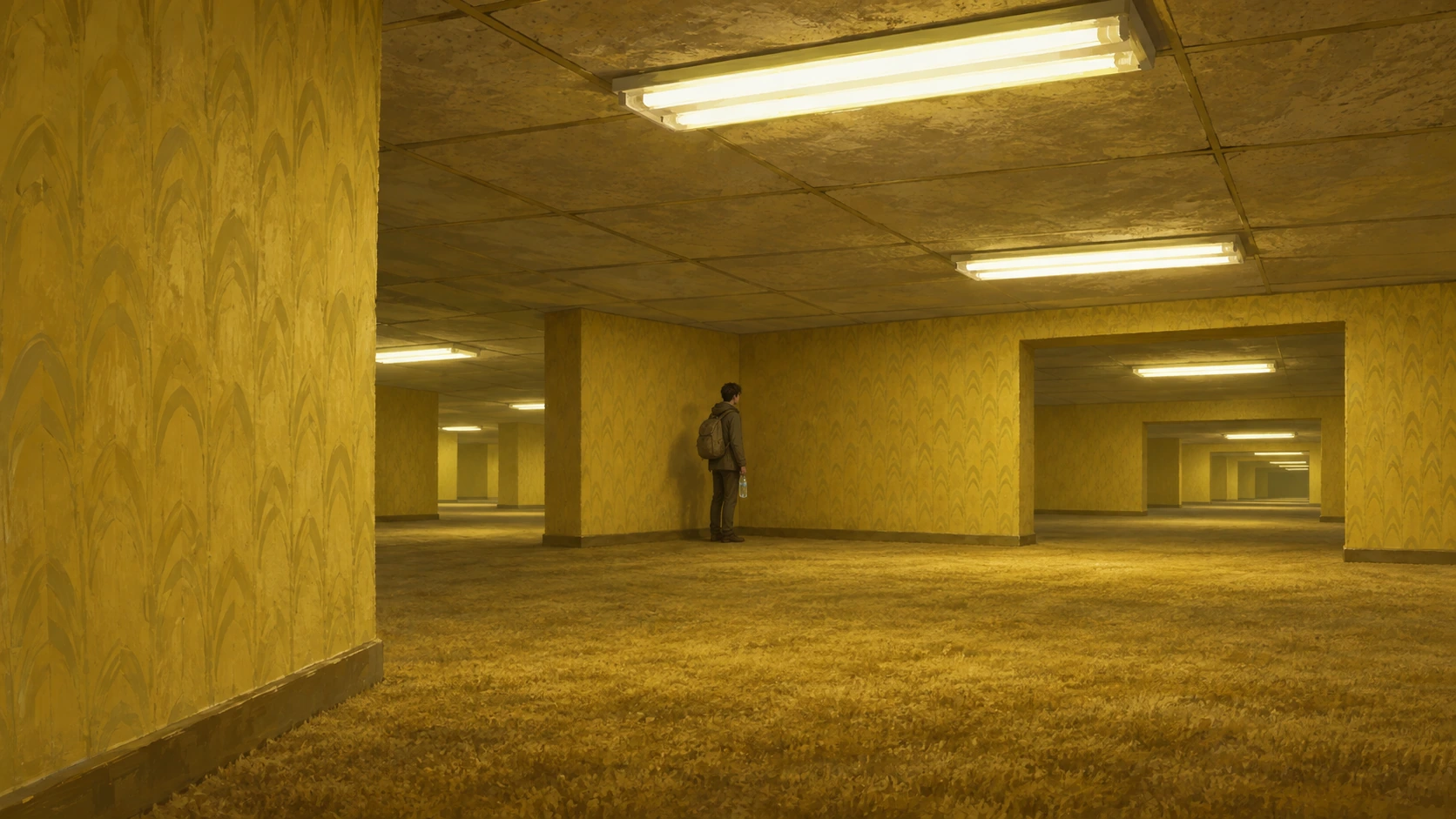
A person can be an ordinary accidental wanderer, and entities may be entirely absent. Plants, animals, fungi and machines depend on the chosen version and spatial conditions rather than automatically forming a hunting ecosystem. A backpack, cup or compressed carpet can suggest passage indirectly.
Spaces and forms
Wallpaper, carpet, ceiling tiles and skirting form believable modules. The anomaly lies in connections, purpose or construction junctions. Repeated decoration and repeated topology are different; similar walls need not mean returning to the same room.
Color and materials
The classic yellow palette is one entry point. Carpet fibers, paper seams, skirting and sockets retain real-world scale, with local moisture or incompatible finishes providing differences. Keep ordinary rooms for comparison instead of replacing spatial design with dirt and filters.
Light, composition and scale
Fluorescent lighting appears normal yet cannot explain the continuing rooms. Frames and columns divide views while nearby corners and distant openings stay readable. A low ceiling can coexist with a seemingly extensive floor plan without turning everything into a huge hall.
Sound and graphics
Fixtures, ventilation, carpeted footsteps and cavities behind walls form a located soundscape. Notices may belong to different periods without explaining the anomaly. A sound can reveal an unseen connection and add another spatial relationship.
Motifs and distinctions
The Backrooms belongs to particular online fictional traditions; liminal space is a broader category. Endless yellow rooms, random shadows and level numbers are not its only content. A coherent chosen version is more useful than presenting incompatible community settings as one fact.
Ideas for game environments
Use mismatched decoration systems, fully finished rooms without a clear purpose, or ordinary service rooms adjoining anomalous halls. Familiar materials can precede the discovery that connections do not add up. Unease may come from failed understanding rather than pursuit.
Read scene descriptions
Main environment
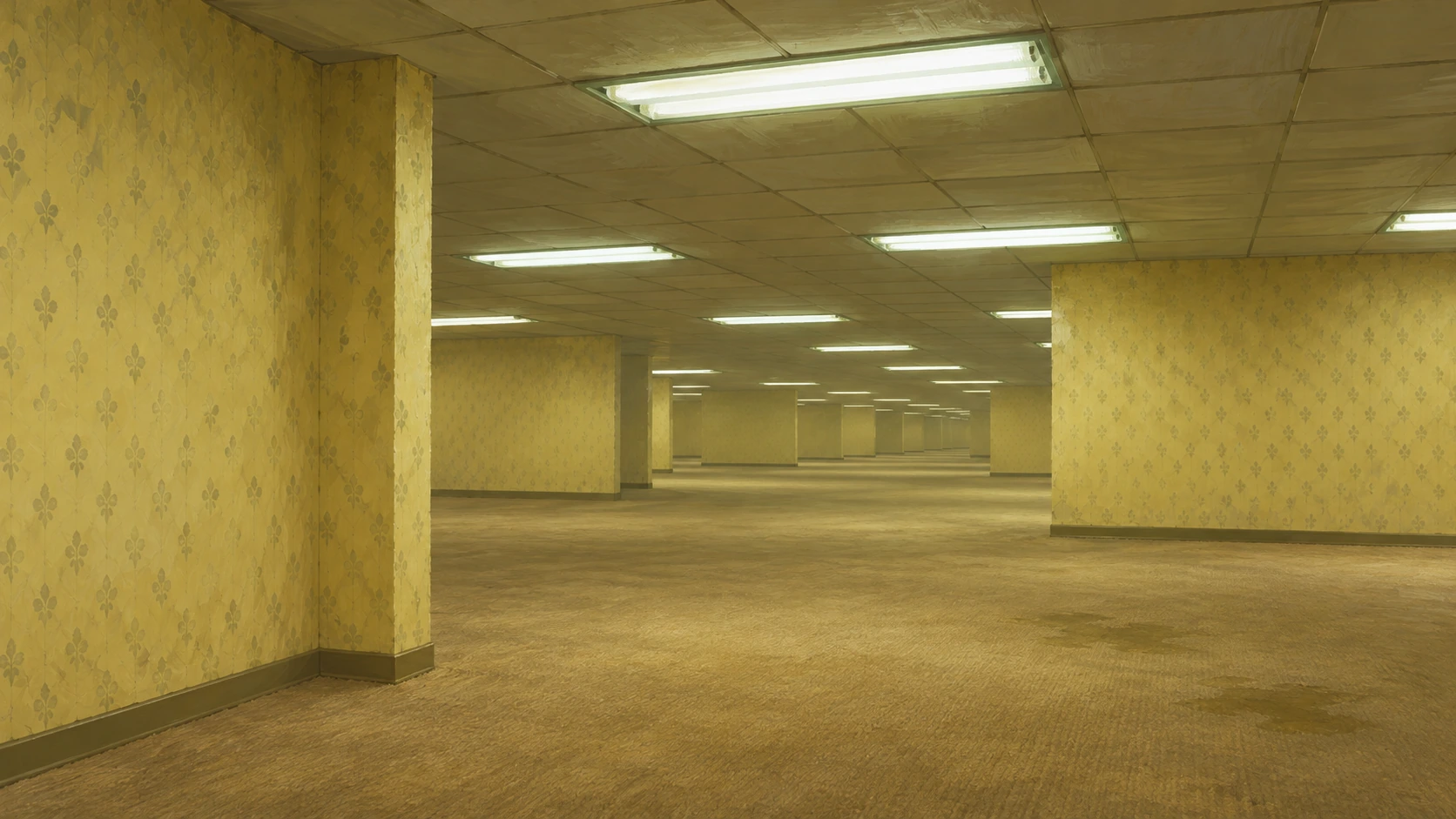
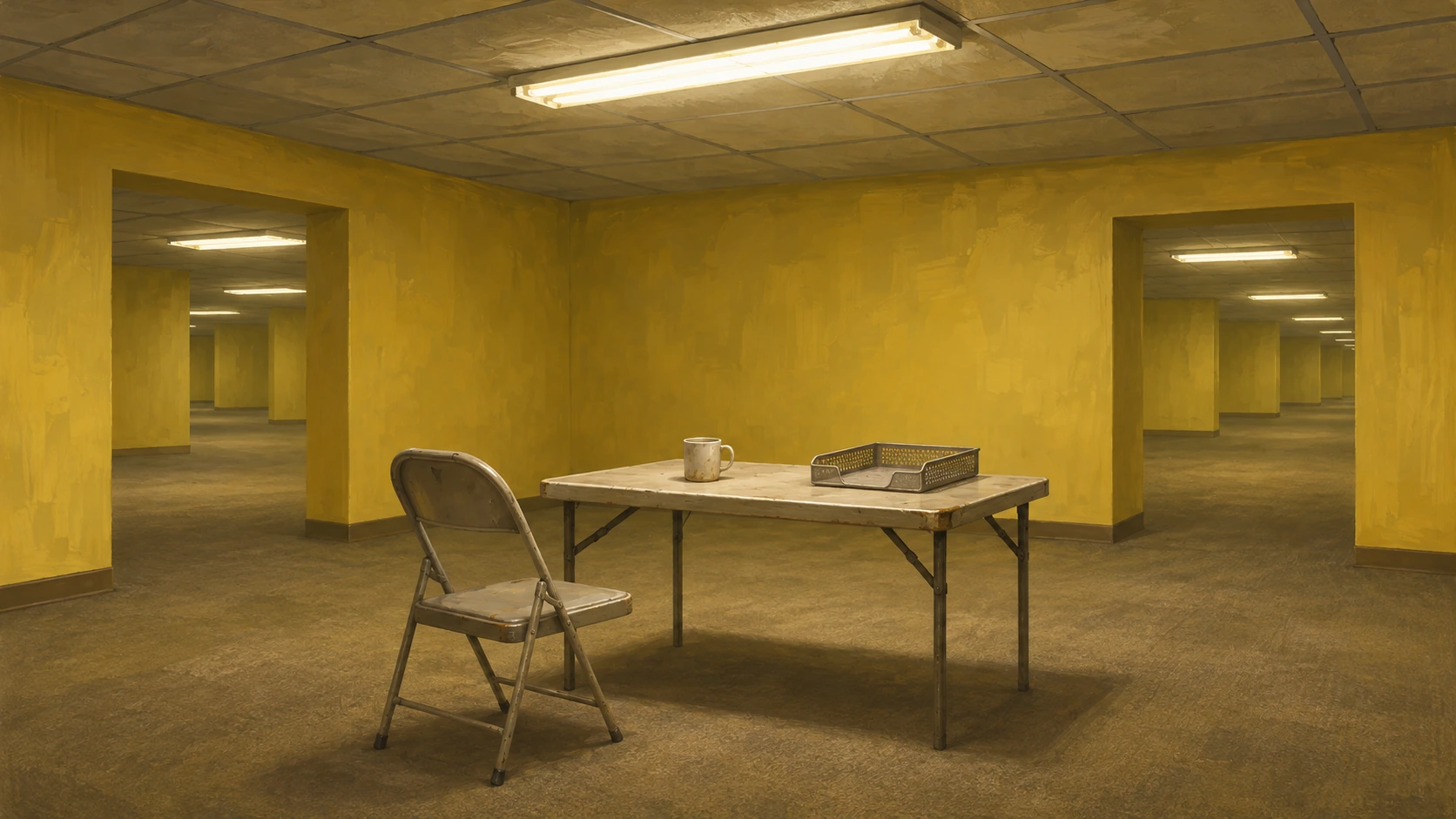
Low yellow rooms repeat through wallpaper, pale carpet, ceiling tiles and cool fluorescent lights. Nearby walls and distant openings resist a complete map. Ordinary finishes and slight wear remain familiar without windows or a clear center of daily life.
An ordinary wanderer pauses among repeated rooms without becoming an entity.
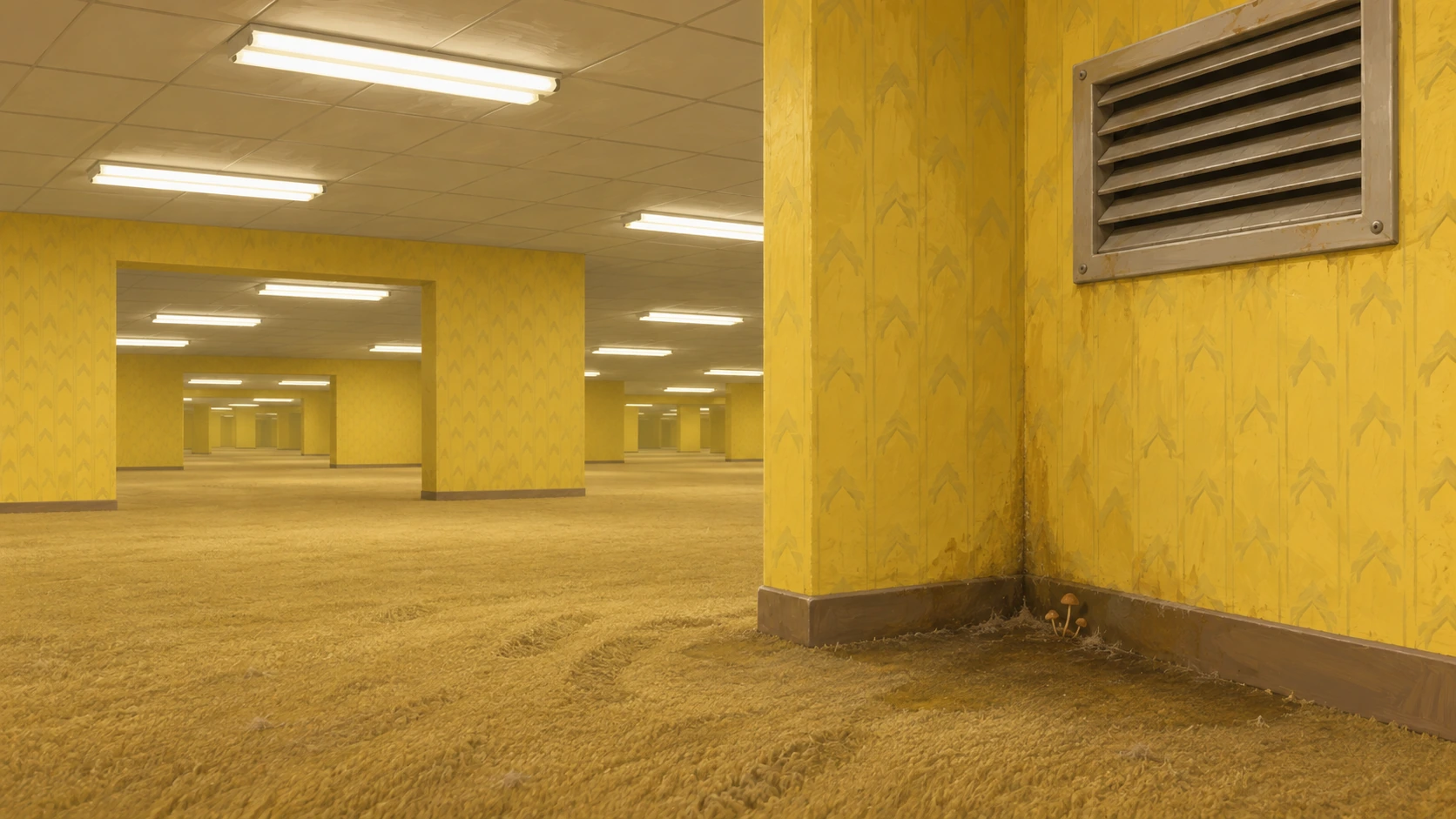
Localized moisture and fibers describe an enclosed environment where life may be absent.
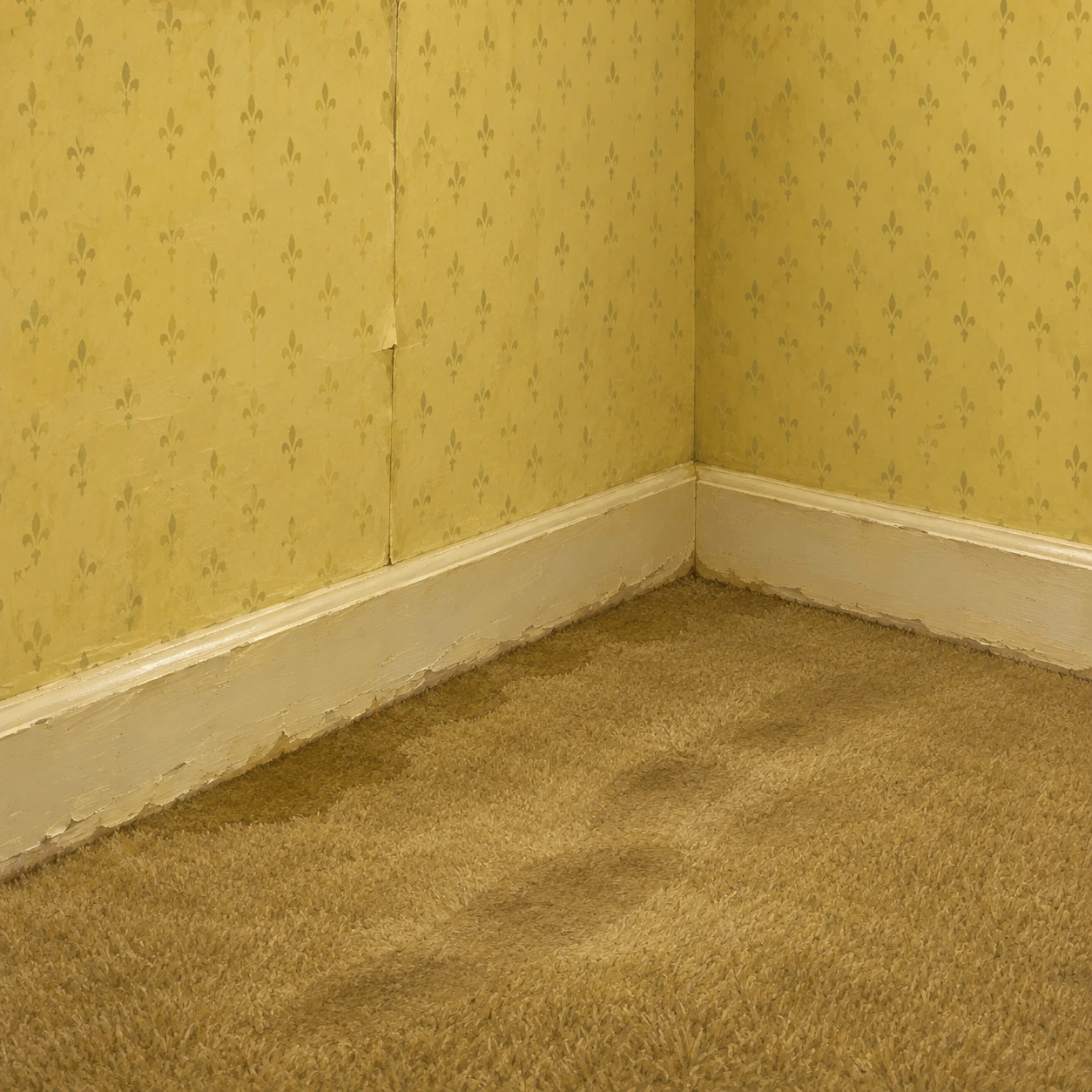
Paper seams, carpet compression and skirting preserve ordinary scale.
A few everyday objects suggest passage without explaining the room.