19Bunker Architecture
Thickness, shelter and restricted entry shape space.
Definition and context
Bunker architecture organizes space around protection, concealment and restricted access. Real defensive structures provide direct references. Its weight follows a use, not simply a mass of concrete. Distinguish periods, places and present conditions.
People and ecology
Original occupants, sheltering people, caretakers and later visitors leave different traces. Vegetation follows terrain and suitable niches; animals may use openings. Underground mould and fungi depend on moisture and substrate. Ventilation, drainage and power often define the service systems.
Spaces and forms
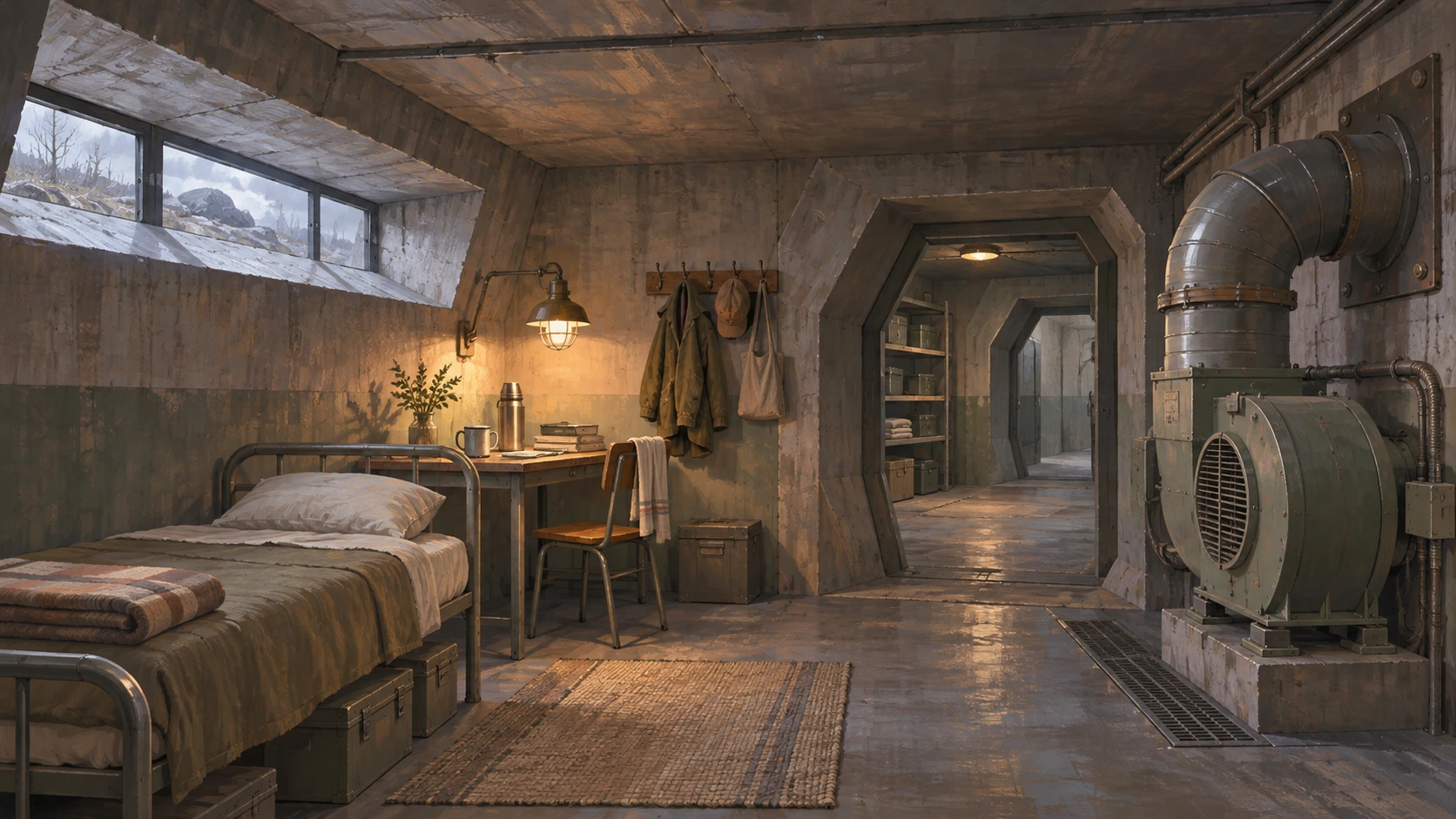
Deep entrances, turns, slits, heavy doors and terrain-embedded masses form a protective vocabulary. Show wall thickness at corners, window reveals and service penetrations, not merely on the front. Restricted views and interior layers organize the space.
Color and materials
Concrete, steel, rubber seals and old coatings have distinct qualities. Coastal salt, incoming sand and underground condensation are different processes. Trace water to joints and slopes, and place repairs and contact wear specifically rather than covering every wall in black stains.
Light, composition and scale
Brightness falls from the opening into successive interior layers while boundaries remain readable. A narrow slit may frame a broad exterior. Keep bodies, service doors and domestic objects ordinary in size so a low protective space does not become a grand palace.
Sound and graphics
Heavy doors separate soundscapes. Wind and birds enter through vents and slits, while nearby equipment transmits vibration. Durable numbers and maintenance records can inform graphics. Sounds should have a source rather than defaulting to alarms.
Motifs and distinctions
Unlike concretecore, the structure has a protective purpose. It is not inherently post-apocalyptic. Decommissioning, preservation, reuse and abandonment are different states; radiation, nuclear accidents and horror are not requirements.
Ideas for game environments
Use visible reveals, a shell embedded in terrain, a sound change across a door and an exterior glimpsed through a restricted view. Living and service rooms can explain habitation rather than producing a sequence of purposeless dark corridors.
Read scene descriptions
Main environment
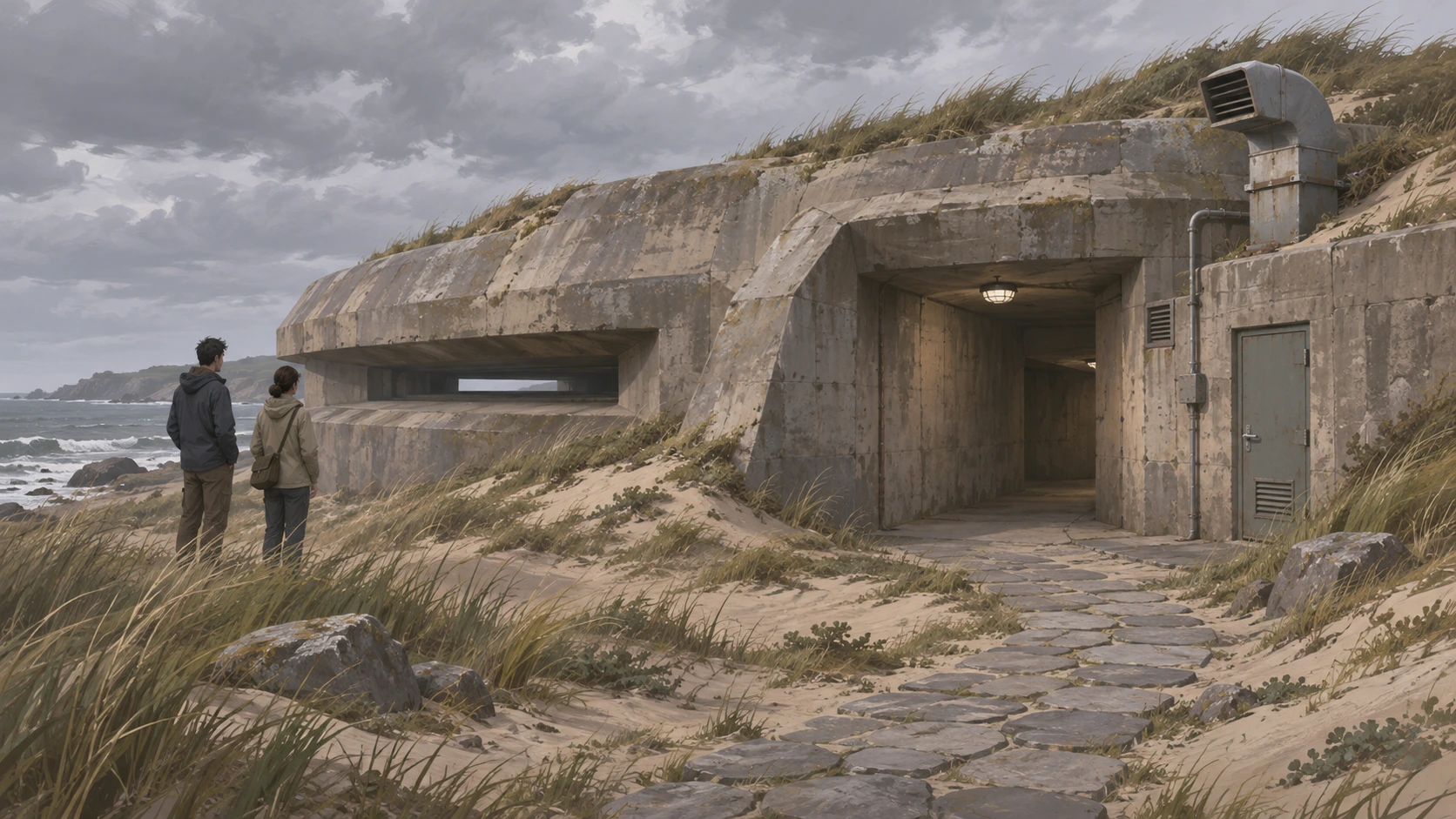
A low decommissioned coastal bunker sits partly within the dunes. Deep observation slits, a recessed turning entrance, vents and an ordinary service door explain protection. Pale sand, coastal grass and restrained concrete grey surround visiting people.
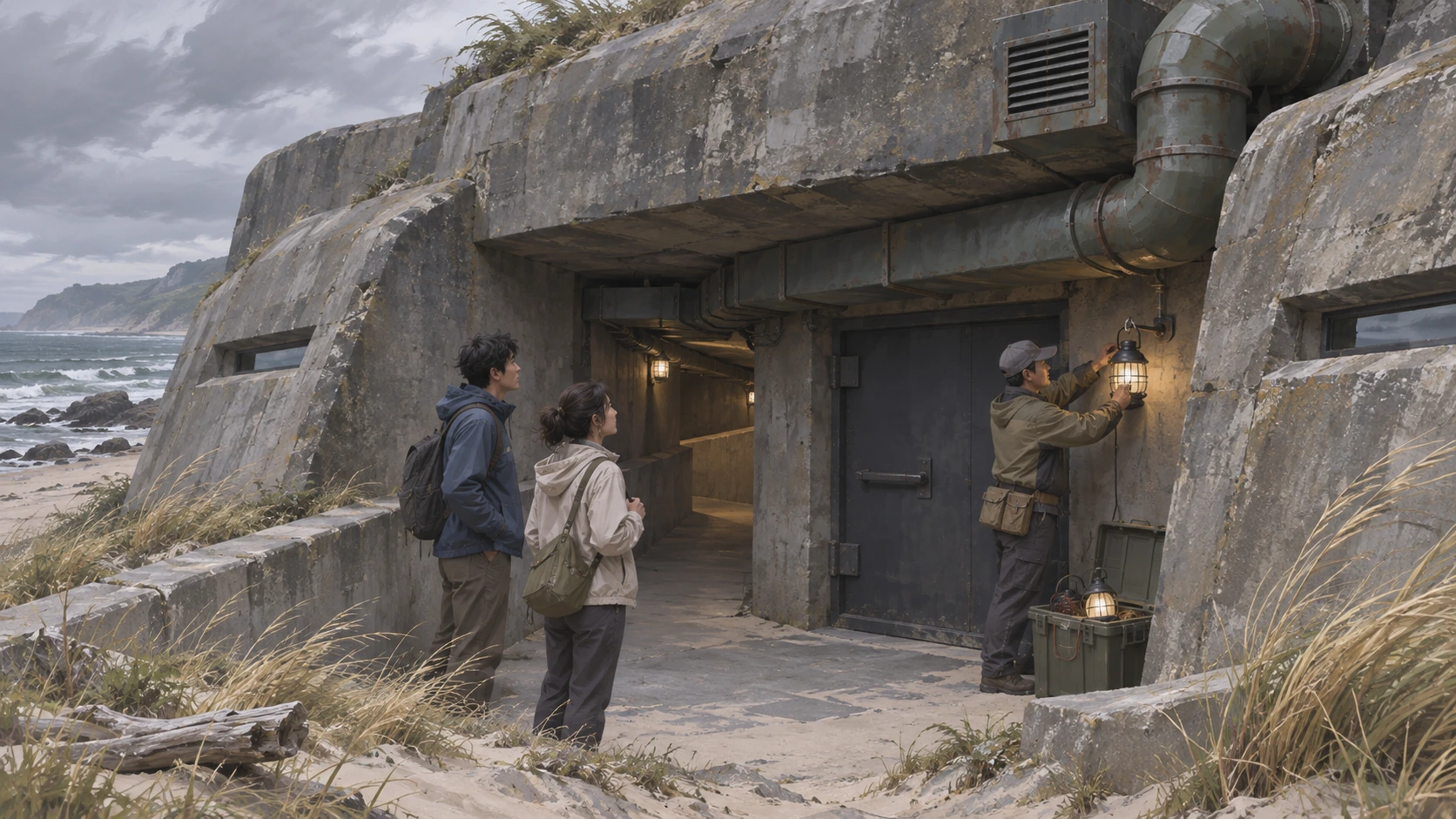
Visitors and maintenance explain a deep entrance at human scale.
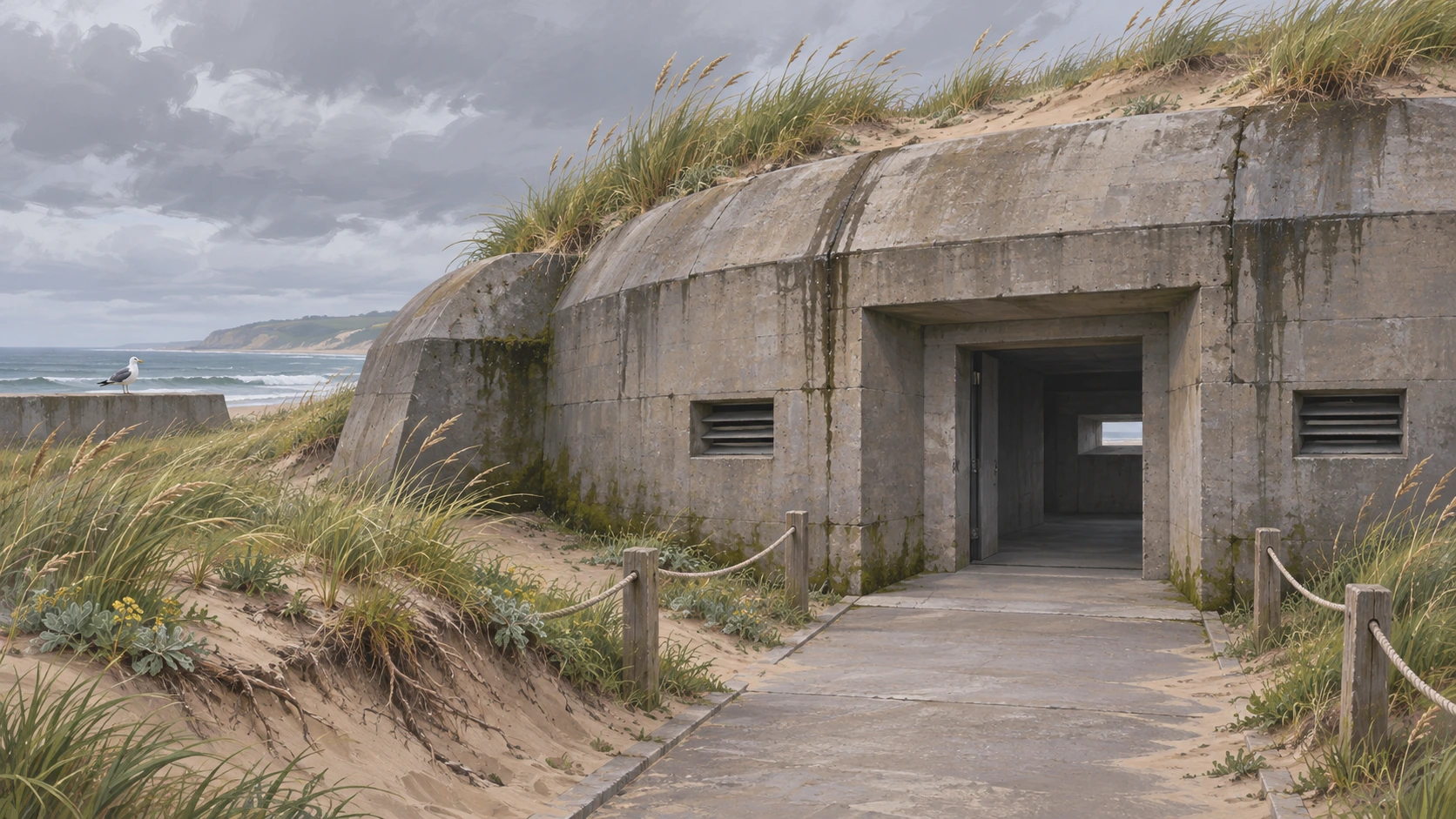
Salt-tolerant grass, damp niches and upkeep follow coastal conditions.
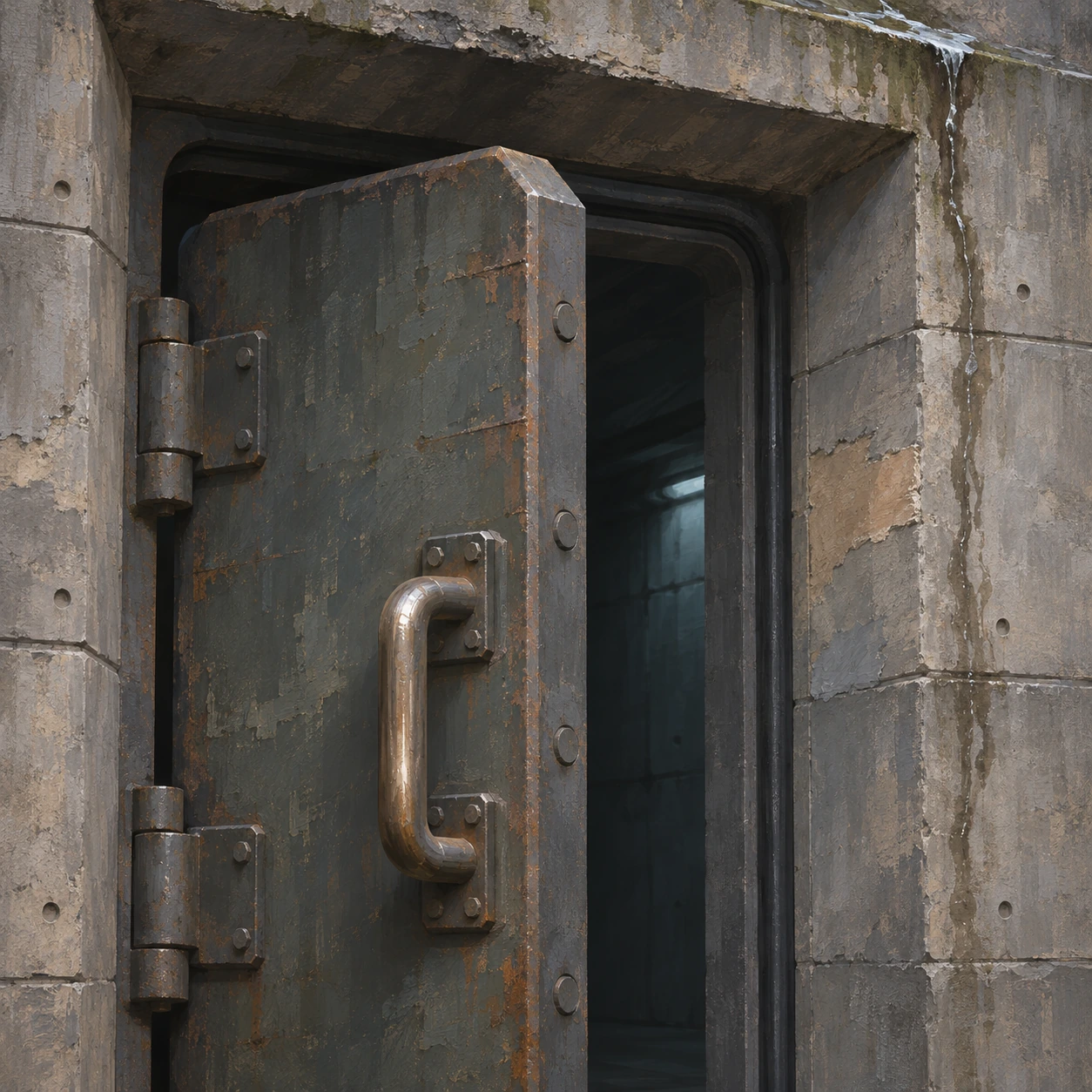
A heavy door, seal, hinges and rain traces occupy specific places.
Domestic objects and ventilation reveal life inside a heavy shell.