18Industrial Sublime
Readable production systems dwarf ordinary human work.
Definition and context
The industrial sublime finds power, complexity and awe in production, infrastructure and engineering scale. Industrial photography offers rich references, but visual beauty does not establish environmental performance. First explain the system and the work people perform within it.
People and ecology
Workers, inspectors and transport crews establish working scale. Birds use suitable high structures; plants occupy nonoperating edges; fungi need appropriate damp organic substrates. Machines transport, process, supply energy or control rather than merely decorating the scene.
Spaces and forms
Waterworks have dams, spillways and waterlines; logistics has silos, conveyors and loading points; energy systems have turbines, pipes, cooling and electrical structures. Choose a process with its own silhouette, then let secondary facilities support it.
Color and materials
Structural colors, equipment coatings and safety markings have different roles. Water scours, hot areas need insulation, dry high surfaces collect dust, and touched surfaces polish. Connect pipes to equipment and give conveyors both ends. Trace rust to joints and water paths.
Light, composition and scale
Frame a small control desk, maintenance bridge, rail or ladder with the larger system. Operating, stopped and abandoned sites need different lighting. Explain distance through structural layers and occlusion rather than dense fog.
Sound and graphics
Locate equipment by its cycle and position. A stopped plant can retain resonance, dripping and wind without full machinery noise. Flow diagrams, numbers and inspection records can inform graphics, while interfaces and circulation remain readable.
Motifs and distinctions
Unlike High-Tech architecture, this category emphasizes industrial power and the experience of looking, not necessarily exposed building services. Avoid disconnected pipes, arbitrary steam and a shut-down plant that still roars. Scale alone does not make science fiction or disaster.
Ideas for game environments
Make a production route traceable, distribute wear by water, heat and dust, and view large structures from small instruments. Different operating states can transform one place. Distinguish maintenance access from production equipment to connect scale with human labor.
Read scene descriptions
Main environment
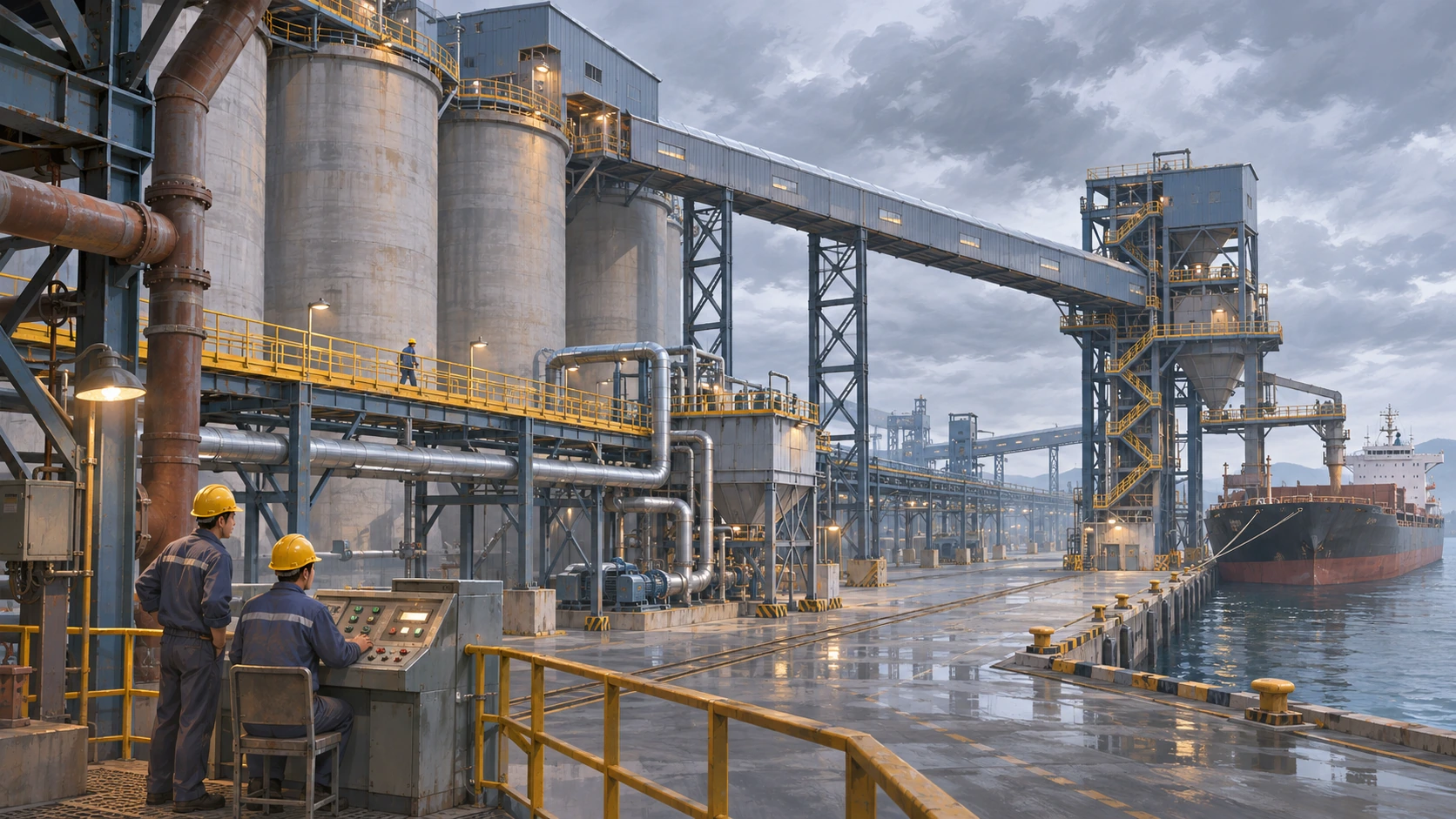
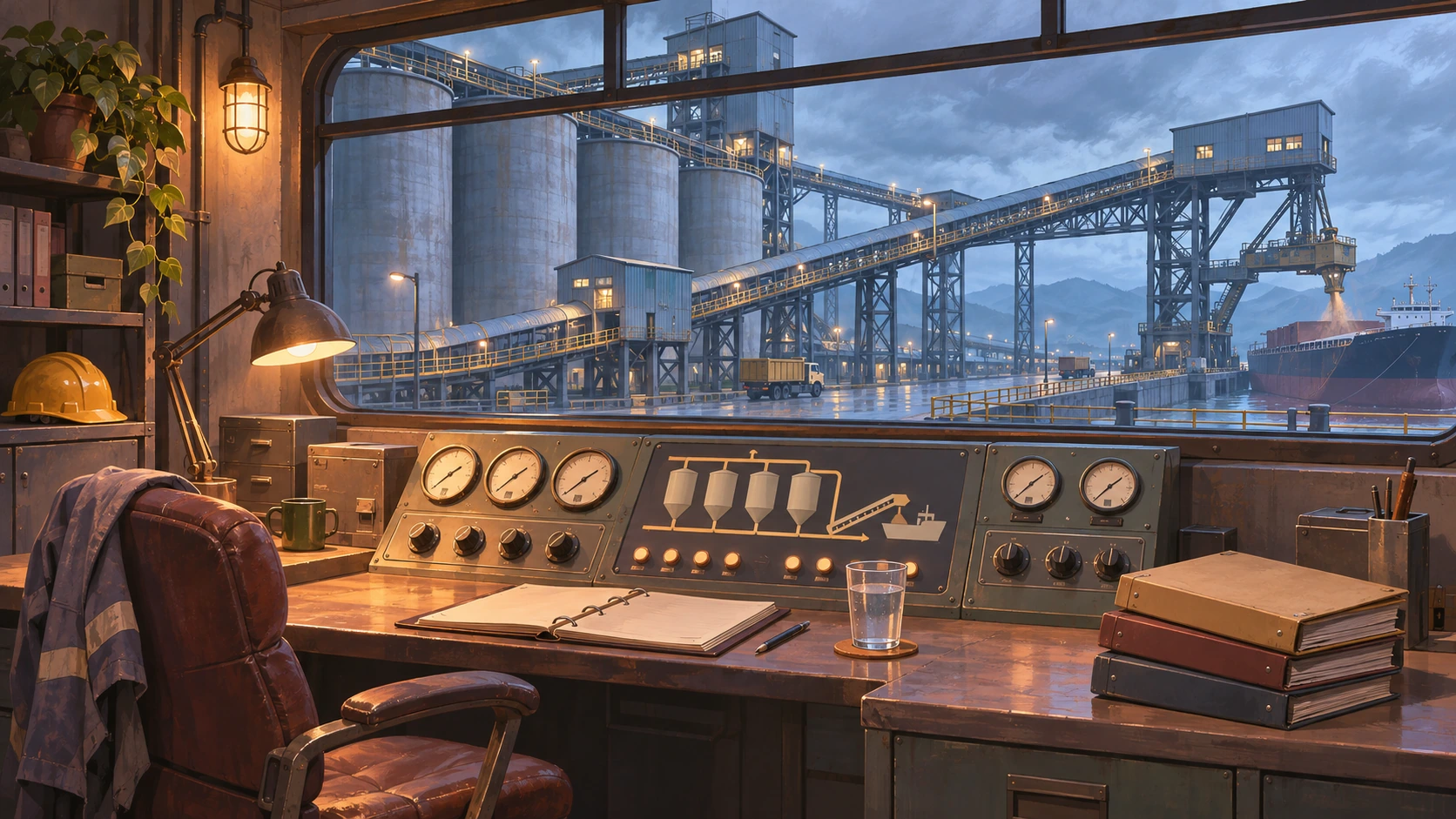
An operating loading system connects huge silos, enclosed conveyors, a loading tower and service pipes. Yellow maintenance bridges, a small control desk and ordinary workers establish scale. Blue steel, rust and pale concrete separate structural and working layers.
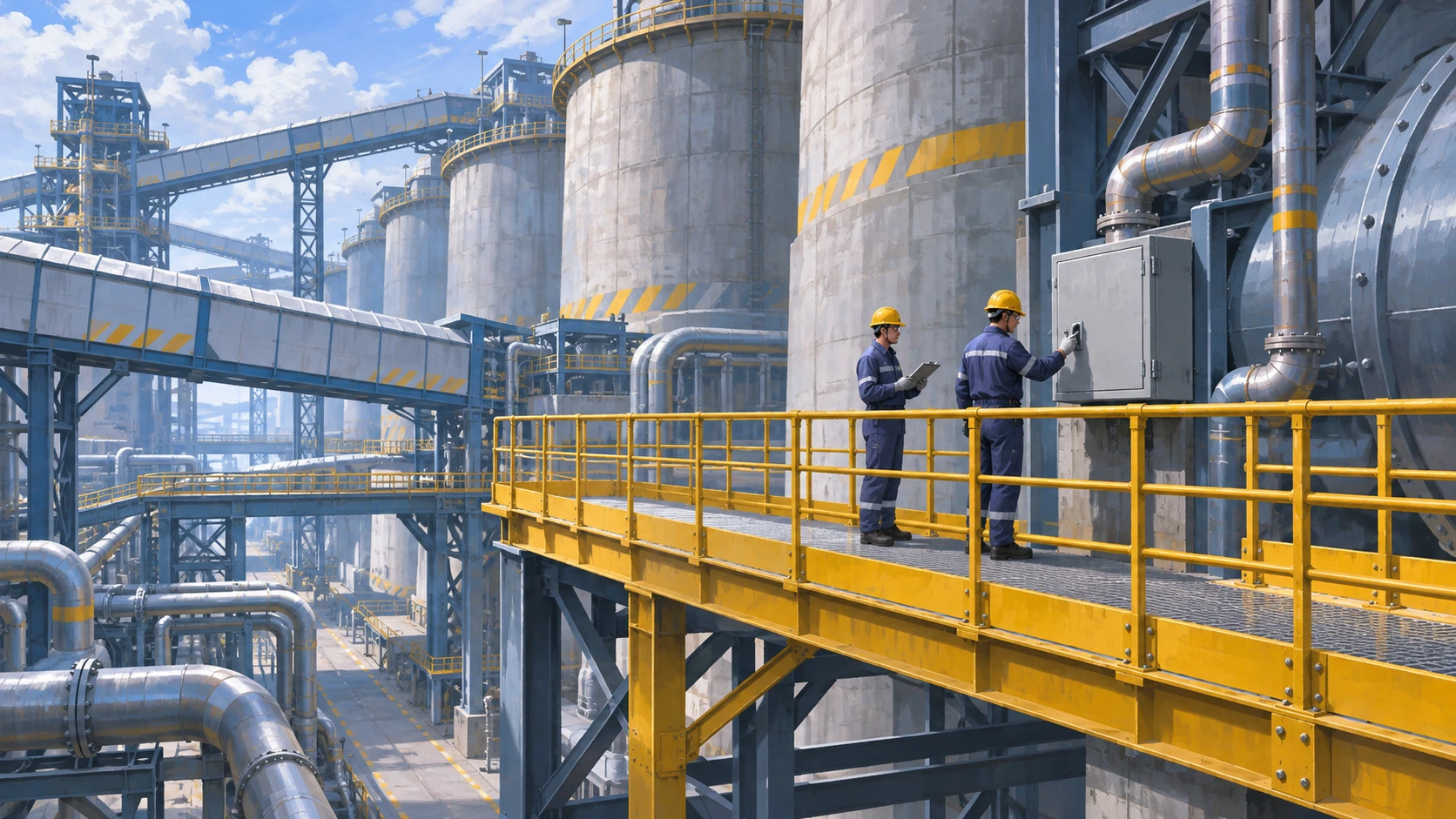
A complete maintenance platform puts human work beside large equipment.
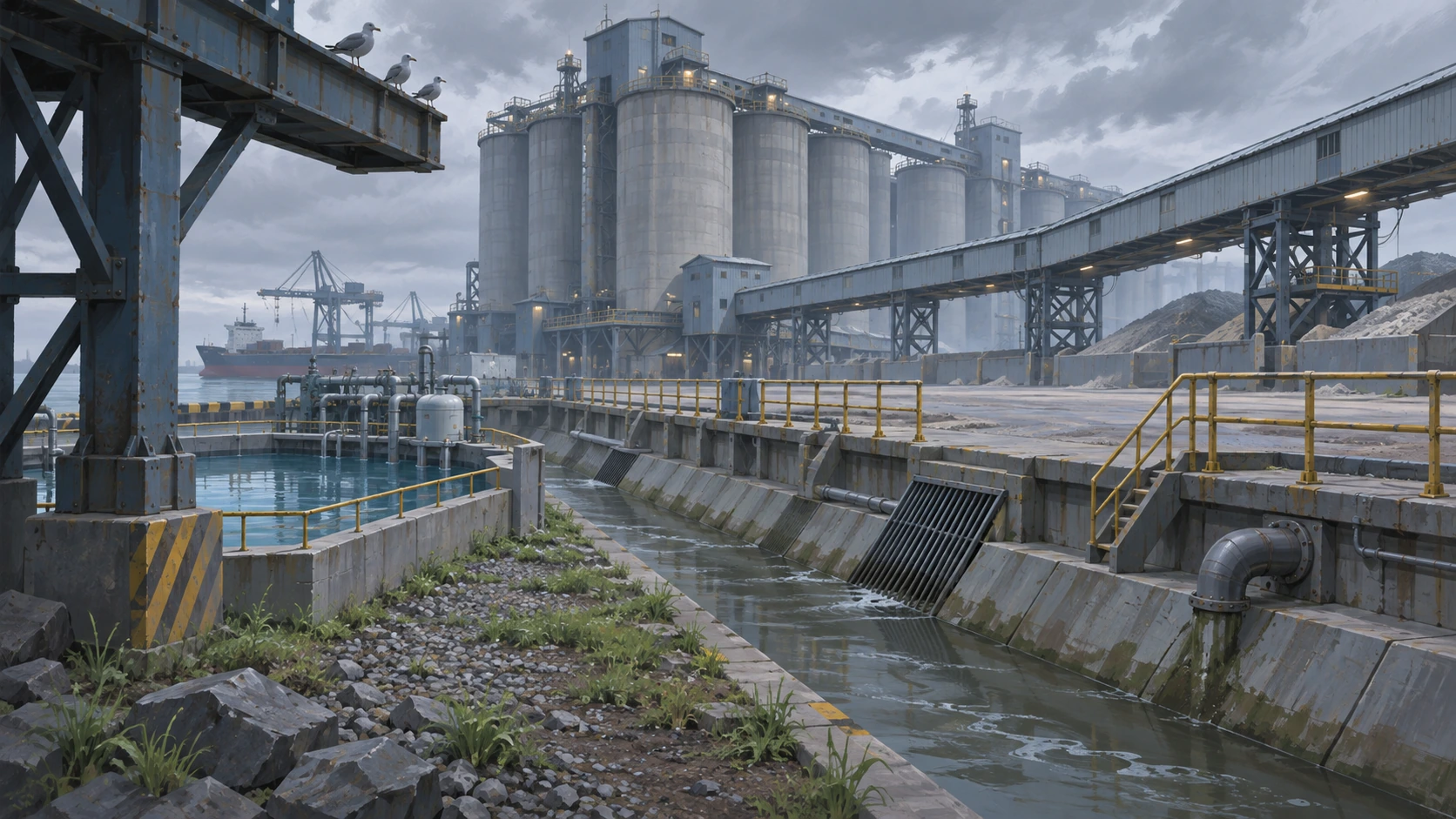
Plants and birds occupy suitable nonoperating edges.
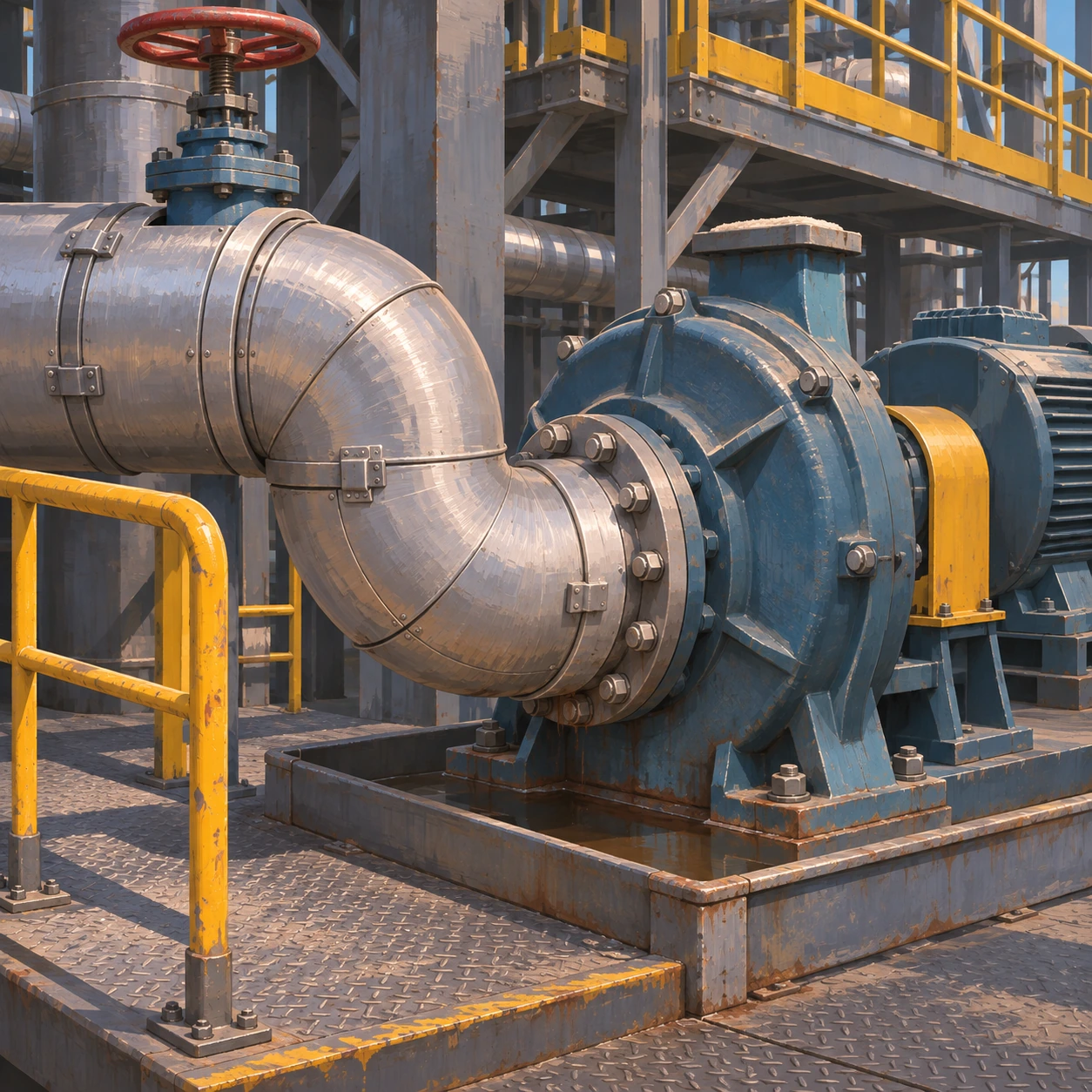
Pipes, flanges, insulation and a collection tray have clear connections.
A small control-room window links daily watchkeeping to the larger process.