14Radical Architecture and the Continuous Monument
An unchanging grid crosses a world of differences.
Definition and context
Radical architecture uses extreme proposals to test assumptions about cities, consumption and modern life. Superstudio's Continuous Monument is a key reference: a gridded mass crosses different landscapes as both an image and an argument. Such critical experiments should not be read as ready-made recommendations for an ideal city.
People and ecology
Ordinary walkers, picnickers and temporary occupants retain bodily and personal differences. Mountains, water and forests meet a single artificial rule. Animals and plants need neither fill the scene nor disappear; the contact between variation and abstract order matters.
Spaces and forms
A continuous strip, wall or rectangular mass crosses cities, wilderness and water. Maintain grid direction and module instead of bending the rule arbitrarily around terrain. Explain a crossing with clear voids and supports rather than covering the surface with tiny dwellings.
Color and materials
White, mirror-like surfaces and black grid lines meet a geographically specific setting. The structure can appear almost ageless while rocks, vegetation, climate and urban materials remain differentiated. Irregular natural edges strengthen the uniform grid.
Light, composition and scale
Use distance to show extent and nearby people or objects to retain ordinary scale. Continue the mass beyond the frame. Collage and scale conflict belong to the historical visual language; resolving every contradiction into a plausible property rendering would lose part of the argument.
Sound and graphics
Let wind, water and daily activity meet a low artificial hum while retaining local acoustic differences. Grids, coordinates and rational descriptions can sit beside personal images. Uniform graphics and particular human needs may remain in tension.
Motifs and distinctions
Unlike concretecore, weight and weathering are not central. Unlike a generic megastructure, the scene foregrounds a conceptual critique. A grid is not automatically Poolrooms tiling. Avoid adding so many windows and machines that the continuous mass becomes a large office block.
Ideas for game environments
Carry one module over different terrains, reflect changing nature in a windowless skin, and place a small domestic act beside abstract order. Players can encounter changing regions while the structure refuses to change.
Read scene descriptions
Main environment
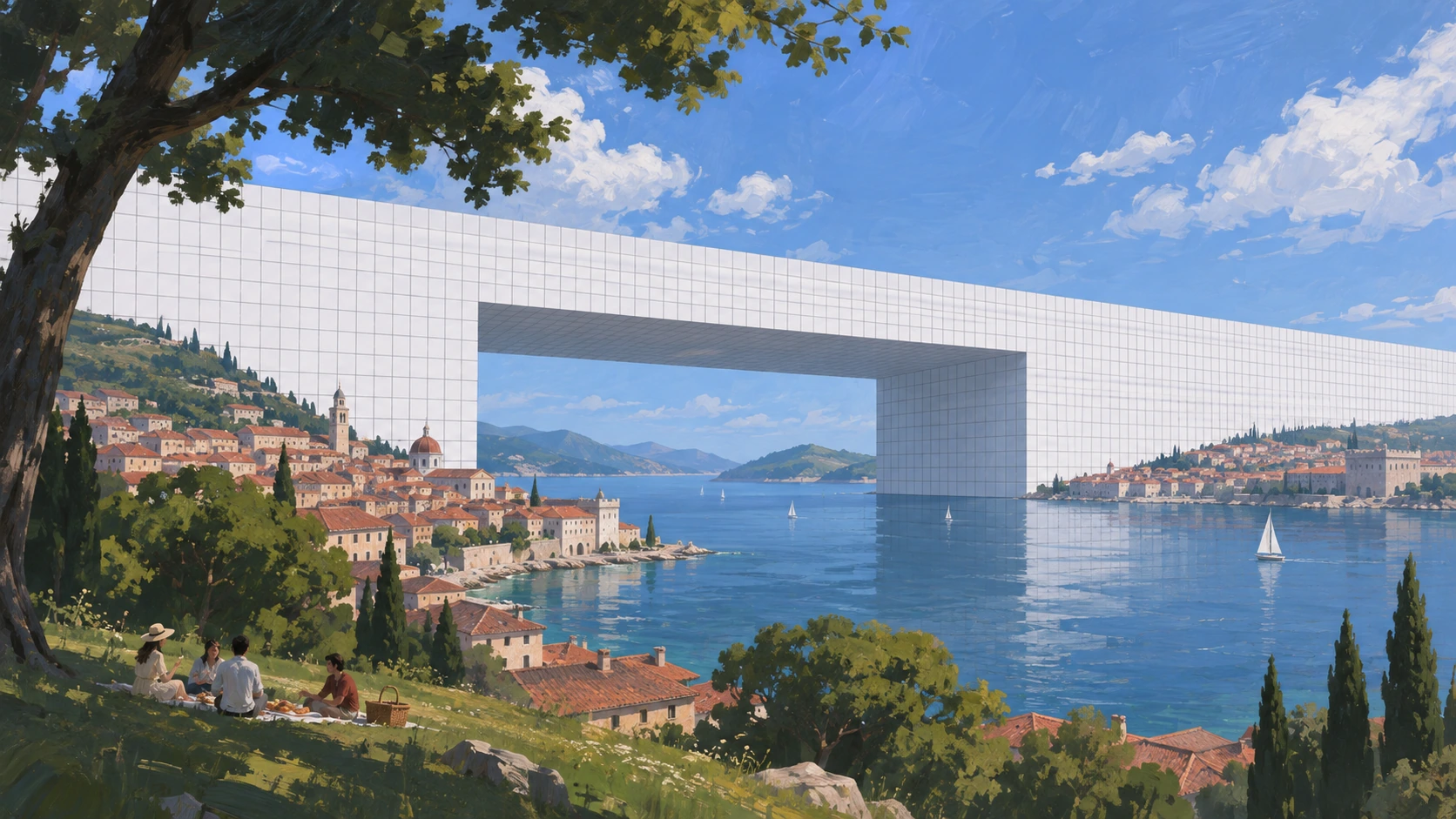
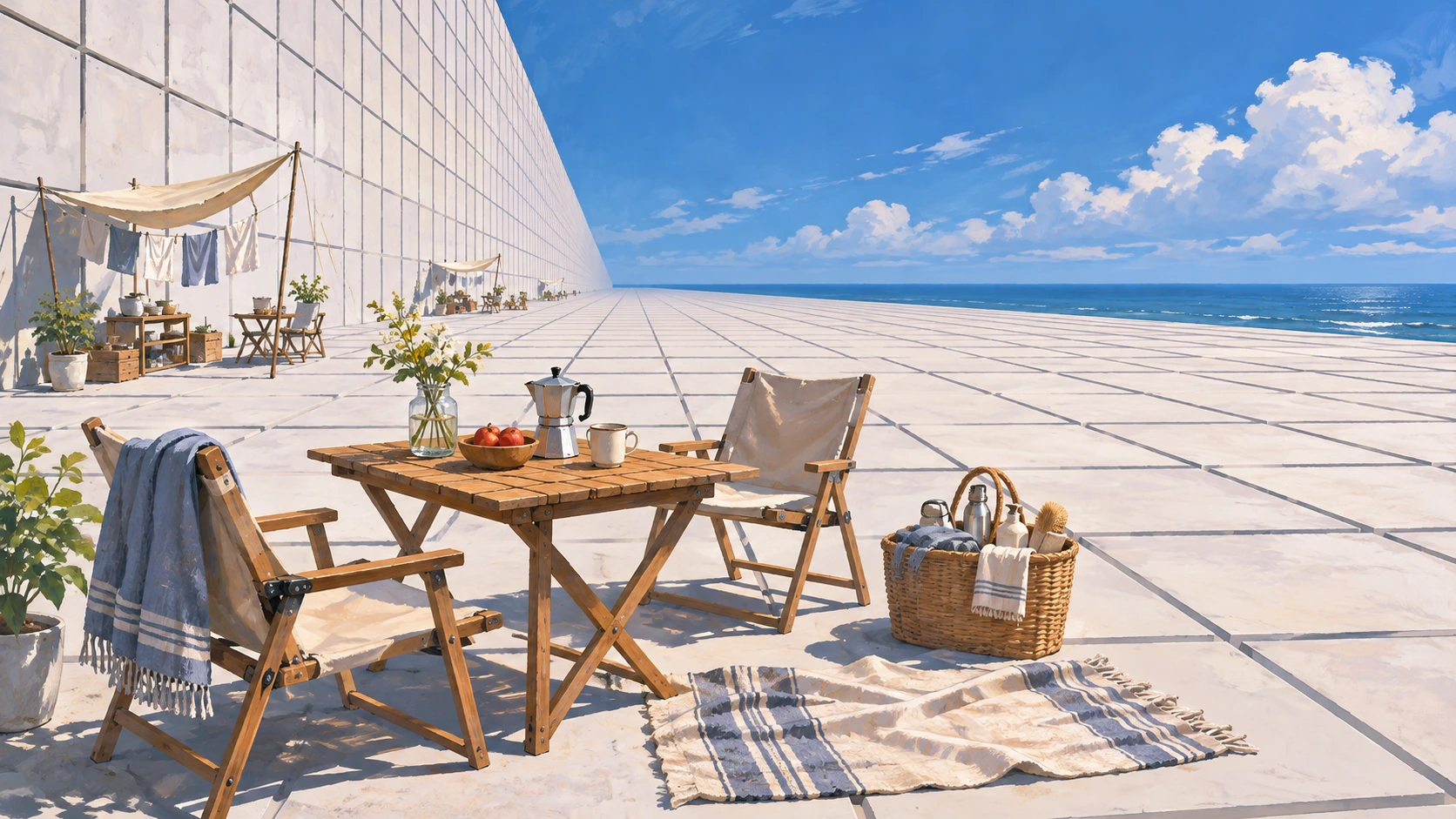
A minimal white gridded mass crosses a bay, hillside and older town without changing its module. A broad rectangular opening spans the water and the structure continues beyond the frame. Picnickers, trees and red roofs preserve local differences beside uniform order.
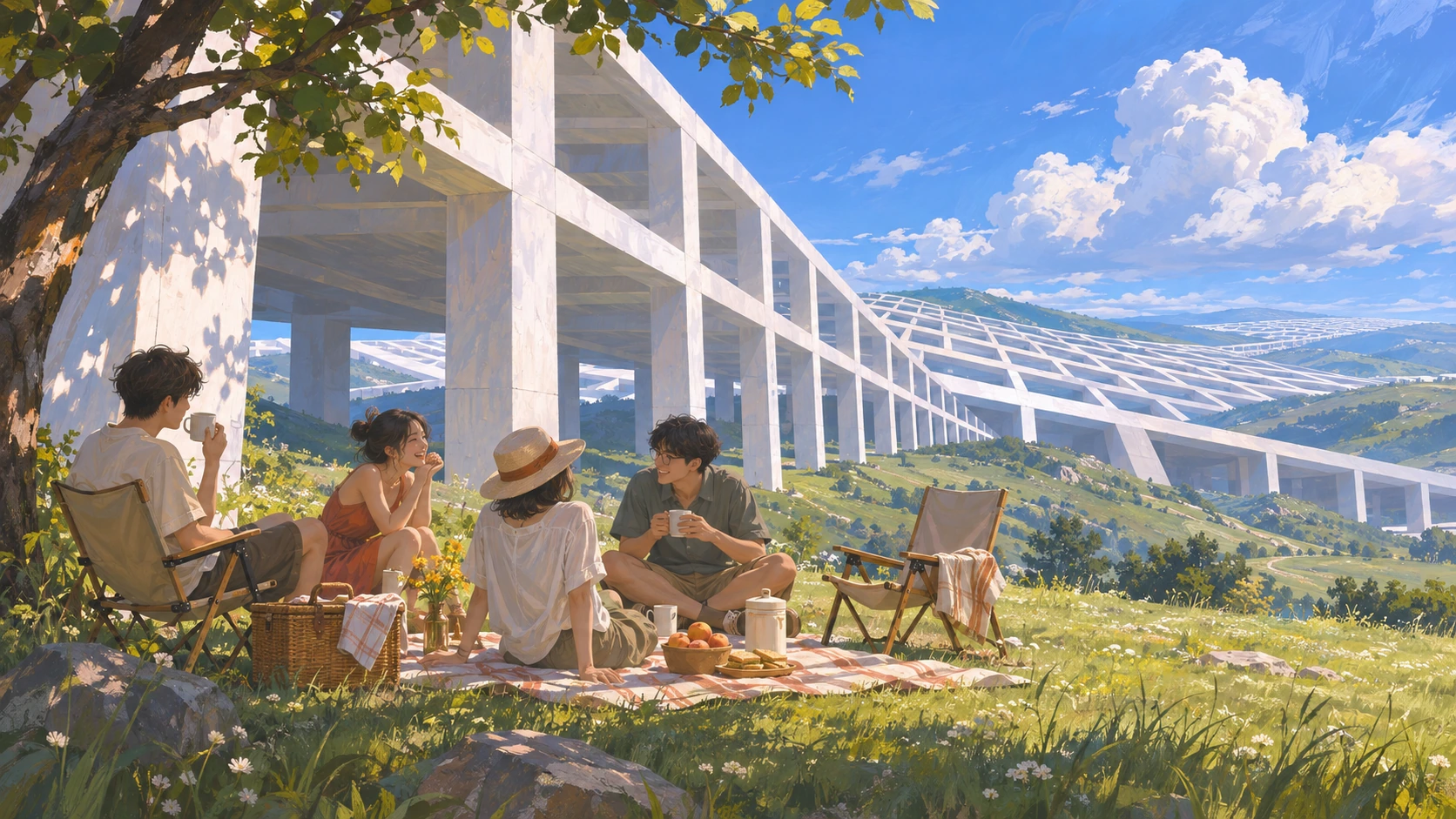
A small picnic sits beside a vast grid indifferent to location.
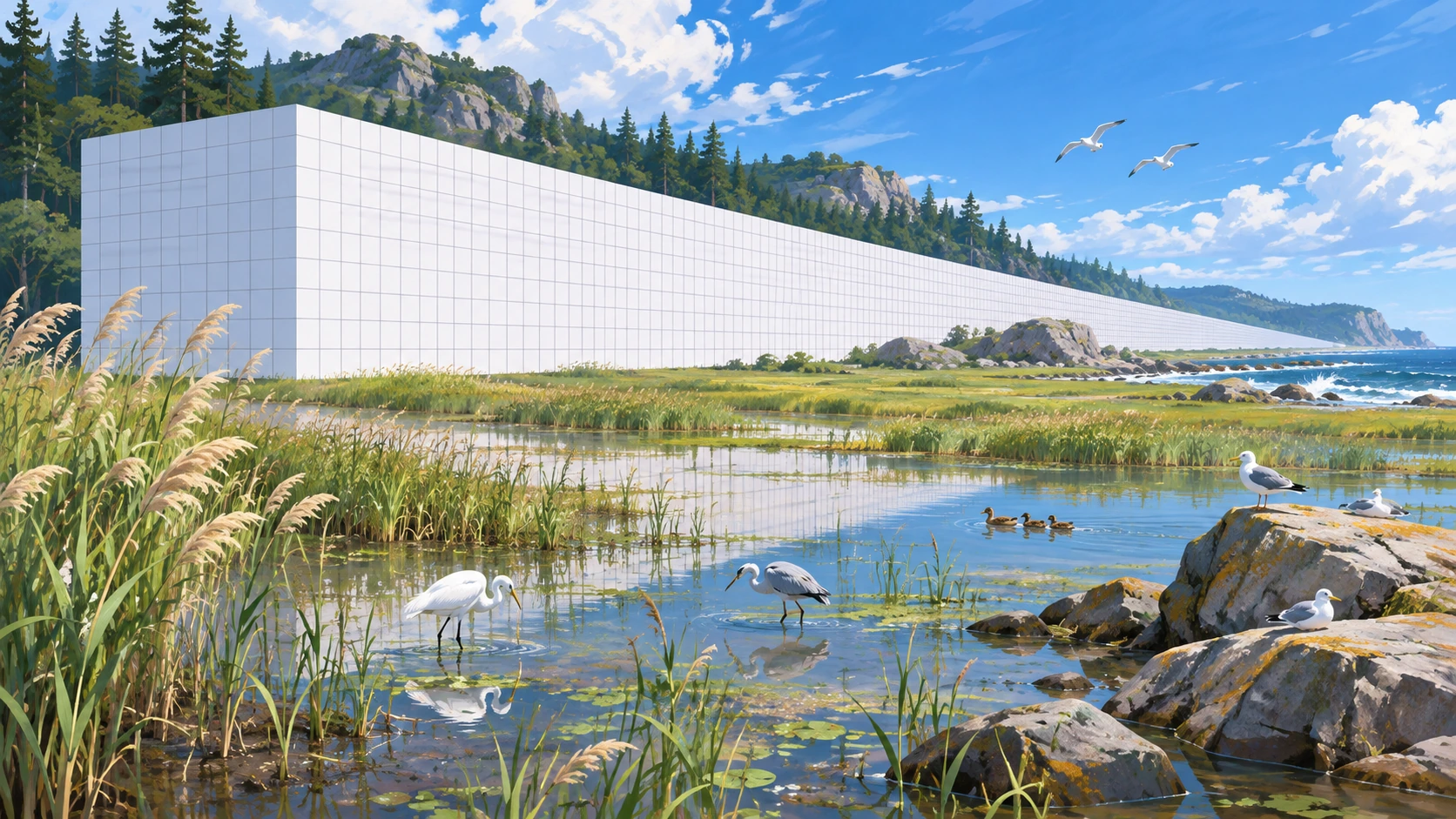
Wetland water, reeds and birds vary beneath one continuous rule.
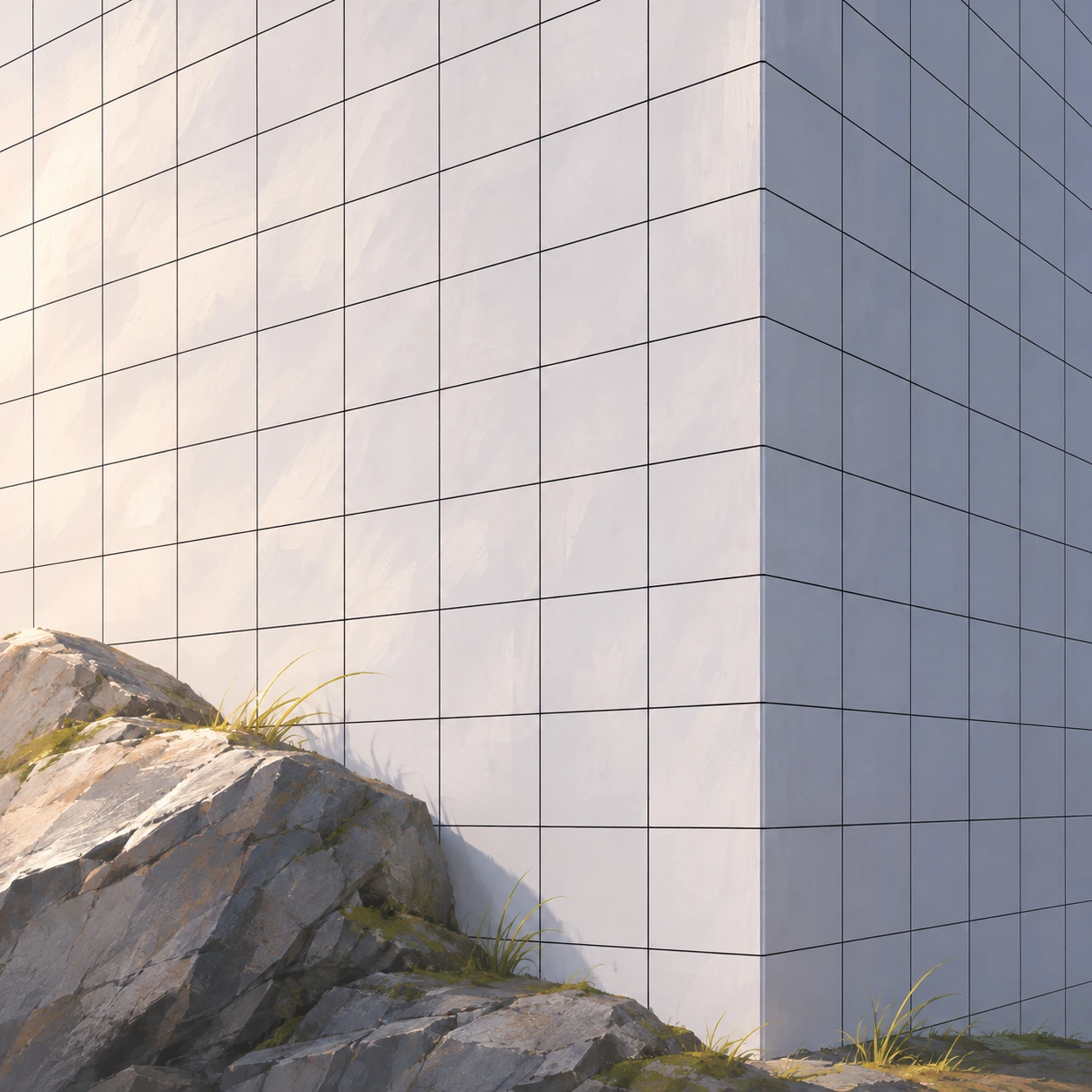
Fine black lines turn a sharp corner beside irregular natural rock.
Temporary domestic objects create local differences on an extending grid.