13Plug-in and Moving Cities
A city changes through plugging in, docking and moving.
Definition and context
Archigram brought consumer culture, technology, mobility and temporary occupation into urban speculation. Plug-in and moving cities are related but distinct: one inserts units into a service framework, while the other relocates whole urban habitats. Their lively drawings are experiments and arguments, not straightforward construction proposals.
People and ecology
Residents may be travelers, temporary occupants or event participants with personal belongings. Movable gardens and living units can carry plants and animals. Fungi still need suitable substrates. Machinery transports, docks, connects and rearranges the city.
Spaces and forms
Plug-in systems need cranes, slots and shared services; moving systems need joints, supports, broad feet and docking corridors. Make the activity legible in the form, and retain ordinary homes and public spaces inside. Legs alone do not make a convincing moving city.
Color and materials
Bright functional colors, thin metal, plastic, hoses and membranes suggest a light technological vocabulary. Distinguish load-bearing frames, replaceable shells and flexible connections. Use color to explain systems rather than coating everything in military grey.
Light, composition and scale
Explain a local connection before revealing the changeable whole. Frames, small vehicles and people can move at different speeds. Translate joints, gaps and scale into spatial relationships rather than reproducing a technical drawing.
Sound and graphics
Pneumatic release, mechanical coupling, announcements, transit and a temporary market form a mobile soundscape. Product catalogues and comic arrows can inspire graphics. Wayfinding should identify the current stop and next connection.
Motifs and distinctions
The ideas overlap with Metabolism but often emphasize mobility, consumption and temporary events. A moving city need not be a war machine, and plug-in architecture is more than piled capsules. Optimism and absurdity can coexist.
Ideas for game environments
Use visible docking interfaces as level connections, retain domestic traces on moving components, and separate crane routes from pedestrian routes within one frame. Familiar life can help players navigate a city whose position or arrangement changes.
Read scene descriptions
Main environment
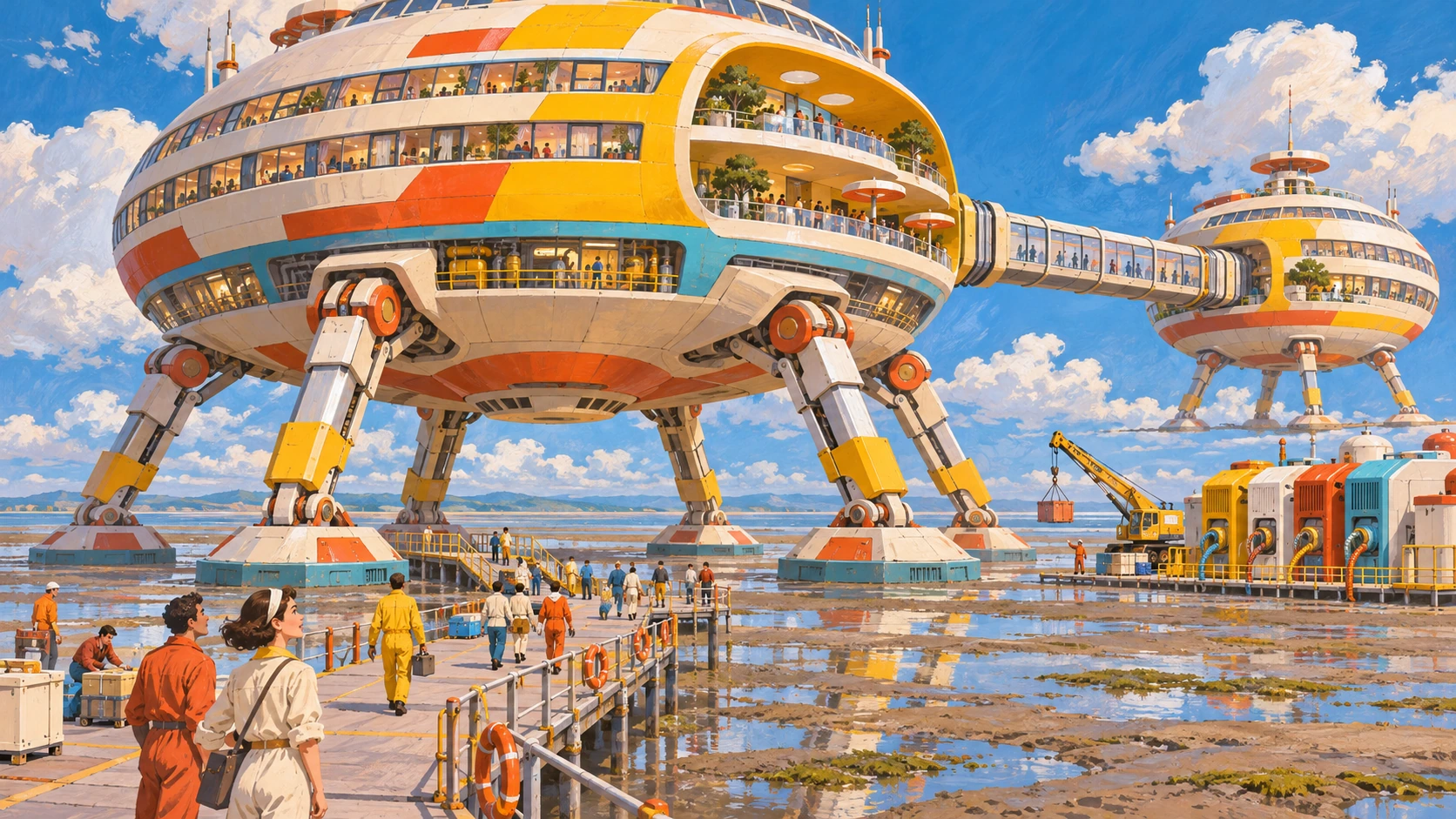
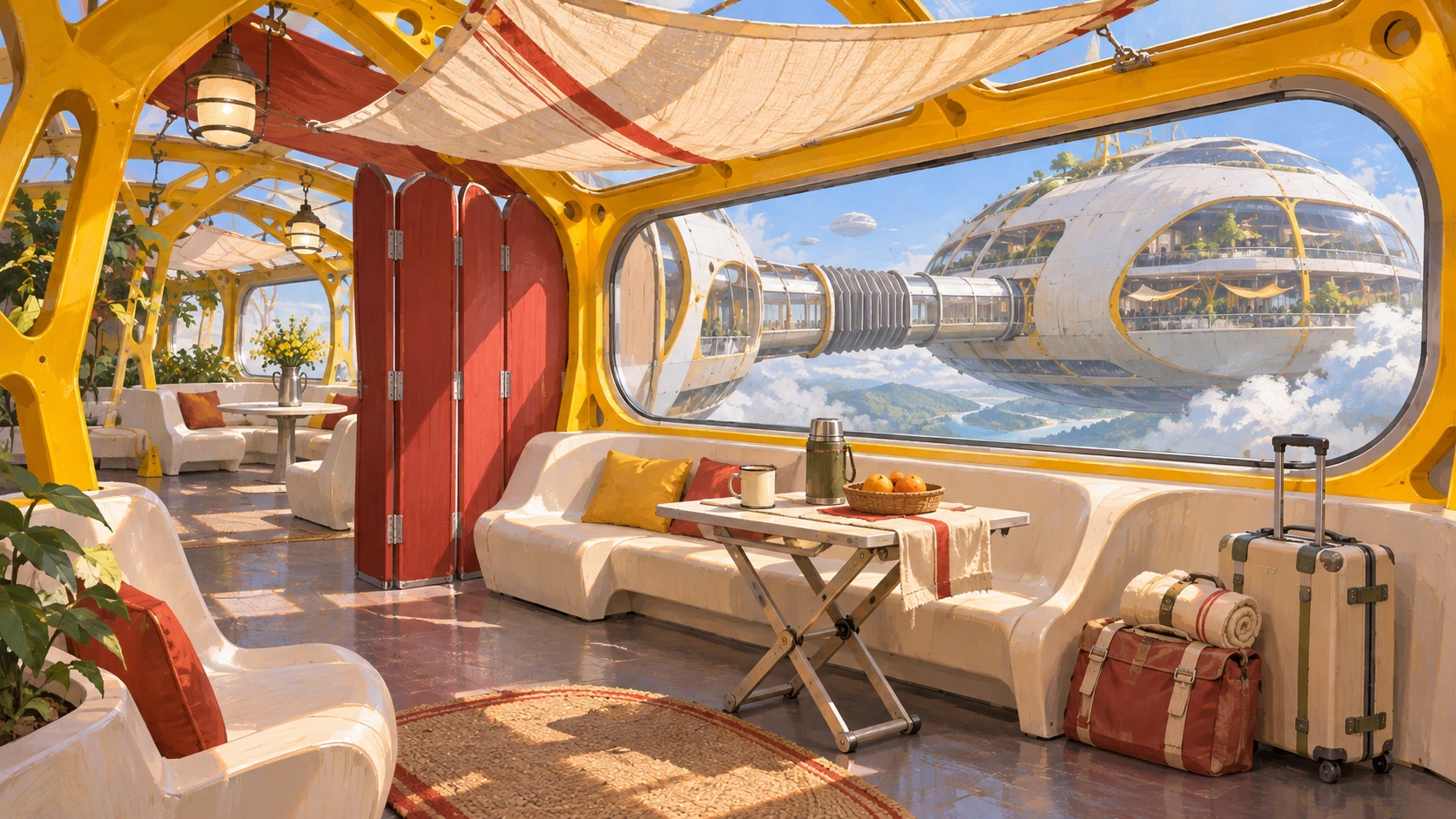
Ovoid urban habitats dock on articulated legs with broad feet. Windows, public decks and service layers remain legible, and telescopic corridors connect the pods. Ordinary people and colorful plug-in services establish scale in an optimistic experimental city.
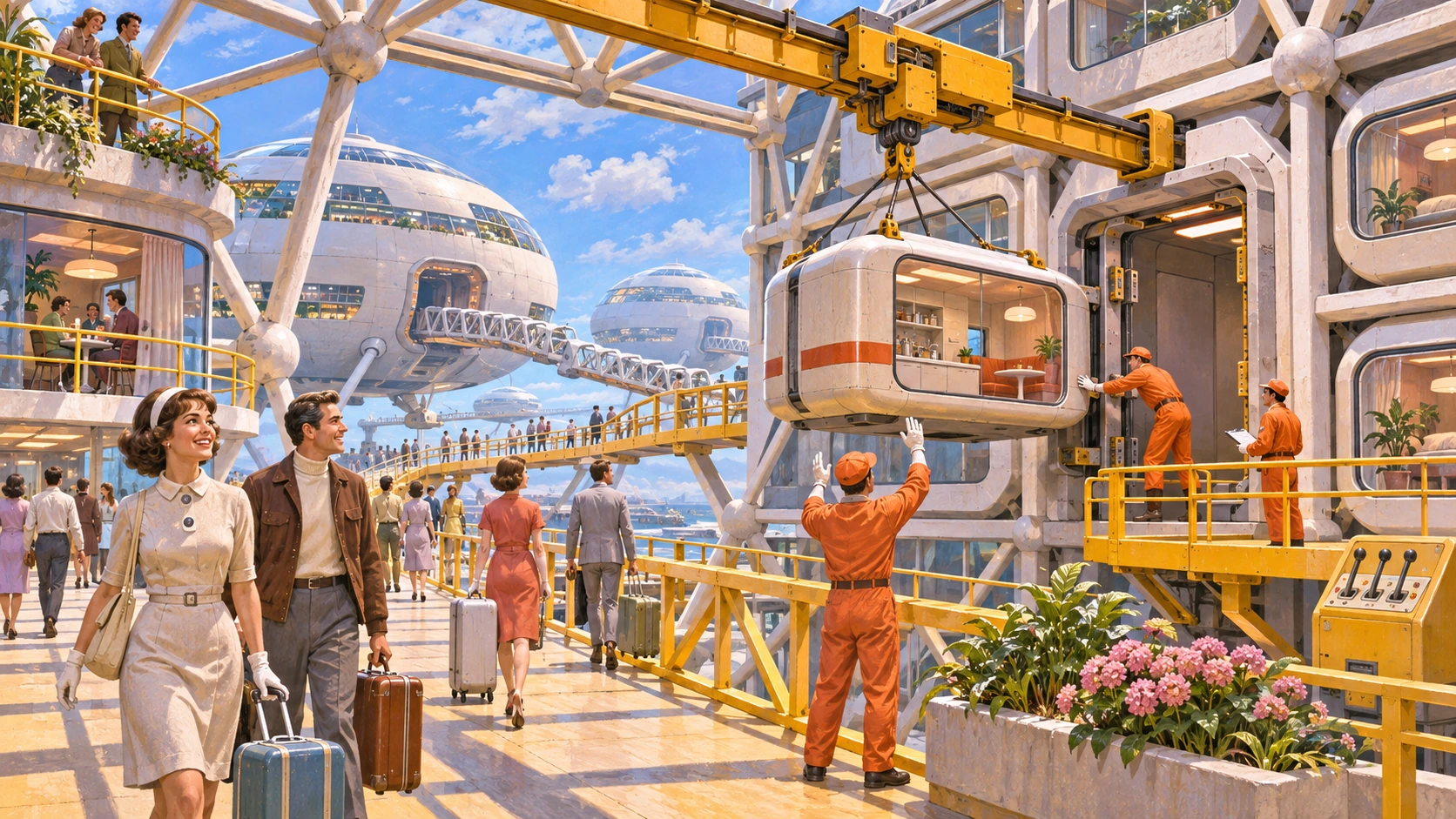
Pedestrians and lifting operations share a framework on separate routes.
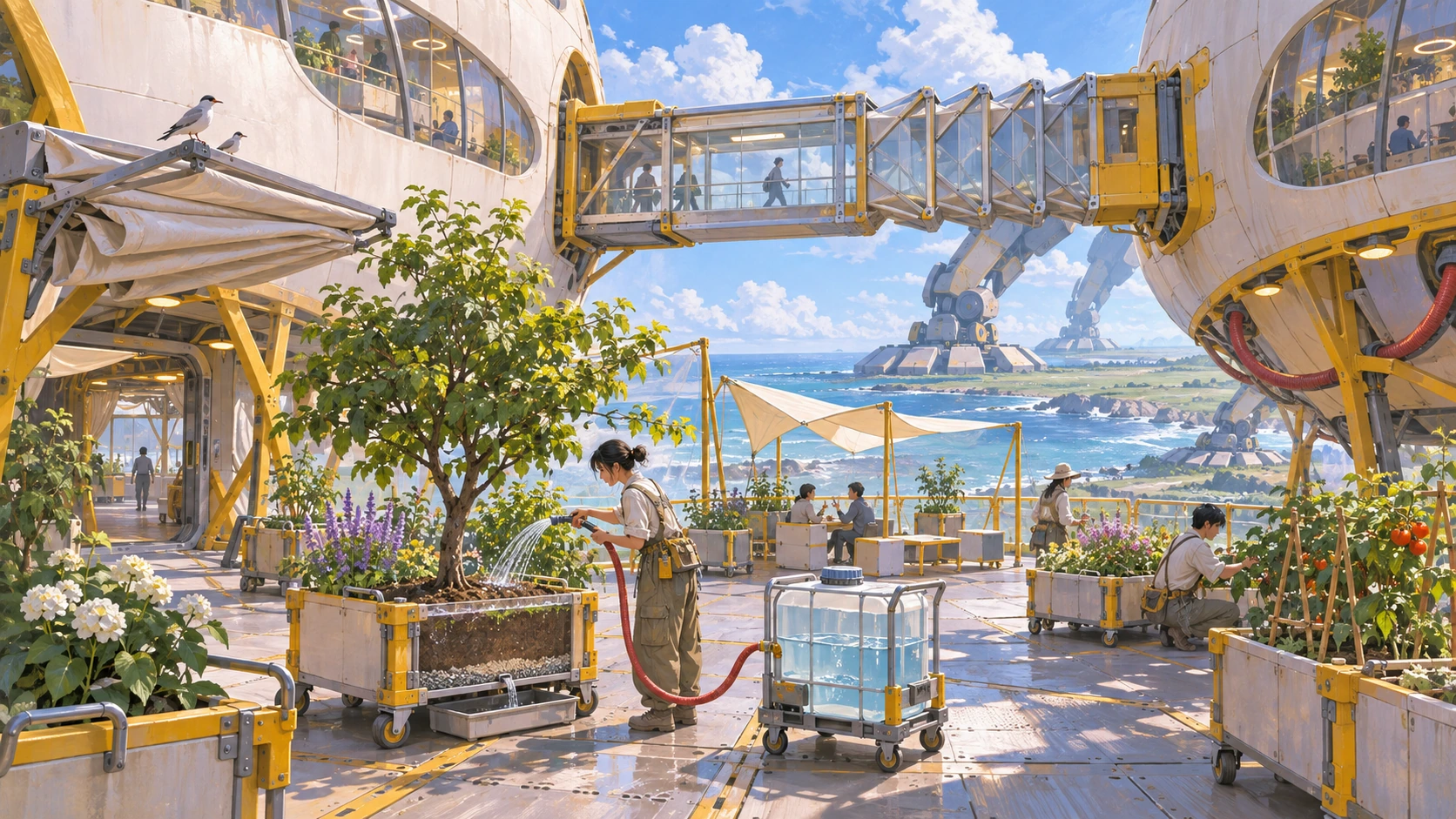
A movable garden carries soil, water and maintenance provision.
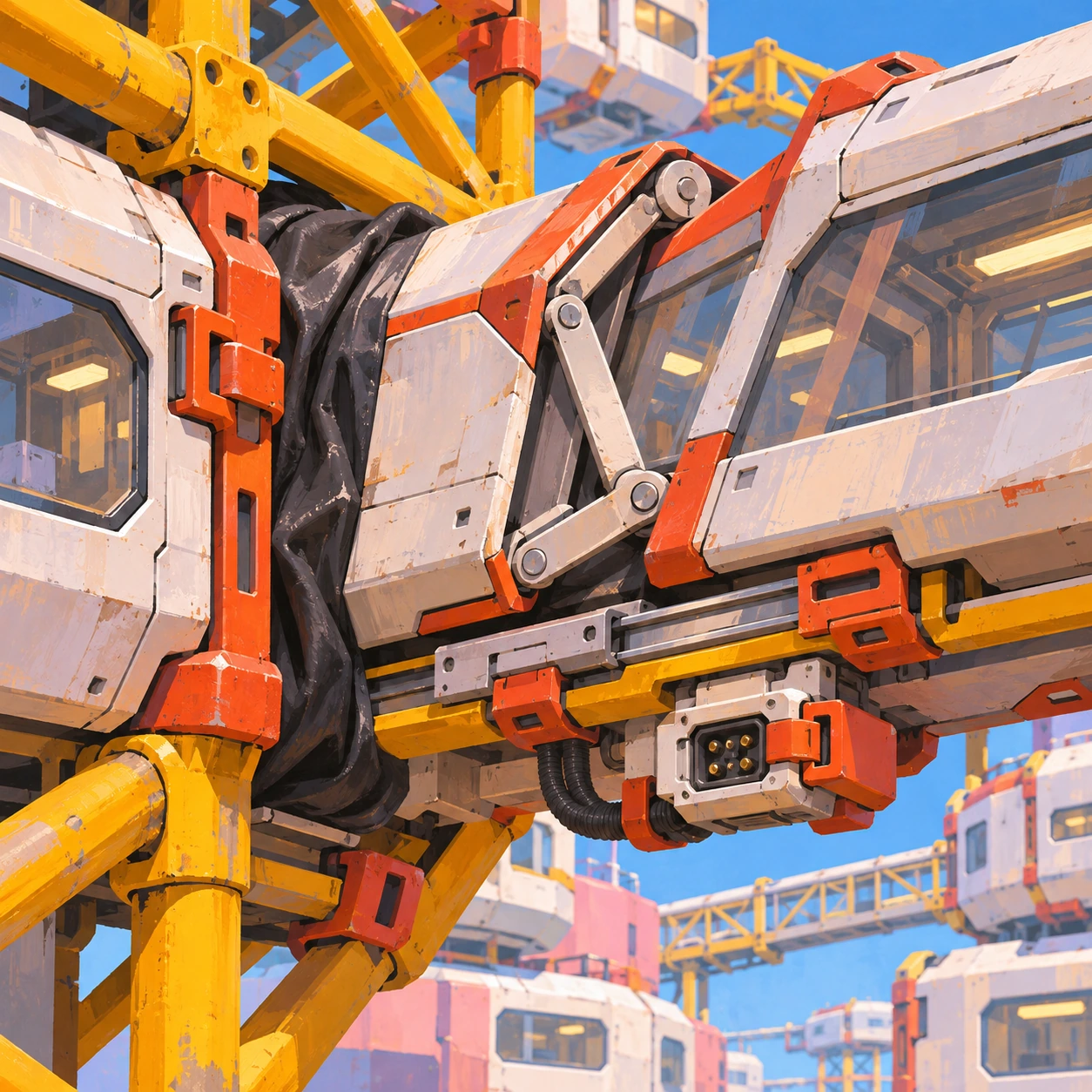
Clamps, hinges and flexible sleeves make repeated assembly visible.
Folding partitions and light seats support a temporary stop.