12Metabolism
A growing city of enduring cores and replaceable units.
Definition and context
Metabolism was a Japanese architectural movement that imagined cities through growth, change and replacement. Many proposals distinguish long-lived infrastructure from shorter-lived units. Separate unrealized visions from built projects: intended replaceability does not prove that units were actually renewed as planned.
People and ecology
Residents, maintenance crews and logistics workers share a core through different routes and schedules. Plants belong on lit, drained platforms or windowsills. Birds may use overhangs; fungi require suitable damp substrates. Machinery connects, transports and supplies rather than merely decorating the exterior.
Spaces and forms
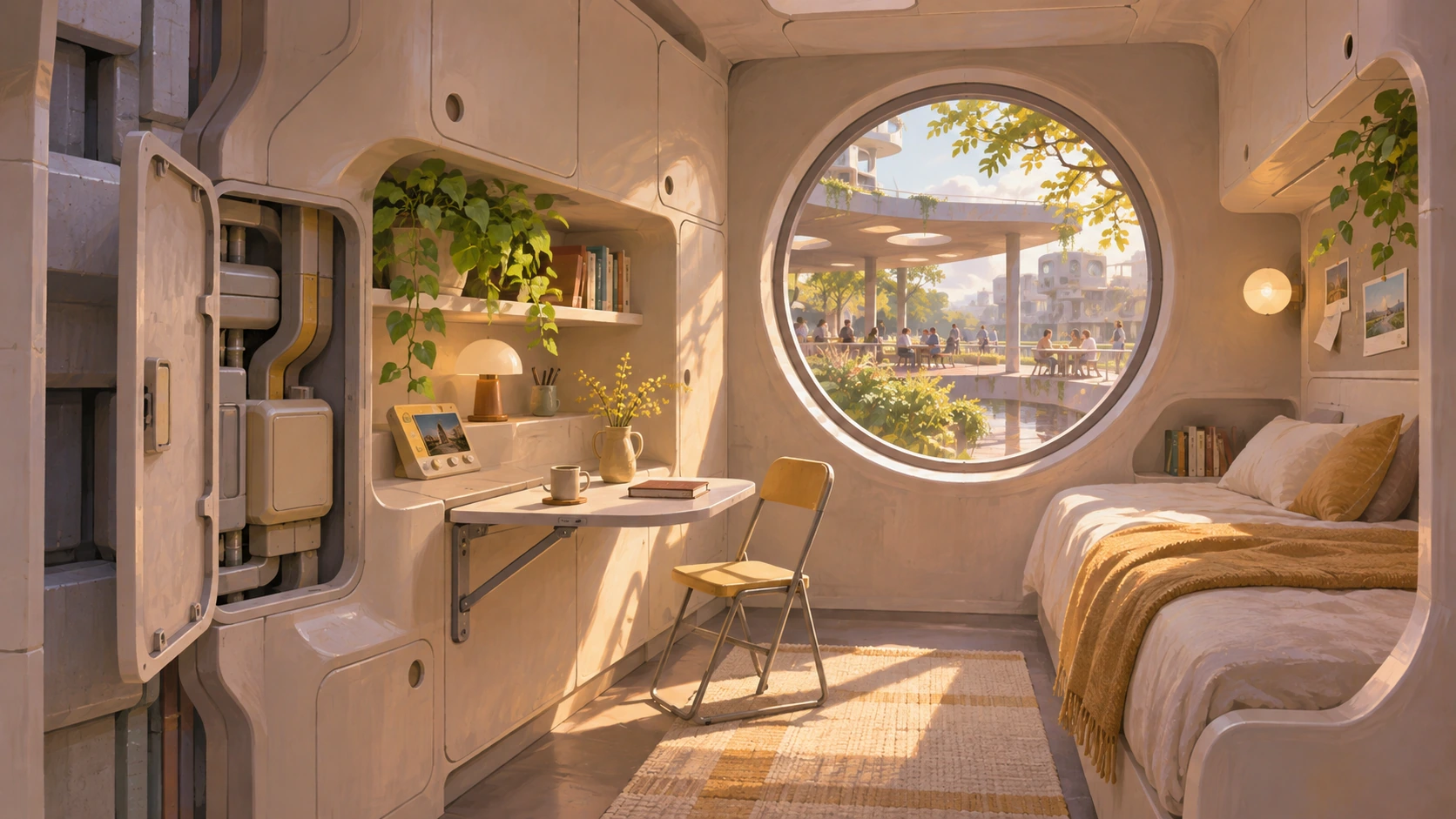
Tower cores, bridging trunks, capsules and repeated boxes form a hierarchy. Openings and connections follow a common module. Empty positions retain readable interfaces, while the core and living units have visibly different structural thicknesses.
Color and materials
A continuous heavy core can support metal, plastic and glass units from different periods. Relate colors to replacement cycles and uses. Preserve household differences nearby and a shared system at a distance.
Light, composition and scale
Look from one dwelling toward many related units, or through a vacant position toward the core. Projections, missing capsules and bridges create shadows. Explain one connection before multiplying it across the city.
Sound and graphics
Locate transport in the core, domestic sound in rooms and service noise in pipes. Nodes, unit numbers and sections can inform wayfinding, but a route from a dwelling to the shared structure must remain traceable.
Motifs and distinctions
The changing city distinguishes this movement from generic modular housing. Its history overlaps with megastructural thinking, but not every stacked box is Metabolism. The illustrated capsule replacement is a conceptual scene, not a record of a real building's renewal.
Ideas for game environments
Keep an empty but usable connection, juxtapose new and older skins, and attach different functions through one interface. Let players move from a small dwelling into the communal trunk. Maintenance and moving house can reveal an ongoing world.
Read scene descriptions
Main environment
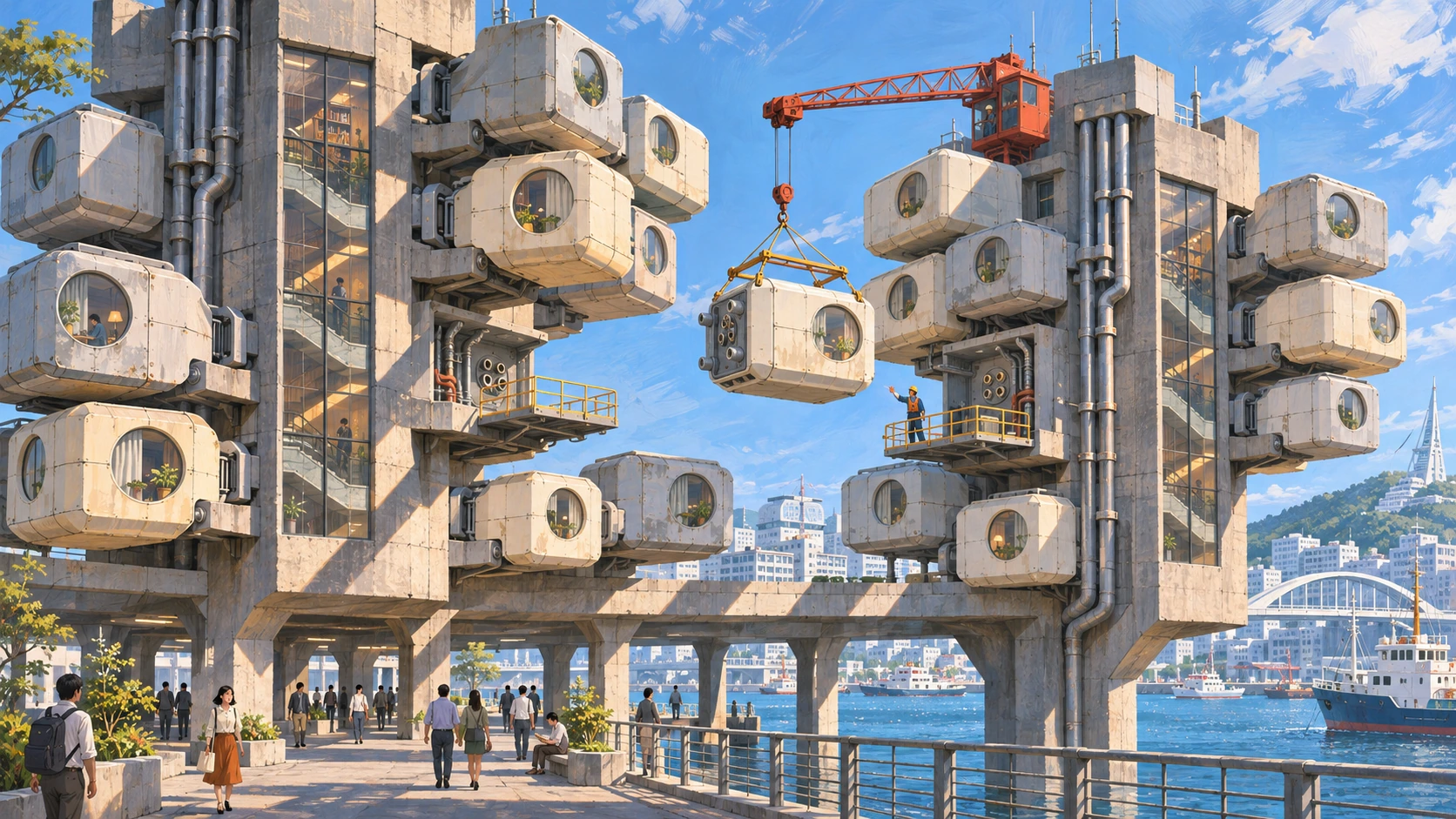
Durable concrete cores carry replaceable dwelling capsules in a harbor district. Round windows, older and newer shells, vacant connections and a working crane make change visible. Residents and public paths establish human scale beneath the shared structure.
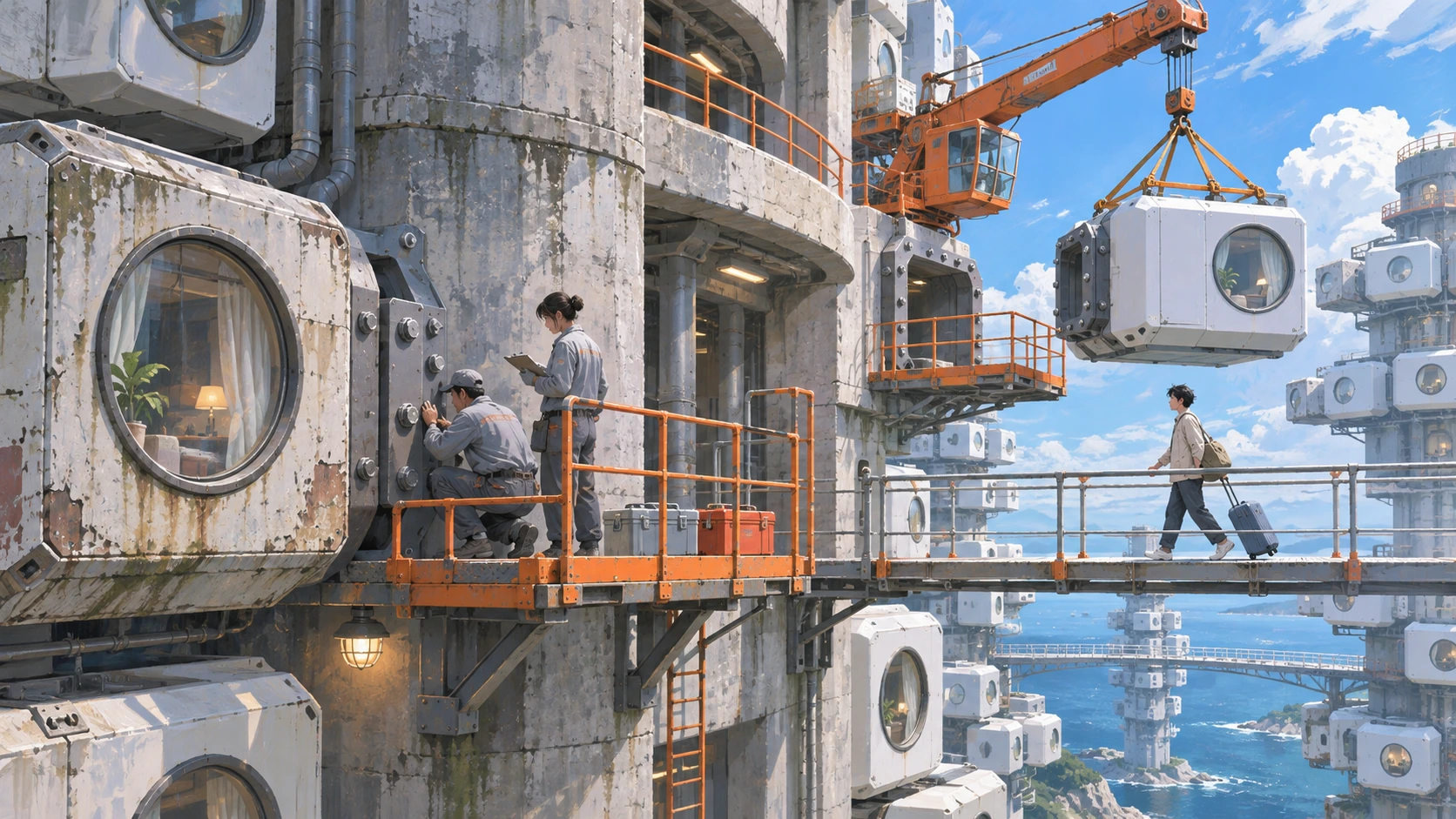
Crews inspect a connection while a resident moves along the shared trunk.
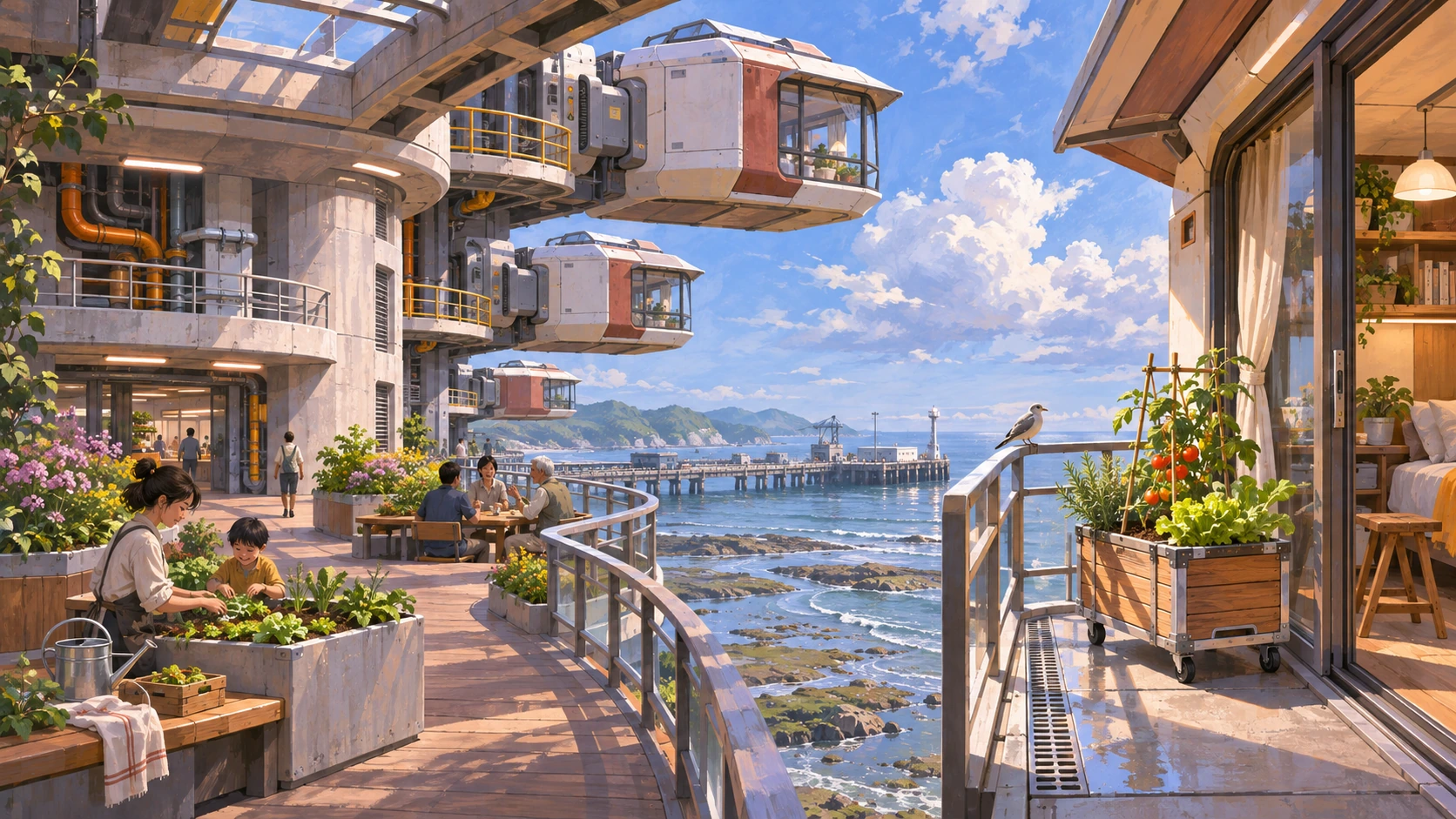
Balcony planters receive light and drainage while connections stay accessible.
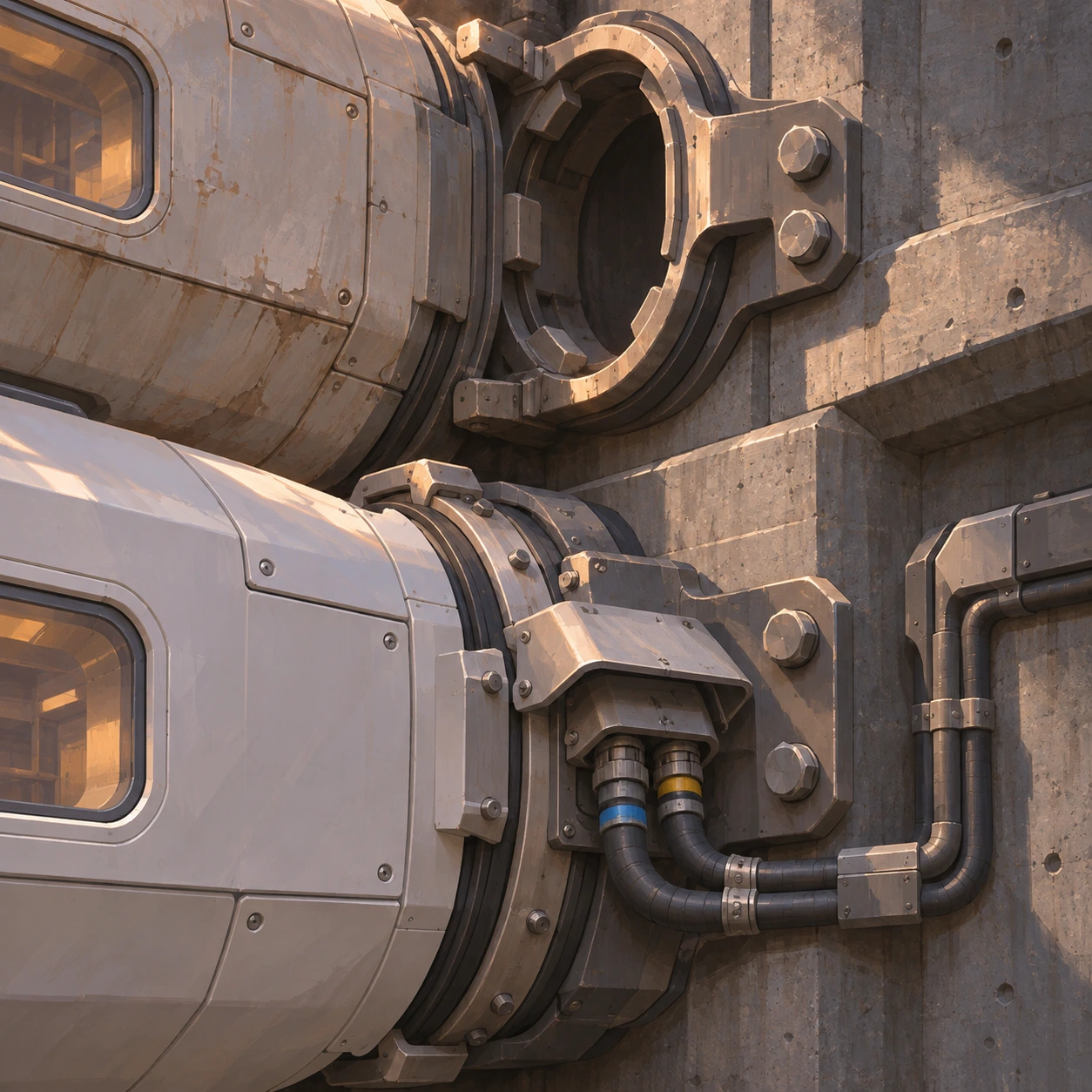
Removable panels, seals and service couplings meet the durable core.
A round window, folding desk and service panel organize a compact home.