74Dieselpunk
Build a weighty imagined machine age through heavy machinery driven by internal-combustion engines, industrial organization and alternate history.
Definition and context
Dieselpunk often borrows industrial, transport and mass-media vocabularies from the first half of the twentieth century to develop another machine-age path. Public images from Iron Harvest provide reference points for imagined heavy machinery in urban and rural settings, but war is not required in every dieselpunk scene. Period, power and narrative position still need definition rather than grouping all old metal equipment together.
People and ecology
Loading, maintenance, transport and cooperation show machinery affecting everyday life. Ordinary work clothes and scale comparisons can convey more than military poses everywhere. Plants, soil and animals also reveal relationships among machine footprints, noise and access instead of reducing the background to gray.
Spaces and forms
Build masses around engines, intake, exhaust, fuel, transmission and load-bearing frames before arranging shells and access panels. Heavy forms need hierarchy, balance and support rather than simply more rivets. Transport infrastructure, workshops and urban edges can share industrial scale while keeping different daily rhythms.
Color and materials
Riveted plate, cast housings, rubber hoses, paint and concrete differ in thickness, dents and maintenance traces. Oil marks need local causes; uniform black dirt erases structure. Contrasting large housings with small controls makes the human scale of operation clearer.
Light, composition and scale
Low-saturation machines and a few warm maintenance lights establish hierarchy; daylight, snow or sheds can all reveal mass. Exhaust and dust may indicate operation without obscuring the sky. Readable silhouettes, ground contact and routes prevent smoke from substituting for design.
Sound and graphics
Interactions might involve preparation, loading rhythms, trade-offs among fuel and maintenance, or changes in one machine's uses. Feedback can convey inertia and burden without relying only on enormous explosions. Ownership, operators and consequences can enter the narrative too.
Motifs and distinctions
Compared with steampunk, internal-combustion engines, heavier shells and larger industrial organization often become central, rather than merely changing colors. Dieselpunk can borrow period forms from Art Deco and Streamline Moderne while placing greater emphasis on imagined technology and alternate-history storytelling. Actual historical machines remain distinct from invented revisions.
Ideas for game environments
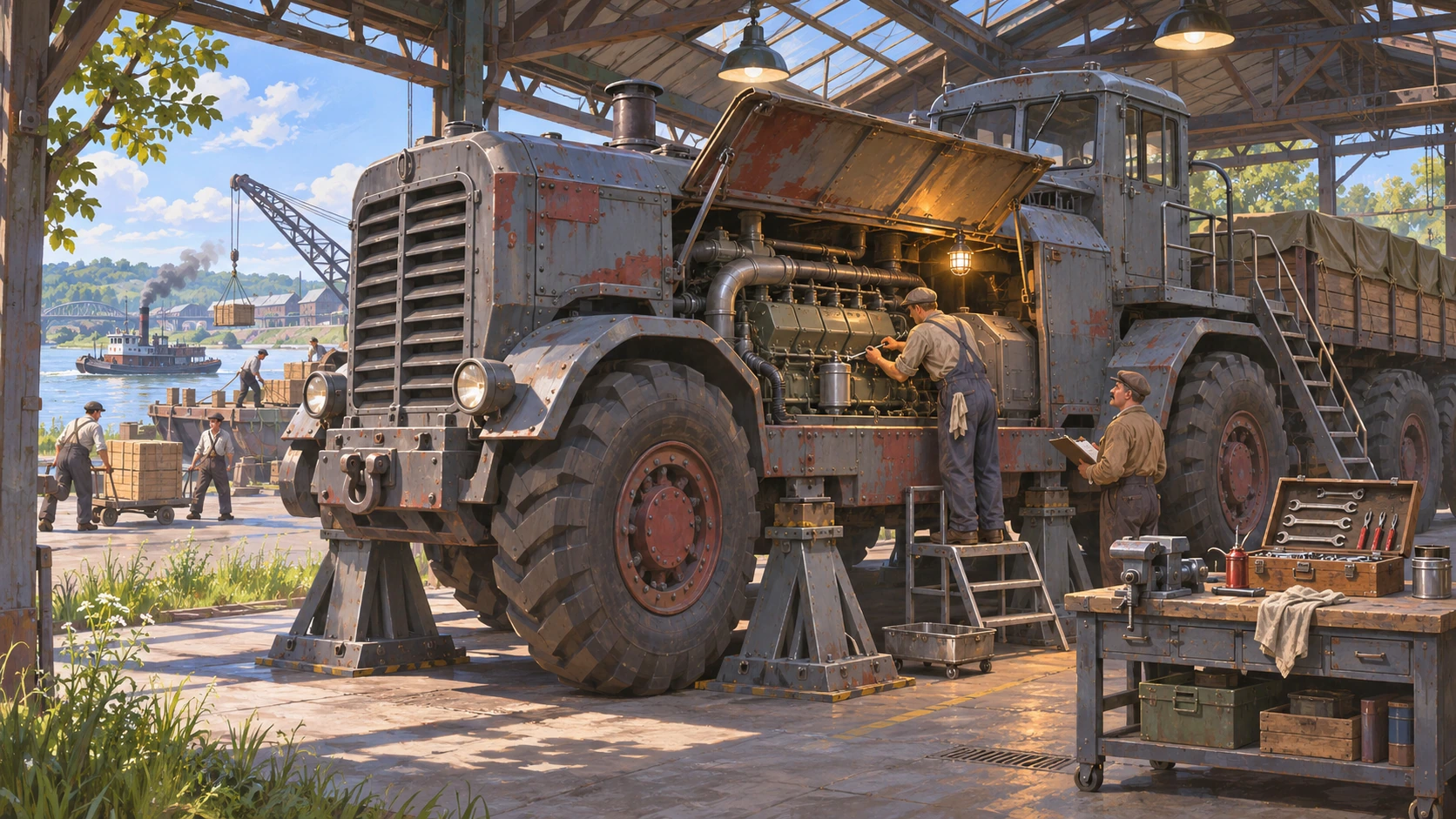
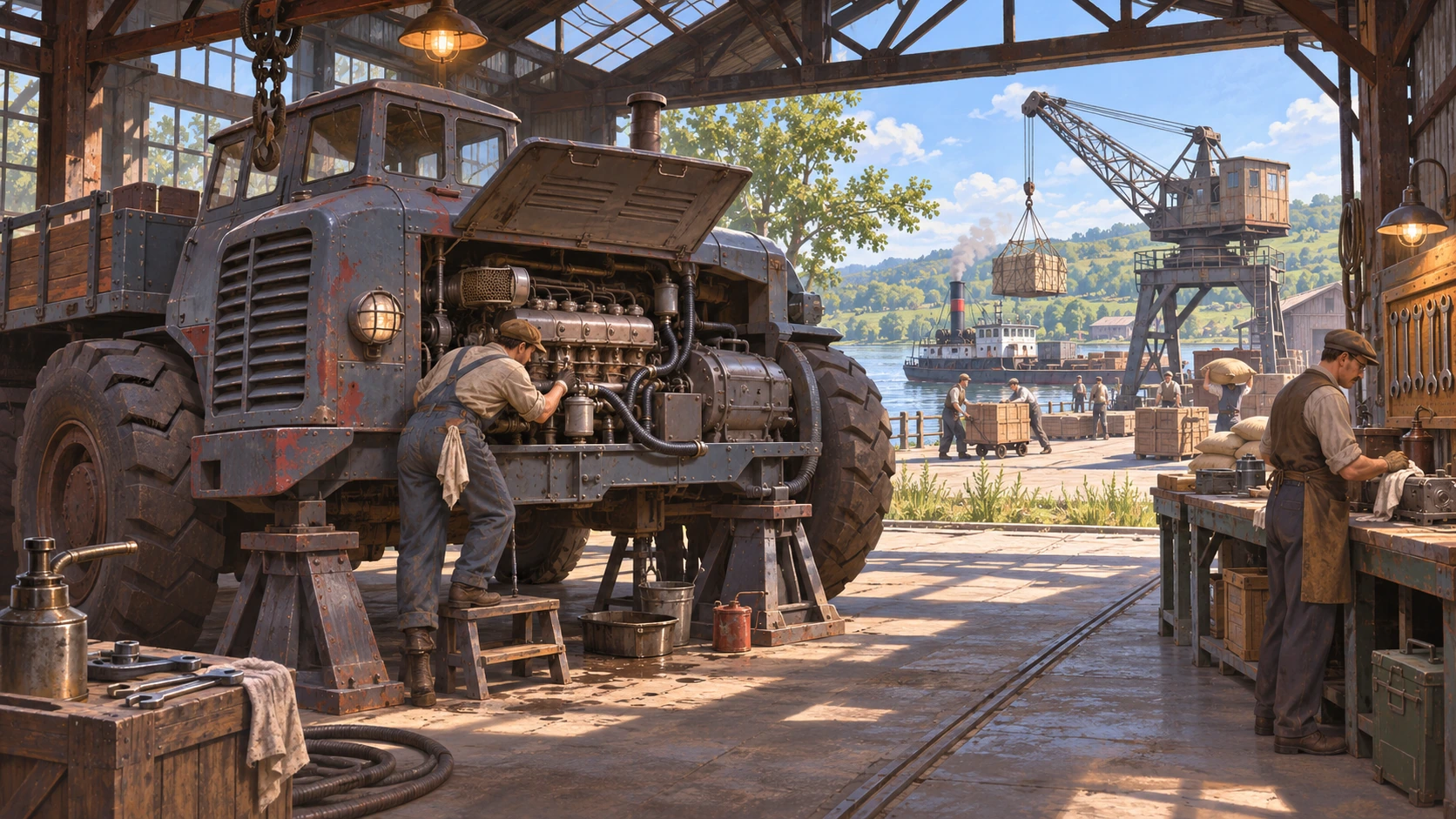
Design a river-freight machine repair shed. A heavy-duty civilian cargo-handling machine rests on thick steel supports, with an engine housing, intake grille, short exhaust and access panels clearly separated. Ordinary mechanics and loaders cooperate among worn paint, concrete ground and riverside plants, returning a heavy machine to daily maintenance and labor.
Read scene descriptions
Main environment
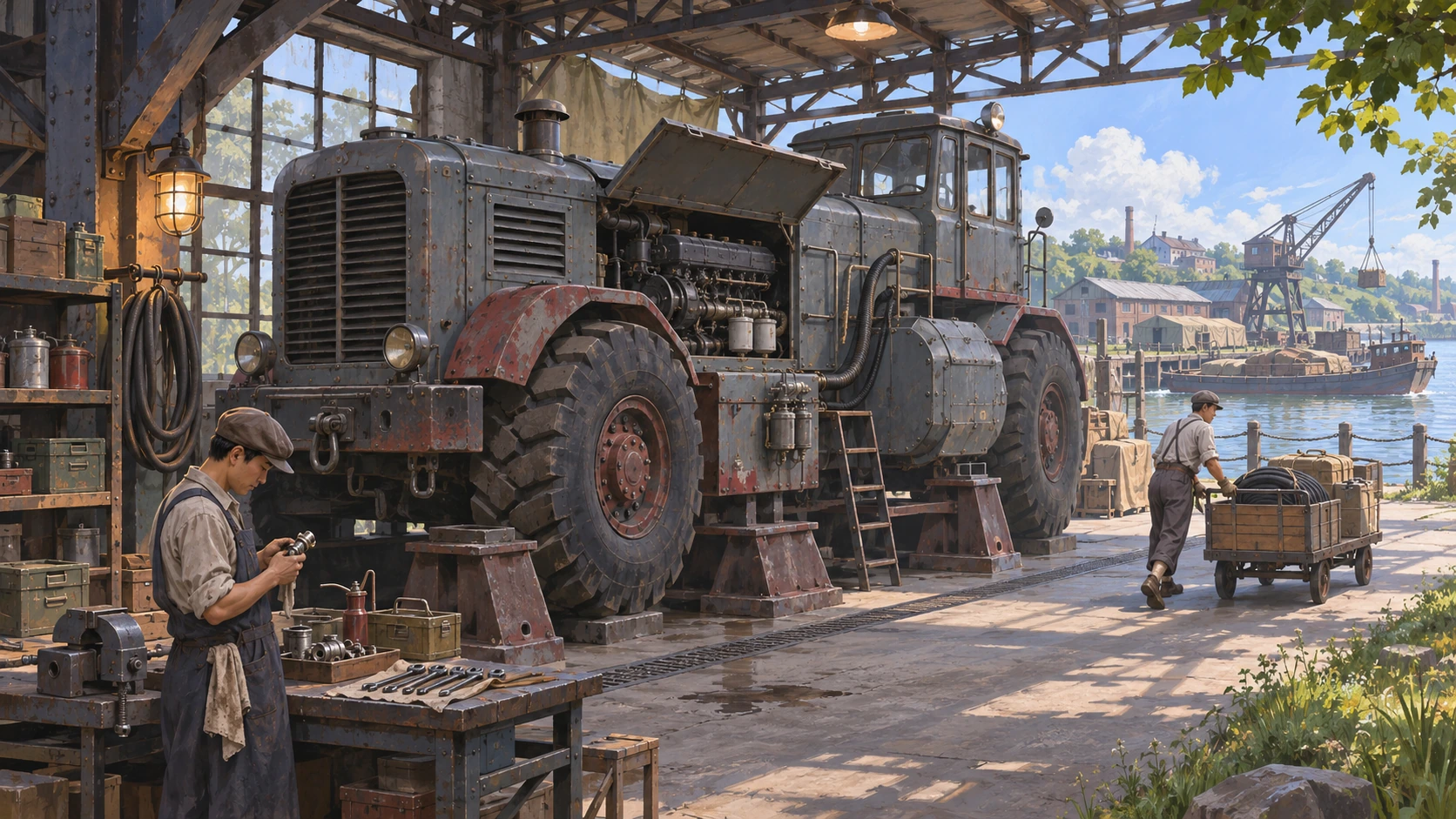
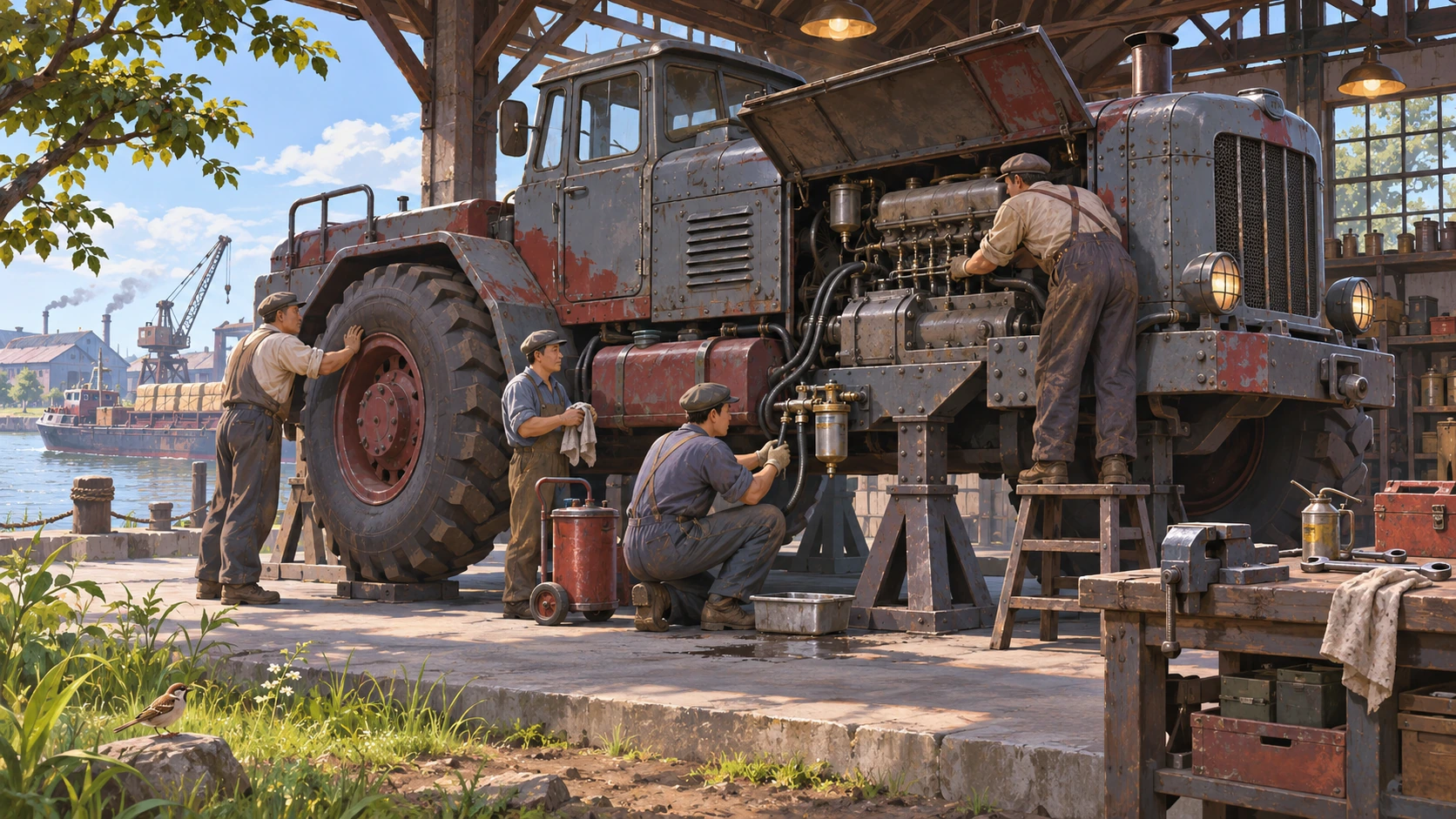
In an original river-freight repair shed, thick steel supports hold a heavy-duty civilian cargo-handling machine with distinct engine housing, intake grille, short exhaust and access panels. Ordinary mechanics and loaders cooperate among worn paint, rubber hoses, concrete and riverside plants, giving time and everyday scale to the machine.
Ordinary mechanics and loaders connect heavy machinery with human working scale.
Riverside plants meet an industrial boundary, making machine footprints and access legible.
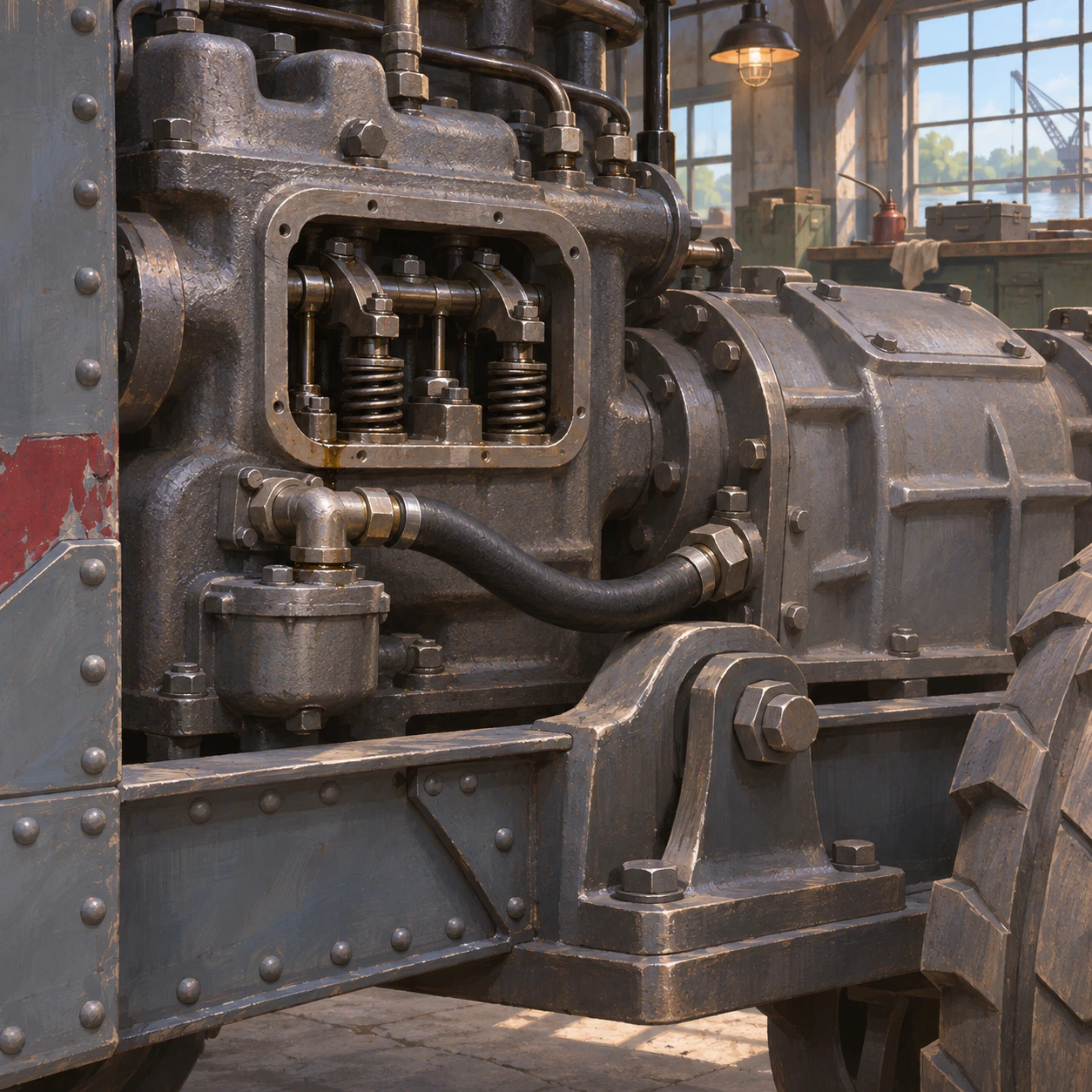
Riveted plate, rubber hoses and local oil marks distinguish materials and maintenance.
An engine, intake, exhaust and load-bearing frame organize heavy masses through function.