73Steampunk
Build an alternative modernity through steam-age machinery, power, maintenance and everyday use.
Definition and context
Steampunk borrows machinery, craft and social imaginings from the steam age to develop alternative technological paths. Attaching gears to an object is not sufficient, nor is the genre historical reconstruction. Mechanical, automaton and transport imagery from Machinarium and Syberia offers adjacent comparisons; not every pictured technology uses steam, so clockwork and steam circuits remain distinct.
People and ecology
People may operate, ride, repair or own equipment, showing its significance through labor, waiting and use. Not every costume needs goggles and a top hat. Real plants and animals can keep separate habitats, clarifying boundaries around heat, ventilation and moving machinery.
Spaces and forms
Determine where power originates, how it connects and what it serves before choosing boilers, pipes, pistons, transmissions and frames. Principal relationships should be traceable rather than making every gear spin unsupported. Buildings, transport and small devices can share a mechanical vocabulary at different scales.
Color and materials
Steel, brass, wood, leather, glass and insulation offer tactile variety through different functions. Wear can gather around grips, friction, access and condensation instead of coating everything uniformly in rust. Cross-sections, thickness and connections can distinguish decorative pieces from load-bearing members.
Light, composition and scale
Warm work lights and cool window daylight can distinguish metal reflections, glass and steam. A little visible steam can suggest heat and operation, while white fog everywhere hides space. Machine silhouettes, controls and human routes should read before small shiny components.
Sound and graphics
Interactions can connect rotation, pressure and displacement through clear feedback, or let maintenance alter operating rhythm and access. Machines can be fanciful while relationships remain understandable. Including labor and resources creates a richer world than decorative spinning wheels alone.
Motifs and distinctions
Compared with dieselpunk, the emphasis is on steam and earlier industrial machinery, with different power relationships and materials. Movement and connections are often more directly visible than in cassette futurism. Distinguish imagined machines from actual industrial heritage, whose dates, purposes and maintenance conditions need separate evidence.
Ideas for game environments
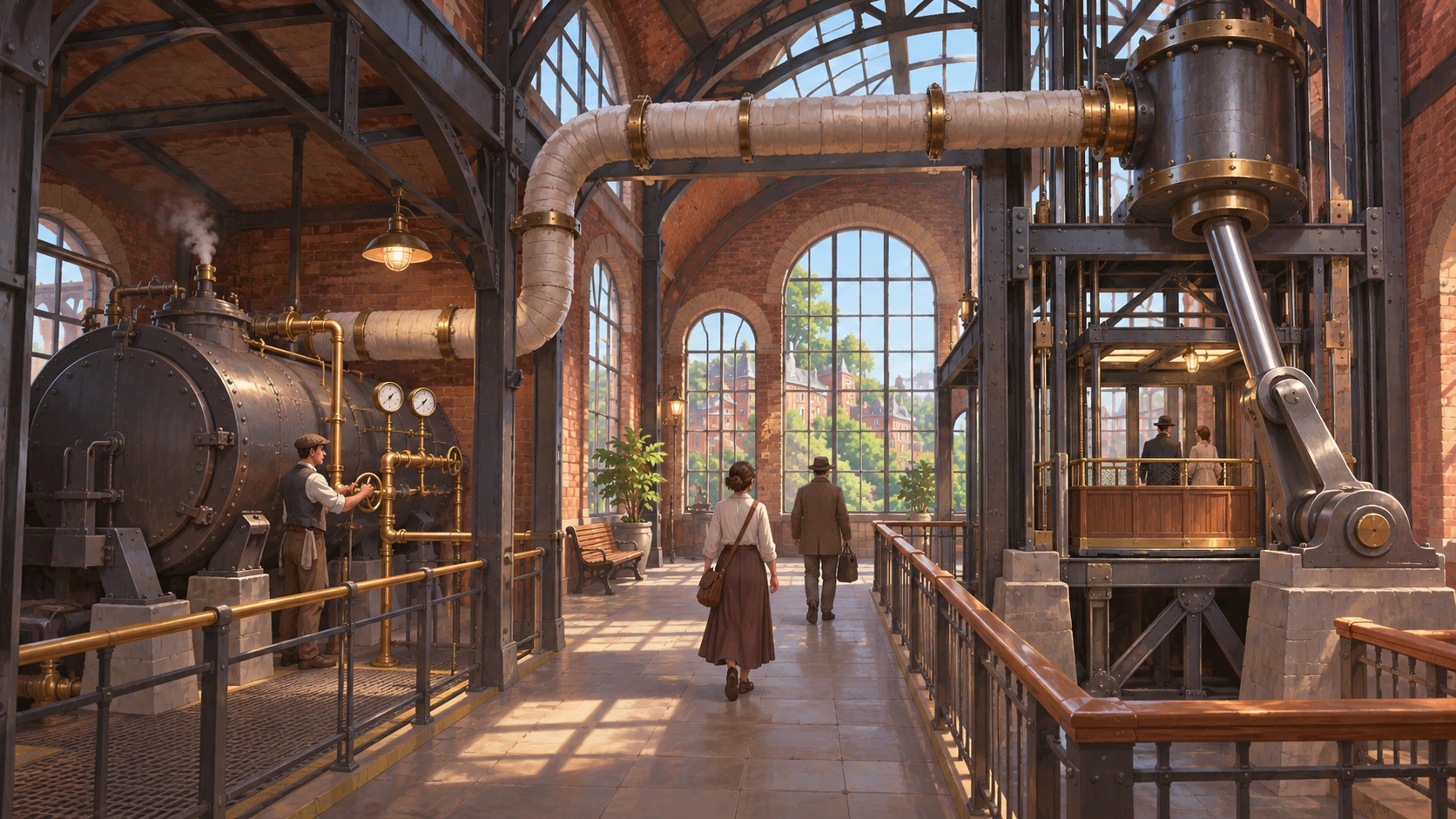
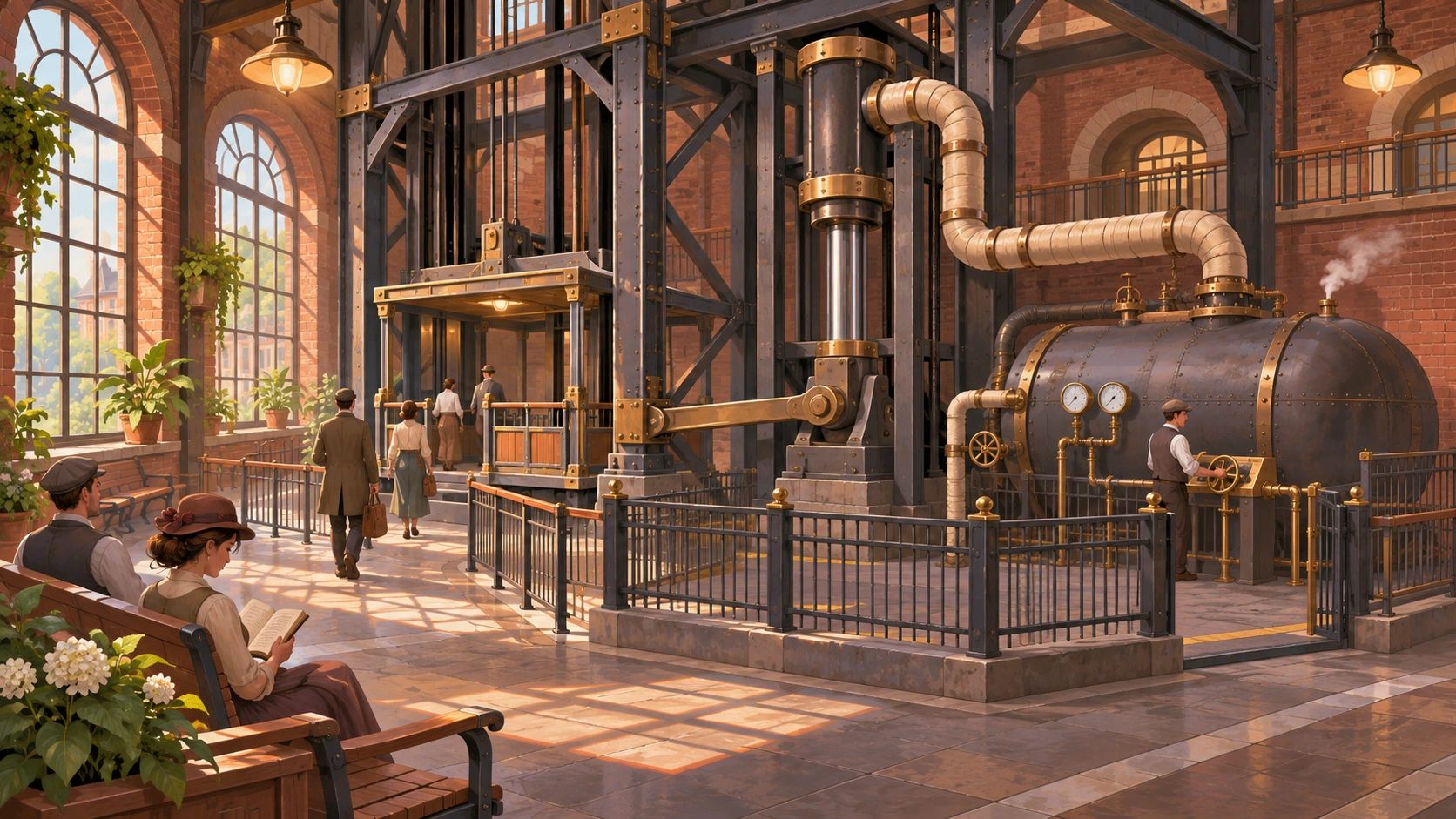
Design a community steam-lift station. An enclosed boiler, insulated pipes, piston and lifting platform occupy readable zones in a brick hall; ordinary operators and passengers retain separate routes, with brass valve fittings as selective accents. Window plants stay away from heat, connecting mechanical fantasy with power, maintenance and public use.
Read scene descriptions
Main environment
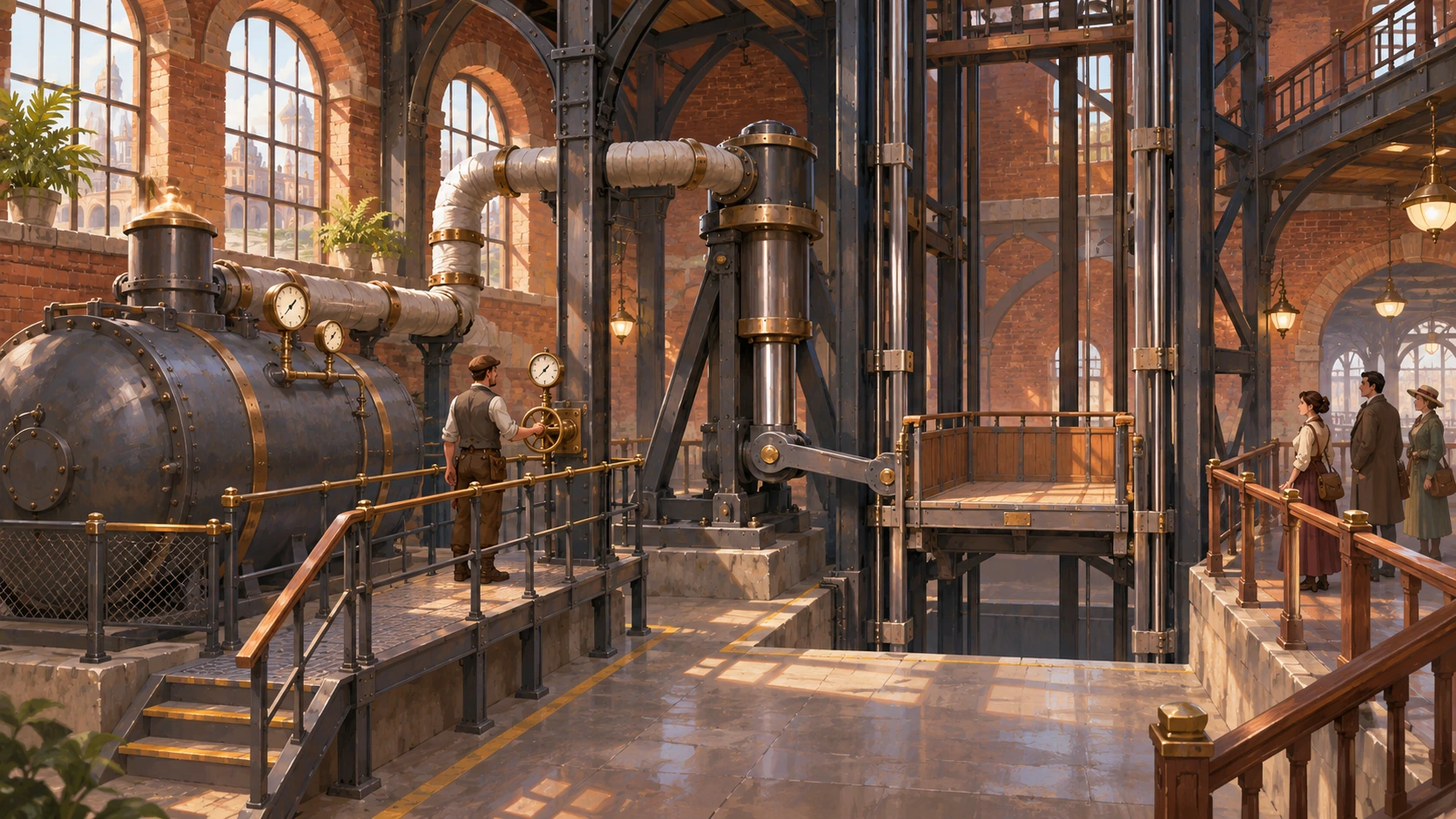
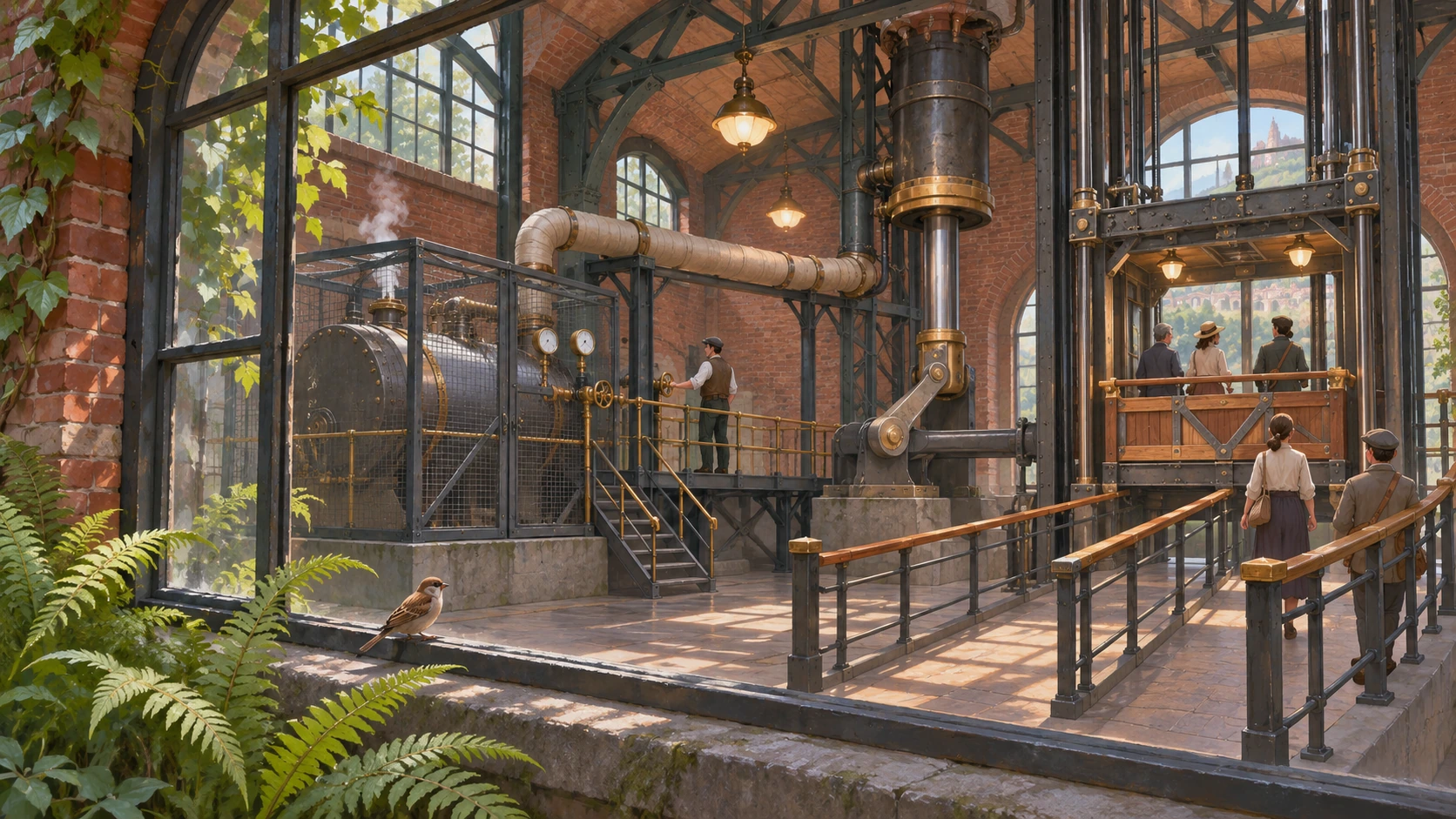
An original community steam-lift station places an enclosed boiler, insulated pipes, piston and platform in readable zones within a brick hall. Ordinary operators and passengers retain separate routes among selective brass fittings, wooden rails and real window plants, organizing mechanical imagination around public use.
Operators and passengers follow separate routes, revealing machinery through everyday use.
Real plants and a small bird outside the heated zone clarify boundaries between machinery and habitat.
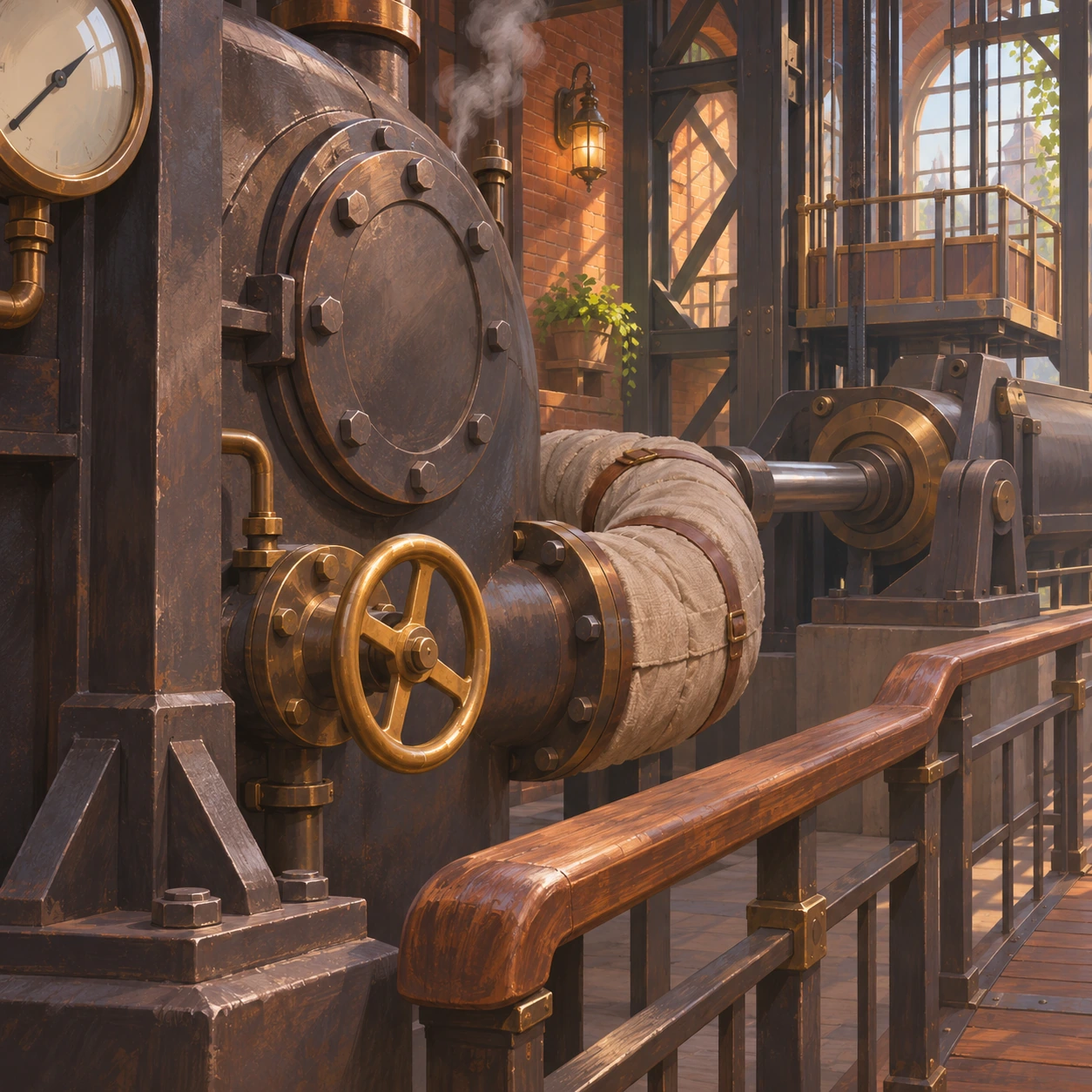
Brass, steel, wood and insulation have distinct functions, with wear concentrated at contacts.
A boiler, pipe circuit and lifting platform form traceable power relationships.