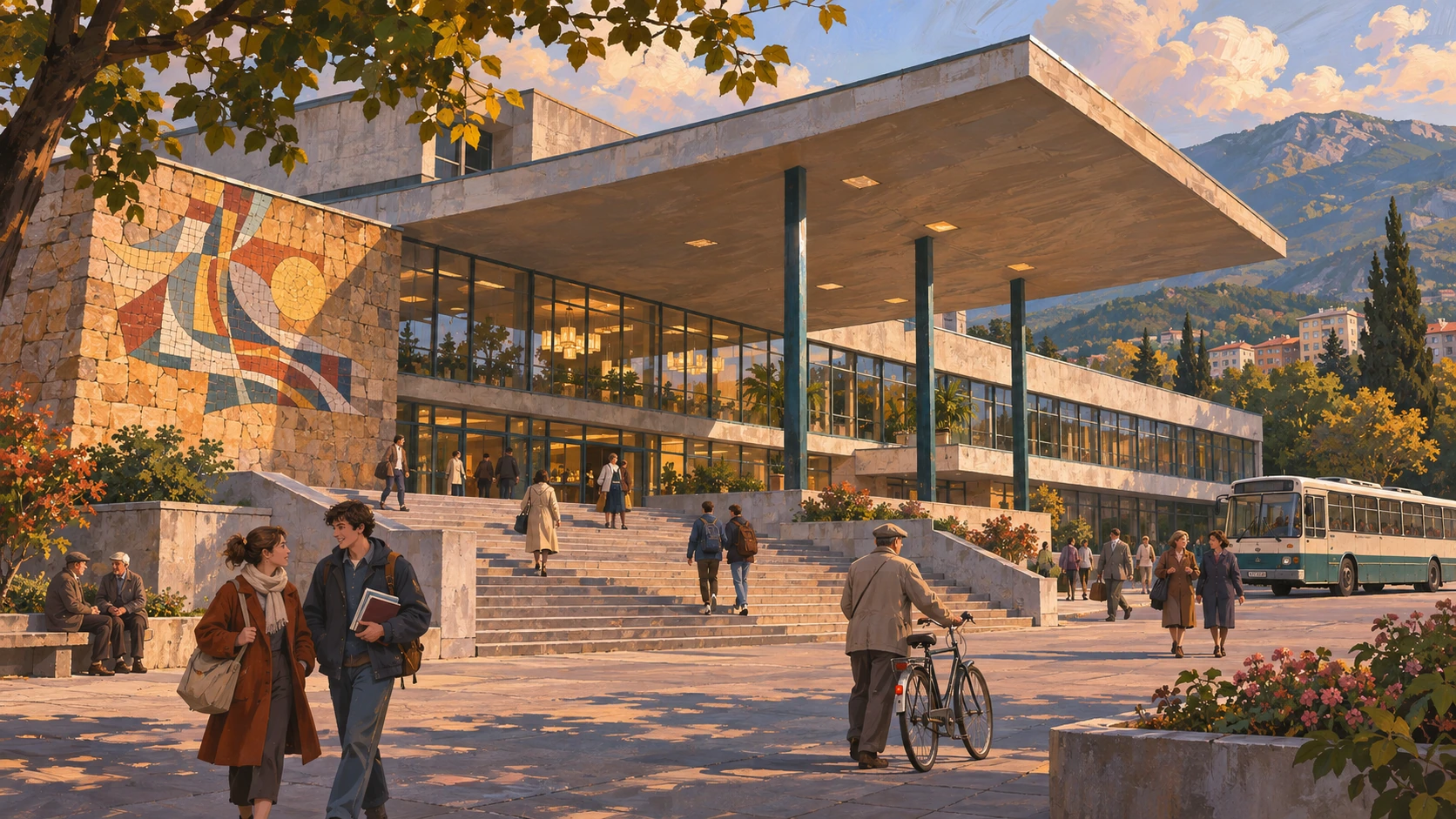
16Soviet and Socialist Modernism
Public functions meet modern structure and local materials.
Definition and context
This broad category concerns modern architectural practices under particular socialist historical conditions, including housing, culture, sport, transport and recreation. Soviet Modernism is one part, not a substitute for every socialist region. Study places, periods, architects and users separately.
People and ecology
Students, residents, athletes, staff and visitors explain a building's purpose rather than merely supplying scale. Plants, animals, snow, corrosion and fungi follow local climate. Transit, cinema equipment, kitchens and sports facilities belong to everyday systems, not automatically to military machinery.
Spaces and forms
Housing slabs, cultural centers, sanatoria, sports halls and interchanges have different masses. Large cantilevers, repeated windows, public steps and local crafts can coexist. Establish entry, gathering, work and rest before choosing a silhouette.
Color and materials
Local stone, brick, mosaics, colored glass and metal accompany concrete. Dry sun and cold damp produce different surface histories. Added equipment and repaired frames show time without turning an occupied facility into a ruin.
Light, composition and scale
Place a large public entrance beside small daily activities. Steps, bus stops and benches maintain human scale. Reading, performance and sport require different interior lighting rather than one gloomy treatment.
Sound and graphics
Announcements, sport, assemblies, transport and rest have distinct soundscapes. Language, murals and graphics depend on the region; Cyrillic does not stand for every socialist society. The original illustrations use abstract, unlettered decoration rather than invented historical propaganda.
Motifs and distinctions
The category overlaps with Brutalism but is not identical to it, and differs from early Constructivism and Stalinist classicism. Avoid reducing it to a grey Cold War base or abandoned institution. The illustrated cultural center is fictional, not a site record.
Ideas for game environments
Use the meeting of local stone and modern frames, give mosaics and reliefs a public setting, and show later equipment as a layer of continued use. Let players read a route from the bus stop through a square, lobby and activity room.
Read scene descriptions
Main environment
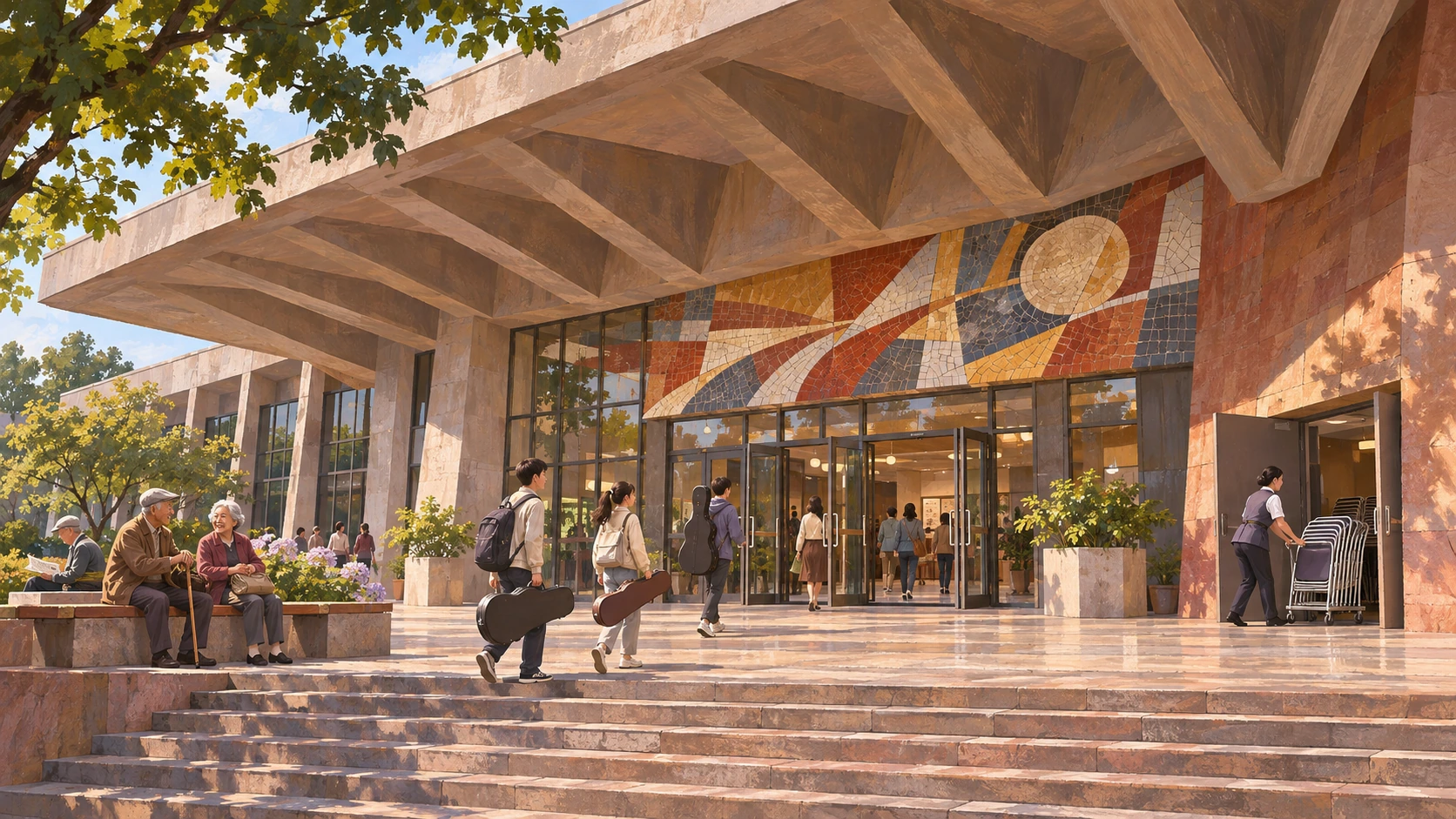
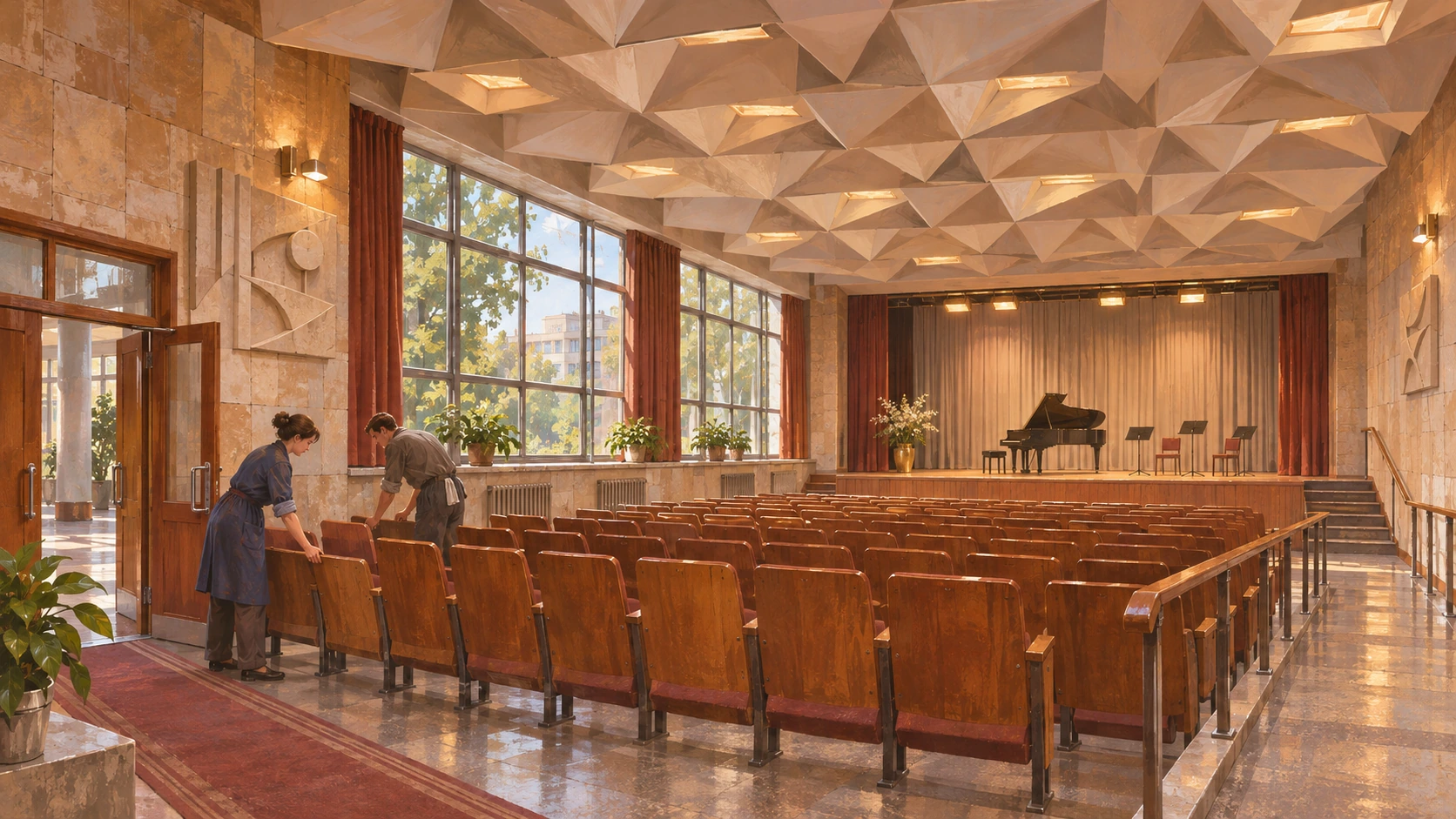
An occupied postwar cultural center brings a broad cantilever, continuous glazing, public steps and local stone around its entrance. Abstract ceramic mosaics, residents, students and transit make daily life visible in warm low sunlight.
Students, older visitors and staff reveal different public uses.
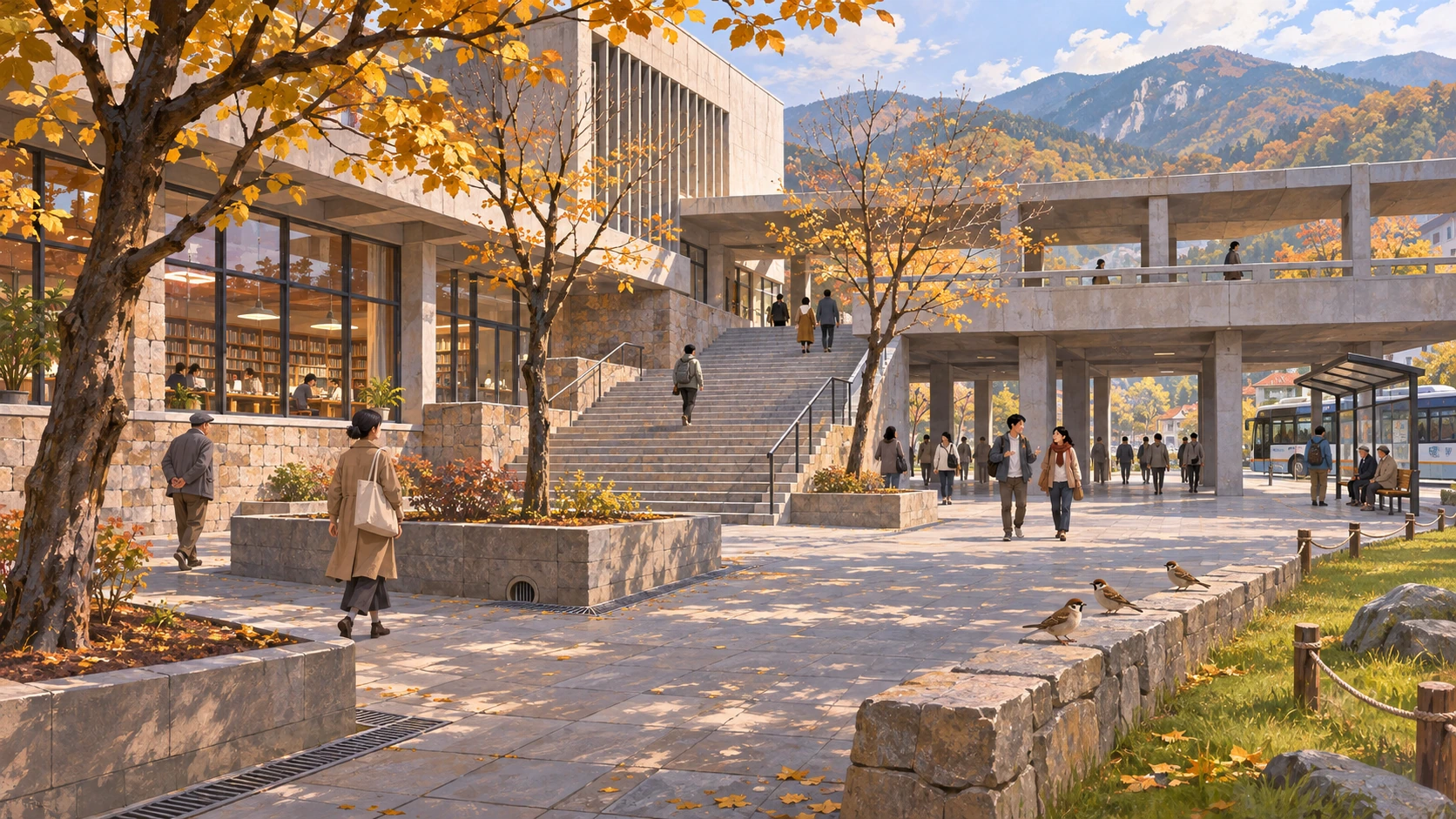
Local climate shapes planting, season and maintained boundaries.
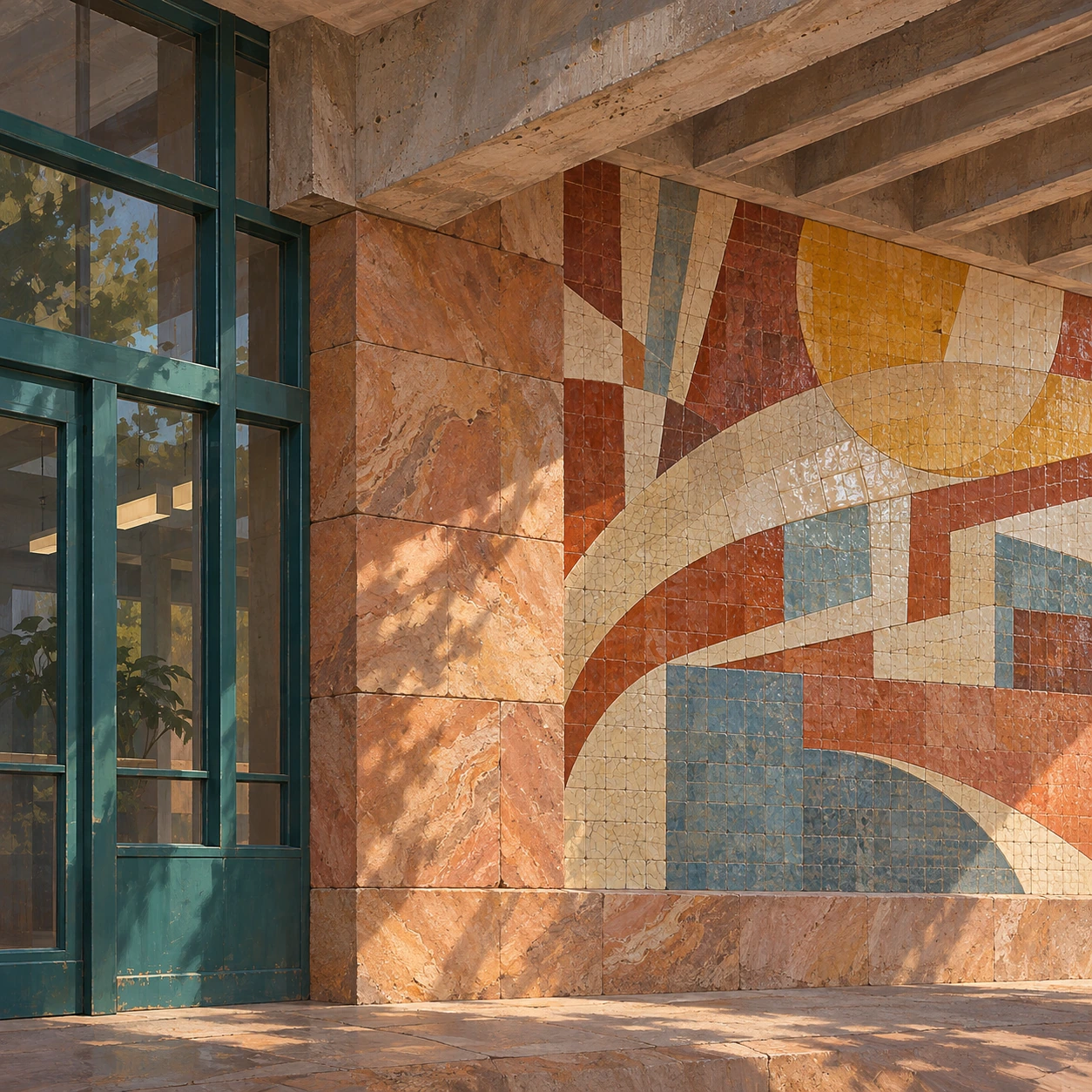
Local stone, ceramic mosaics, concrete and metal retain distinct textures.
An acoustic ceiling, wood seating and side windows form an active hall.