
04Dreamcore
Open space, remembered familiarity and a quiet shift of scale.
Definition and context
Dreamcore evokes dreamlike recognition through familiar fragments, discontinuity and unusual scale. It need not be frightening, yellow-tinted or blurred.
People and ecology
A small familiar house or a distant figure can anchor memory. Keep ecological details selective and avoid giving every object a symbolic or threatening role.
Spaces and forms
Use a low horizon, broad grassy slope and unusually small domestic forms. Distances can feel longer than expected while individual objects remain recognizable.
Color and materials
Choose calm sky blue, grass green and softened domestic colors. Preserve designed edges and material differences instead of applying a soft-focus filter.
Light, composition and scale
Stable gentle daylight and abundant negative space establish quietness. Scale and spacing create the dream rather than arbitrary distortion.
Sound and graphics
Distant wind, a remembered domestic sound or long intervals of silence can suggest memory. Graphics should remain sparse and unforced.
Motifs and distinctions
The motif is recognition without a complete memory. Distinguish calm dream spaces from horror corridors and the yellow Backrooms stereotype.
Ideas for game environments
Let a tiny destination remain visible across a large empty approach. Use consistent light and restrained sound to sustain a familiar but unreachable feeling.

Read scene descriptions
Main environment
An unusually low horizon leaves a vast blue sky above a gentle green hill. A very small cream house with a red roof anchors the open landscape. Stable soft daylight, simplified shapes and generous empty space suggest a calm, partly remembered dream.
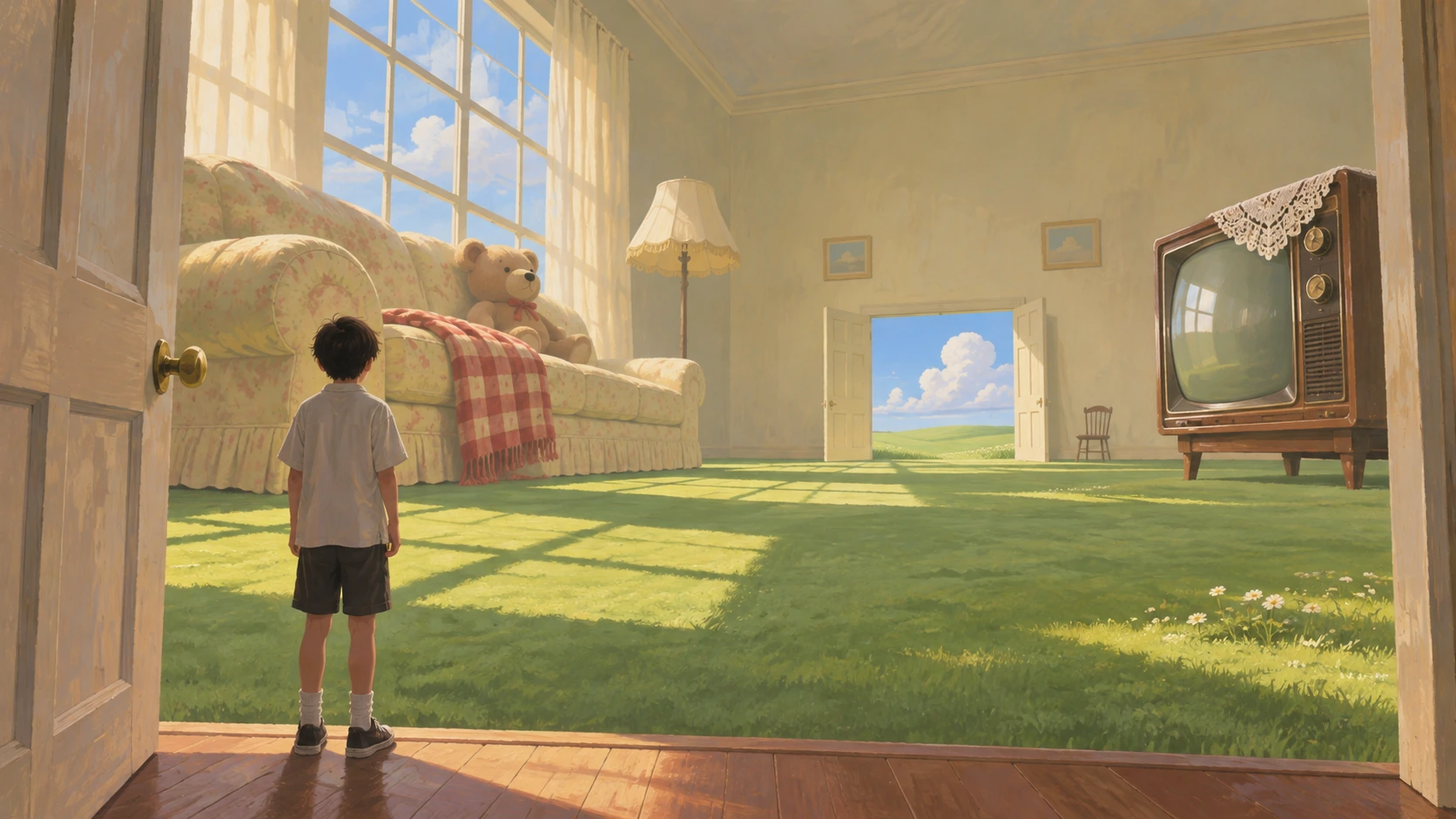
An ordinarily dressed figure stands at the entrance to an unusually wide living room.
Plastic daisies and real flowers share a lawn; small mushrooms circle an old pipe.
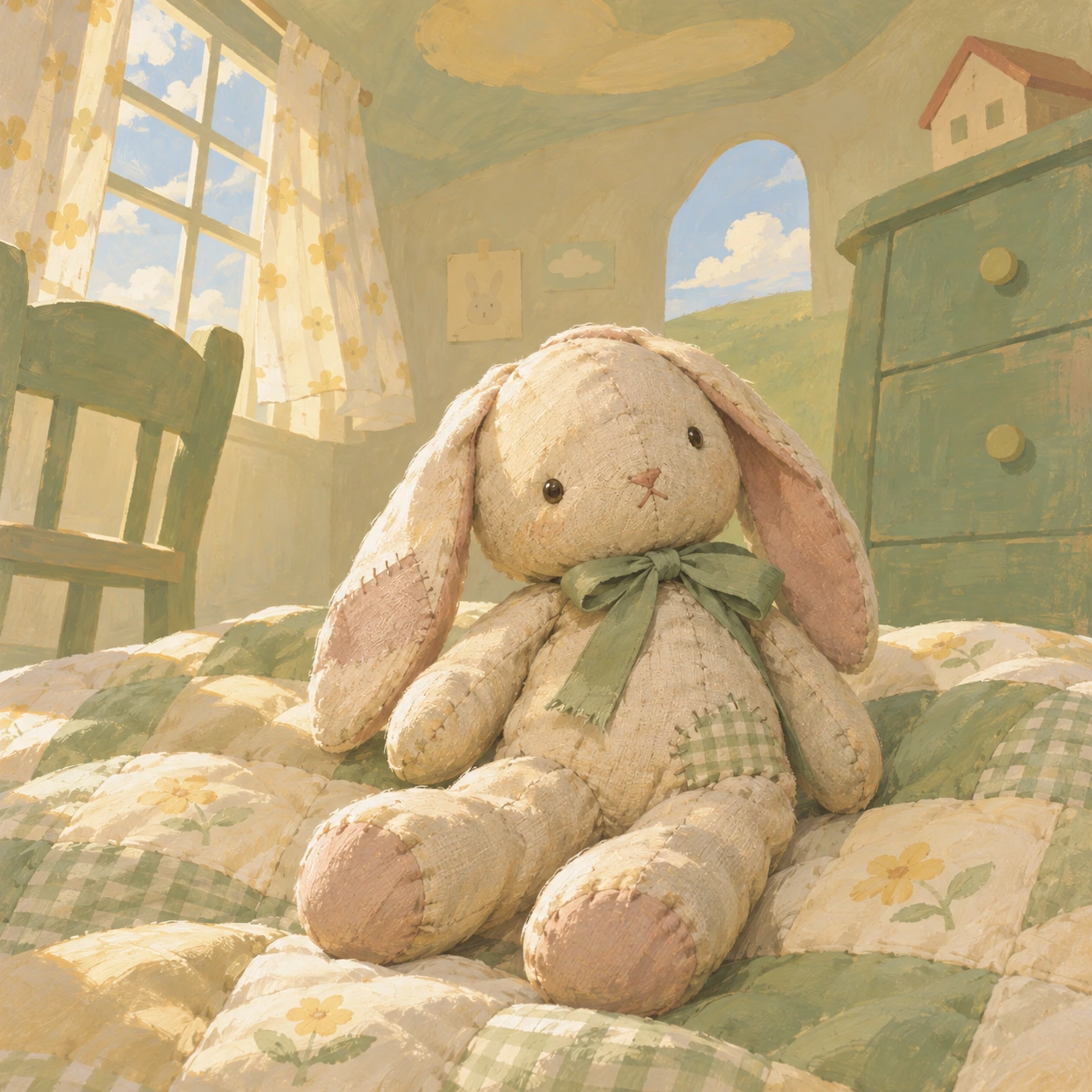
An old fabric rabbit rests clearly in view on a quilt.
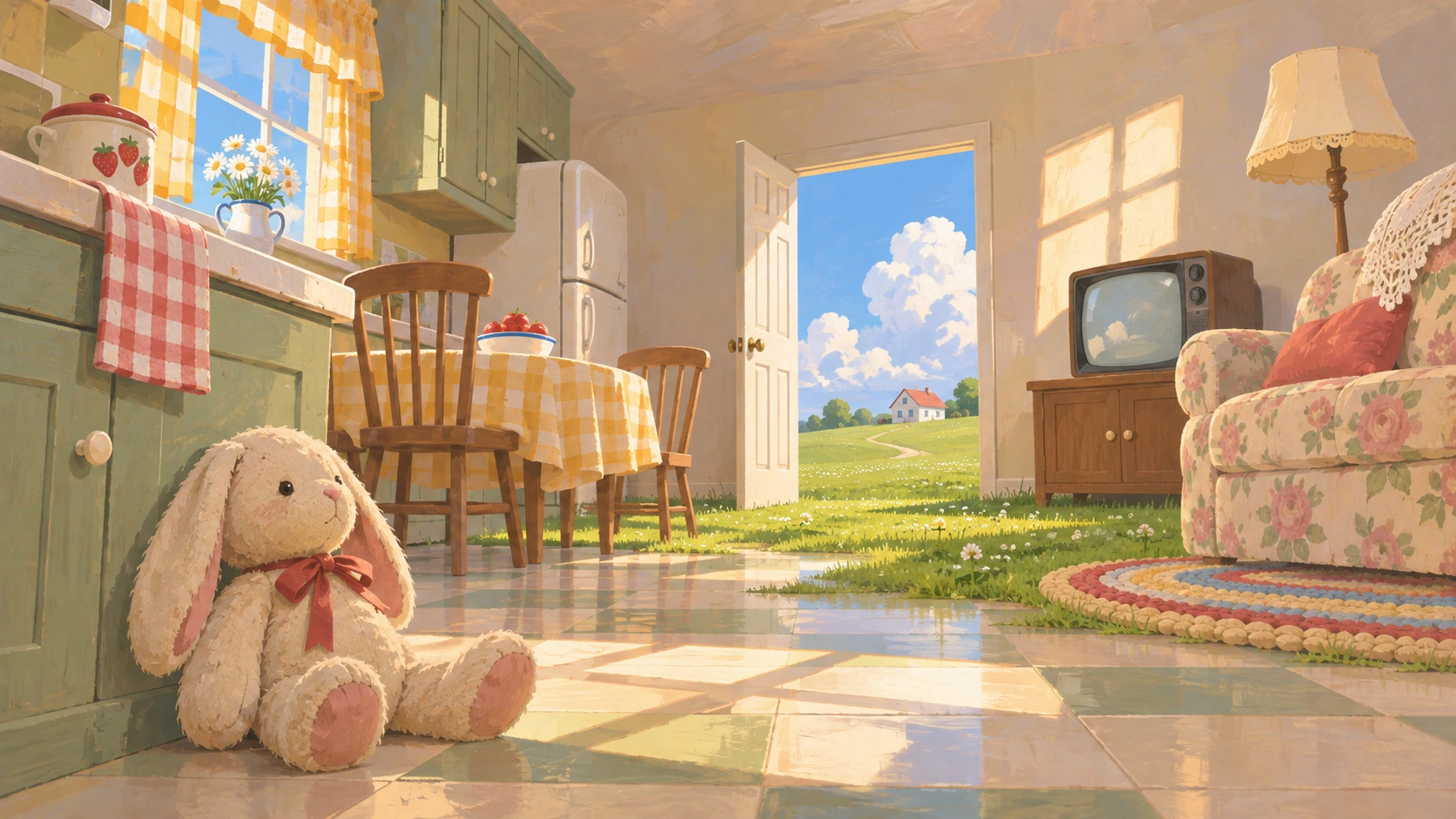
A kitchen and living room seen from a child’s height.