62Utopian Scholastic
Arrange nature, artifacts and images of knowledge into an explorable learning world.
Definition and context
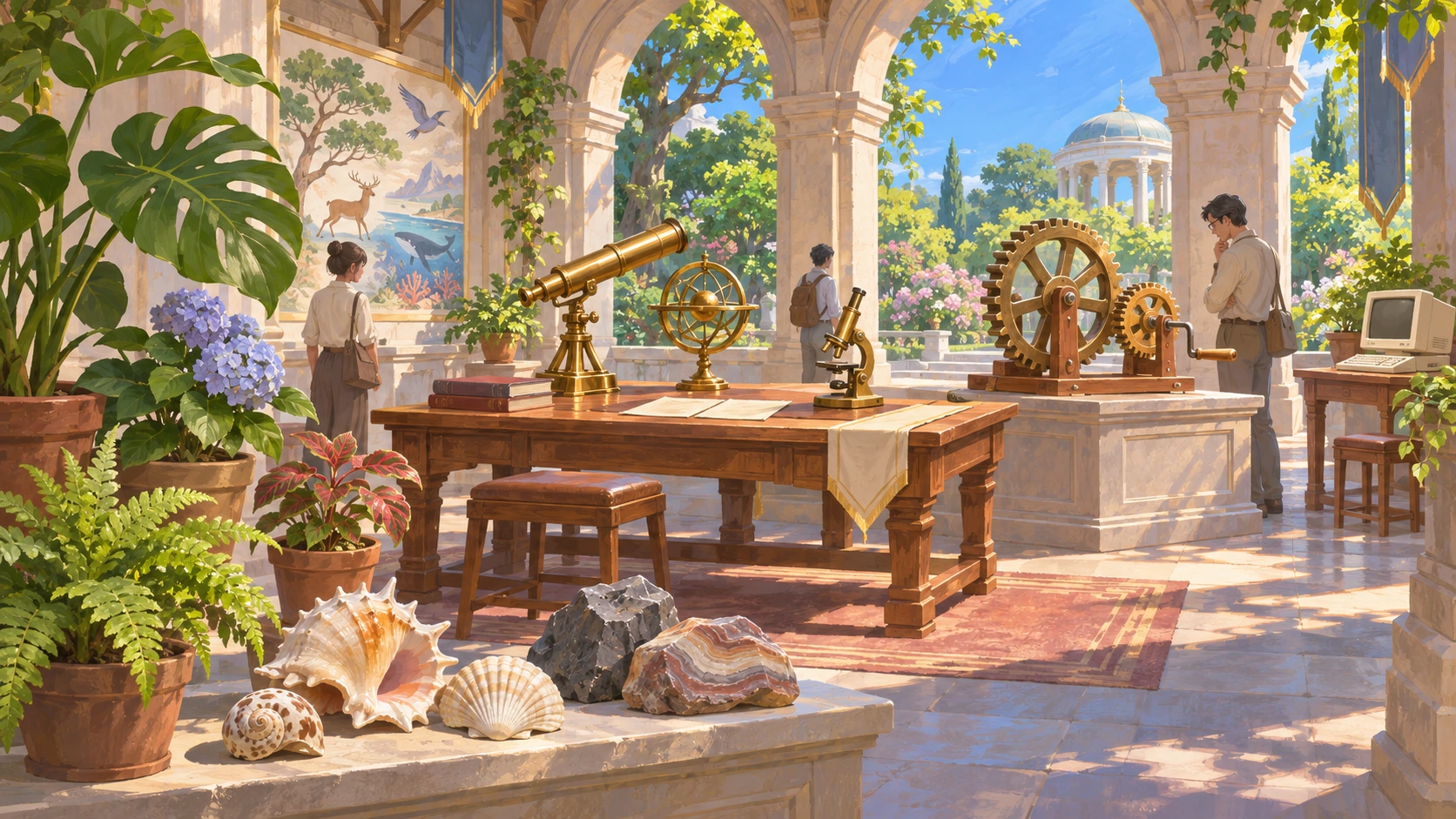
Utopian Scholastic is a research label used retrospectively for some educational publishing, science-oriented commercial imagery and early multimedia. CARI's examples juxtapose natural specimens, ancient artifacts, books and computers. It is a visual-culture label rather than a formal educational theory.
People and ecology
Give people actions such as observing, comparing, reading or assembling rather than merely placing them before a heap of symbols. Ordinary plants, shells, stones and models can retain distinct scales. When scales differ, explain relationships through zones and displays instead of making everything unrelated floating decoration.
Spaces and forms
Arches, steps, display compartments, desktops and distant skies can establish layers where different fields of knowledge meet. Clear object photography, photo collage and classical-looking typography are key cues; spatial adaptations can retain their relationships through displays and framing. A spatial translation still needs clear routes: richness does not mean filling every empty patch.
Color and materials
Paper, wooden cases, brass observation tools, plaster models, glass and early computer housings offer varied tactile qualities. Objects need not all be antiques or glossy 3D forms. Legible uses and neighboring relationships are more convincing than a generic accumulation of retro textures.
Light, composition and scale
Blue skies, warm desk light or darker backgrounds can support clearly defined objects. Give specimens, models and entrances different value accents, with quiet surfaces between dense details. Light can suggest discovery without making every exhibit glow by itself.
Sound and graphics
Visitors might match a leaf to its plant, compare a mechanical model with an actual mechanism or discover a clue from a viewing station. Historical or scientific explanations require verifiable information. A decorative atmosphere of knowledge cannot substitute for explanations and sources.
Motifs and distinctions
Compared with a cabinet of curiosities, the focus is on explorable learning relationships rather than collecting rarity alone. Unlike Y2K futurism, digital tools sit beside nature, history and hands-on observation instead of centering streamlined shells. Unlike utopian virtual, the whole need not be a perfected computer-generated world.
Ideas for game environments
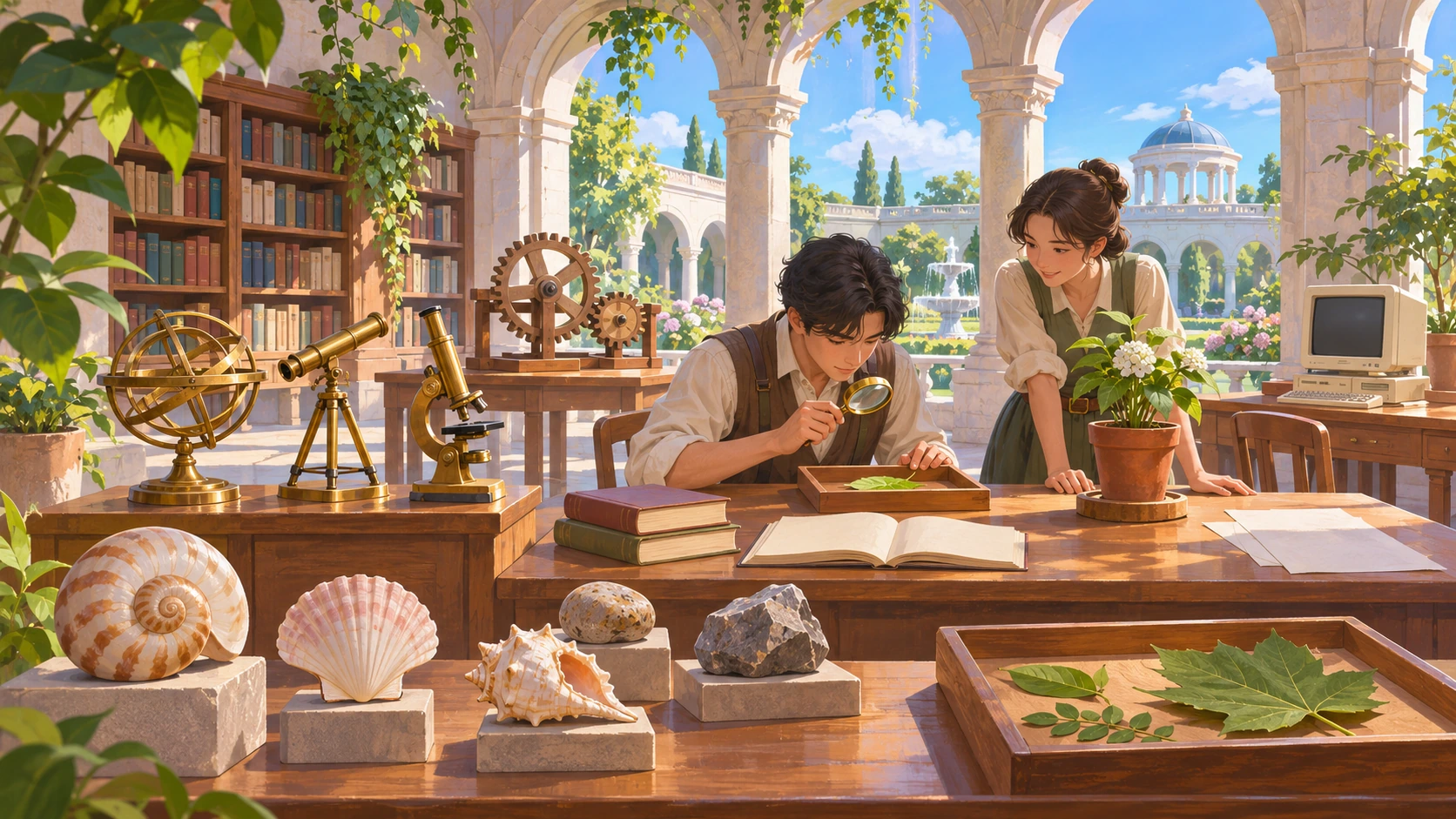
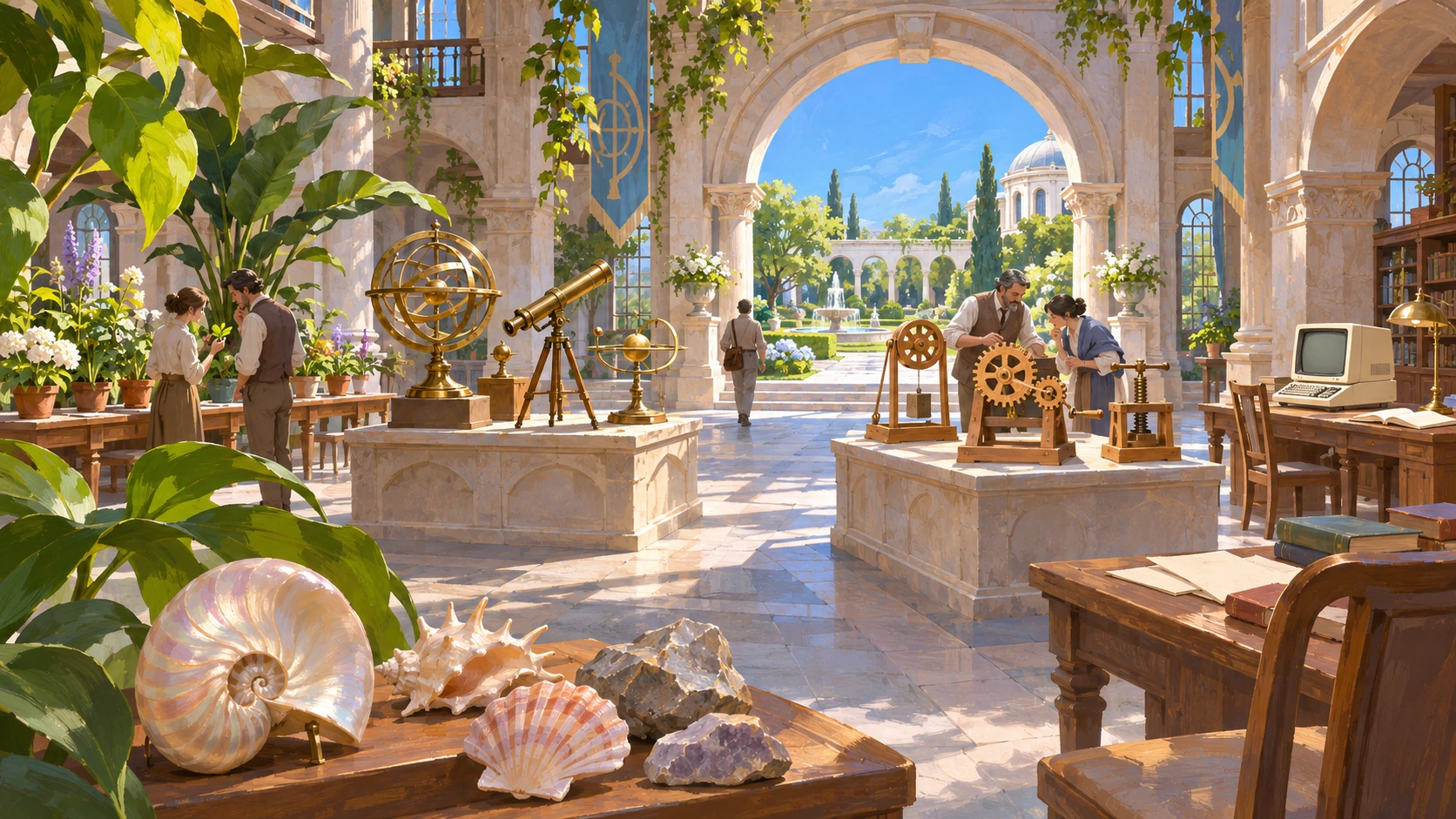
Design a small nature-and-mechanics learning hall. Wooden tables, observation tools, potted plants and clear mechanical models connect displays at different heights; an arch opens onto a real courtyard, and a plain early-style computer remains a tool. Adult visitors compare objects.
Read scene descriptions
Main environment
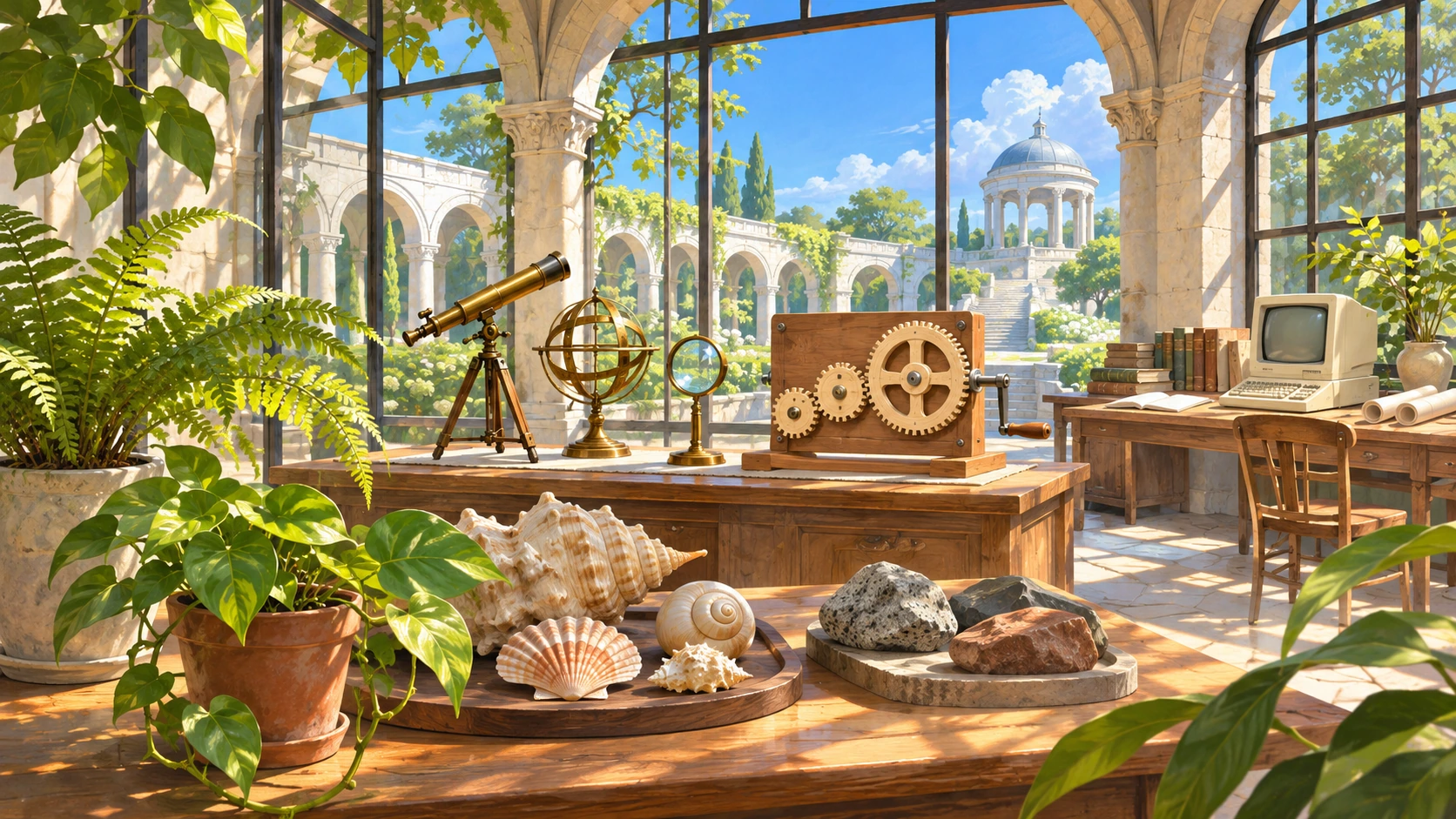
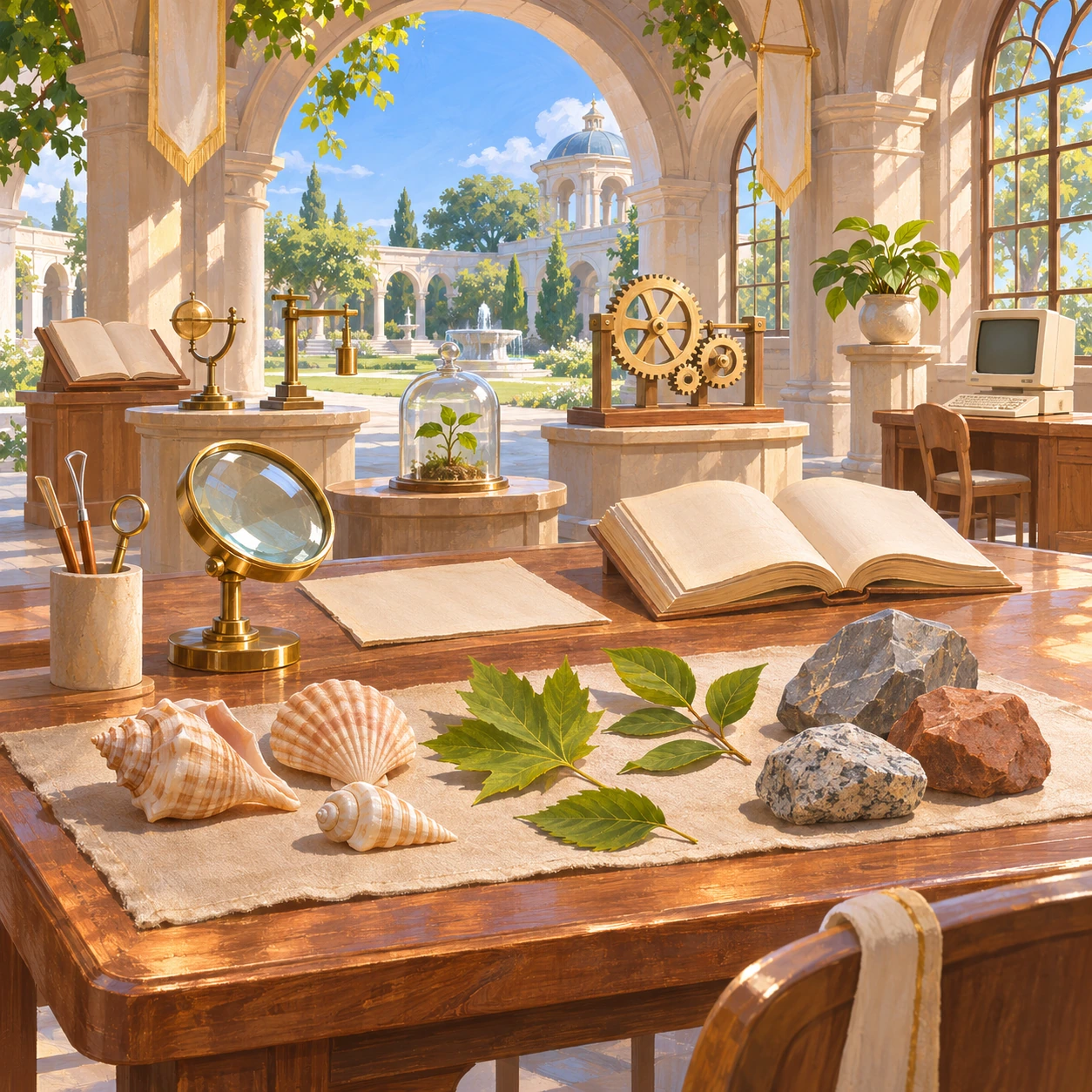
An original nature-and-mechanics learning hall organizes wooden tables, observation tools, ordinary plants and mechanical models into related areas. A courtyard arch and a plain early-style computer connect nature, hands-on study and digital tools, with clear spacing and routes.
Observing and comparing turn knowledge-bearing objects into a connected exhibition.
Ordinary plants and separate specimen stands retain readable natural scales.
Paper, wood, brass and glass have distinct textures while tools retain legible uses.
Displays, an arch and a courtyard form layers with clear routes between varied objects.