43Uncanny / Weird / Eerie
Presence, absence and familiarity leave different questions.
Definition and context
Uncanny, weird and eerie are compared here as viewing mechanisms rather than a shared filter. Distrust within a familiar setting, something that does not belong, and a missing presence or cause can each initiate a design. This is a creative analysis method, informed by Freud Museum discussions and Mark Fisher's distinctions; it should not collapse different theories into one strict definition.
People and ecology
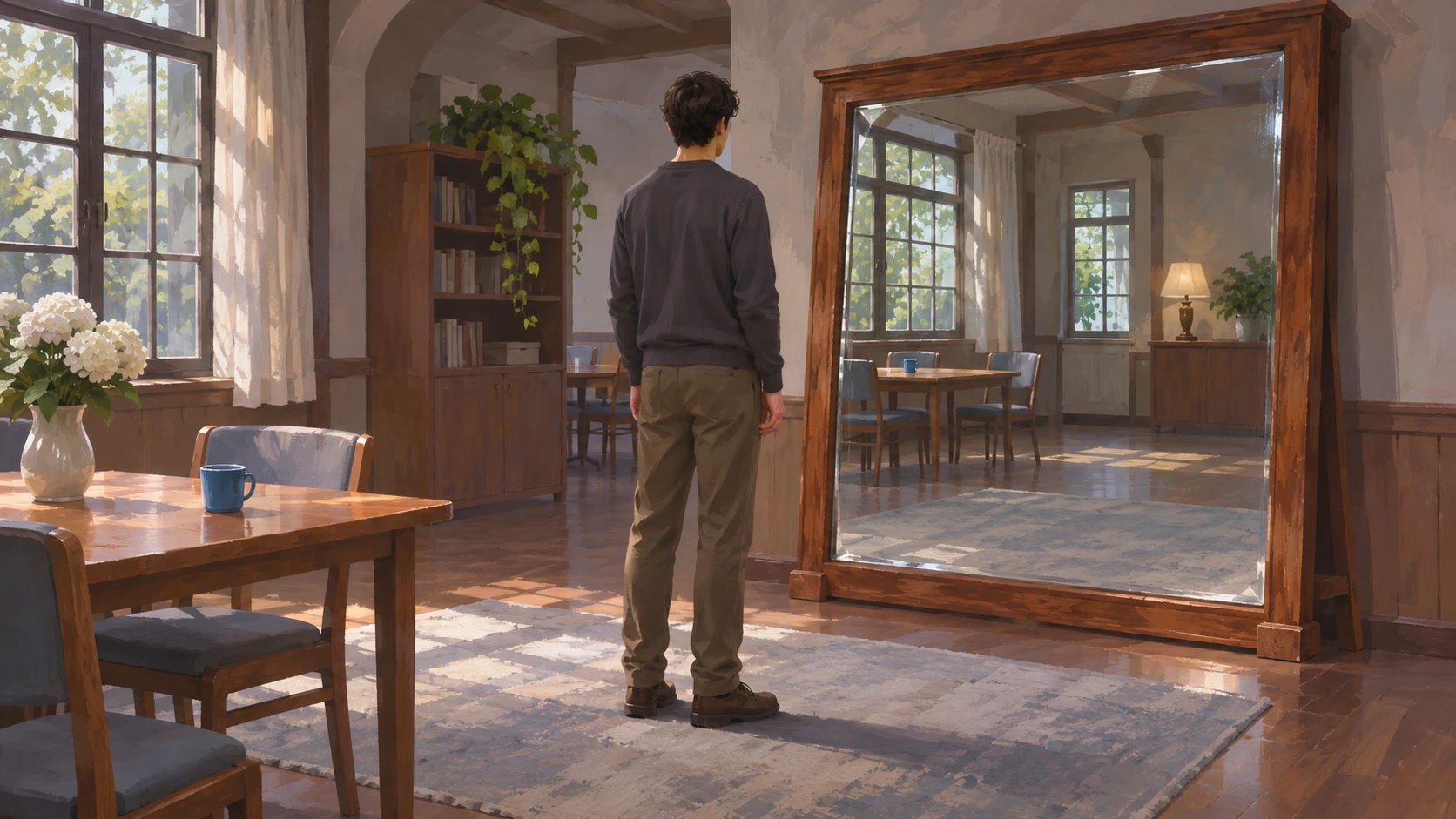
Figures, masks, dolls and repeated poses can delay a judgment between living and inanimate. A recently used seat can imply a person without showing one. The anomaly need not lie in a human body, and deformation is not required to establish unease.
Spaces and forms
Start with a recognizable home, activity room, service station or rural route, then change one relationship. An identical room in an unexpected location unsettles familiarity. A definite object with no apparent place introduces an outsider. An operating space without its expected user leaves a question of agency.
Color and materials
Keep ordinary wood, cloth, glass, plastic and plants credible so there is a baseline. One materially clear but contextually misplaced thing can stand out. If every surface is distorted, the viewer cannot tell which rule has changed.
Light, composition and scale
Normal daylight and clear shadows can carry the question. Keep the anomaly visible rather than hiding it only in darkness. A quiet, clean or attractive image can unsettle because judgment cannot settle, without implying an imminent attack.
Sound and graphics
In an interactive work, footsteps, door responses, ongoing machinery and an absent everyday sound can suggest uncertain causes. Static images use chair positions, lights or intact objects to imply action. Leave causes open, with visible traces supporting different interpretations.
Motifs and distinctions
Compared with weirdcore, this is a broader analytical frame beyond internet imagery. Compared with horror, it need not always imply a threat; strangeness can invite curiosity. Unlike impossible architecture, the geometry may remain normal while existence, classification or agency is questioned.
Ideas for game environments
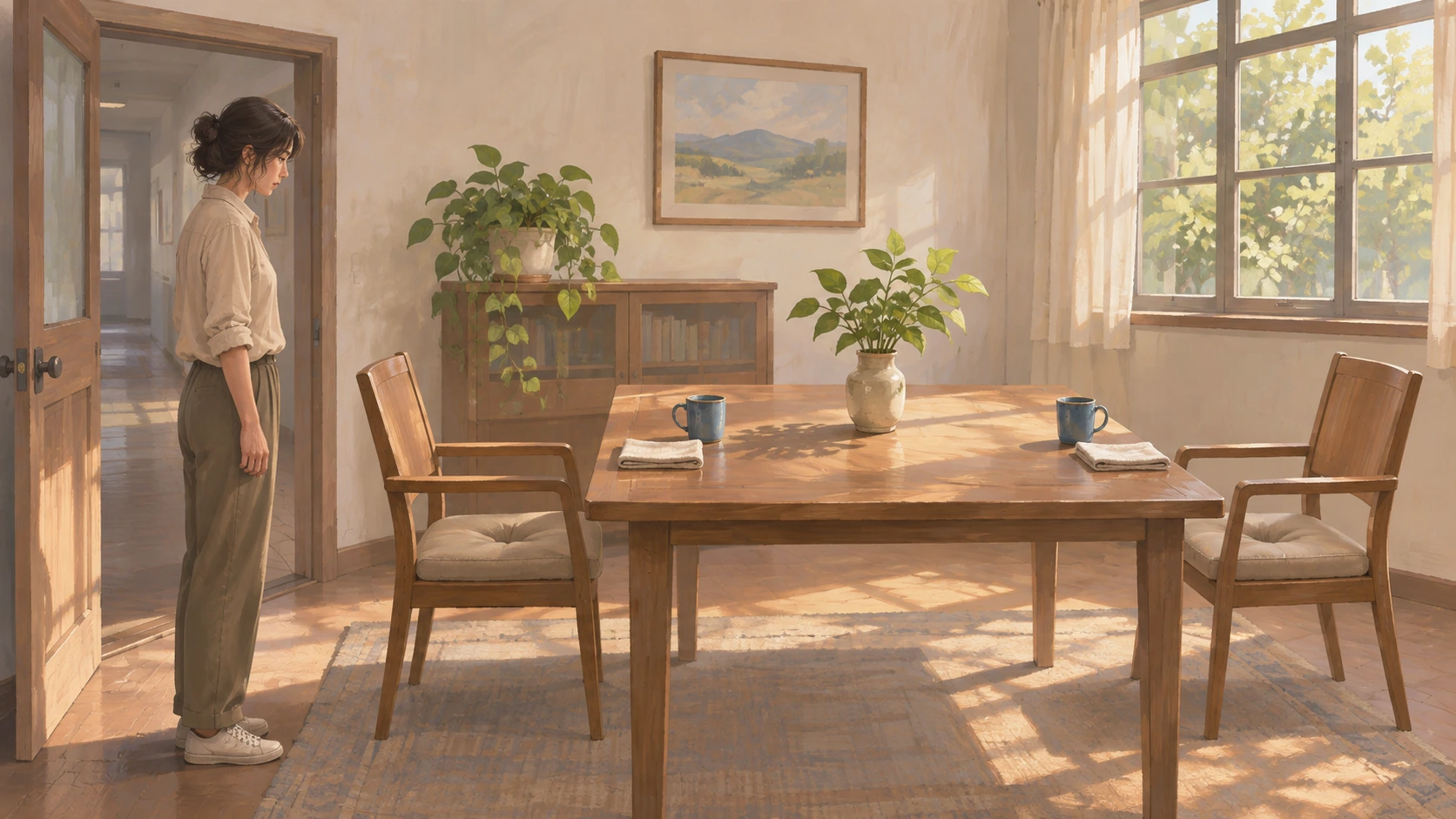
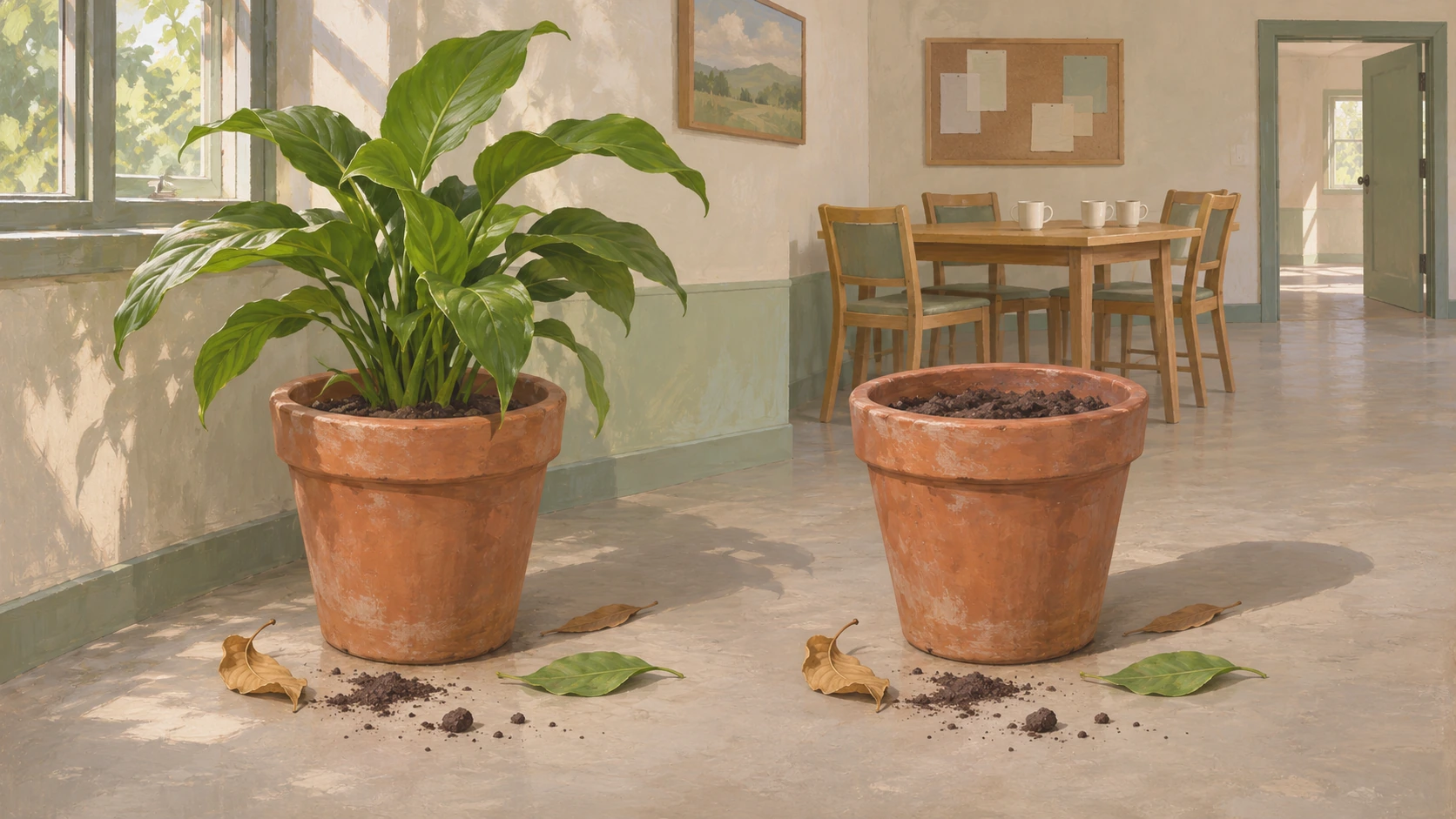
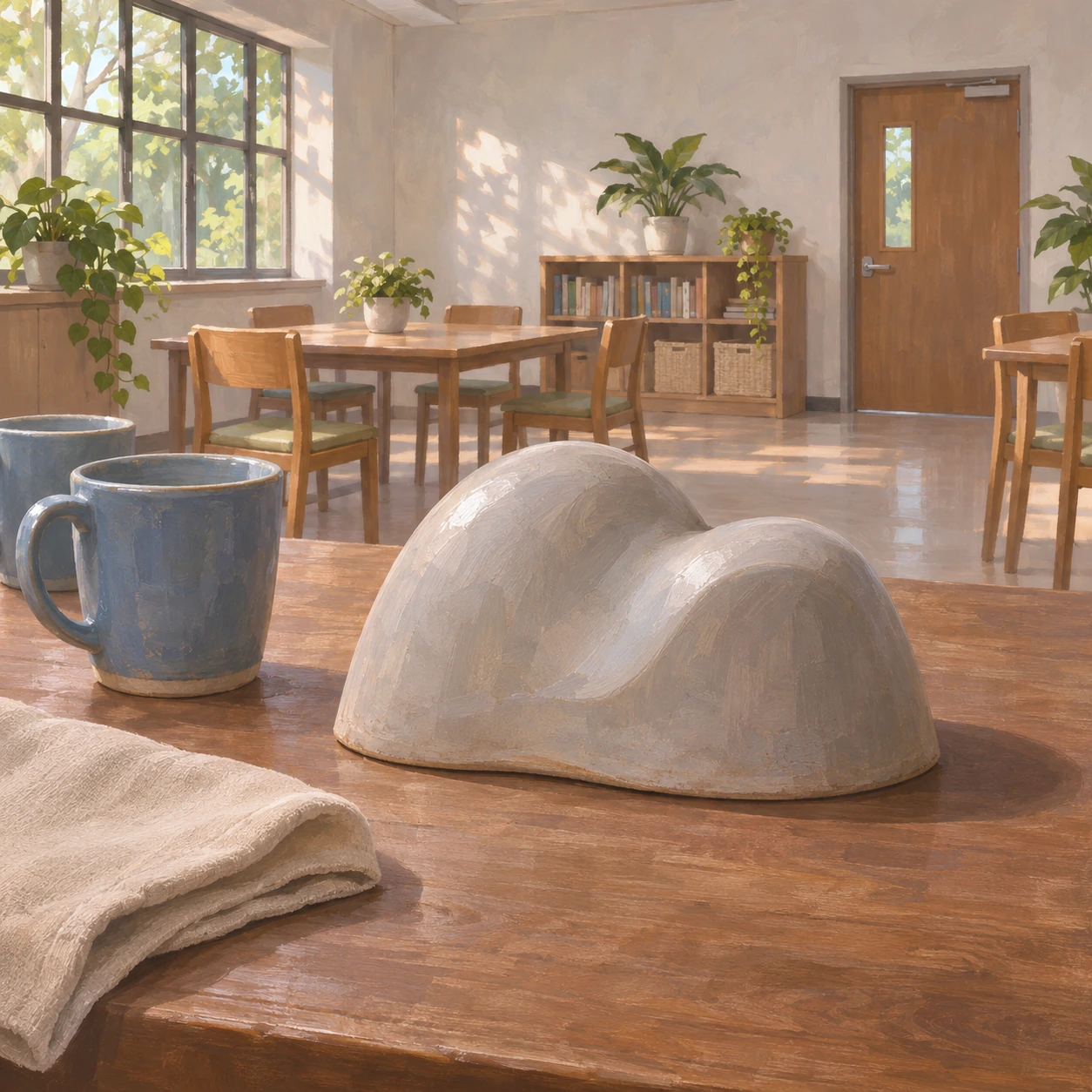
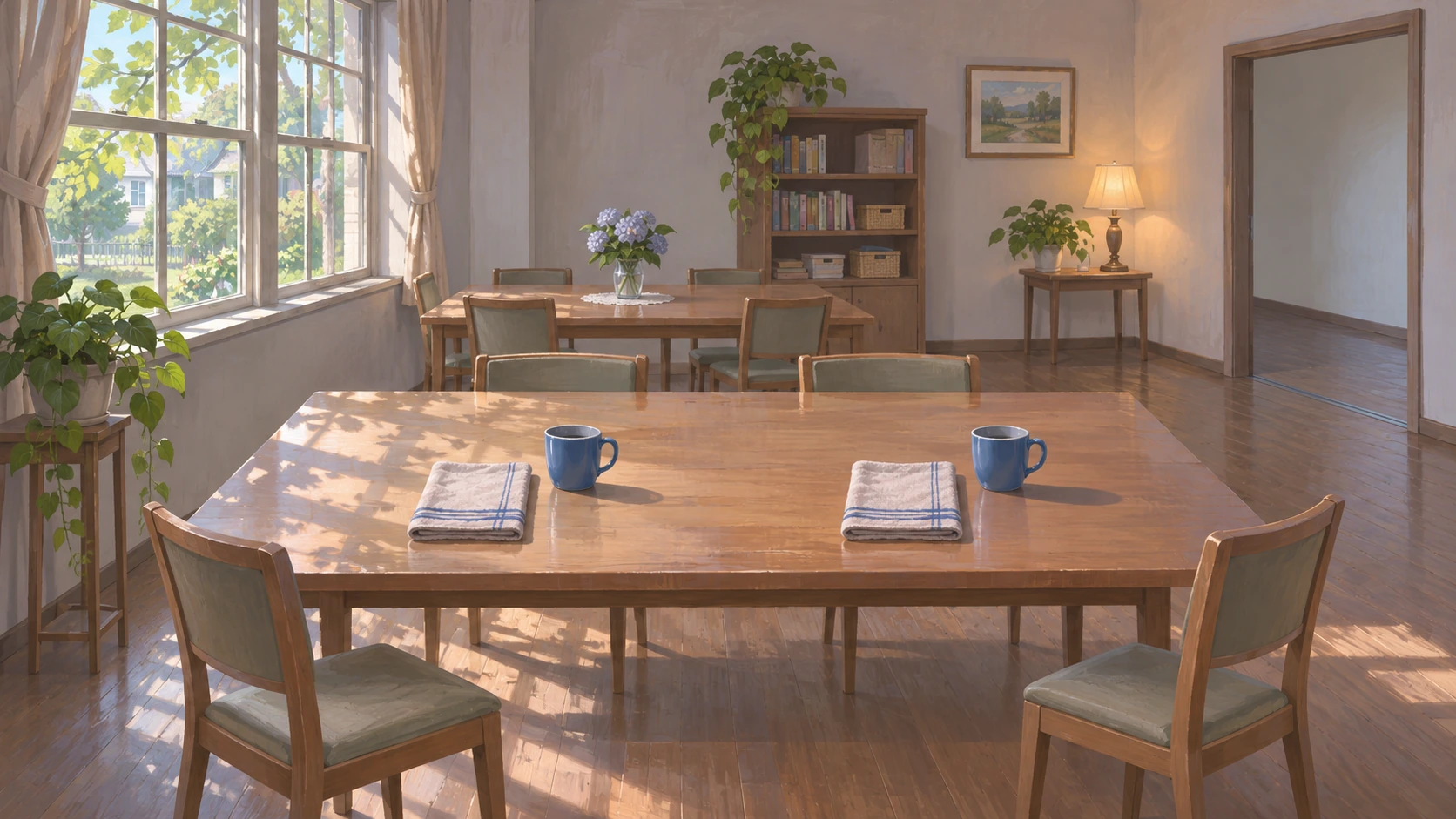
Give one table two identical sets of domestic traces but only one approach. Keep a foreign object materially definite while its use stays unknown. Leave evidence of use without a visible user. Choose one principal question so the viewer can compare and keep asking.
Read scene descriptions
Main environment
An original community room retains ordinary daylight, wooden tables, blue cups and plants. A visitor stands before a wood-framed mirror that shows the familiar room without the visitor. Clear everyday objects provide a baseline for the disturbance.
An ordinary figure and an empty seat leave presence uncertain.
Ordinary plants retain a baseline while one comparable relation changes.
The foreign object has a definite material but no clear reason to be there.
An intact used space retains traces of action with no clear agent.