29Webcore / Early Web
Imagine personal pages as maintained rooms linked to one another.
Definition and context
Webcore is an online label drawing on early personal pages, online identities and amateur webmaking. It asks who maintains a page, what they collect and whom they link to. Early websites had many visual languages. These original scenes translate some of them into walkable digital rooms rather than reconstructing a historical site.
People and ecology
Avatars, signatures, pet icons and collections can stand in for an author. Pixel flowers and animated creatures form a digital ecology distinct from living organisms. Servers, players and connection signals can make the medium visible.
Spaces and forms
Tiled backgrounds, sidebars, nested windows, long pages and uneven empty space organize information. In a spatial translation, thick frames become doors and personal collections occupy niches. Narrow routes connect rooms maintained by different people.
Color and materials
Limited palettes, dithering, pixel stickers, rough cutouts and simple beveled edges can coexist. Assets need not share a resolution, but their hierarchy should remain clear. Leave room around bright patterns so that collections stay readable.
Light, composition and scale
Overlapping windows create shallow depth; a long page suggests exploration. Place a small decoration in the distance and reveal its limited animation on approach. Painted light can give volume while retaining pixel edges and restricted color.
Sound and graphics
MIDI, clicks, connection tones and notifications are optional cues with located sources and rhythms. Counters, webrings, guestbooks and status indicators represent different relationships. The illustrations translate these through unlettered ornaments and lights; an actual interface still needs clear controls.
Motifs and distinctions
Compared with Y2K product futurism, webcore emphasizes personal publishing, private interests and links. Roughness is not automatically a glitch. Early sites were not universally neon, chrome or star-covered; decoration should express a particular author.
Ideas for game environments
Give neighboring rooms different fictional maintainers. Repeat a small icon to suggest shared interests. Let an old link lead to a space retaining earlier decoration. Collecting and connecting become narrative, and browsing becomes walking.
Read scene descriptions
Main environment
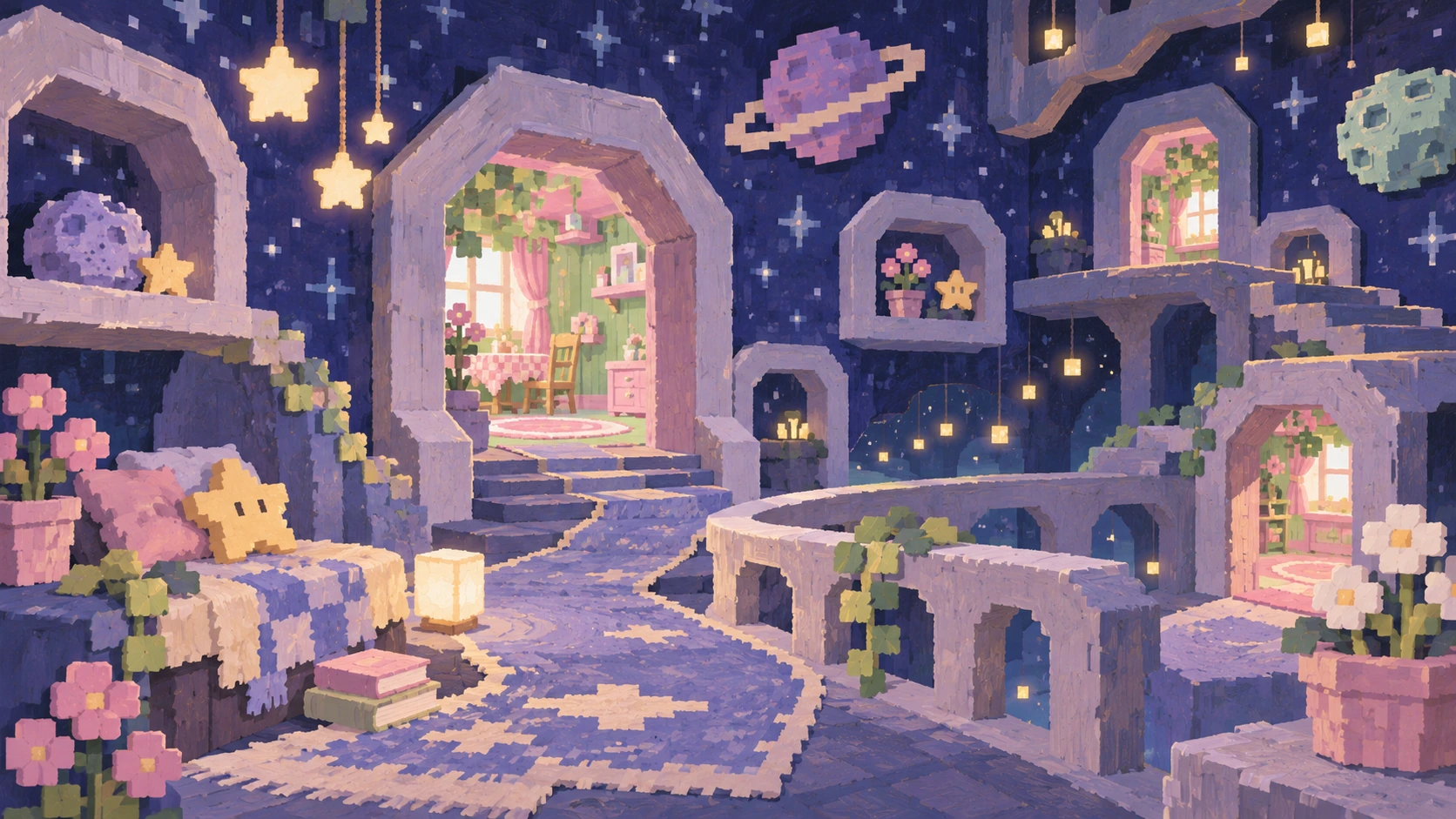
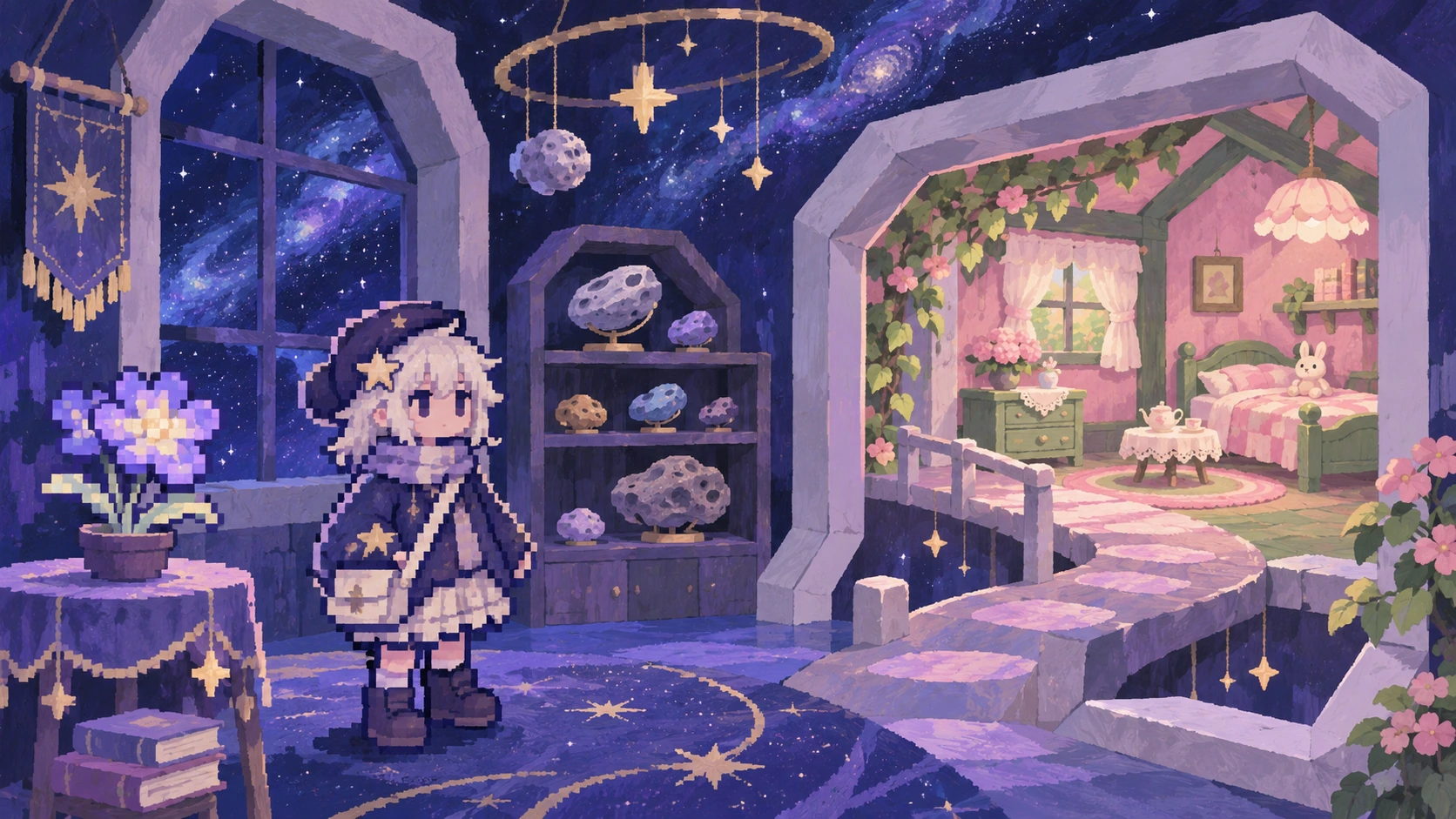
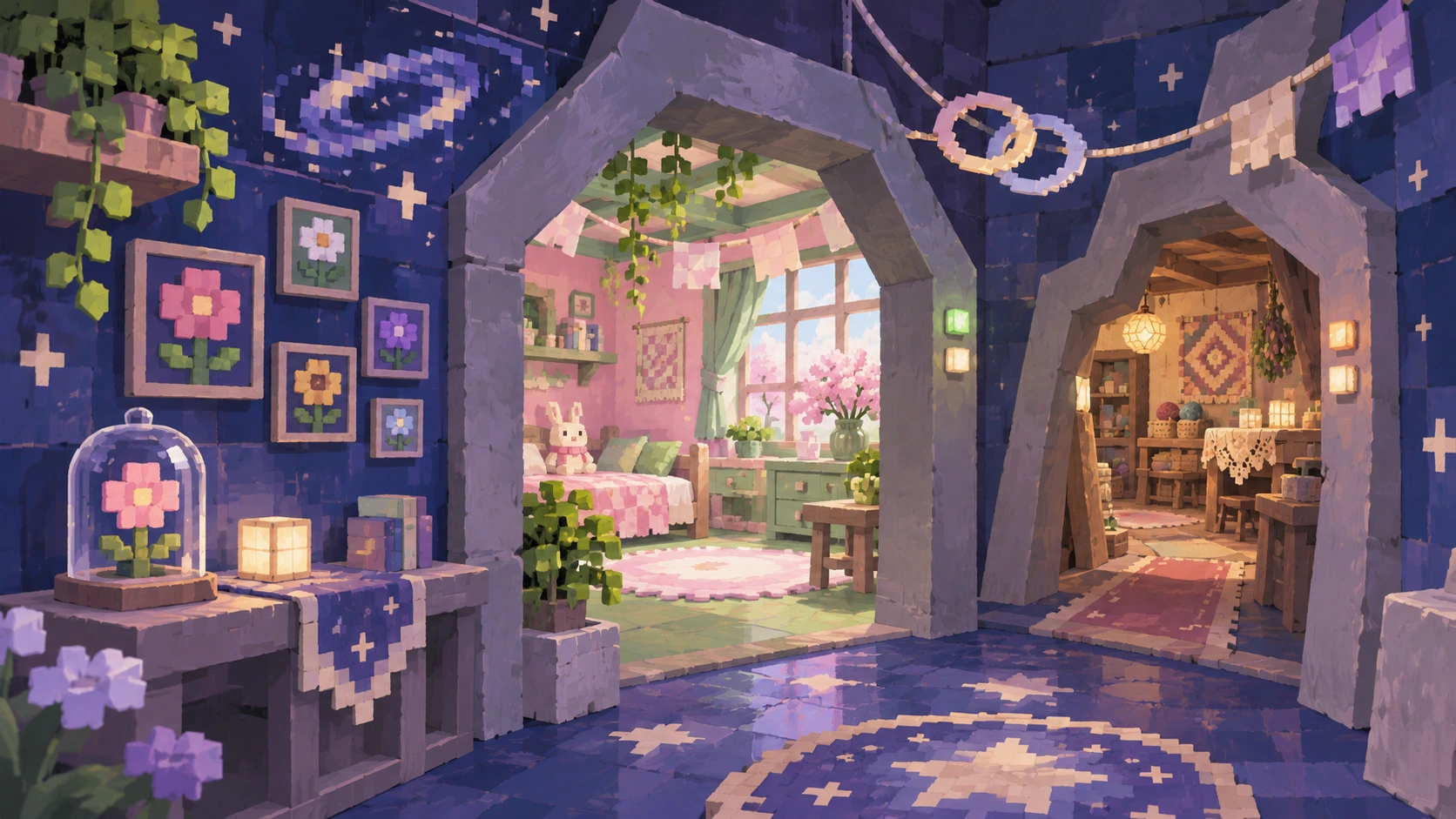
A tiled star field, thick grey doorframes and pixel-flower collections form an original private digital room. A differently decorated room lies beyond. Nested depth, limited color and uneven spacing turn personal-web imagery into walkable space.
An original avatar and private collection suggest an individual maintainer.
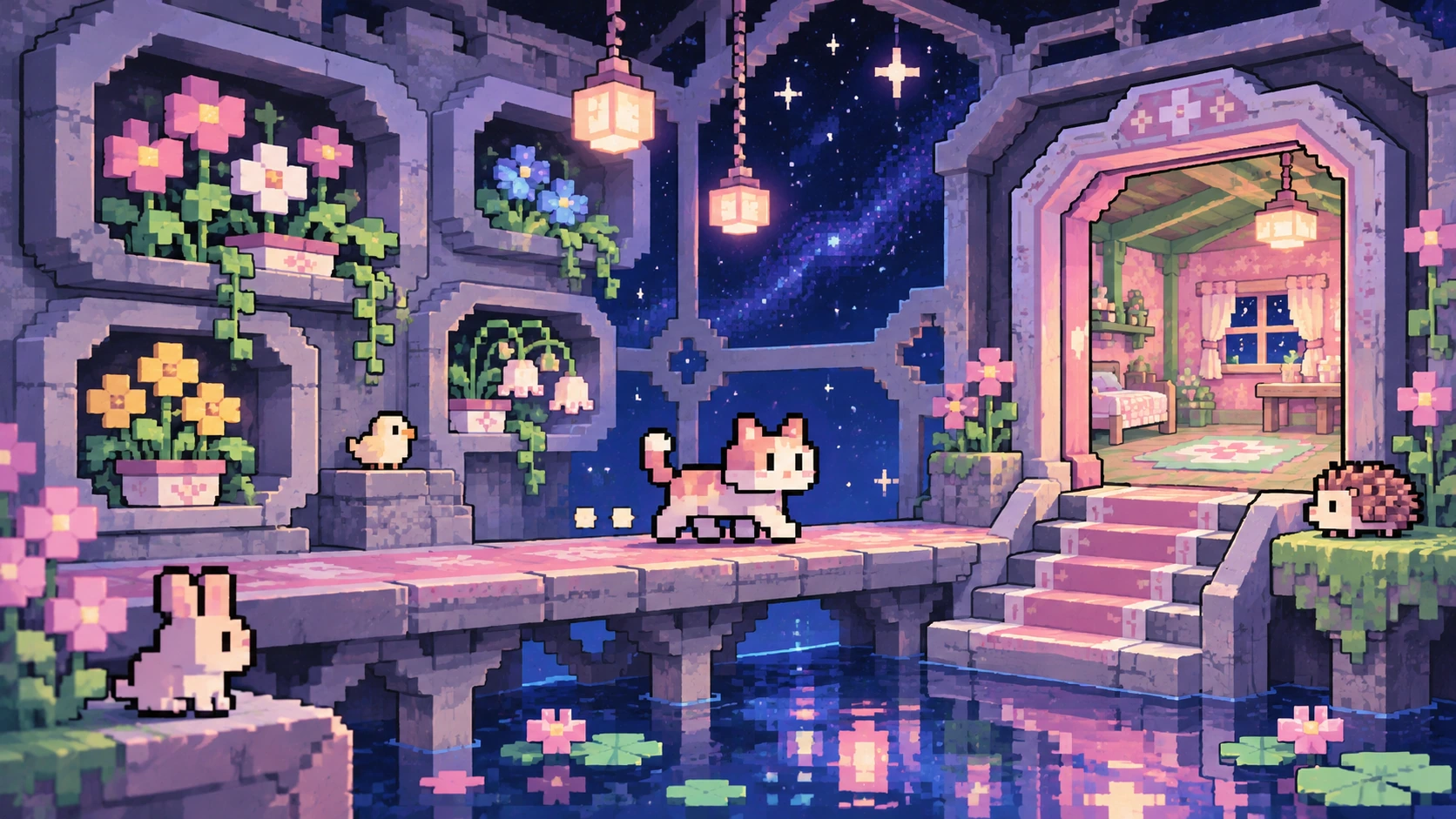
Pixel flowers and a blocky creature form a visibly digital ecology.
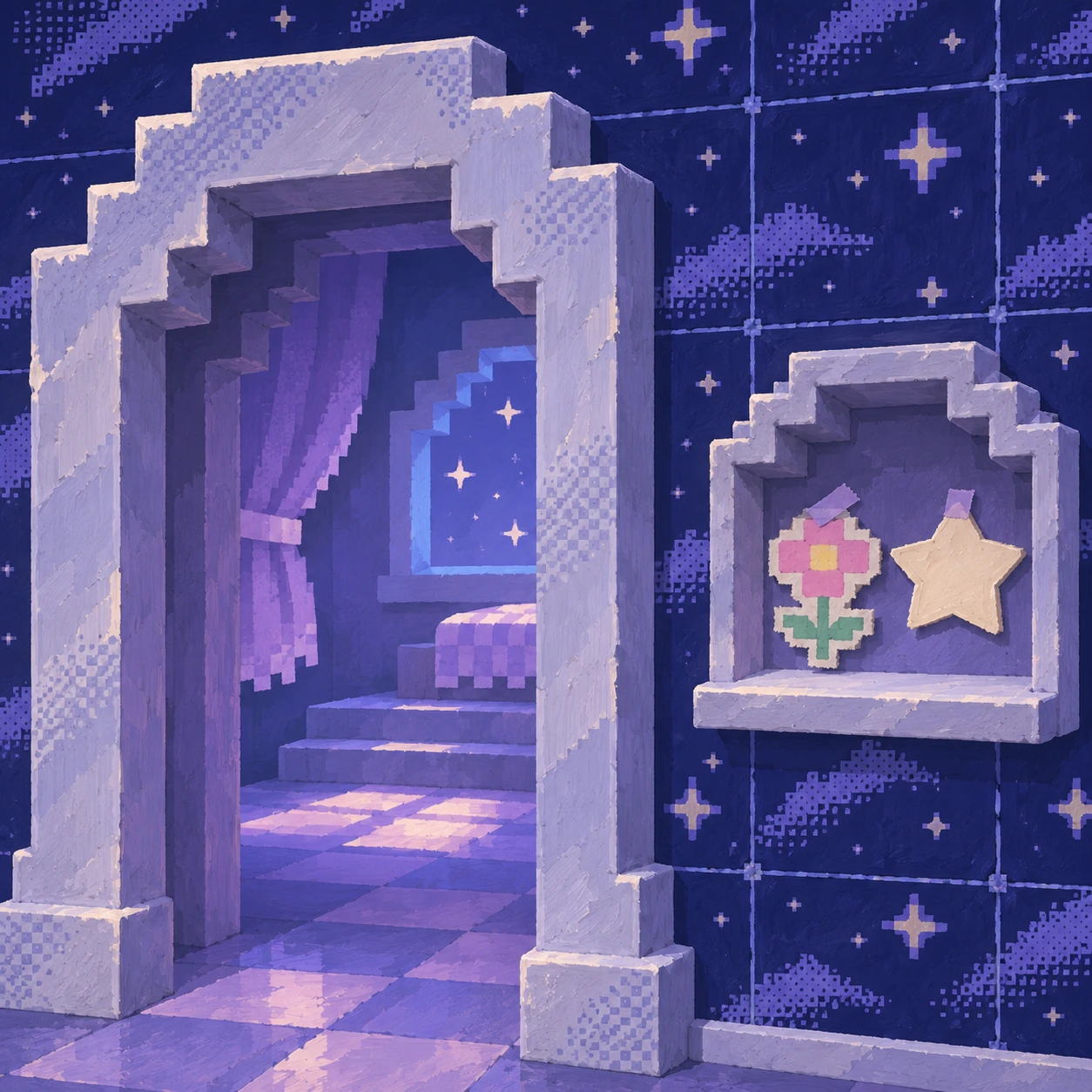
Tiling seams, dithering and rough edges retain varied handmade web materials.
Differently decorated rooms connect through asymmetrical routes.